
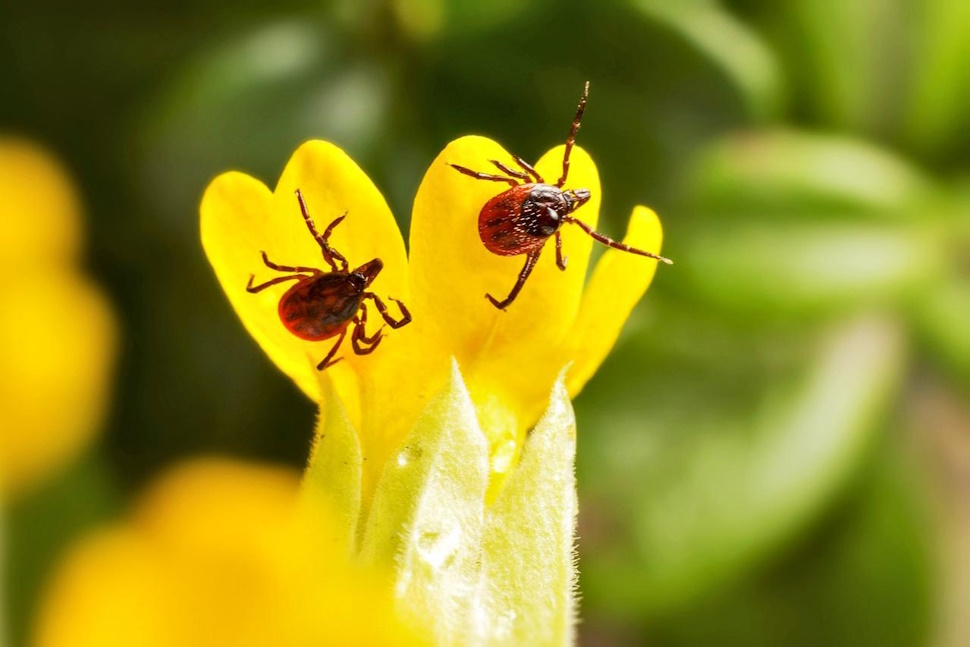
What may feel like a particularly bad tick season in Saskatchewan is not just people’s imagination.
Dr. Maarten Voordouw, an associate professor in the Department of Veterinary Microbiology at the University of Saskatchewan’s Western College of Veterinary Medicine, says the American dog tick, the most common tick species in Saskatchewan, has been expanding its range across the province for several decades.
“American dog ticks are now routinely encountered by people in Saskatoon and surrounding areas and further north in Prince Albert and surrounding areas,” Voordouw said in an email response.
“Many people living in these communities will attest to the fact that they have been living there for decades and have never encountered ticks until recently.”
Tick numbers appear to be rising
Voordouw said data from the eTick app suggests tick submissions in Saskatchewan are about 20 per cent higher this year than at the same point last year.
However, he cautioned that citizen science data does not perfectly reflect actual tick abundance.
“In summary, the eTick app suggests that tick numbers are higher than last year, but not by a huge amount,” he said.
While researchers still have much to learn about year-to-year fluctuations in tick populations, Voordouw said the long-term trend is clear: ticks are becoming more common across more parts of Saskatchewan.
Health risks from tick bites
The American dog tick can carry the bacterium that causes Rocky Mountain spotted fever, while blacklegged ticks, which are much less common in Saskatchewan than in Eastern Canada, can carry the bacterium responsible for Lyme disease in humans and dogs.
Voordouw said tick-borne illnesses can become serious if left untreated.
Rocky Mountain spotted fever, while uncommon, can cause severe damage to blood vessels and can be fatal in some cases. Lyme disease can also lead to more serious complications, including arthritis, heart problems and neurological issues such as Bell’s palsy, chronic fatigue and brain fog.
In the news:
Recognizing symptoms
Lyme disease can be difficult to identify in its early stages because symptoms such as headache, fever, fatigue, and muscle and joint pain can resemble those of other illnesses.
One of the most recognizable early signs is a rash known as erythema migrans, which typically appears seven to 14 days after a tick bite and gradually expands.
Rocky Mountain spotted fever causes a different type of rash, often beginning as small pink spots that darken and spread across the body.
Unlike Lyme disease, the rash associated with Rocky Mountain spotted fever can provide an early indication that something is wrong, Voordouw said.
Prevention remains the best defence
Voordouw said people can reduce their risk of tick bites by staying on designated trails and avoiding brush and tall vegetation.
“Ticks tend to hang out on vegetation waiting for hosts to pass by so that they can grapple on to them,” he said.
He also recommends using insect repellents containing DEET, tucking pant legs into socks and conducting thorough tick checks after spending time outdoors.
Particular attention should be paid to areas such as the armpits, groin, scalp and back of the neck, especially in children.
Don’t forget about pets
Dogs are particularly effective at picking up ticks because they frequently run through brush and tall vegetation, Voordouw said.
Long-lasting flea and tick medications can help protect pets, but owners should still check their animals after spending time outdoors.
Voordouw noted that ticks can also be carried into homes on dogs before attaching themselves to a second host, including a person.
Long life cycles
Ticks have much longer life cycles than many insects.
Voordouw said hard ticks such as American dog ticks and blacklegged ticks pass through four life stages, egg, larva, nymph and adult, and can survive for several years.
Blacklegged ticks, for example, may have a life cycle lasting between three and five years.