
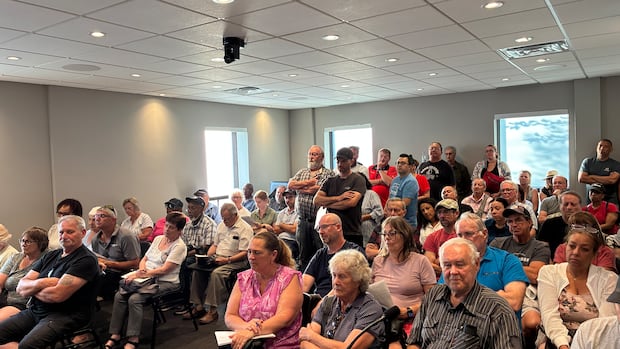
One by one, residents stepped up to the podium carrying handwritten notes, research and years of frustration.
Some fought back tears. Others pleaded for emergency help. Many said they were already preparing for “the next time.”
Monday marked the first council meeting in Châteauguay, Que., since the June 20 flooding that left homes and businesses underwater across several neighbourhoods — and over 60 residents came seeking answers, timelines and action.
For more than two hours, residents shared stories of repeated flooding, mounting repair bills, lost property values and the lingering fear that another storm could undo what little progress they have made since the water receded.
Speaking on behalf of neighbours on Laramée Street, resident Nesia Ngwilizi described how the flood has affected more than just homes.
“It is about people who feel anxious every time the sky becomes dark,” she told council.
She said many residents are still waiting for insurance responses, living in damaged homes or trying to rebuild after contaminated water entered their properties.
“We are grateful that no lives were lost,” Ngwilizi said. “But being fortunate that nobody died does not mean that what happened was acceptable.”
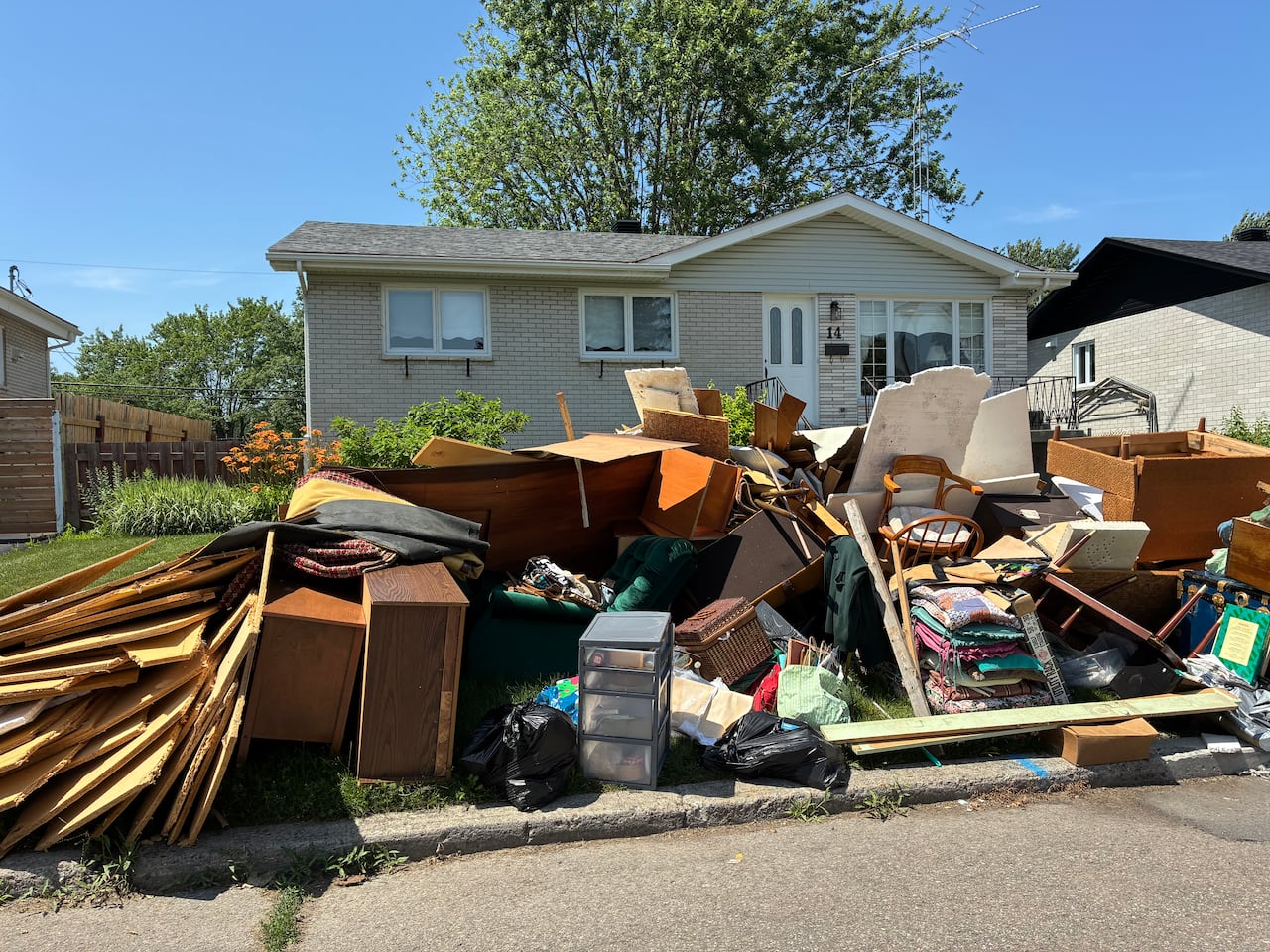 Garbage is piled outside dozens of homes in affected neighbourhoods. (Chris Kurys/CBC)
Several residents argued they had already installed sump pumps, backwater valves and other protective measures recommended after previous floods, only to see water pour into their homes again.
“Our sump pumps are useless against this,” said Gordy Ferguson. “It’s the infrastructure.”
He reminded council that residents had stood before them following earlier flooding events and were told to install protective equipment while the city completed engineering studies.
“So we’re back to where we are.”
‘We need emergency help’
Longtime Laramée Street resident Oscar Jones told council he has lived on the street for 39 years and has experienced six flooding events.
“I haven’t fixed my basement since 2024 [flooding] yet and then this one came,” he said. “We need emergency help.”
Jones said residents are worried not only about repairing their homes but about what repeated flooding is doing to property values.
“Our property values are going down. Nobody’s going to buy there,” he said.
Another resident, Darlene Burke-Charles, described the impact on families living through the aftermath.
Her son, who has autism, has been displaced from the family home after sewage-contaminated water entered their basement.
“He’s scared to come back home,” she said. “And it’s not fair.”
Another young parent said she fears another storm before repairs are complete.
“I’m scared that they’re living in mould,” Ashley Nault said of her children. “Enough is enough.”
She said she has already begun demolishing her basement because she expects another flood.
“I know there’s going to be a next time.”
City says work is coming
Throughout the evening, Châteauguay Mayor Éric Allard maintained that the city is investing heavily in flood mitigation and acknowledged that much of the city’s stormwater infrastructure was built decades ago.
“Those infrastructures were made 50 years ago without the climate we have right now,” he said.
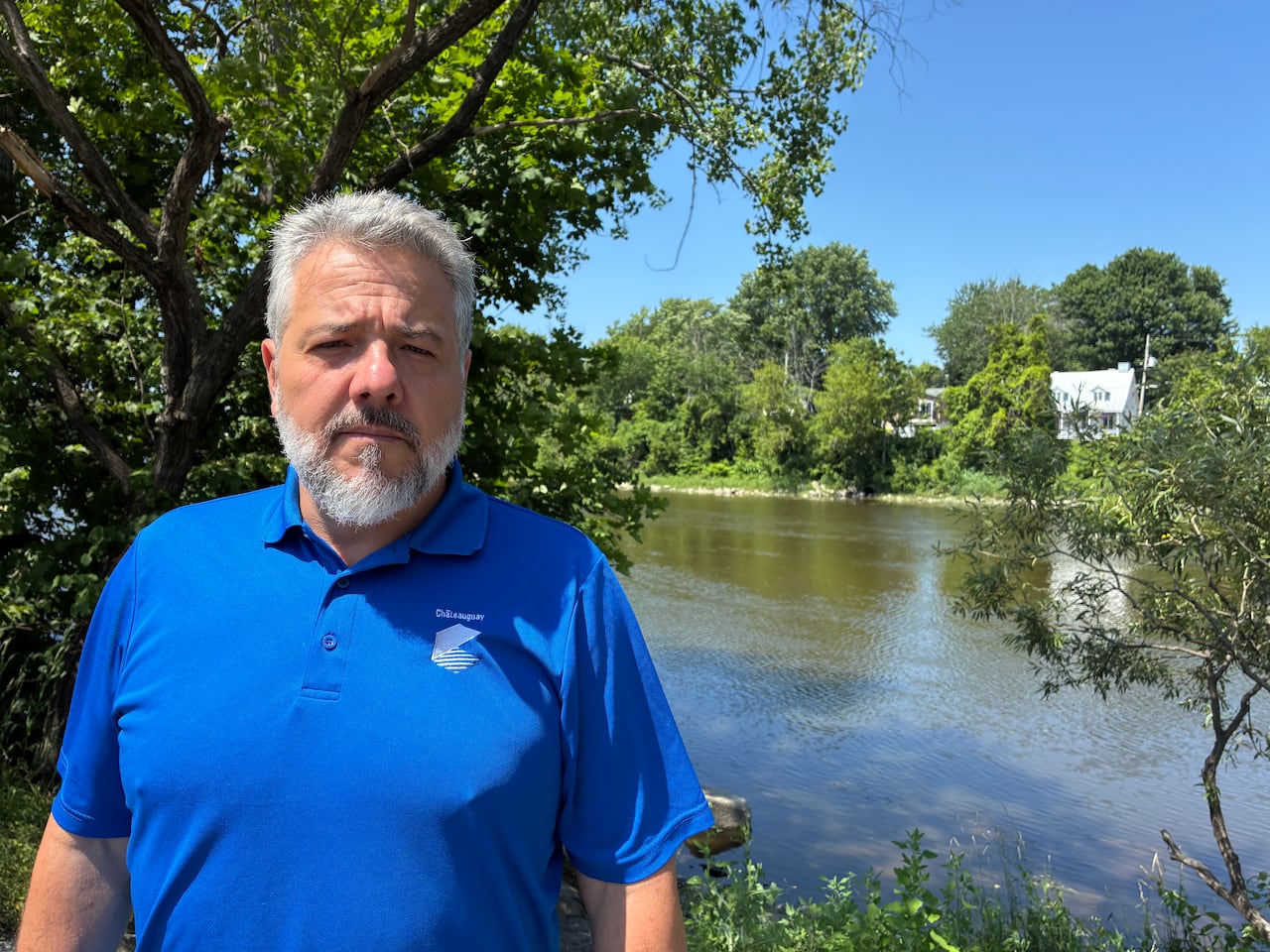 Châteauguay Mayor Éric Allard said the city plans to invest $165 million in infrastructure upgrades between 2027 and 2031. (Chris Kurys/CBC)
Speaking to CBC the day after the meeting, Allard acknowledged that he shares residents’ concerns when storm clouds roll in. He said the city’s first priority is upgrading its infrastructure, but noted that those improvements cannot be completed all at once.
“There’s a lot of projects that need to be put on the table, but we need to have the government’s support to do all those things,” said Allard. “We will not be able to afford all the work that needs to be done to be resilient.”
After the floods of 2024, the City of Châteauguay applied for a $4.6-million provincial grant for some of the work but did not receive the funding and is proceeding without it.
Contracts for drainage improvements in some affected areas are expected to be awarded in August, with construction beginning toward the end of the summer or early fall, he said.
The funding for the work will come from the city’s reserves, and partly through a loan.
Allard encouraged residents to take advantage of municipal rebate programs for sump pumps and backwater valves while larger infrastructure projects moved ahead, though he acknowledged he could not guarantee future flooding would be eliminated.
‘It’s bittersweet’
Speaking after the meeting, Ngwilizi described the evening as “bittersweet.”
“Yes, there are some answers,” she said. “But it was vague answers.”
She said residents are looking not only for infrastructure improvements but also for greater compassion and support from the city as they rebuild.
“Any money would make a difference,” she said, referring to potential financial assistance. “Whether it’s $5,000, $10,000 or $3,000, I would be grateful rather than nothing at all.”
Although legal action has been discussed among some residents, Ngwilizi said the group is still exploring its options.
For now, she said, residents simply want to see progress before the next major storm arrives.
“The citizens are not happy with the answers,” she said.