
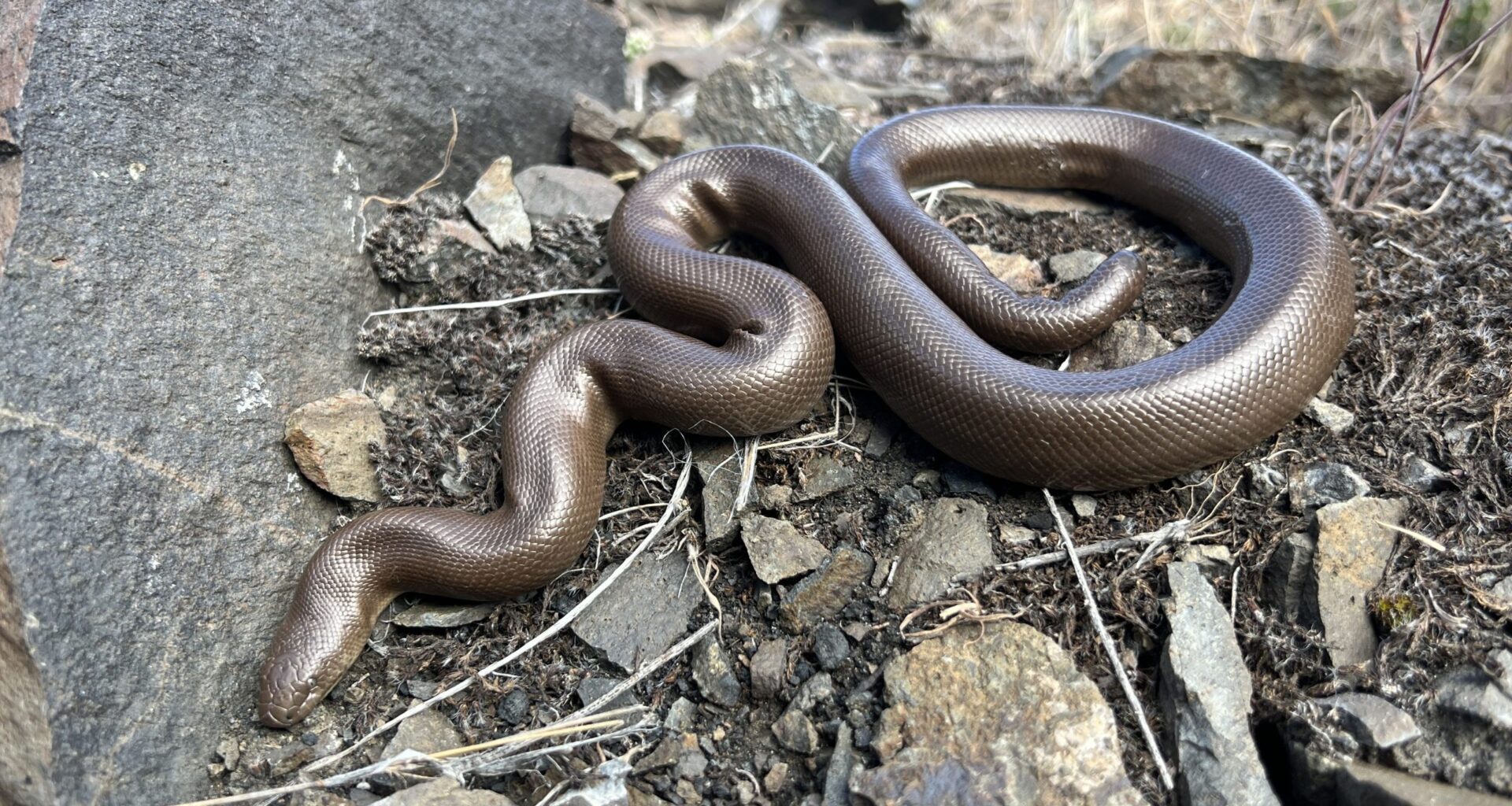
A research team from Thompson Rivers University in Kamloops is asking British Columbians to be on the lookout for rubber boas, including on Vancouver Island.
Masters student Maria Collins says there have been unconfirmed reports of rubber boas being on Vancouver Island, but there have been no verified sightings in the region.
“I don’t think it’s far-fetched at all. It’s a burrowing snake and the Island has a lot of vegetation so it wouldn’t surprise me if they’re here and they’re just super hard to see,” said Collins.
The team’s broader project is looking at the rubber boas’ behaviour in its northern region of British Columbia. Its overall habitat spans from B.C. to California, and Collins says little research has been done locally about the species, particularly over the past two decades.
“Since they’re a snake living at their northern range it’s very likely that they’re doing something different than what they’re doing at their core range,” she said.
“So a lot of studies have been done in Oregon and Idaho, so their core range, and that’s kind of where we’re basing our information.”
Collins says without information on how rubber boas behave here in B.C., the province could be basing conservation methods on data designed for environments down south.
“If we don’t know, we can’t protect them,” she said.
Citizen scientists important
Collins says that since the team started its public call out for rubber boa sightings last year, thousands of people have made reports.
“The people making a difference are the landowners who have been watching the snakes in their yards for the past 10 years, the dog walker who says, ‘Hey this snake is moving and it’s the end of October.’ We didn’t know they were moving in November until then,” she said.
She adds that potential confirmed sightings of rubber boas in places like Vancouver Island will help scientists understand the true distance of the snake’s home range in B.C.
Anyone who spots a rubber boa can report the sighting online here. Reports should include the time, date, location and Collins says it’s important for Islanders to include a photo so researchers can verify it is indeed a rubber boa and not something like a sharp-tailed snake or garter snake.
Rubber boas can be difficult to find as they are a burrowing species. Collins says they live in a variety of environments and it may just come down to luck if someone spots one or not.
Locals are asked to keep an eye out when hiking or on walking trails.
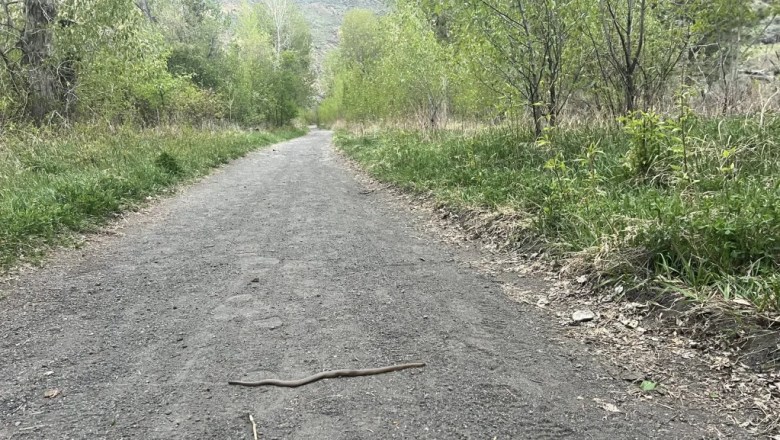 A rubber boa is seen crossing a hiking trail. (Maria Collins)
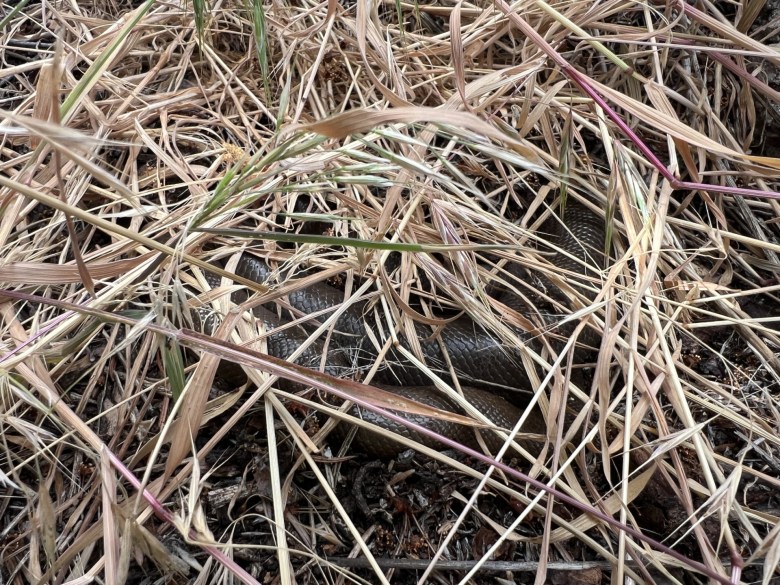 A rubber boa is shown burrowing.
Rubber boas are sometimes referred to as a “double-headed snake” as they have blunt tails and are a solid colour, often ranging from pale brown to dark brown – though they can be olive green, or even a pale pink/orange colour.
They tend to be small, less than 70 centimetres long, and prey on things like small mammals and young rodents.
Collins says that rubber boas are considered an “ancient snake,” meaning they have remnants of hind legs, or vestigial limbs, and they are unlike any other snake species in the province.
“It’s pretty special that we have them here in B.C., we don’t have them anywhere else in Canada,” she said.
Collins is a Masters student working under supervisor Karl Larsen. She also credits her outreach assistant Tirzah Robinson with communicating and reviewing the thousands of submissions they’ve received so far.
SEE ALSO: Rare endangered snake discovered on Lasqueti Island for first time