

Listen to this article
Estimated 4 minutes
The audio version of this article is generated by AI-based technology. Mispronunciations can occur. We are working with our partners to continually review and improve the results.
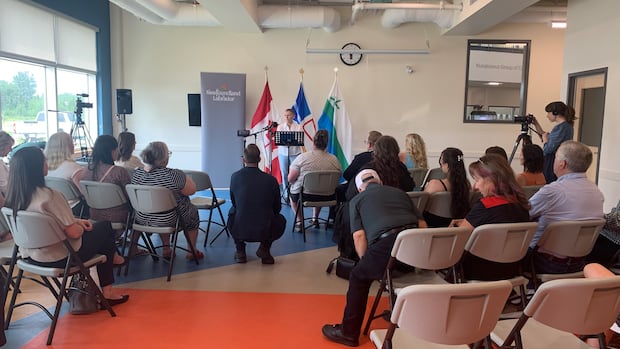
Health Minister Lela Evans says eight transitional beds will be coming to the Labrador Health Centre and that the province would be working to redevelop the Paddon Home, a former long-term care facility in Happy Valley-Goose Bay.
Evans made the announcement on Wednesday in Happy Valley-Goose Bay.
WATCH | Minister Lela Evans says province ready to cover cost for new beds, service: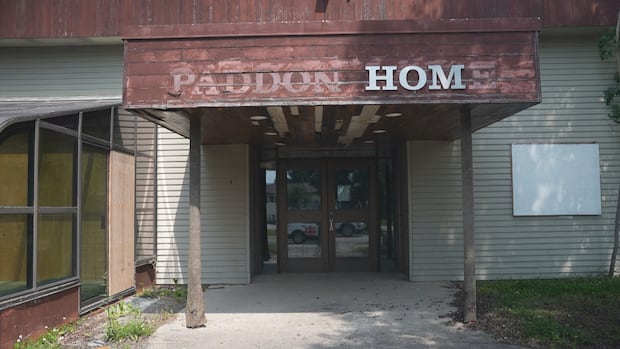
The Paddon Home — a long-term care home in Labrador — to reopen, 16 years after it was closed
Renovations will take three years, but it will mean the addition of 26 long-term care beds in Happy Valley-Goose Bay. The CBC’s Regan Burden reports.
She said that when she took on the role of health minister, she looked at what was impacting bed capacity at the hospital. They found that older patients or patients with specific needs were taking up hospital beds because they were unable to return home, but there were no long-term care beds available.
“How do we address that? We invest in long-term care beds, which is what we were doing with the Paddon Home,” she said.
The home will have capacity for 26 long-term care patients, she said.
The province’s 2026 budget included $1.25 million for the transitional care beds, part of a multi-year project totaling $2.5 million. This year’s budget also included $2.25 million dollars for the redevelopment of the Paddon Home, which the government says will cost $22 million in total.
The Paddon Home closed in 2010 and has been vacant since. In 2015, months ahead of a provincial election, the PC government at the time promised $1 million to get the building up to code and it was offered to the Labrador Friendship Centre but a consultant’s report said it would take more than $6 million to make it suitable.
Evans says that construction will start on the Paddon Home this year, with some beds opening in the 2027-2028 fiscal year.
“That’s a commitment we’ve made because we didn’t want to announce something off into the future, because Labradorians are tired of announcements that really doesn’t bring action,” said Evans.
Evans says the addition of these new beds should improve the quality of life for patients who have had to travel far from home, and improve the mental health of their families.
Transitional beds to provide ‘immediate pressure relief’
“We know that Newfoundland and Labrador Health Services has that overflow because they have patients who have nowhere to go because … physically and health wise they can’t return to their homes and be supported by loved ones because that’s not possible and also there’s no beds available,” said Evans.
Evans says it’s very upsetting for her to see people in overflow spaces.
Cassie Chisholm, the chief operating officer for the Labrador Grenfell Zone, says these overflow spaces are being seen right across the country.
“[There’s] changing demographics, you know, lots of comorbid illness out there in the environment and you know, people are living longer, we have better medical care, better interventions and all of that stuff has an impact on the utilizations of our health-care facilities, so here in Goose Bay it’s no different,” said Chisholm.
Chisholm says they expect the transition beds to be very impactful for addressing overflow issues.
 Cassie Chisholm, the COO for the Labrador Grenfell Zone, says she was excited for the news the province announced on Wednesday. (Andrea McGuire/CBC)
“The Goose Bay hospital has 25, 26 beds and it’s not uncommon for over half of them to be occupied by people who are waiting for a transitional bed in the community or a long-term care bed… so opening up eight beds in the facility gives us an immediate pressure relief,” said Chisholm.