
Prime Tire Newsletter | This is The Athletic’s F1 newsletter. Sign up here to receive Prime Tire directly in your inbox twice a week during the season and weekly in the offseason.
Welcome back to Prime Tire, where today I’m in a reflective mood, thinking about how this is only Formula 1’s second weekend off in eight weeks. Two races to go until the August summer break.
And by this time next week, we’ll be back in action at the Belgian Grand Prix.
I’m Alex, and Madeline Coleman will be along later.
Red Bull Problems: Issues facing boss Mekies 1 year in
As we covered in Tuesday’s PT, ex-Red Bull team boss Christian Horner made his return to the F1 paddock for the first time since his axing last year. Inevitably, the camera crew of the Netflix docuseries “Drive to Survive” was on hand to capture the moment.
Yesterday was the one-year anniversary of Horner being forced to step down from the team he ran for more than 20 years, and his exit was made official in September 2025. In the intervening time, Horner and Red Bull agreed to a mammoth settlement figure over his termination.
Well …
Horner may be plotting a comeback with Aston Martin or Alpine, or being headhunted to run a new entry from Chinese manufacturer BYD — depending on which reports you believe.
But no deal is done or official yet.
On the BYD reports, I do find it fascinating that FIA president Mohammed Ben Sulayem went out of his way in what was ostensibly a roundtable interview on the World Endurance Championship (which I attended at Le Mans last month) to insist F1’s next team will be “from China, hopefully.” (More on the WEC later.)
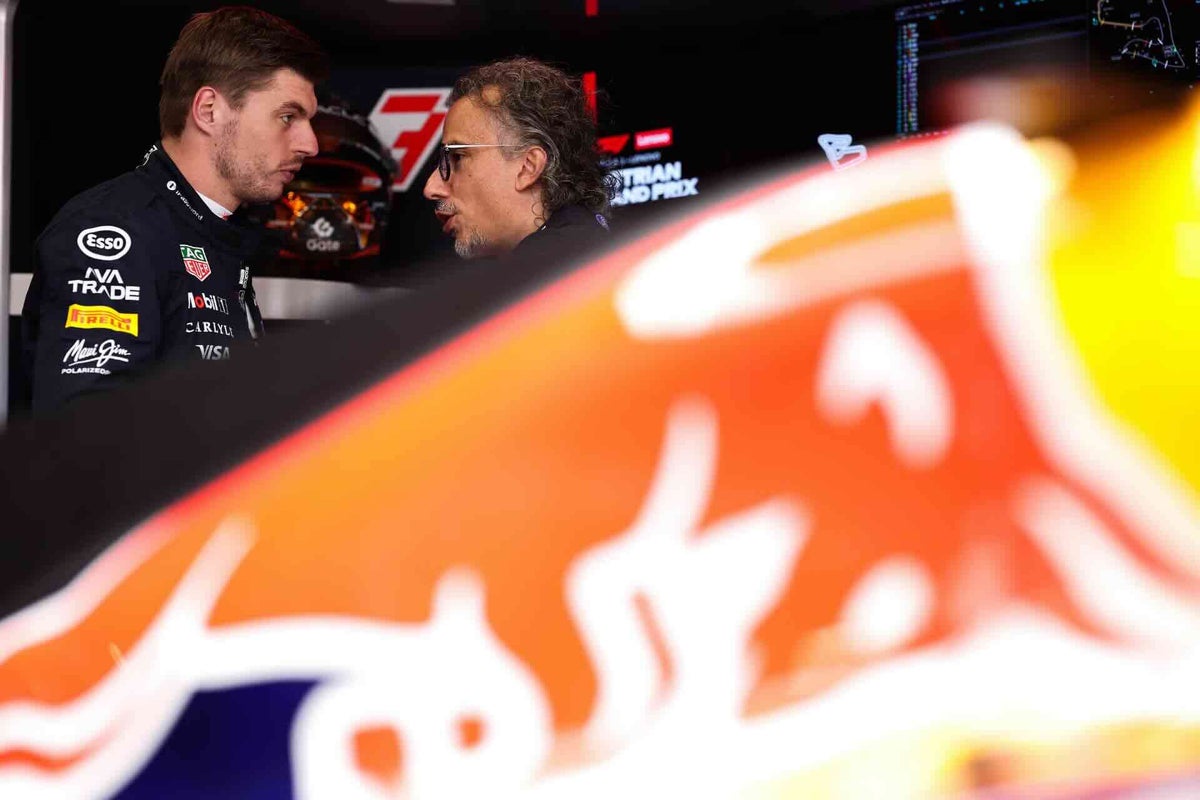
Anyway, there is plenty more to consider about Red Bull right now, one year into its time being led by an “engineer with a heart,” Laurent Mekies. Especially as senior staff continue to leave under him, and Red Bull’s version of the Ferrari-pioneered flipped rear wing concept keeps causing star driver Max Verstappen to crash.
And it’s fair to say Verstappen is particularly unhappy about that.
One way in which Red Bull both has and hasn’t changed since Horner’s exit concerns the pantomime villain character he and, by extension, his team played when it came to F1’s ever-present paddock politics.
Mekies certainly gets involved in the politics less frequently, but it’s worth remembering how he kept undermining McLaren’s statements about Gianpiero Lambiase switching sides for 2028. And that Red Bull and McLaren somehow got in a spat about tape late in the 2025 campaign.
Elsewhere, there has been notably less focus on how Red Bull’s junior drivers are performing, with Horner gone and his old sparring partner, Helmut Marko, also leaving the team at the end of 2025.
Red Bull’s Isack Hadjar shone at Silverstone, and there are no questions over the call Mekies and co. made to promote the Frenchman and drop Yuki Tsunoda at the end of last year.
Liam Lawson and Arvid Lindblad are thriving at Racing Bulls, while Nikola Tsolov is also on a three-race winning streak in Formula 2, where he leads the drivers’ standings.
It will be interesting to see what Red Bull does if Tsolov does win the F2 title in 2026, as that would surely place Lawson’s F1 future under threat, again. Or, it takes the Pierre Gasly approach and sends Tsolov to another championship for one last year of motorsport finishing school, instead of fast-tracking him to F1.
But back to Mekies.
The change of car-design regulations from 2025 means Mekies is dealing with a completely different set of technical problems compared to Horner just over a year ago.
One element of the new rules — the Additional Development and Upgrade Opportunities — is a particular headache for Mekies’ reign, as the FIA has ruled (but not openly declared) that Red Bull has F1’s best internal combustion engine component of the five new engines being used across the grid in 2026.
That’s good and bad for Mekies.
It’s good that Red Bull’s new Powertrains division, working in conjunction with Ford, can make some potent power technology.
It’s bad that it’s the battery energy deployment side that has a deficit to Mercedes and seemingly cannot catch up, as the ADUO factor is only activated based on measurements of ICE performance.
Mekies has already voiced his concerns that this could trap Red Bull in a cycle of never being able to upgrade its engine.
But, more awkwardly for Mekies, is how car handling issues that became so familiar to Verstappen from mid-2024 onward are happening again, just when the four-time world champion’s future is, again, in the spotlight.
It wouldn’t shock me if Red Bull goes back to its old rear wing design at Spa next week, given the fast and fearsome nature of that track. But that would be applying a bandaid to a more serious wound.
Mekies has been open about how Red Bull concentrating resources on Verstappen’s unlikely (but still brilliant) late-2025 title tilt meant it took an “unavoidable” hit to its 2026 car development. (As an aside, it was interesting to hear McLaren team principal Andrea Stella say something similar at Silverstone last Saturday …)
But perhaps Mekies should reflect on the 2025 recovery, in which he has already shown Verstappen he can oversee a huge upswing in performance and deliver race-winning chances for the Dutchman. It just seems that Year 2 of replacing Horner may need to go the same way, or better, to keep Verstappen on board for 2027.
Now, over to Madeline to look back at Silverstone and ahead to Spa.
Inside the Paddock with Madeline Coleman: Drivers fear Spa will repeat energy issues
Ahead of the British GP last week, many drivers aired concerns about how the cars would feel on the high-speed track, given its layout would quickly drain their engine battery energy, and the impact it would have on racing as a result.
The expectation among some drivers, including Ollie Bearman and Oscar Piastri, is that there will be a similar story at Spa next week, given the Belgian track also features many fast corners and straights. Piastri went as far as saying Spa and Italy’s Monza after the summer break will “be sad.”
“It’s tough, because some of the moves genuinely are still very good, but some of them really aren’t,” Piastri said. “When you’re racing people, especially on the first few laps, there’s such a massive element of luck now.”
The McLaren driver went on to give an example from the Silverstone sprint race, where he used his Boost button and caught Mercedes’ George Russell “in a straight but too close to a corner,” forcing Piastri to brake. But he’d only pressed the Boost button as early as he did to keep Charles Leclerc behind him — and when the Ferrari driver did not, it ended up being a wasted usage for Piastri.
“It’s just a massive game of flipping a coin, basically, on what the deployment around you is like and sometimes it works for you, sometimes it doesn’t,” Piastri said. “This is a very extreme example of that.”
But not every driver sees the new style of racing as a problem.
Audi’s Gabriel Bortoleto didn’t mince words when asked how he found racing the new cars at Silverstone and whether the famed track lost any of its magic in the new era: “I think we should turn the page.”
“We are still driving quick through Copse. It’s 175 mph, so I’m still lifting to do that corner,” Bortoleto said.
“We cannot spend three years talking about the same problem every time. The cars are still fun to drive. It’s different, we need to adapt to that, and it’s life.”
Back to you, Alex.
WEC: Endurance racing back in the spotlight
A month removed from Toyota winning one of the closest ever 24 Hours of Le Mans, by just 11 seconds over BMW, the WEC is back in action. (I won’t go too much into why it isn’t the closest, but basically officials used to measure Le Mans by distance, not time, along with the drivers running to their cars ahead of the start.)
This weekend’s WEC race is taking place in São Paulo, Brazil, on the same Interlagos track that hosts F1 every year.
Cadillac won the WEC race a year ago to make up for its disappointing Le Mans result. And, in 2026, this is no different — after Cadillac led 184 laps at Le Mans and lost another pole to a penalty, it headed to Brazil searching for a pick-me-up.
Luke explained just how Cadillac’s many motorsport programs — including an IndyCar engine supply from parent company General Motors via its Chevrolet brand — means they can all learn from each other.
Plus, Eric Warren, General Motors’ vice president of global motorsports competition, outlined how the company is aiming for a motorsport Triple Crown.
While this is primarily a driver’s accolade, one organization can lay claim to it: McLaren. As I got into here, it’s returning to Le Mans in 2027 to try and claim another. It’s MCL-HY (pictured above) has hit the track for private testing and is being run by James Barclay, who did a solid job of running the Jaguar squad in Formula E.
Ahead of Le Mans last month, triple (and only) W Series champion and former Indy NXT driver Jamie Chadwick completed a history-making test. In driving the Genesis Magma Racing GMR-001, Chadwick became the first female driver to test a Hypercar at Le Mans.
As Chadwick told Madeline, she’s hoping to forge a long-term career in endurance racing.
Outside the Points
👩💻 Luke and Madeline answered reader questions after the British GP — with a fair bit of interest in the safety car ending we also covered in depth in Tuesday’s PT.
🏎 Ferrari got an early trial of the Madring circuit set to host the Spanish GP in September, with Charles Leclerc and Lewis Hamilton completing just over 60 miles each on special demonstration Pirelli tires.
🇪🇸 The Madring has come a long way in just a few weeks, since Luke visited after F1’s most recent race in Spain.
📫 Love Prime Tire? Check out The Athletic’s other newsletters.