
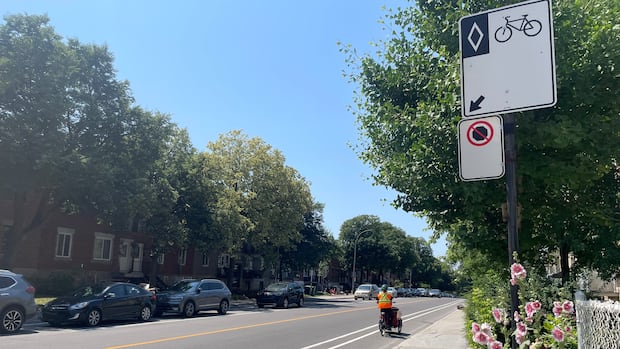
Concrete slabs and a car sit where 69-year-old Matilda Ramacieri’s garden once was in the backyard of her Park Ex home in Montreal’s Villeray–Saint-Michel–Parc-Extension borough.
The longtime resident dished out thousands of dollars to create a parking space behind her home after 250 spots — including her reserved disability space — were removed three years ago to revamp bike lanes on Querbes and Ball avenues.
At the time, then borough mayor Laurence Lavigne Lalonde said car users would have to adapt to the changes.
But after resident-led demonstrations against the parking reduction, rowdy council meetings and an ombudsman complaint, Ramacieri says she doesn’t see it as adapting so much as giving up.
“I had no choice,” she said. “I had a beautiful yard; three-quarters of it had to move for parking…. Most neighbours have given up also,” she said, adding that many are seniors like her.
In her annual report released last month, Montreal’s ombudsman, Nadine Mailloux, weighed in on the situation, after Ramacieri and another resident submitted complaints.
She found that the borough, from the outset, didn’t seriously consider the universal accessibility issues created by the project, despite the neighbourhood’s layout and high density.
Specifically, reserved disability parking spaces couldn’t be relocated “to a reasonable distance” and “no drop-off zone for people with disabilities can be created along a stretch of more than 1.3 km on the east side of the street,” noted Mailloux.
Of her three recommendations, the borough rejected the first two: to conduct a comprehensive mobility study to see how it can increase universal accessibility in the area, and adapt the space according to that study.
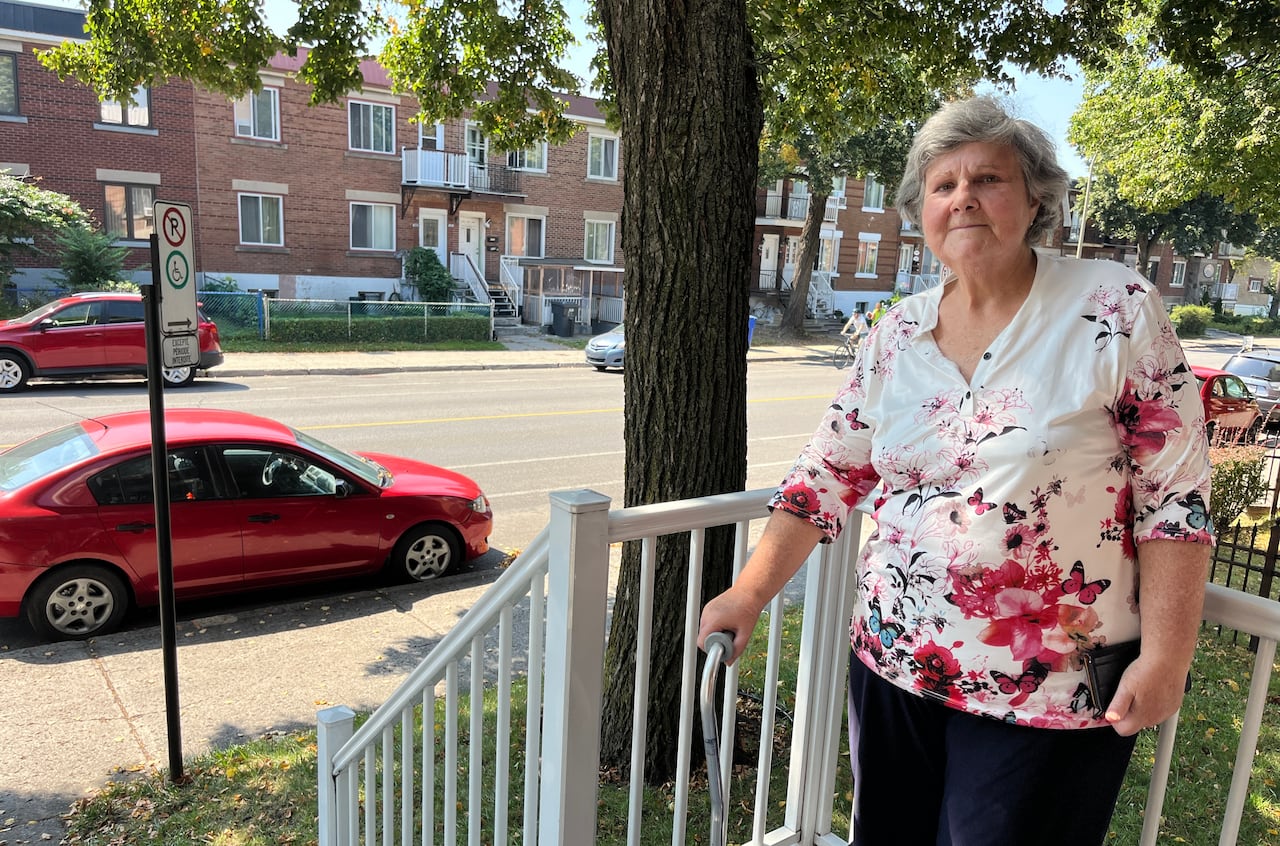 Matilda Ramacieri’s parking spot, reserved for people with disabilities, used to be right outside her home, as seen in this photo from September 2023. (Verity Stevenson/CBC)
According to the ombudsman, the borough judged that its internal analyses were sufficient.
Ramacieri says she asked the borough if it could install a pedestrian crossing between intersections — which are about 200 metres apart — so she could at least access the parking spots across the street, to no avail.
In a statement, a spokesperson for the Villeray–Saint-Michel–Parc-Extension borough said the new bike lanes meet safety and comfort standards for cyclists. It adds that it relocated disability parking spots as close as possible to the homes of people with limited mobility, and made them bigger based on feedback from residents.
Isolation, tensions, logistical headaches
Ramacieri has undergone several surgeries, including ones targeting her hip, shoulder and knee. That made it difficult for her to access her disability parking space, which was moved around the corner from her home.
“I don’t go out anymore now, that’s what my life is now,” she said, adding that her custom parking spot in the backyard is an imperfect solution.
Her friends, who are around her age and are certainly not biking over, are also more hesitant to visit, she says.
Ramacieri is not alone in feeling more isolated. A few doors down, members of the Perez family share similar experiences. They say they’ve noticed more tension between neighbours over available parking spots, and given Park Ex is the densest neighbourhood in Montreal, figuring out who gets priority on any given street is complicated.
Emily Perez, a mother of two young kids, says simple errands like grocery runs have turned into logistical puzzles.
“Oftentimes we’re having to park three, four streets over, bring the kids home, have my mom watch them, and then go back to the car and bring the groceries,” she said.
Down the road, a man visiting his parents in their 90s said that they lost a house cleaner to the headaches caused by the parking situation.
Not a car vs. bike issue
Emanuel Perez makes clear that he takes issue not with the bike paths themselves but rather with the way the borough went about redeveloping them.
Vélo-Québec’s CEO Jean-François Rheault says the changes to the bike paths addressed important safety concerns, on top of making the areas in and around Park Ex more accessible to those without a car.
“It’s a territory where 56 per cent of the households do not own a car,” he said. “It’s never about making life difficult for people with a car, but how do we put mobility options for people that do not own a car?”
Though the ombudsman’s recommendations aren’t binding, Ramacieri says she’s happy they exist.
The borough did say it would adopt the third recommendation, which is to improve its citizen participation process moving forward. Overall, the steps it took in this case, including an information session held in 2023, were deemed insufficient by ombudsman Mailloux — something Rheault disagrees with.
“I feel that sometimes we think that consultation can be a consensus, which is not the case,” he said.
Ramacieri, for her part, is not feeling optimistic about the borough’s promised changes given her experience with them over the last three years.
“You call them, they’re not going to do anything, you get angry. At my age, I cannot get angry anymore …. It’s not worth it,” she said.