
Atlanta —
Meliesha Johnson saw the Instagram message first.
The single mom, a teacher who lives north of Atlanta, monitors her 15-year-old daughter’s social media accounts. She had always wondered how other girls her daughter’s age ended up at various invite-only soccer camps around the country, and there it was: An invitation.
Upstairs, in an unabashedly pink room, Makenna was on the phone with her friends. Her freshman year of high school was winding down and all around were the signs of this liminal time in life: Stuffed animals on the bed, skincare bottles arranged on a Hollywood-inspired vanity. She can’t yet drive herself anywhere and is therefore in a constant state of negotiating where and when she can walk around unsupervised. But she has a phone for navigating the shifting landscape of friendships and social media to show her a highlight reel of everyone she could be.
The DM was from an elite soccer training organization that touts Christian Pulisic as a client on the professional side. Makenna had been invited to a camp that’s part of their “pathways” program. The camp was in Denver.
“I just immediately knew that I wanted to do it, because, like, I had never really gotten a personal invite,” Makenna told CNN Sports.
The only problem was that her mom had recently booked a cruise for the two of them to take that summer. It had been a tough year for Makenna – transitioning to high school often is, and then there was the soccer of it all.
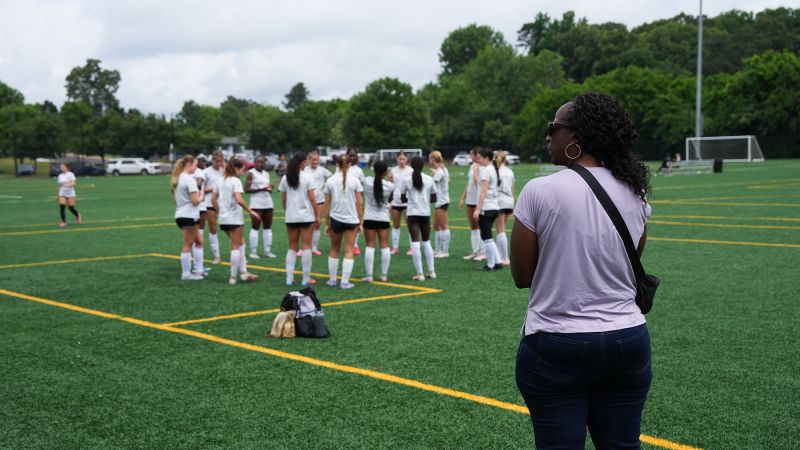
When Makenna was just 5 years old, a director of a soccer academy saw her playing on a rec team and recruited her to an under-eight team, meaning she was playing with and against girls who were several years older. At eight, Makenna moved to a more competitive club. Now she plays for TopHat, a travel team ranked third in the state of Georgia and 22nd in the country. Two years ago, they won the national championship in their age group.
But in the past year, things have begun to shift. Two of Makenna’s teammates were selected for the US under-15 national team. She was not. Last year, they fell short at nationals after Makenna allowed a critical goal on defense. It seemed like every time she opened social media, she was reminded of all the opportunities she wasn’t a part of or wasn’t able to partake in.
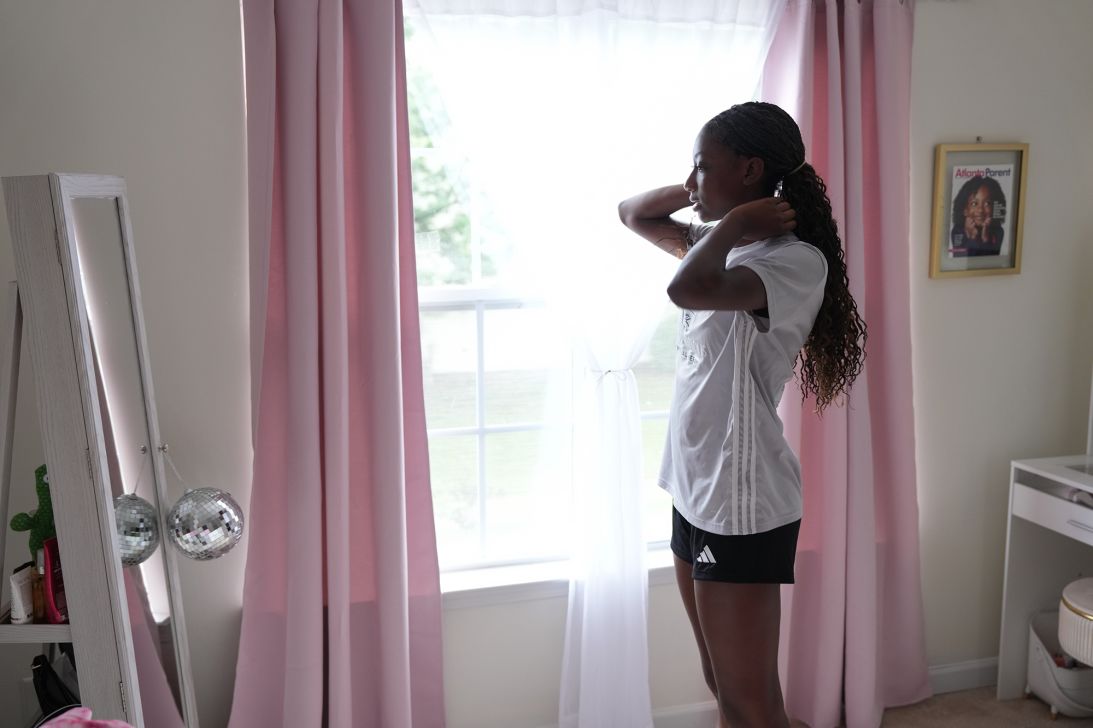
“It just hurts sometimes because I feel like I’m not putting in enough,” Makenna told CNN Sports in an interview. “Or it leads me to believe I’m not doing enough when I’m really trying to give it my all. Or it makes me question my ability and wonder if, like, I’m actually as good as I think I am.”
Meliesha thought her daughter could use a break from a soccer-centric life. Makenna was excited for the cruise, she had used TikTok to find other teens who were going to be onboard and had begun sharing plans for packing lists. And then she saw the Denver invite and asked her mom if they could go.
“I feel like she looks at my face to see if it’s OK, sometimes, to get excited about it. Or if I’m going to say we can’t afford it,” Meliesha said.
They couldn’t really afford it.
Meliesha said that if she had known about the Denver opportunity, she wouldn’t have booked the cruise. But she felt like the invite was a sign: Don’t step away from soccer, the good stuff is just around the corner. So she told Makenna they’d made it work.
In Denver, Makenna got nervous. She was worried about the effects of the altitude. But mainly she was worried about whether she would fit in. At the first team meeting without parents present, she started to get a little starstruck. She was sharing a pitch with the top ranked girls in the country – girls with huge social media followings and famous parents. None of this seemed new or notable to them.
Makenna imagined their comfort giving them advantage, and then it did.
She spent the first part of training nearly hyperventilating and struggling to keep up. In the car afterwards, her mom asked her, “Do you want the good part first, or do you want me to cuss you out?”
“And she was like, ‘I want you to cuss me out,’” Meliesha remembered.
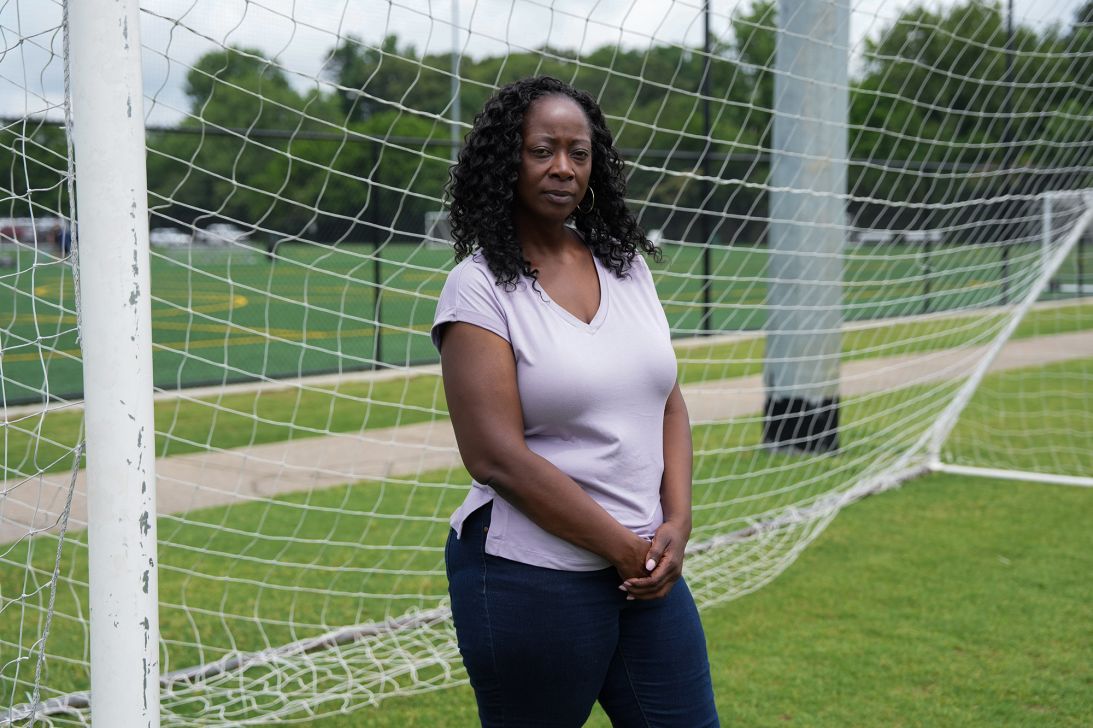
“I was just like, ‘We do not have money like these other people,’” Meliesha said. “‘It affects us financially more than other people. We came too far. The stakes are much more for us. You cannot blow this opportunity.’”
She balanced that with the good stuff: How talented she is, how she was sure the coaches could see it through the anxiety.
And then she told her daughter the one thing she hoped she could will into existence, by overextending the family financially in service of the promise soccer holds to make her daughter soar.
“‘You belong here,’” Meliesha told Makenna. “That’s something we struggle with.”
The pep talk worked. Makenna excelled over the remainder of the camp. As she walked off the pitch for the final time, another mother knew her name. “You’re Makenna, right? You did so good,” the other mom said. Makenna exchanged phone numbers and social handles with the girls who had initially intimated her. She felt seen and confident and, shortly thereafter, the same coach invited her to a camp in Louisville where they would play against an actual, grownup NWSL team.

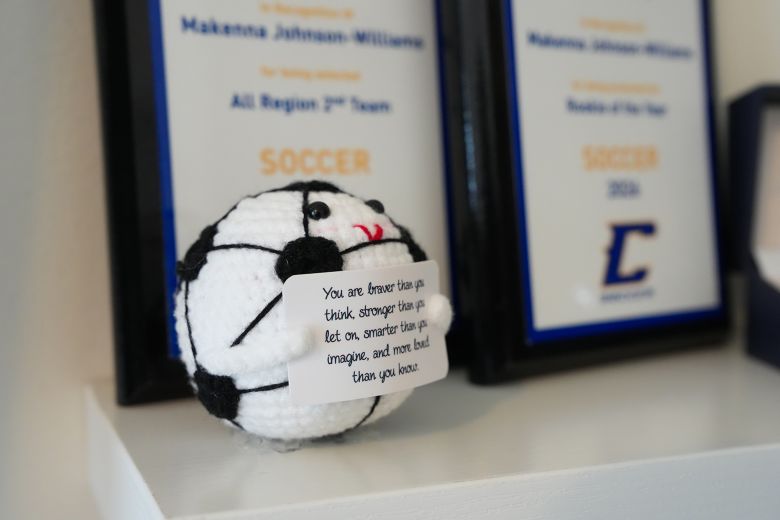

Back home in Georgia, in a living room decorated with signage that promises “Difficult roads often lead to beautiful destinations,” Meliesha considers the question of Louisville, and whether they can afford to go.
“I don’t think so,” Meliesha says.
They have to save their money. There will be so many expenses to consider in the coming year. Next summer, after her sophomore year, is when college coaches can approach Makenna about recruitment. Between now and then, she will want to go to college ID camps and showcases in addition to the tournament travel necessitated by TopHat’s schedule. There’s pressure to pursue private training or costly out-of-pocket physical therapy to shore up weaknesses and keep up with the competition.
“So, probably not,” Meliesha concludes about Louisville
Next to her, curled up on the same big squishy couch, Makenna began to quietly cry.
Makenna loves soccer. She’s been told her whole life she is talented. Over the next year, she’ll find out if that talent will open doors to a future her family might not have been able to afford without soccer. But the way that youth soccer is structured in this country means constant pressure to spend more and more time and money chasing that dream.
And what they can’t know is whether the money they don’t spend would have made the difference.
Between 2019 and 2024, the amount of money families spent on youth sports rose 46% according to the Aspen Institute’s Project Play. For soccer, specifically, the jump was from $537 to $910. But that’s an average across all levels.
“So, to some people, that cost is going to sound incredibly low,” said Jon Solomon, research director at the Aspen Institute Sports & Society Program.
Indeed. Parents across the country who spoke to CNN Sports reported spending thousands of dollars each year to support their kid’s competitive soccer careers. Access to any kind of recreation is a concern. Soccer’s “pay-to-play” model in America is routinely criticized for limiting the country’s success on the international stage at the professional level – a concern that has renewed attention in the wake of the disappointing ouster of the US Men’s National Team from the World Cup this month.

But it’s not just the barrier to entry parents complain about – club fees as high as $3,500 for nine-year-olds in affluent suburbs – it’s the cost to stay competitive. It’s the fear of missing out.
Youth sports across the board are pushing kids, and their families, to specialize sooner and decide how serious they are about the sport – committing to the less demanding participation pathway or the more ambitious performance pathway – earlier. And families find that if they do go the more competitive route, their reward for success is the requirement – perceived, anyway – to spend more.
In soccer, that paradigm is exacerbated by what experts and parents call the “alphabet soup” of competing leagues. There is no single standardized way to progress through the levels of youth soccer. Instead, various sanctioning bodies – MLS Next, ECNL, USL, NPL, Girls Academy – tout their particular program and parents, anxious to give their child an advantage, are eager to pay for the premiums.
“These sanctioning bodies are going to compete against each other. We have better coaches, we have better pathways, we have a better history of getting kids with scholarships,” says Skip Gilbert, the former CEO of US Youth Soccer.
But, even at thousands of dollars annually, “league costs are not what’s really impacting most parents. It’s the travel.” Gilbert says. And beyond that, “for a lot of parents, it’s not just the team. Many will get into private coaching and they’ll start to get into all of the add-ons that they feel they need.”
The reality is, if some families can afford those advantages, that becomes the standard for progressing.

“It is a competitive thing. And if your son or daughter wants to compete at a high level, you have to be willing and able to spend the same or more as some of those other kids. Because those other kids, they may all want it the same,” said one father in Tennessee who estimates he spends $15,000 a year on soccer for his two sons. “Money makes a difference in how good your kid is.”
His kids aren’t yet in high school and he requested CNN Sports not use his name out of a concern that talking about this publicly would cause their respective clubs to treat his kids differently. That fear – that something they do will negatively impact their children – is what makes youth sport parents so susceptible to exploitative pricing structures and costly commitments.
“Everyone’s favorite athlete is their own child. It’s not LeBron James, it’s not Lionel Messi, it’s your own child. That runs really deeply and passionately, because you want them to succeed, you want them to do well, and so you will do anything for your child,” Solomon said.
“There are a lot of parents who I’ve spoken to who want to get off this arms race and don’t want to spend as much time and money and have it be as pressurized as it is, particularly at younger ages, but they look around and go, ‘Where else can I go? What are the other options?’”
Makenna receives a scholarship to cover some of the club fees associated with being on a top travel team. Early on at TopHat, Meliesha resisted asking for financial assistance until another mother encouraged her to do so. And in talking to CNN Sports, she was hesitant to publicize that support.
She wants Makenna to use soccer like a ladder to climb up the socioeconomic hierarchy. But she understands that she can’t protect her daughter from feeling a little out of place among teens who have never been to Walmart and take their parents’ credit cards to the mall.
Meliesha estimates that even with assistance from the team and all her so-called “angels” – like the old coach who would give her a heads up about which events were more important to be at or the other parents who let her carpool in their rental when they get there – that she spends between $10,000 and $12,000 a year on soccer expenses.
“Some people think we’re crazy. They don’t understand, why are you putting all this time in? They don’t understand, you can barely pay your bills, why are you paying for her to go to California?” Meliesha says.
Those people include her extended family. Sometimes Makenna and Meliesha don’t post pictures from events to avoid the judgement. What they don’t get is that soccer has already given Makenna so much – friendship, poise, work ethic, ambition.
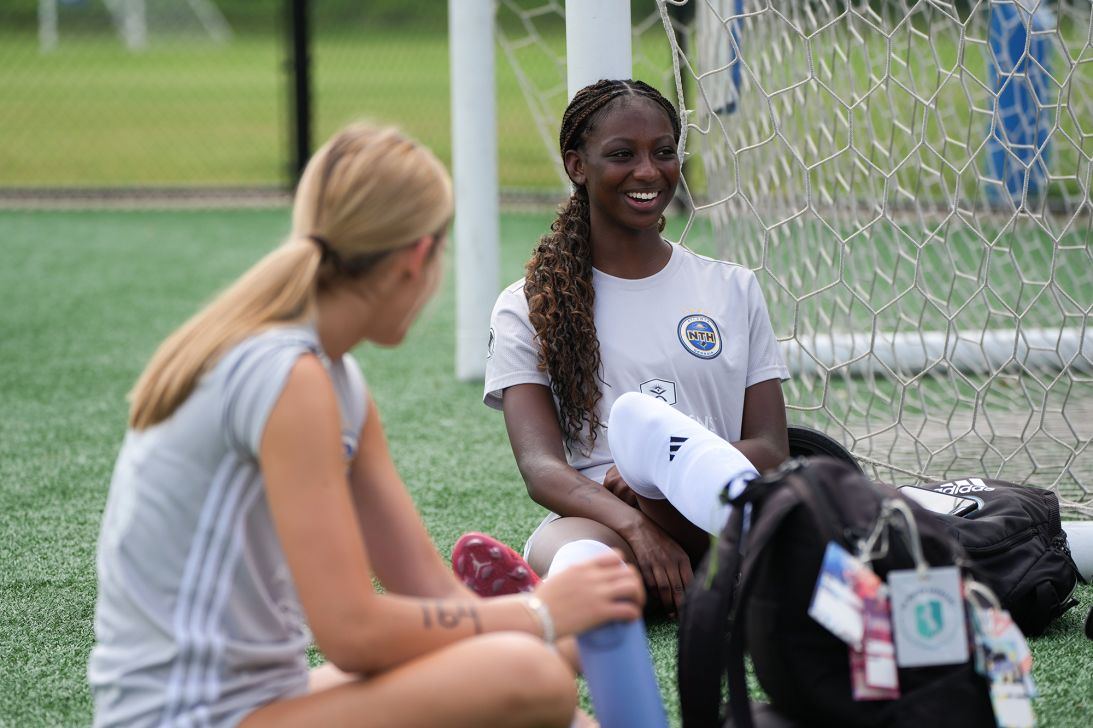
“She’s a great kid,” Meliesha says. “I think I have a lot to do with it, but I also think soccer does too.”
And they’re banking on it giving Makenna even more.
“It’s going to pay off, so that’s why I do it,” Meliesha says. “That’s why I’ll pay soccer before I pay a bill.”
Both her outgoing coach and her incoming coach believe Makenna is good enough for a Division I scholarship.
The changing landscape of college sports, especially the introduction of the transfer portal, has heightened the uncertainty around securing a spot on a top team. But the people who watch her play every week say Makenna is good enough to get something.
That is, if she gets noticed.
“If you want to be considered, to be seen by some of the best, you’ve got to put yourself in that environment. As a family, you sit there and have to decide, OK, is this a goal of mine? And as a parent, if it’s a goal of your kid, I feel that you’ve got to do what you’ve got to do to make your kid’s dream pretty much come true, right? I would say, you’ve got to at least put them in that environment,” says Jeffrey Golston, who coached Makenna at TopHat this past year. “You have to, that’s a non-negotiable.”

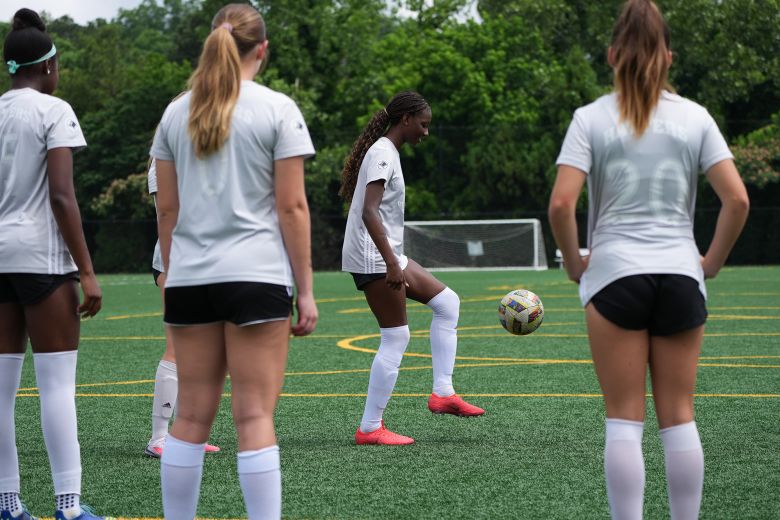
To parents who remember their amateur sports careers from decades ago, that may sound like an opportunist selling a bill of goods. And maybe it is. But it’s also the new standard.
“When I was playing, we were told to kind of go out and play on our own,” says Kyle Helton, Makenna’s new coach. “We were told to just get comfortable on the ball, whether it’s juggling, kicking the ball off the wall, so many different things that you can do on your own. Where, I think, now everything is shifted so the only way that you can get good training is to go and pay somebody a lot of money to do it.”
That’s the standard in America, anyway.
“When you look globally, there are going to be kids that are playing in the streets that are not prohibited from playing every day barefoot, playing futsal, playing street soccer, and they’re able to do that and be identified in ways that it’s kind of hard to be identified in the states if you’re not doing some of these events,” Helton says.
Meliesha went to Delaware State on a basketball scholarship. Her mom, a true matriarch who brought the family together before she passed away, had been a nurse.
“She didn’t have to worry for college,” Meliesha says.
Expecting a return on your youth sports investment in the form of a college scholarship is often derided as naive, delusional, or perhaps even indicative of an overbearing parent eager for their own glory. Periodically, posts on social media juxtaposing the percentage of parents who believe their child will get a scholarship or go pro with the number of actual spots available go viral with sanctimonious hate-shares.
It’s hard to be impartial about your own child. And optimistic parents are more likely to shell out for endless soccer expenses. The more skeptical youth sport families know that they’re often about to be upsold if someone compliments their kid’s ability. Financial planners will say that money spent on sports would be better off invested in a savings plan that can yield a more predictable return.
So, does it ever make sense to chase an athletic scholarship?

“The number of kids playing and the number of opportunities at the collegiate level don’t match, and there’s far more academic money than athletic money, and just because the school can offer the maximum in scholarships doesn’t mean it does,” said Sarah Dwyer-Shick, who has coached women’s soccer across all three NCAA divisions and at the youth level.
Recent rule changes at the college level have capped roster size, while expanding schools’ discretion to offer more scholarships to everyone on those rosters. They don’t have to, though, and there’s little incentive to do so in sports that aren’t moneymakers – except at the most elite level.
“Those top-tier Division I programs? Absolutely, they’re getting a full ride,” Dwyer-Shick said.
And unless you’re actively pursuing one of those coveted spots – which means participating in the costly gauntlet of elite youth sports – you’re never going to get one.
“Then you throw into it that the kid really loves it and is decent at it, at least decent,” Dwyer-Shick said. “Suddenly, well, my kid really loves it, and if this is a way to help them get what they want, I’m going to spend the money.”
Makenna dreams of going to Stanford University or Clemson University or University of Georgia. She believes, perhaps erroneously, if she can get a full ride to one of those schools, she’ll finally be able to just enjoy being an athlete without worrying about scholarships and showcases. It’ll be more like playing on her high school varsity team has been – which is less competitive than TopHat but feels more embedded in her community – plus campus parties and tailgating football games.
“She doesn’t quite understand it. It’s a different experience when you’re an athlete,” her mom says. “You’re gonna miss out on some of them football games, though. I told you that.”
“Nooo,” Makenna says, drawing out the O to play up the affected petulance.
But in this way, she is just like every other teenager – imagining a future where maturity means more freedom without acknowledging the additional responsibility.
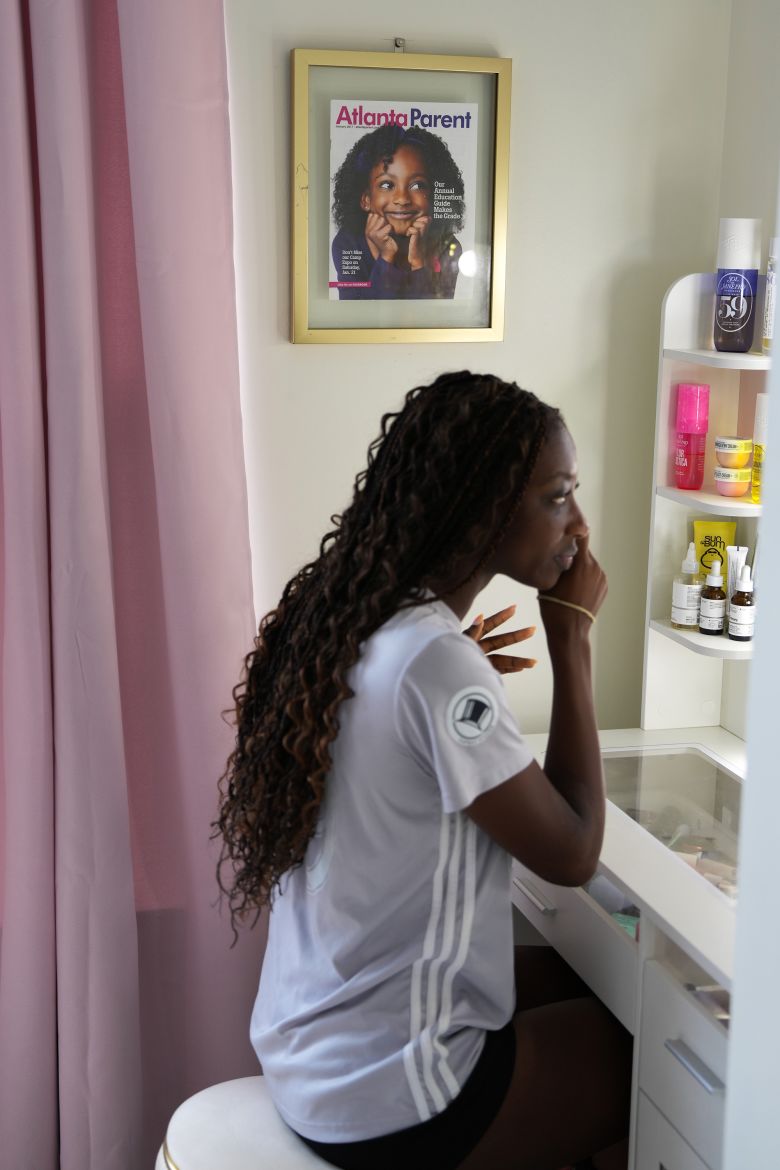

Meliesha began telling Makenna about the financial burden of soccer about two years ago. Things were getting more expensive, a gap growing between the opportunities Makenna was aware of and those they could afford to attend. The nature of their relationship – just the two of them – makes that kind of transparency easier. But also, now that the future is coming up quickly, Meliesha needs Makenna to consider the calculus when it comes to soccer.
“‘The schools that you see? I can’t afford them. And if you want to go there, you’ve got to do this,’” Meliesha says of the message she must impart to her daughter. “She’s not going to those schools without soccer.”
That’s why the trip to Denver was so stressful. Both of them understood that they couldn’t afford many more chances to turn talent and the cheapest plane tickets they could find into a good impression on the right people. They’ve come this far and Makenna still loves soccer so her mom lets her in on the truth: It’s up to her to seize every opportunity; she’ll have to do more with less.
Maybe that motivates Makenna, maybe it’s a lot to put on a kid.
“I know she does,” Meliesha says of whether her daughter might feel more pressure on the pitch than the girls who don’t need soccer quite so much. “She knows our house is different, she knows our car is different. It’s a little upsetting for me, because it’s tough. I feel like I’m fighting to make her feel like she isn’t different.”
“But it is obvious that the stakes are higher.”