
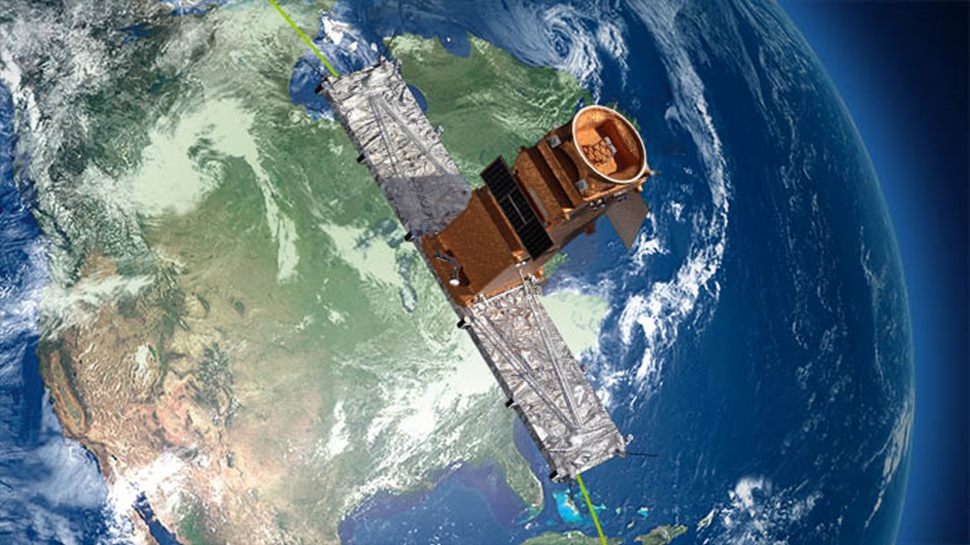
The federal government has awarded a $688-million contract to MDA Space Ltd. to build, test and launch a replenishment satellite for Canada’s RADARSAT Constellation Mission.
Industry Minister Mélanie Joly announced the contract June 30, saying the investment is intended to strengthen Canada’s sovereign satellite capacity and support national security.
The federal government says Canadian industry will be involved in design, manufacturing and integration work as part of the project.
Related Stories:
Satellite data supports Arctic monitoring
The RADARSAT Constellation Mission provides satellite data used by federal departments for a wide range of services, including tracking floods, observing Arctic sea ice, monitoring remote regions, supporting maritime safety and studying environmental change.
Ottawa says the data also supports Arctic surveillance and helps safeguard Canadian sovereignty in the North.
Joly said Canada is investing in modern surveillance systems as global security concerns grow.
“Through this investment, we are reinforcing Canada’s sovereign satellite capabilities and equipping industry and the Canadian Armed Forces with the intelligence they need to protect communities, inform decisions, and keep Canada secure,” Joly said in a release.
Launch targeted for early 2030s
The federal government says the replenishment satellite will help maintain uninterrupted access to RADARSAT data, which is used by more than 10 federal departments.
The satellite will use MDA Space’s next-generation synthetic aperture radar technology, along with experience from Canada’s previous RADARSAT program.
Ottawa says that approach is expected to reduce risk, speed up delivery and ensure compatibility with existing RADARSAT infrastructure.
The replenishment satellite is targeted for launch in the early 2030s.
Jobs and defence strategy
The contract is part of a $1.012-billion, 15-year federal investment announced in 2023 to support current and future satellite Earth observation needs.
Ottawa says the project will create and maintain up to 100 high-paying jobs over the life of the project.
The government says the investment also supports Canada’s Defence Industrial Strategy and contributes to NATO spending targets.