

Listen to this article
Estimated 4 minutes
The audio version of this article is generated by AI-based technology. Mispronunciations can occur. We are working with our partners to continually review and improve the results.
Bonnie Love’s top speed is no walk in the park.
The Whitehorse retiree has fast walked through competitions across Canada, Italy, Sweden, Australia and New Zealand. In her prime, Love says she could regularly walk 20 kilometres in under two and a half hours.
Admittedly slower with age, she is now a longtime member of an informal fast-walking group in Whitehorse. Established more than two decades ago, the group would often win the walking category in the Klondike Road Relay between Whitehorse and Skagway, Alaska.
“Yeah, we can go pretty fast,” Love said, laughing.
Rain or shine, the group of up to 10 retirees meet up on Wednesdays and Saturdays for fast walks as long as 15 kilometres. While some members recognize the health gains of their speedy outings, they say they also benefit from the community aspect.
“Our friends here that we meet with weekly are our best group of friends,” Love said. “It’s really about the time we spend together, getting that bit of break from the rest of our week, and just enjoying ourselves.”
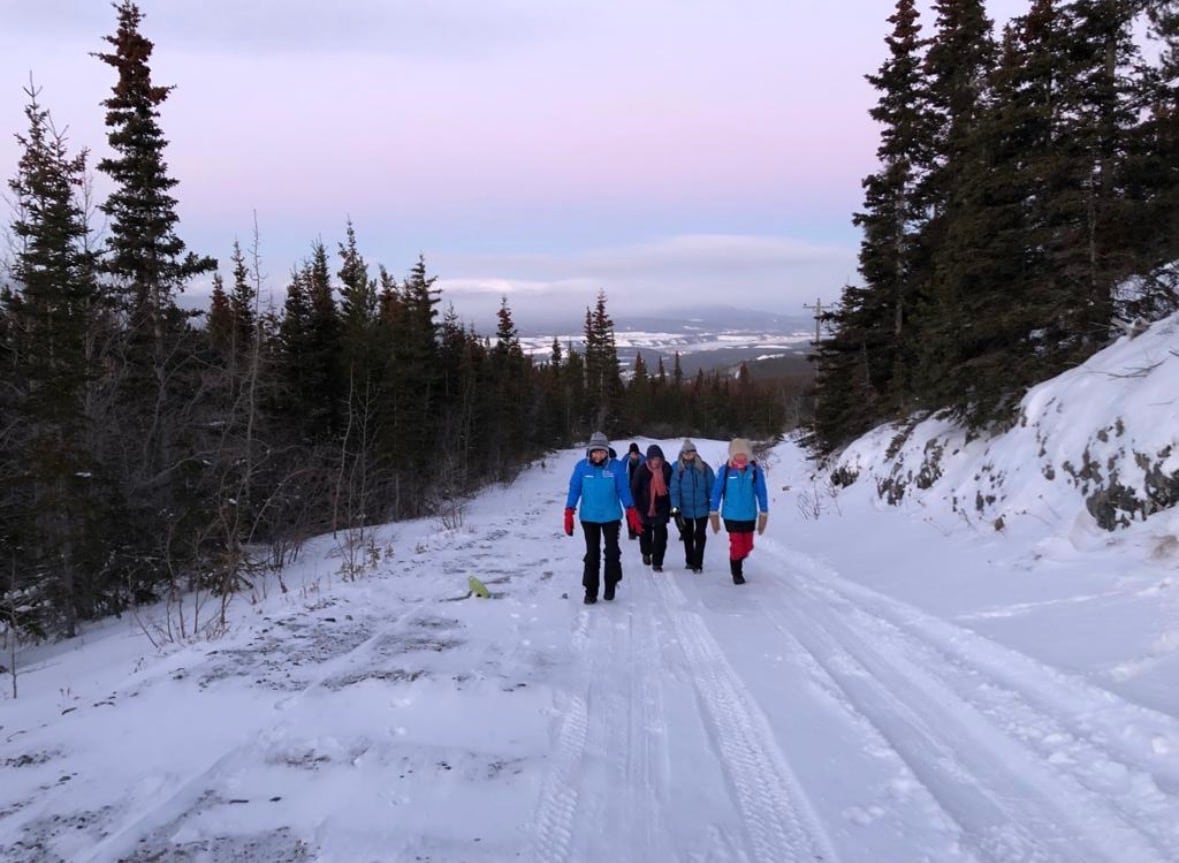 An informal fast-walking group treks through the snow in Whitehorse. (Submitted by Bonnie Love)A sign of strong mobility
A recent study in the Neurology Journal coined the term “super movers” for people older than 80 with walking speeds at least 1.5 standard deviations above average for their age. The study analyzed data from a timed walking test of nearly 4,000 adults older than 80, with the fastest 8.9 per cent classified as super movers.
According to the New York-based researchers, super movers showed slower decline in memory and overall cognition.
“Fast walking is a signal or a marker of strong mobility in older people,” said Dawn Mackey, a professor in the department of biomedical physiology and kinesiology at Simon Fraser University.
Mobility helps older adults maintain their freedom and quality of life, Mackey continued. Limited mobility and walking slower than 0.6 metres per second could make it challenging for older adults to sustain their independence.
“A mobility limitation can make it really difficult to do what you need to do in a day,” Mackey said, citing examples like getting in and out of bed, preparing meals and getting dressed.
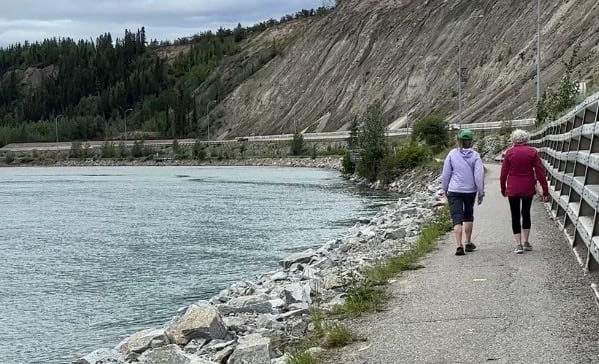 Becky Striegler (left) and Bonnie Love (right) trek during their weekly fast walk along the Millennium Trail in Whitehorse. (Alexa MacKie/CBC News)The holistic experience
On a windy Wednesday afternoon, Becky Striegler joined Love for a fast walk along the Millennium Trail. The group typically completes the five-kilometre loop in under an hour.
Both retirees are 67-years-old, 13 years shy of qualifying as super movers. However, Love says she worries about bone health and cognitive decline, the latter of which runs in her family.
“Walking is a good place to put both those things to action and move along with it,” she said.
Striegler said she often thinks about the benefits of fast walking as she ages. However, she also enjoys the group’s outings for reasons beyond the workout.
“It’s also just about the holistic experience,” she said. “It’s being out in nature, being with friends … It’s smelling the fresh air and being by the river. And then the exercise, of course.”
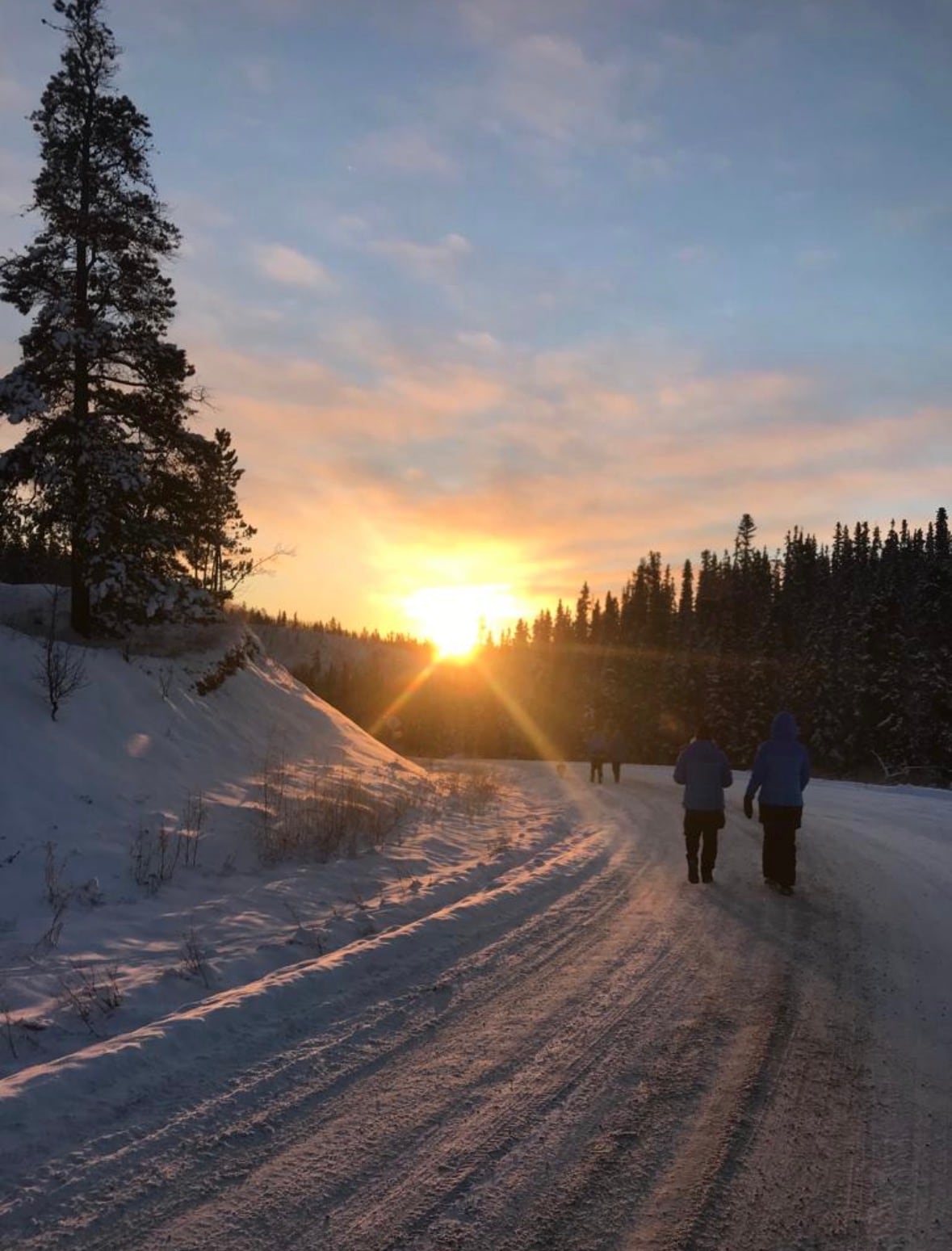 An informal fast-walking group in Whitehorse treks along a snowy path at sunset. (Submitted by Bonnie Love)Forming social bonds
Walking has “low barriers to entry” and does not require specialized equipment, Mackey with Simon Fraser University said. This makes it an accessible activity for many.
“It brings people together and they form social bonds,” she said. “Having someone or a group to be accountable to helps to make it easier when you may not feel like getting out for a walk on your own.”
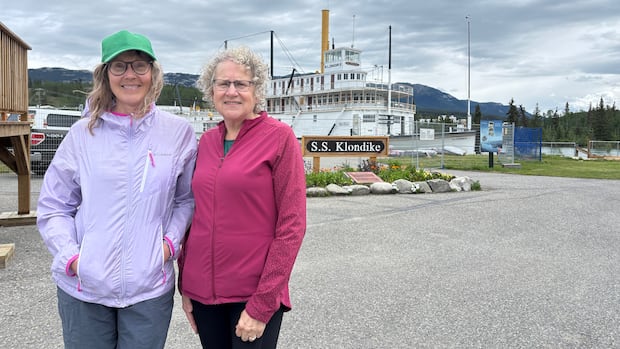
The Whitehorse group developed a reputation for speed, according to Love, but anyone is welcome to tag along. They meet at the SS Klondike on Wednesdays at 12 p.m., and the Yukon Visitor Information Centre on Saturdays at 10 a.m.
“Some people are a little intimidated to come out and I’d like to break away from that,” Love said. “People are welcome to come and do what they can or turn around if it gets too tiring.
“And then next week, they will probably walk farther.”