
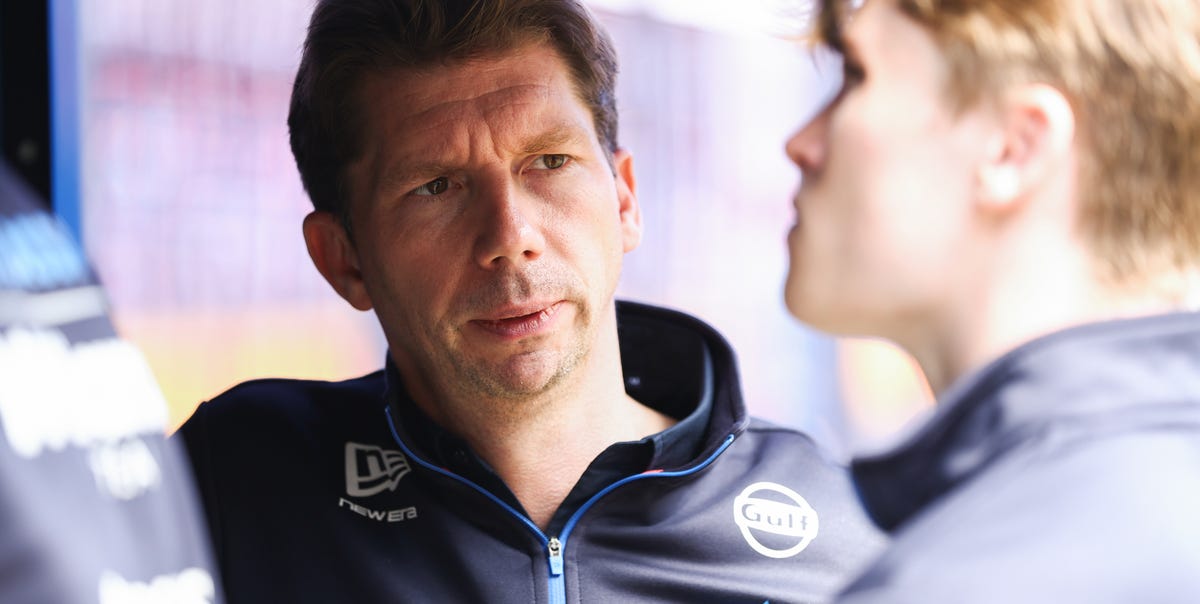
When James Vowles took over as Williams F1 boss in January 2023, the once-mighty organization was at a low point, having just finished 10th in the world championship for the fourth time in five years. The former Mercedes man faced a huge task; turning things around was like redirecting an oil tanker, and was always going to take time.
Vowles began putting the pieces in place, changing the old ways and hiring key people. He pulled off a huge coup when, in the summer of 2024, he persuaded Carlos Sainz to join, having convinced the Spaniard of his vision. Both men looked like geniuses when the team finished fifth in the world championship last year, with Sainz overachieving relative to his own expectations by picking up a couple of podiums.
In 2026, however, things have taken a step back. The FW48 arrived late and missed the first test in Barcelona, and it was significantly overweight. Even that didn’t explain the poor performance over the first few races, and while the car did start to creep up the midfield and occasionally allow Sainz and teammate Alex Albon to score points in races of high attrition, it still has some fundamental issues.
To that end, Williams has — much like Aston Martin — opted for a major rethink, with a huge package of changes big enough for Vowles to describe it as a “B-spec” version coming for the Azerbaijan Grand Prix in September. Assuming the calendar does not lose the two currently planned Middle East events, that leaves Sainz and Albon with eight races in which to get some better results and move up the team up from its current P8 in the championship standings. A mid-season reset on that scale is a huge task, as well as an admission that something went awry with the original concept of the car.
Vowles sees it as a challenge. “In terms of our direction of travel, we have to, as a business, prove to ourselves that we can do the engineering to the right level of quality and build a car to the right level of quality in-season,” he says. “Effectively the equivalence of flying the plane and rebuilding it at the same time. But we have to prove to ourselves that we have changed from where we were three years ago, and [we] have that capability. And we’re on target to do it at the moment.”
Clive Mason//Getty Images
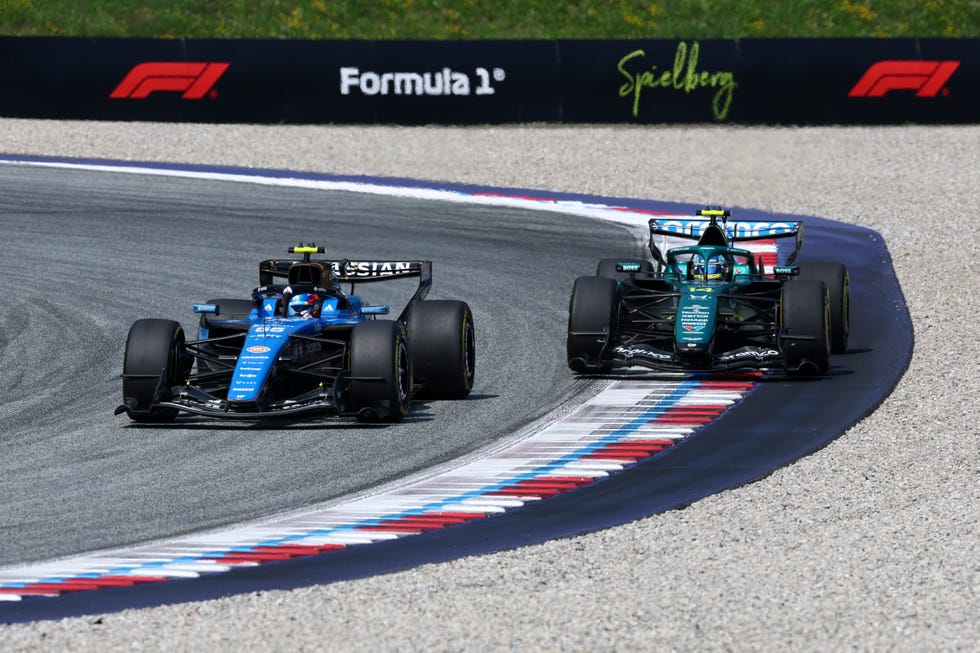
He sees similarities with the situation at Aston Martin, where Adrian Newey is also trying to turn things around and build a substantially new car as the season progresses. “We didn’t have process systems, the underlying structure behind it. I know what efficient organizations look like, and even today we are struggling to do a lot of what the others can do at this point. And that is on us to fix,” Vowles says. “It’s just, you have to do at the same time as moving forward in the field.”
The Williams situation shows just how difficult Formula 1 is, especially for the midfield teams that are trying to get on terms with the four established front-runners of Mercedes, Ferrari, Red Bull, and McLaren. Williams had made progress over the past couple of years, but changing fundamental ways of working takes time. And doing that while creating a car for this year’s new set of rules was a huge test.
It’s no coincidence that the leading four teams have opened up a gap to the rest in 2026 after the field had gradually closed up over the life of the previous regulations. Heading into this season, the top runners had everything in place to focus on making as competitive a new car as possible, while the likes of Williams were also still having to focus on the improving process of creating such a car. Vowles knew that 2026 would be a tough test, but it’s proved to be harder than expected. “I thought we’d be able to produce a car that was slightly overweight, but roughly speaking, on time as a result of it,” he says. “So not by any means benchmark—I don’t think we’ve ever said we’re benchmark on this target for this year at all. It’s just, it should be working. That’s not what we achieved, though; we underachieved relative to that.”
Peter Powell//Getty Images
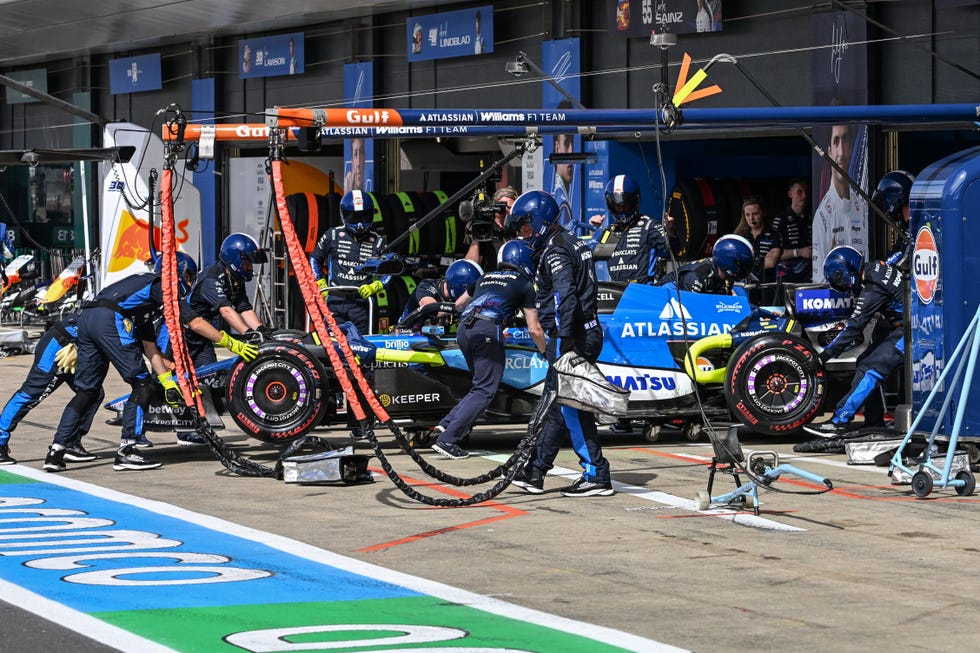
Williams’s biggest problem during the winter was falling behind schedule. Creating a new F1 car is a huge undertaking, and it relies on thousands of new parts going through design and manufacturing and arriving at the right time to be fitted together to make a complete entity. Doing that while you are also developing the processes themselves that make it all happen is like three-dimensional chess—so when something isn’t quite right, the schedule falls apart.
“The first time that data got flagged up was far too late in the process to make corrections,” says Vowles. “And the strange thing — it does sound strange, and it took me a while to get my head around — is when you fall three weeks behind, and that’s what we fell behind, that’s unrecoverable. There’s no way of coming back. Because everything else is trucked up in the system, ready to go on those dates. And so, when one bit falls away, all of it falls away as the result of it. And the catch-up to that is enormous. And the only way to get through it is to compromise, which is what you see now.”
Vowles see the positives too, however, and views the difficult 2026 season as an important part of the team’s collective education as it tries to close the gap to the big guys – including his former employer. “Understanding what capacity you can push through your operations facility is data that’s built up [at] Mercedes [for] at least ten years,” he says. “Probably from 2010 all the way to 2026. That data we built up in one year, which was this winter. Is it just around processing systems? No, it’s ways of working and expertise that go with it at the same time.”
He views the glass as half-full, however. “But never let a good crisis go to waste. The amount of changes we have made have put us into a very good situation in the future, and I don’t think we would have made them if we had partially succeeded this winter,” he says. “So, as painful as it’s been, I believe we had to go through it as well.”