
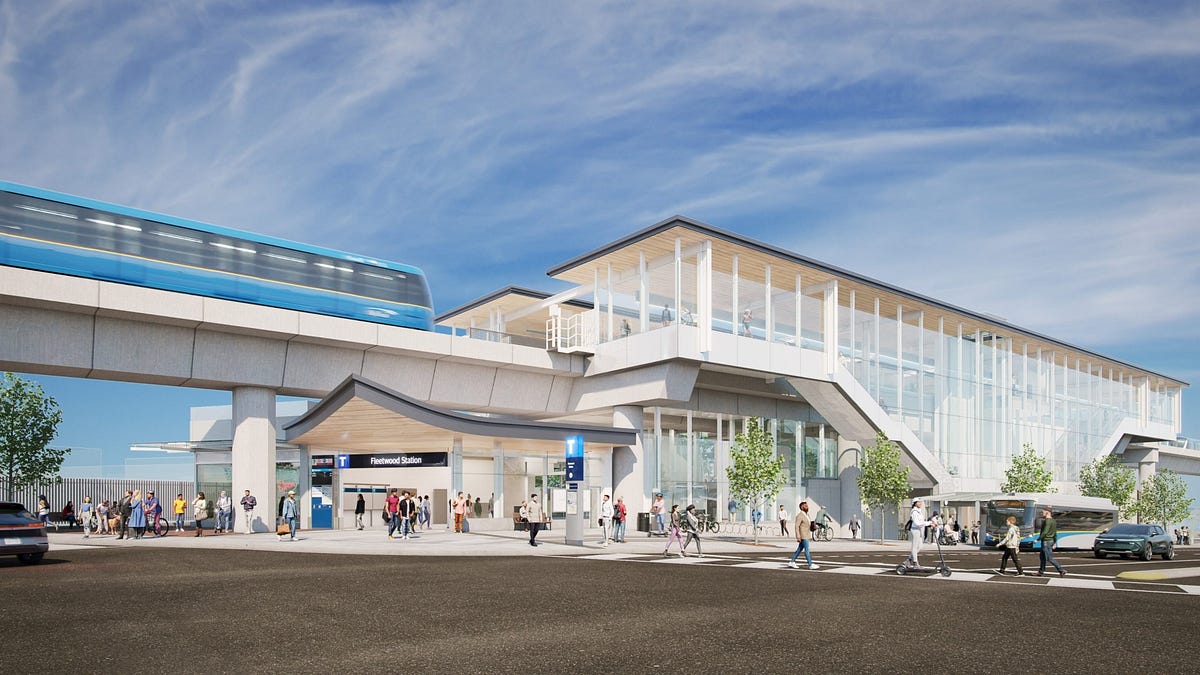
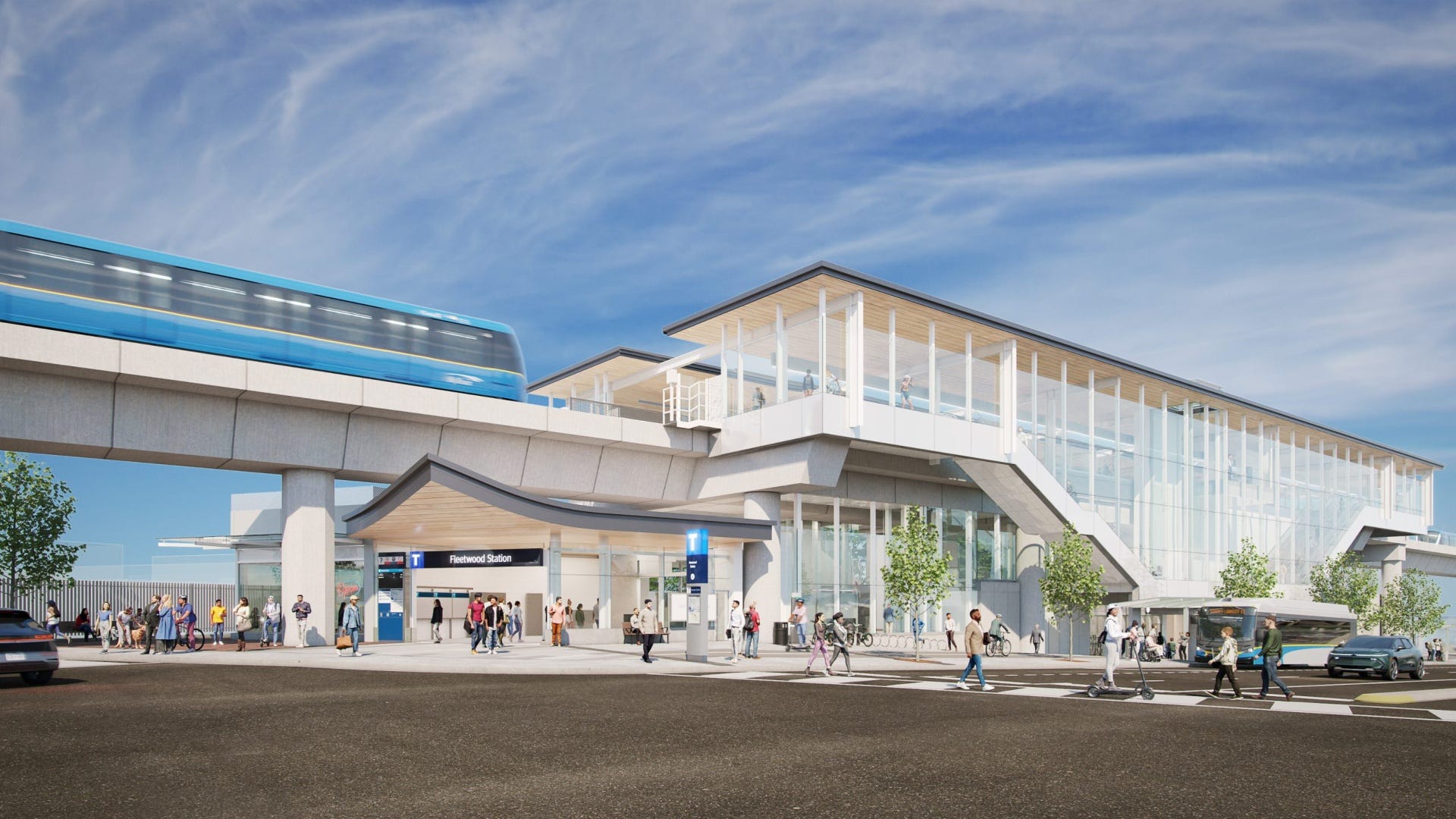
 The future Fleetwood Station. (TransLink, Government of British Columbia)
Inclusionary zoning, sometimes also referred to as inclusionary housing, is the practice of requiring a certain amount of housing in a development to be provided as affordable housing, and it’s a topic at the core of the housing affordability crisis.
Should governments use inclusionary zoning to compel developers to deliver affordable housing? Is inclusionary zoning actually counter-productive because they are onerous and make it harder for developers to move projects forward?
Arguments can be made for both sides and it’s a tough thing to balance, particularly in the current market realities where very little new construction is moving forward. For various reasons, lack of new construction is cause for concern for governments too, hence why many have made policy tweaks focused on improving viabiilty.
In Spring 2024, the Province introduced Bill 16, which included a new mechanism for local governments to establish inclusionary zoning bylaws and Surrey is now taking advantage of that mechanism and is set to introduce inclusionary zoning requirements to select transit-oriented areas (TOAs) — with an eye on not impacting development too much.
“The proposed inclusionary housing framework has been designed to align with Provincial legislation and guidance, while reflecting Surrey’s local market conditions and policy objectives,” said City staff in a report. “The framework establishes clear and predictable requirements regarding the amount of affordable housing designated within a private market development (i.e. set-aside rate), affordability level, and delivery of inclusionary affordable housing in applicable developments.”
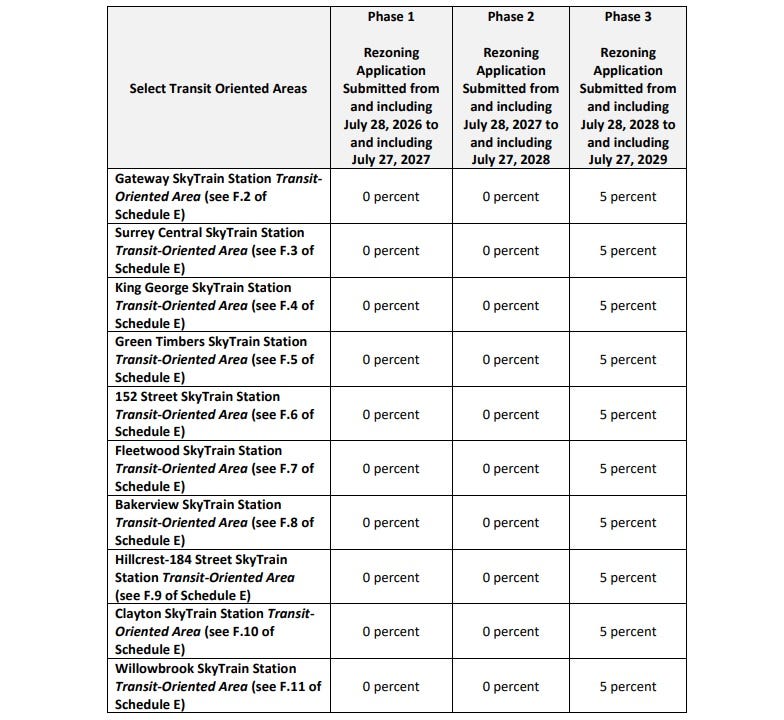
The inclusionary housing framework will be geographically limited to high-density TOAs. The corporate report does not actually list the TOAs, only alluding to TOAs in City Centre, Fleetwood, and Clayton, but a draft of the amended bylaw lists all of the SkyTrain TOAs in Surrey besides Scott Road Station. Seven of the eight new stations currently being constructed as part of the Surrey Langley SkyTrain are included, with the last — Langley City Centre Station — not included because it is in Langley.
The affordability level will be set at 10% below CMHC median rents for Surrey, which the City says provides “a moderate level of affordability that remains financially supportable within private development projects.”
The amount of inclusionary housing to be required will be set at 5% of the gross residential floor area, but the requirement will not come into effect until two years from now, on July 28, 2028 — based on the day the rezoning application is submitted. The City notes that the requirement will be “no more than 5%” and would be subject to “further financial feasibility analysis” as well as Council approval prior to implementation.
 (City of Surrey)
“This phased approach ensures that inclusionary zoning requirements are introduced in a manner that is transparent to the development community, responsive to market conditions and consistent with Provincial expectations that such requirements should not deter development,” said City staff.
“The framework also establishes the expectation that units must be operated by a non-profit housing operator or government entity, such as BC Housing,” said staff. “Under the proposed model, developers may retain ownership of the affordable units, thereby remaining responsible for their maintenance, while the non-profit operator would be engaged to manage tenancies. This includes responsibilities such as marketing units, verifying tenant eligibility (including income testing), collecting rents, and monitoring and reporting on compliance with affordability requirements.”
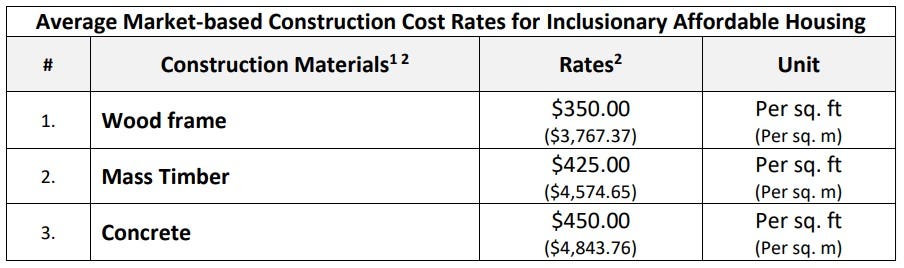
Notably, the policy change includes a cash-in-lieu option, which the City says will “provide flexibility and support the efficient delivery of affordable housing.” The City says “The cash-in-lieu rate is consistent with the cost-of-construction rate for affordable housing established for density bonus” and a chart outlining those rates notes that the rate is $350 per sq. ft for woodframe construction, $425 for mass timber construction, and $450 for concrete construction.
Staff said that they are also “exploring an additional alternative compliance option which would allow developers to construct the units on a different site.”
 (City of Surrey)
This is just a “framework,” however, and further details are to be outlined in the future. For example, inclusionary zoning requirements under the City of Vancouver’s Broadway Plan are specific to specific sub-areas. With the City of Surrey choosing to base their policy on TOAs, it’s conceivable that the requirements could vary depending on whether a site is a Tier 1, 2 or 3 TOA.
“The preliminary analysis indicates that inclusionary zoning may be viable in the highest density apartment developments within TOAs in City Centre and Fleetwood, and in low density apartment developments within Clayton,” said the City. “Despite this, at this time, current economic conditions present challenges for introducing new development requirements. As a result, careful calibration of the inclusionary requirements will be necessary, and further feasibility analysis will need to be undertaken as market conditions evolve.”
Last night, Surrey City Council approved the recommendations and will bring forth formal bylaw amendments for council readings at a future date.