
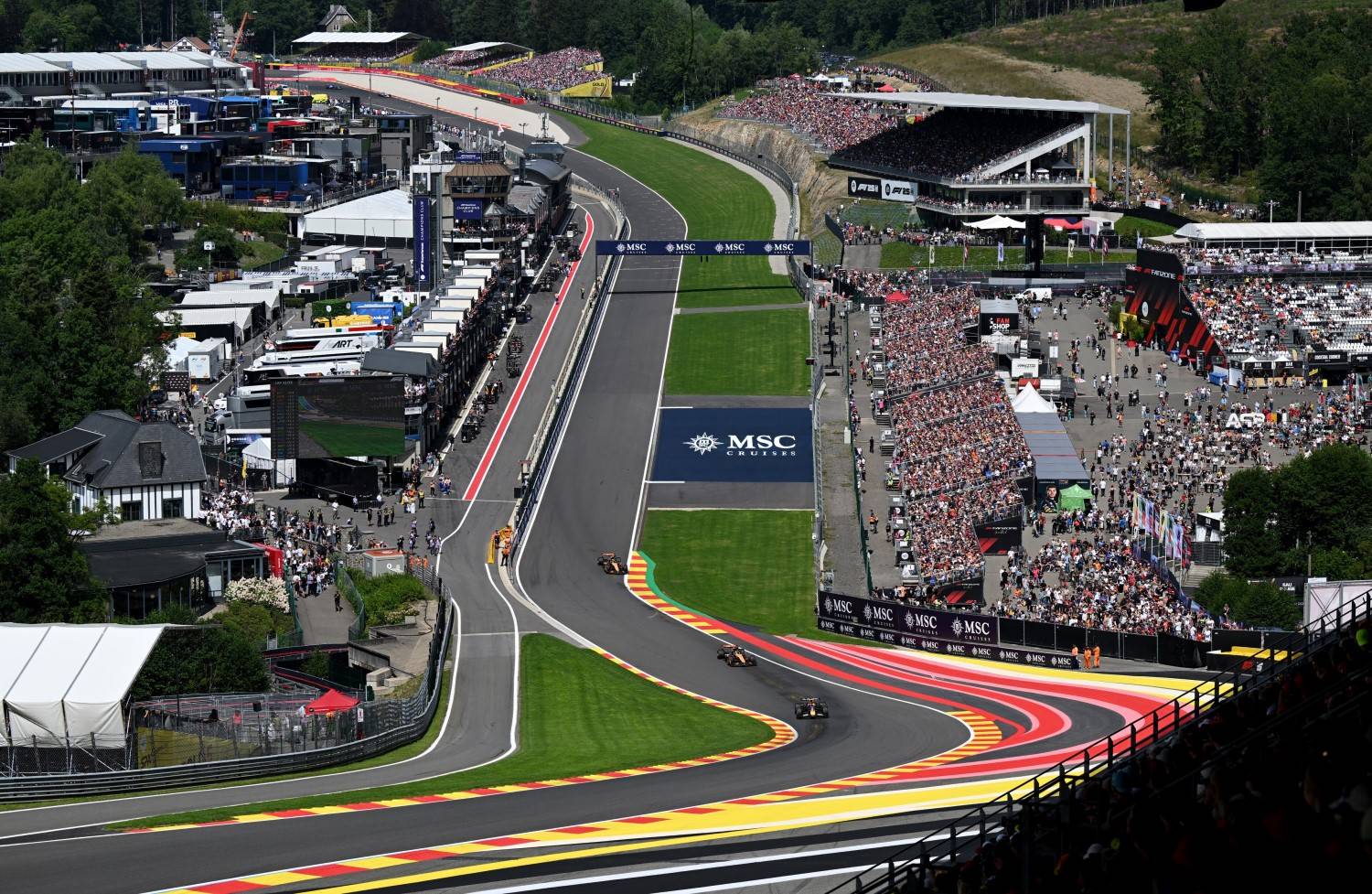
The 2026 Belgian Grand Prix returns to the legendary Circuit de Spa-Francorchamps for what promises to be one of the most fascinating races of the new regulations era. Round 10 of the season, the event comes at a critical juncture in a tight championship battle, with Kimi Antonelli leading George Russell by 25 points. McLaren’s Lando Norris and defending champion Oscar Piastri arrive in strong form, while Lewis Hamilton sits just one victory away from equalling Michael Schumacher’s record of six wins at the track — now wearing Ferrari red.
–by Mark Cipolloni–
Spa has always been special. In 2026, with an entirely new generation of power units and aerodynamic regulations in play, it becomes something even more: the ultimate test of the sport’s bold new direction.
History
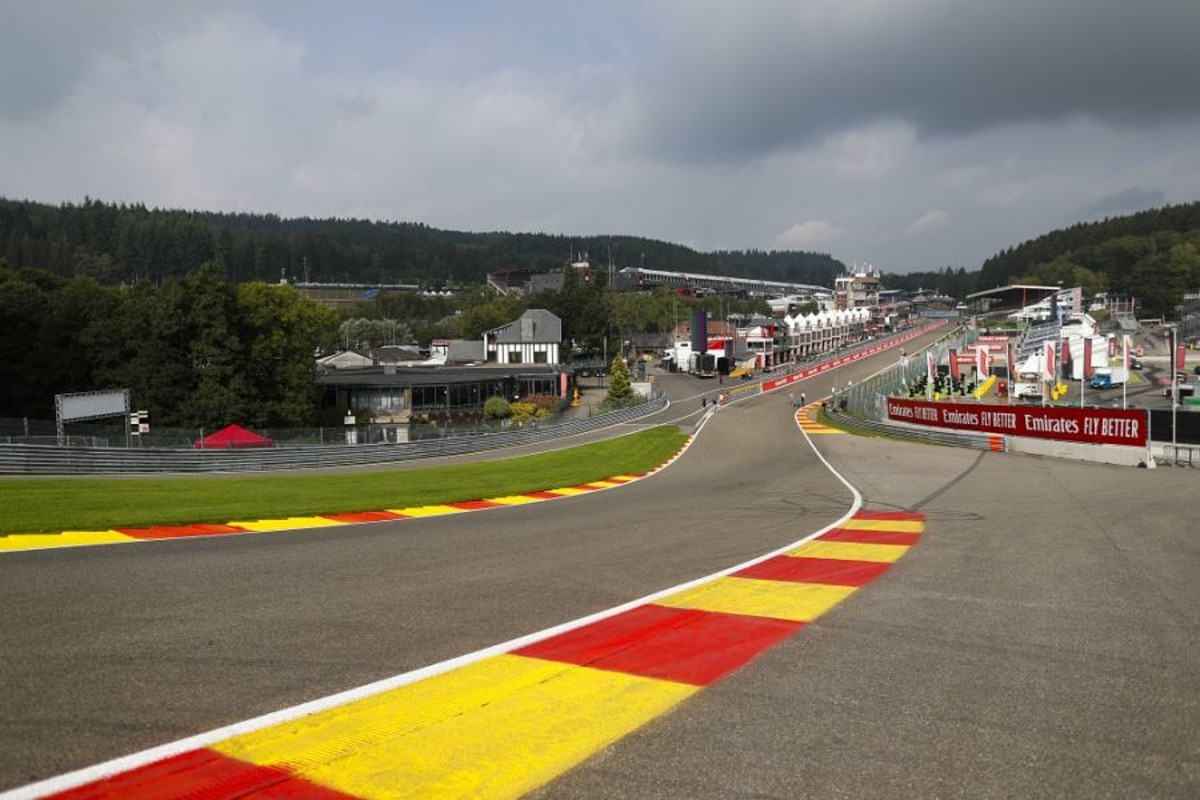
Spa-Francorchamps has been part of the Formula 1 calendar since the very first World Championship season in 1950. The original 14 km public road circuit was one of the most dangerous in motorsport history. After a tragic period that included the deaths of several drivers, the track was shortened and modernised. The current 7.004 km layout has been in use since 1983 and remains the longest circuit on the F1 calendar.
Iconic corners such as Eau Rouge/Raidillon, Pouhon, Blanchimont and the Bus Stop chicane have created some of the most memorable moments in F1 history. The track’s combination of high-speed corners, massive elevation changes (over 100 meters), and long straights makes it unique — and brutally demanding on both car and driver.
Weather
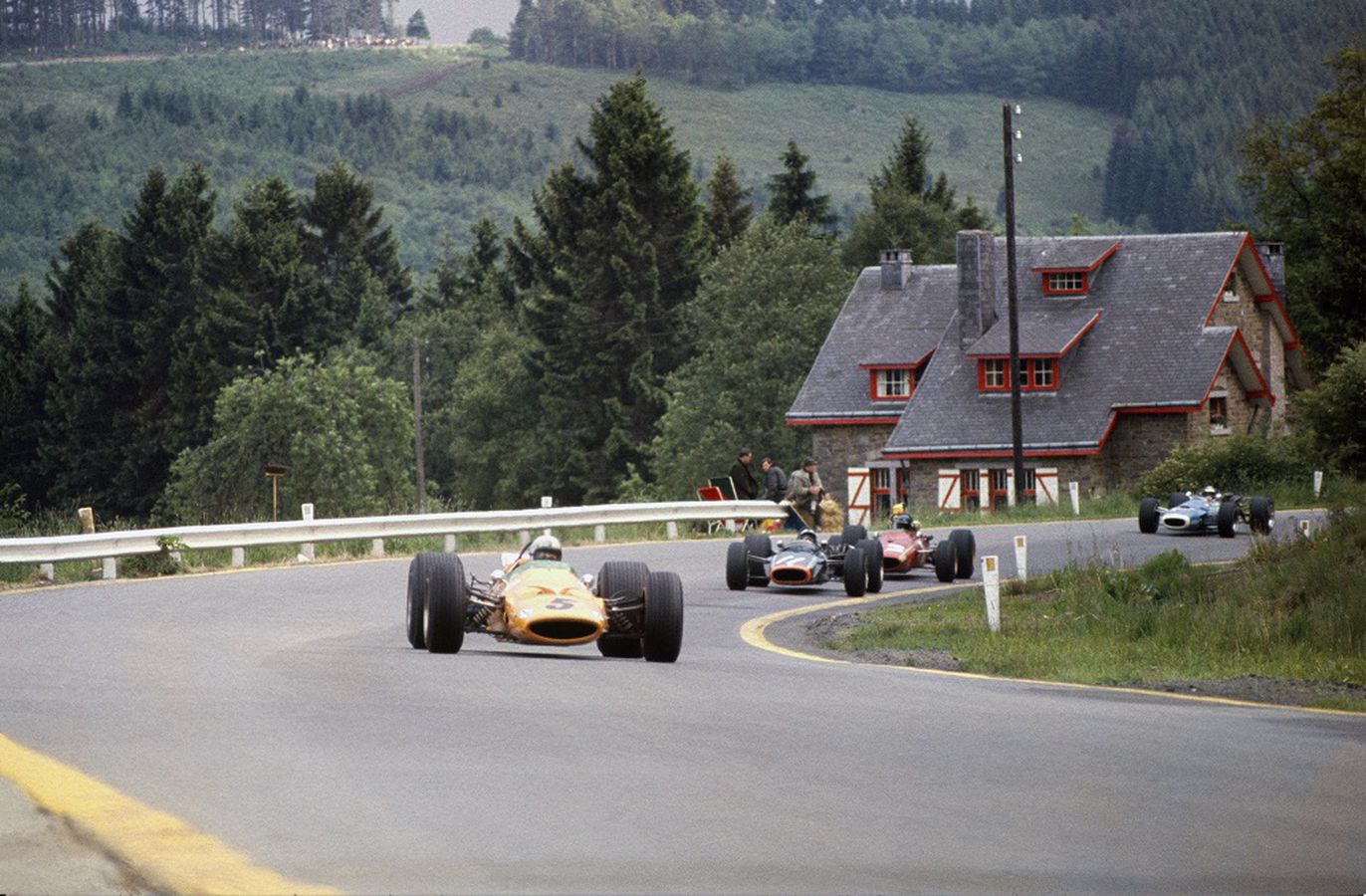
As always, Spa’s microclimate is notoriously unpredictable. Even in mid-July, localised showers can appear from nowhere while other parts of the track stay dry. Early forecasts suggest a mixed weekend with a chance of rain on Friday and Saturday, potentially drying out for Sunday — though conditions can change rapidly. Teams and drivers will need to be prepared for anything, from slick tyres to full wets.
Race Dynamics, Overtaking and Strategy
Spa has seen a Safety Car in almost every race in recent years, often due to incidents at high-speed corners or sudden weather changes. The new 2026 cars, with significantly reduced downforce and drag, should produce more exciting racing on the long straights and allow drivers to follow more closely through high-speed sections than in previous years.
Key overtaking opportunities remain after Turn 5 (Les Combes) and into the Bus Stop chicane. The long Kemmel Straight after Eau Rouge/Raidillon will be particularly interesting under the new power unit regulations, as drivers manage electrical deployment and energy recovery on the uphill and downhill sections. Without DRS, overtaking will depend more on power unit advantages, clean air performance, and precise energy management.
Spa is the second-easiest circuit of the year for overtaking, but battery management discipline will be crucial in wheel-to-wheel battle. This shifts the balance of priorities toward the race, making low-fuel pace more important than grid position.
The race is expected to be a clear one-stop strategy built around the hard tyre, with the main choice being which tyre to start on between medium or soft.
Spa also carries one of the highest safety car probabilities of the season, combined with frequently changeable weather. How quickly teams and drivers react to changing conditions will matter as much as the race plan they start with.
The New Regulations at Spa
This is the first full season of the 2026 power units, which deliver roughly 50% of their power from the electric MGU-K (now up to 350 kW) and 50% from the internal combustion engine. Spa’s combination of long straights, heavy braking zones, and significant elevation changes will push energy management to the limit.
Teams will have to balance powerful electric deployment on the straights with careful battery management through the twisty, high-load sections. The reduced aerodynamic downforce also means setups will be more compromised than ever — cars that are strong in the high-speed corners may struggle with traction out of slower turns, and vice versa. The removal of DRS places even greater emphasis on these power unit and aero characteristics to enable close racing and overtaking.
Teams expect to utilize the full energy pack window: full at Turn 1, depleted by Turn 5, then full again at the Turn 14 exit before emptying by Turn 18. This leaves Sector 2 significantly starved of energy, with superclipping likely on both low- and high-fuel runs.
Five Straight Line Mode zones have been added for 2026, all of which remain active in wet conditions. Zone 2 (Turns 4-5) has a delayed activation point, moved to the straight section.
Unlocking the Lap
– La Source (Turn 1): The tight hairpin remains a classic overtaking opportunity, especially after the long run from the pits or following a Safety Car.
– Eau Rouge / Raidillon: Still one of the most spectacular corners in motorsport. The new cars’ lower downforce will make the compression and crest even more critical for stability.
– Pouhon (Turns 10-11): A high-speed left-right flick taken flat-out. The new aero regulations will test how well cars maintain speed through this sequence.
– Blanchimont: Another flat-out left-hander where confidence and car balance are everything.
– Bus Stop Chicane: The final braking zone before the pit straight — prime overtaking territory.
Belgian Grand Prix: Facts & Figures
– This will be the 71st running of the Belgian Grand Prix as a World Championship event.
– 57th time it has been held at Spa-Francorchamps.
– At 4.3-mile, Spa-Francorchamps is the longest track on the F1 calendar. As a result, the race is run over the shortest number of laps of the year: 44.
-The run down to the first braking zone at Turn One (La Source) is one of the shortest of the season at just 150m. Only Azerbaijan (90m) and Las Vegas (111m) are shorter.
-The tow at Spa-Francorchamps is very powerful due to the long straights, particularly the section after Raidillon. On the first lap this is even more powerful, because drivers chasing can pick up a tow from multiple cars.
– No full-time Belgian driver on the current grid.
– Lewis Hamilton has five wins at Spa and will be hunting a sixth to match Schumacher’s record.
– Oscar Piastri won in 2025 and returns as defending champion.
– Max Verstappen has three victories at the circuit.
– The race is 44 laps long.
Fact File: Belgian Grand Prix
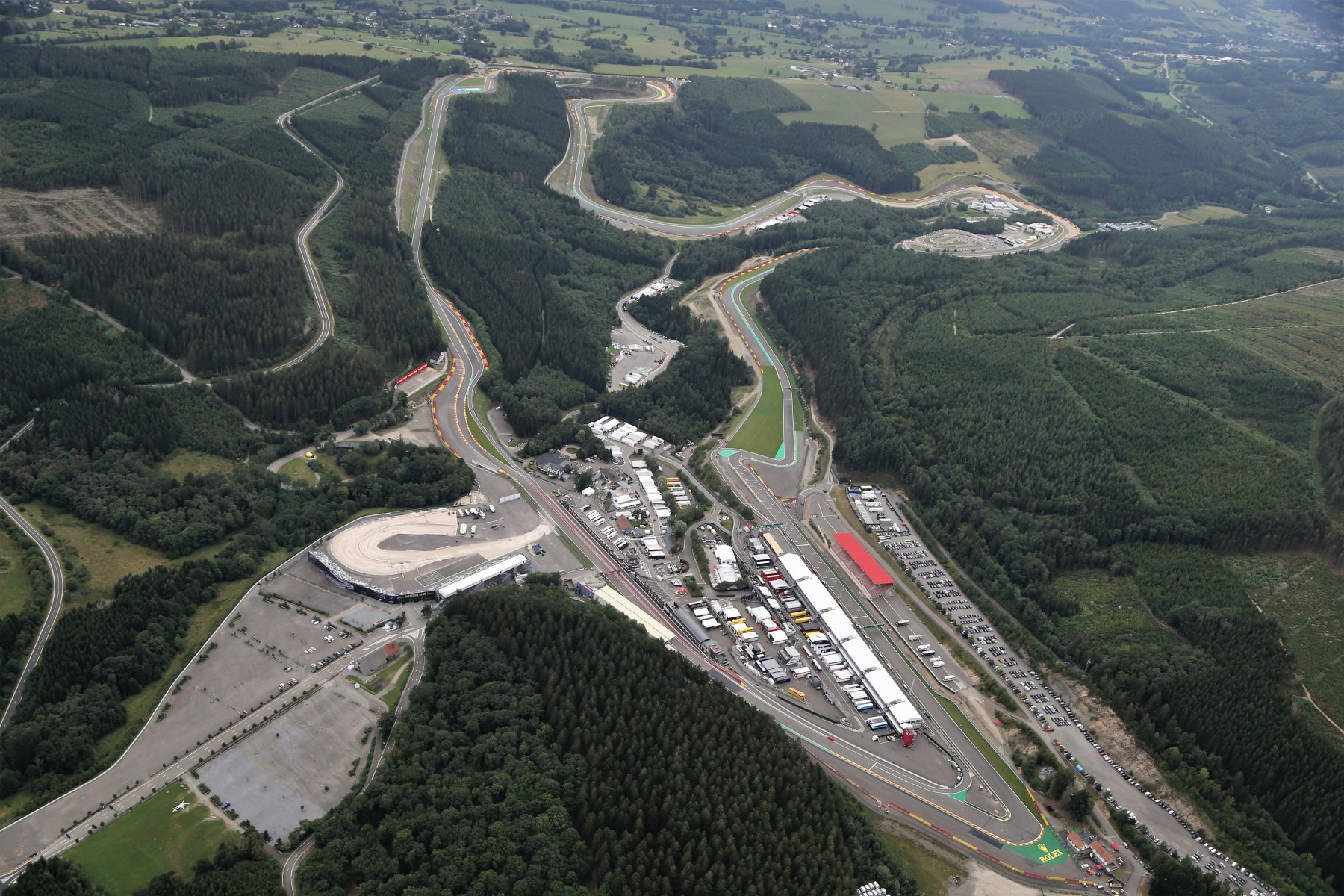
– Lap length: 7.004 km (longest on the calendar)
– Race distance: 308.052 km
– Full-throttle percentage: Around 75-80% (one of the highest)
– Elevation change: Over 100 meters
– Tire wear: High, especially on the right-hand side due to the track’s anti-clockwise layout and heavy lateral loads
– Fuel consumption: High due to the long straights and power-hungry new power units
– The track features a mix of resurfaced and older asphalt sections, creating varied grip levels
Pirelli Tires
Pirelli has selected a set of compounds suited to Spa’s high-speed, high-wear nature. Expect the hardest available options to feature prominently, with teams likely to favour a two-stop strategy in dry conditions, although one-stop runs remain possible if the weather stays dry and temperatures are moderate.
The new power units’ increased electrical deployment could influence tire management, as drivers may be able to use more aggressive throttle applications out of corners thanks to the extra electric torque.
What to Watch For
– How the new power units perform on Spa’s long straights and through the elevation changes — this could be the weekend that reveals which teams have best mastered the 2026 regulations.
– Hamilton’s charge for a record-equalling sixth win.
– Whether McLaren can maintain their strong form or if Mercedes (with Antonelli and Russell locked in a tight title fight) can pull clear.
– The ever-present threat of rain and how it interacts with the new cars’ characteristics.
Spa-Francorchamps remains one of the greatest challenges in Formula 1. In 2026, with revolutionary new cars and power units (and no DRS), it promises to be more revealing — and more spectacular — than ever.