
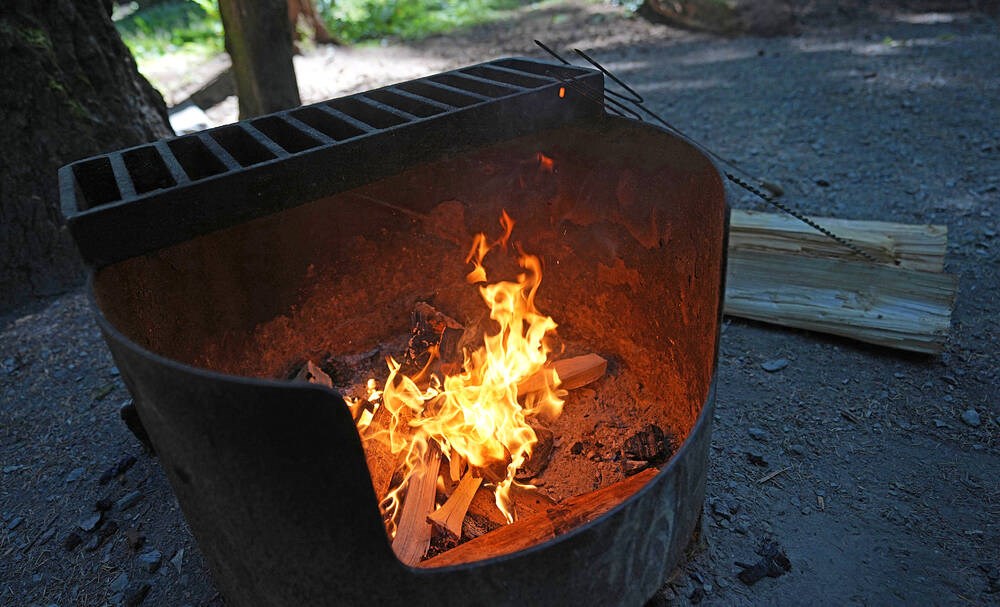
The ban area includes most of Vancouver Island and the Gulf Islands, and portions of the south coast.
A campfire ban will come into effect at noon on Thursday for most of the Coastal Fire Centre region, which includes Vancouver Island, the Gulf Islands and portions of the south coast.
The ban does not include the Campbell River Forest District or the North Island Central Coast Forest District.
A similar ban was issued briefly in May, but lifted after temperatures dropped and humidity increased.
A ban that began in late May on Category 2 and 3 fires, including backyard and industrial burning, fireworks and burn barrels, will continue.
The Coastal Fire Centre advised those having campfires in areas where it’s still allowed to avoid windy conditions, establish a fuel break around the fire and ensure the fire is fully extinguished before leaving it.
The fire centre also advised anyone planning a campfire to check if local prohibitions are in place.
Local governments can impose their own prohibitions based on conditions in their jurisdictions.
Coastal Fire Centre information officer Emily Fardad said fire bans are based on several different indicators, including the level of wildfire activity in an area, long- and short-range weather forecasts, and types of fuel in forested areas.
The lone wildfire on Vancouver Island is still a 2.23-hectare blaze discovered July 6 that is burning on Mount Prevost, west of North Cowichan. It is considered under control.
Fardad said there can be variations on where bans are enacted because the Coastal Fire Centre has a range of topography and climates.
Parts of the south Island are drier and hotter than the north Island, where there are sections that are “well below the threshold” for a campfire ban because of cooler temperatures and more moisture, she said.
B.C. Wildfire Service experts “follow the science” in setting bans, Fardad said, and all of the factors involved are closely monitored. “As seen fit, prohibitions will be put on or moved.”
Environment Canada meteorologist Bobby Sekhon said much of the Island will see seasonal hot, dry weather in the coming days, with temperatures in the low to mid 20s.
But expect “unsettled” weather Thursday and possibly Friday, with a chance of light showers in Victoria, Duncan and Nanaimo, he said. By Sunday, a ridge of high pressure could send temperatures higher, Sekhon said.
In Port Hardy, temperatures are forecast to be in the high teens from Friday into Monday.