

Paul-Claude Bérubé has good upper-body strength.
It’s a good thing, too, because without his ability to lift and lower himself into his wheelchair, he would not be able to use the REM from the Brossard station.
As director general of the Confédération des organismes de personnes handicapées du Québec (COPHAN), Bérubé has received numerous complaints about the REM, so he recently agreed to meet a journalist at the Brossard station to highlight some of those shortcomings.
“It’s OK for me, because I can do things by myself, but for most people who use a wheelchair, this isn’t accessible,” said Bérubé, a Mont-St-Hilaire resident, pointing at the spot where he parked his car.
Though built to comply with laws governing universal accessibility, in practice the REM — the region’s newest public transit network — falls short in several areas, Bérubé said.
The parking spaces are a perfect example. While they technically respect norms set in 2012, those specifications changed between the time the station was planned and when it was eventually built. The result is spaces that are too narrow — a problem for those who need help getting into their chairs, or anyone parking an adapted van with an extendable ramp.
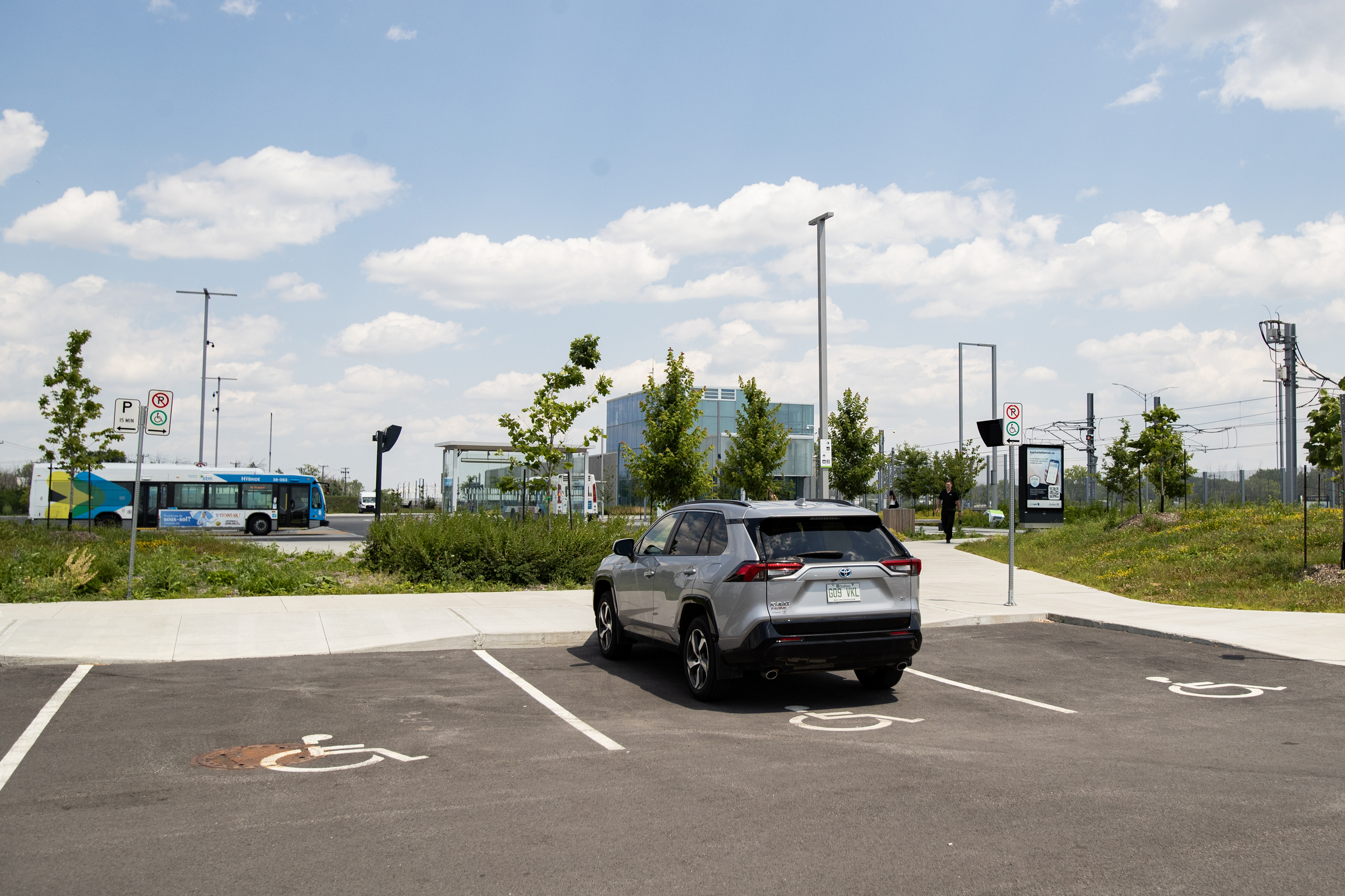 The Anse-à-l’Orme REM station in Ste-Anne-de-Bellevue features only three accessible parking spots, as seen on Friday, July 10, 2026. Tim Snow / Montreal Gazette
“They planned the station in 2018, but they only built the parking lot in 2023, six months before the REM began service (from Brossard to Central Station). In the interim, the norms changed,” Bérubé explained. “It would have been so easy for them to have made these spaces wider, because they started with an empty plot of land.”
He said many with adapted vans won’t take the chance to park in such narrow spots, even if the adjacent space is empty, because if another car parks too close, they won’t be able to get back into their vehicle for their return trip home.
Even though COPHAN and other organizations flagged this oversight to the REM’s builders back in 2023, it still hasn’t been corrected.
“It’s frustrating,” Bérubé said.
A spokesperson for CDPQ Infra — the subsidiary of the province’s pension fund manager that built and owns the REM — said they are proud to have worked with groups like COPHAN to make the network fully accessible. The spokesperson added that the Brossard spots respect the norms in place during the time the station was planned, but if the agency adds more spots in the future, or makes major renovations to existing lots, it will at that time conform to the most recent norms.
Aside from parking spaces, there are other issues with the REM that make it more difficult for anyone using mobility aids. For example, all the stations have elevators, but it often takes longer to access the platforms for the trains than using the escalators.
In Brossard, for example, wheelchair users must take two elevators: one to get to the floor underneath the platforms, and another to get to the platform to board the trains. Having to use two elevators means there are two chances for a breakdown.
“The problem is that if any one of these elevators is not working, it results in the entire network being inaccessible for someone in a wheelchair,” Bérubé said, adding that REM employees appear to lack the necessary flexibility to overcome such problems.
“One time that I was in the Brossard station, the elevator to get to the platform didn’t work. But the elevator to get down from the platform for those arriving from downtown was working fine. I suggested that I could take that elevator (which would bring him to the arriving train), and stay on it until it switches tracks and comes back to go in the other direction. The (security agent) refused. They said this elevator doesn’t go up, it only goes down. I was told: ‘We are afraid that you’re going to have to use your car today.’”
The spokesperson for the REM said the elevators have a good reliability record, as they are functional 98.9 per cent of the time.
Despite his complaints, Bérubé gives the REM’s owners credit for several improvements that have been made to the network in the last three years. For one, ticket payment machines have all been replaced with machines that are fully accessible. Many people in wheelchairs were not able to reach the credit card slots or the slots where tickets were dispensed on the original machines.
On board the trains, there are now barriers in the spaces reserved for wheelchairs. Signs on board tell wheelchair users to put their backs against the backrests in the zones reserved for them, to prevent them from tipping over in the event of a sudden stop.
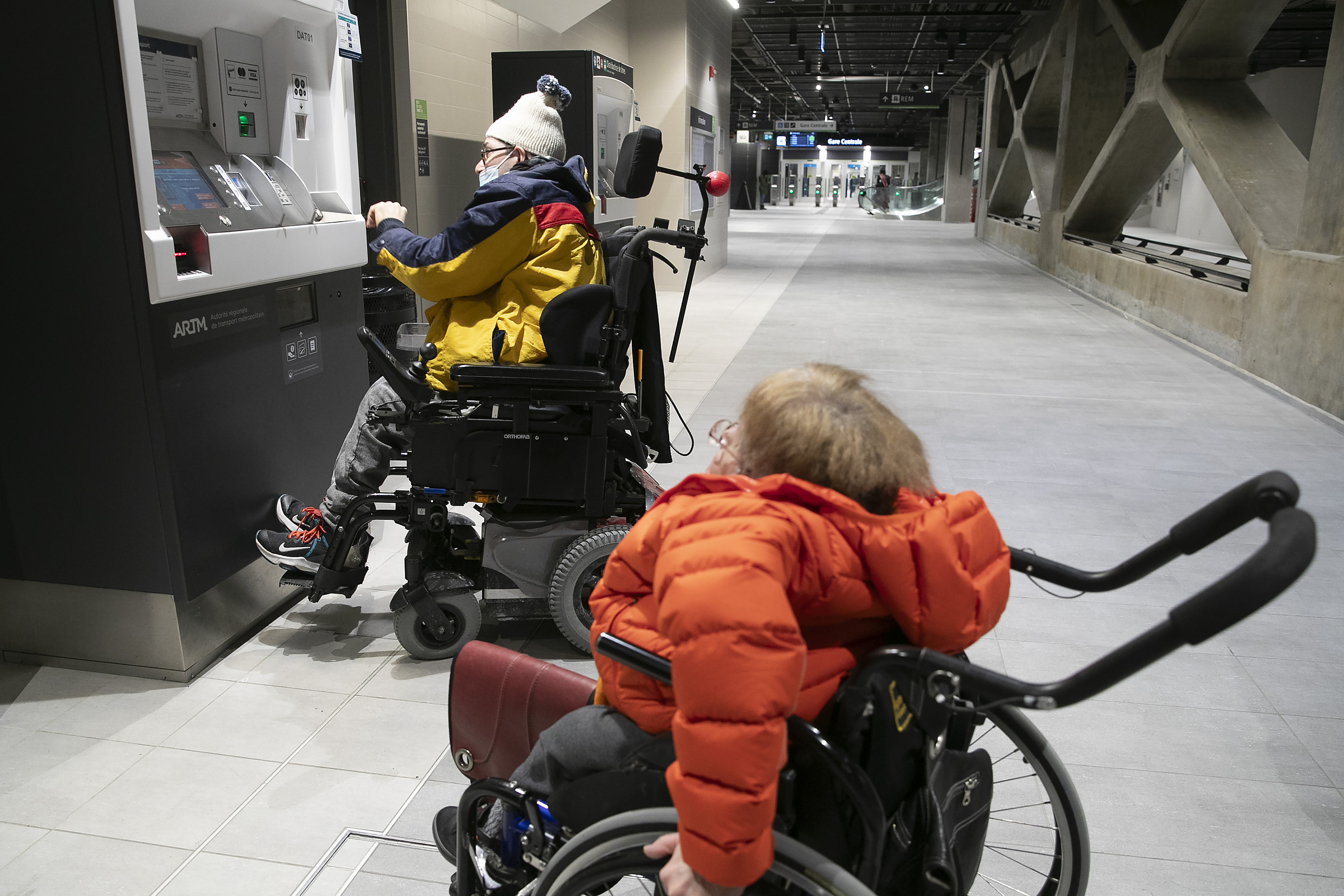 François Bourbonnière, left, and Marie Turcotte try to buy REM tickets from a self-serve ticket dispenser at Central Station on Feb. 16, 2024. Pierre Obendrauf / Montreal Gazette files
The missing barriers and the problems with the ticket machines were among the issues reported by The Gazette in 2024, the last time accessibility issues were tested. At the time, wheelchair user Marie Turcotte had to ask a customer service agent to buy her ticket for her.
Bérubé’s trip ended at the Fairview—Pointe-Claire station, one of the newest in the REM’s network, having opened on May 18. Exiting the station, Bérubé looked at the parking lot in front and saw there are no spots reserved for those with reduced mobility. The station has roughly two dozen parking spots right in front, but all signs indicate they are reserved for employees of the various transit networks.
Bérubé eventually discovered there are two parking spots available for people with reduced mobility, but they are across the street in a portion of the shopping mall’s parking lot now shared with REM users — roughly 300 metres away from the station. It’s a long distance for anyone in a wheelchair.
“When we ask for a parking lot next to the station, it’s for two reasons: one is for safety, because if you have to go through a parking lot in a wheelchair, cars don’t see you and you can get hit,” he said. “The other is to have good access.
“We’re in the summer, so when the weather is warm, it is possible to park a bit further, even if it requires a bit more effort,” he said. “But in January or February, when there is snow and ice outside, forget it. I wouldn’t call this real access.”
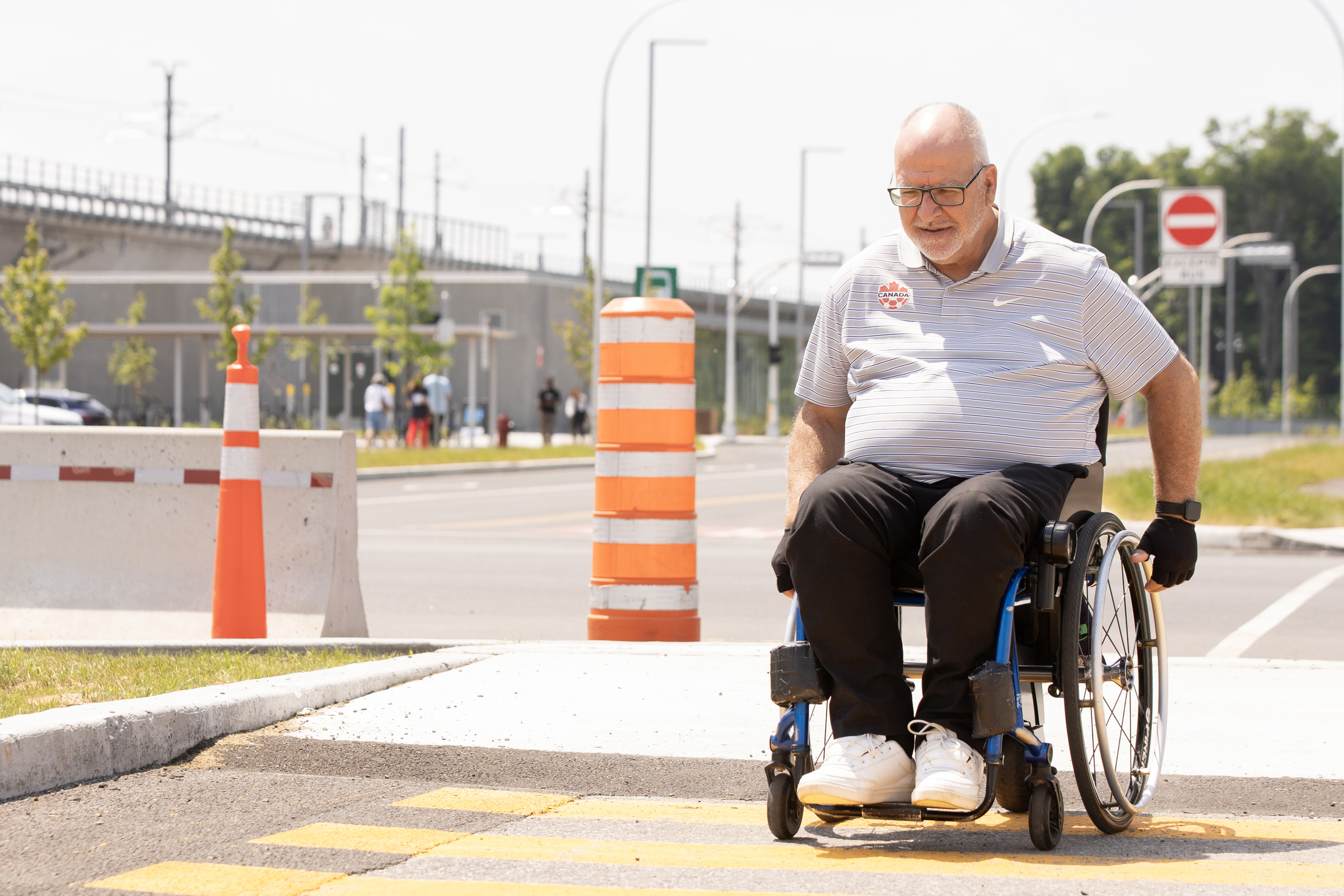 Paul-Claude Bérubé is less than impressed with the lack of parking accessible to people who use wheelchairs at the Fairview—Pointe-Claire REM station. Tim Snow / Montreal Gazette
Making his way to the parking lot, Bérubé had to roll down a sidewalk and wait to cross at a pedestrian crossing. He pointed out that there are no elevated guides on the sidewalk for those who are vision impaired — except right at the corner where he had to cross Fairview Ave. to get to the shopping centre’s lot.
“This is completely ridiculous, because it takes you nowhere,” he said of the markings.
Arriving at the lot, Bérubé discovered two accessible spots, with blue painted wheelchairs on the pavement but no signs anywhere else indicating the intended use of the spaces. He said in wintertime, snow will cover these spots and drivers will unknowingly park there. At the time Bérubé arrived, both parking spaces were occupied.
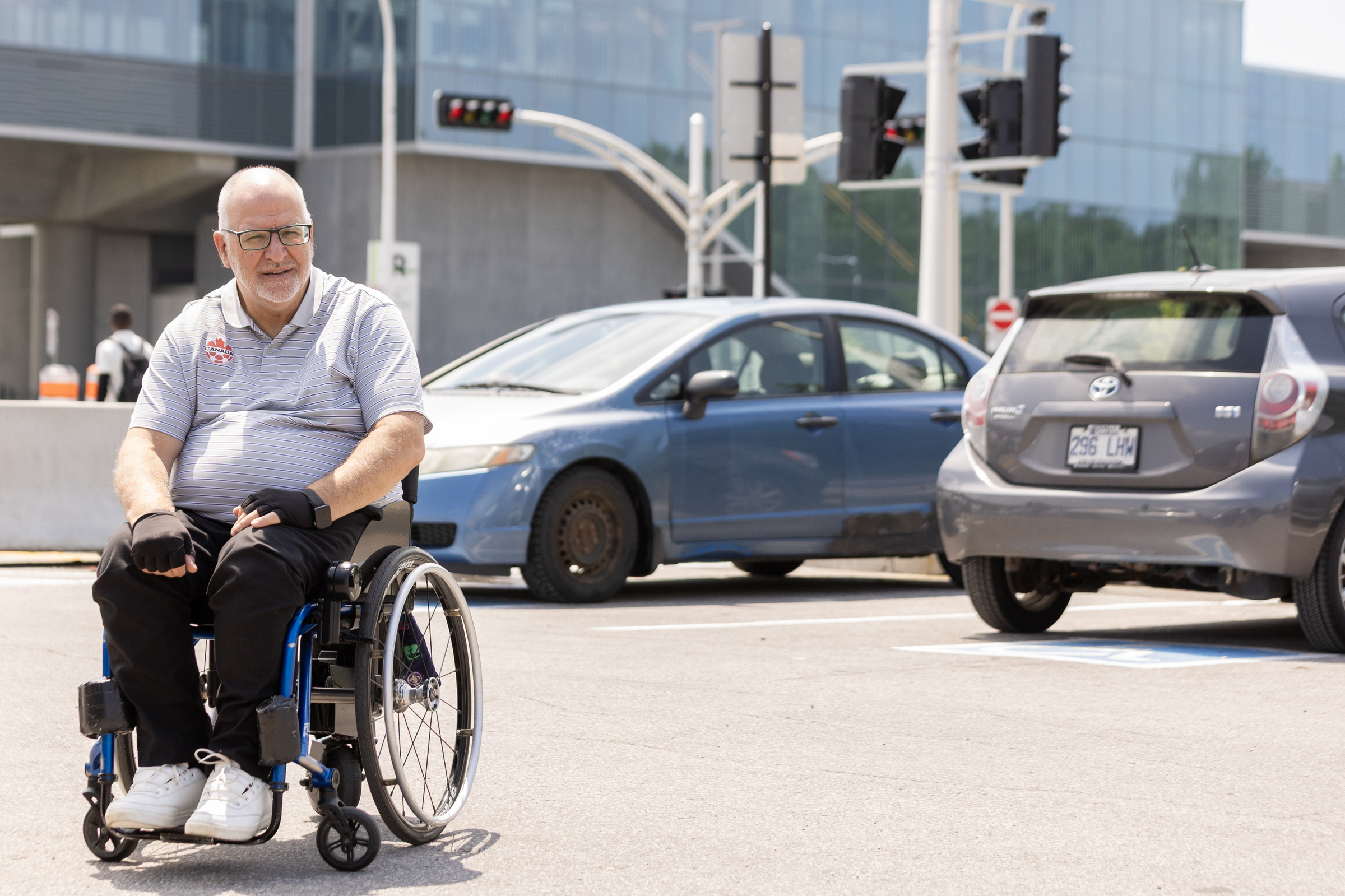 Paul-Claude Bérubé is less than impressed with the lack of parking accessible to people who use wheelchairs at the Fairview—Pointe-Claire REM station. Tim Snow / Montreal Gazette
When asked why there are no accessible parking spots at the lot right in front of the station, the REM’s media relations team did not give a response. Instead, they blamed Cadillac Fairview, the company that owns the shopping mall, for the parking issues.
“The (accessible parking spaces) belong to Cadillac Fairview, which owns the neighbouring shopping centre,” the spokesperson said. “We are continuing discussions with our partner to evaluate the possibility of improving the customer experience with respect to accessibility.”
CDPQ Infra planned and built the parking lot at the Fairview—Pointe-Claire station where none of the spots are reserved for people in wheelchairs. As for the parking lot on the land that belongs to the mall, that was put in place in the weeks before the station opened, under an agreement with the mall’s owners and the City of Pointe-Claire.
The Caisse de dépôt et placement du Québec, CDPQ Infra’s parent organization, could have acted sooner, as the pension fund manager had a 50 per cent stake in the Fairview shopping mall until 2021, more than two years after construction of the REM station began.

You’ll often see Jason Magder donning a hard hat and florescent vest at a local construction site. As The Gazette’s transportation reporter for more than a decade, he has seen the new Champlain Bridge built, the old one demolished and followed the ups and downs of the city’s transit system. He has been covering news in Montreal for 25 years.
jmagder@postmedia.com