

Listen to this article
Estimated 3 minutes
The audio version of this article is generated by AI-based technology. Mispronunciations can occur. We are working with our partners to continually review and improve the results.
There has been growing concern over bears around Inuvik, N.W.T., in recent months, with authorities saying they’ve had more calls, and dispatched more officers to the town, in response.
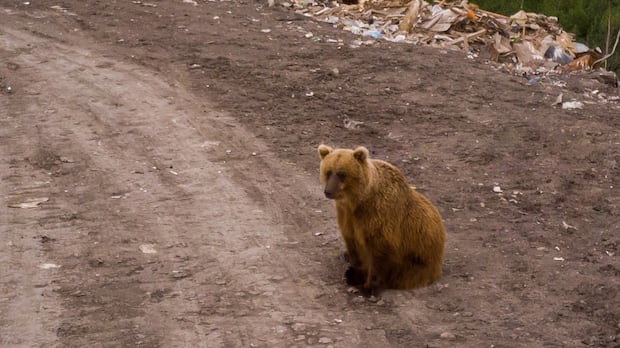
According to territorial government biologist Faye d’Eon Eggertson, a new electric fence installed around the local dump has blocked access to food grizzly bears had relied on, and that’s prompted many of the animals to move into town to find food.
“Bears have a really good memory for where they’ve found food in the past,” D’Eon Eggertson said. “They come back to the same places to try to find food … but they can’t get into the landfill this year.”
She said a total of 14 bears have been euthanized so far this season in the Inuvik area.
D’Eon Eggertson spoke to the CBC’s Wanda McLeod on Northwind on Tuesday.
This interview has been edited for length and clarity.
So what are you noticing?
We have had a lot of increased public interest or concern about bears this year. There’s been a lot of calls to the government of the Northwest Territories’ wildlife emergency bear line. [Some bears are] near the edge of town looking for food, usually at night. And there’s some near the trails near town. So people are seeing bears and reporting those.
Bears are coming in, especially if they’re attracted, if they can find garbage in town, garbage or food or barbecues or animal carcasses. Mostly they’re looking for other food sources now that the landfill has been fenced.
How well is the new fence working?
The fence itself is going well. The bears haven’t been able to dig through it.
We’ve got some cameras looking at how they respond to the fence. They run away, they don’t like getting shocked. [We are] trying to discourage them from coming back. You want them to associate it with it not being a good place to go.
How are you going to be handling these bears in the future?
There are wildlife officers doing regular patrols throughout the night and they’re all on call. The officers need to assess the situation with each bear call. The first consideration is always public safety, and then you look at what the bears are doing. The officers have a toolkit of options, they’ve got non-lethal methods like rubber bullets, they’ve got lethal methods.
The very first step is trying to make sure we’re not attracting bears into town. We’ve got bear-proof garbage bins, but make sure they’re not overflowing.
From the personal safety end, you want to make sure you don’t want to startle a grizzly bear in the woods. Be aware of your surroundings, make sure you’re making noise. It’s always a good idea to carry some bear spray.
If you have a problem with a bear in town there is the 24/7 wildlife emergency line, 867-678-0289.