
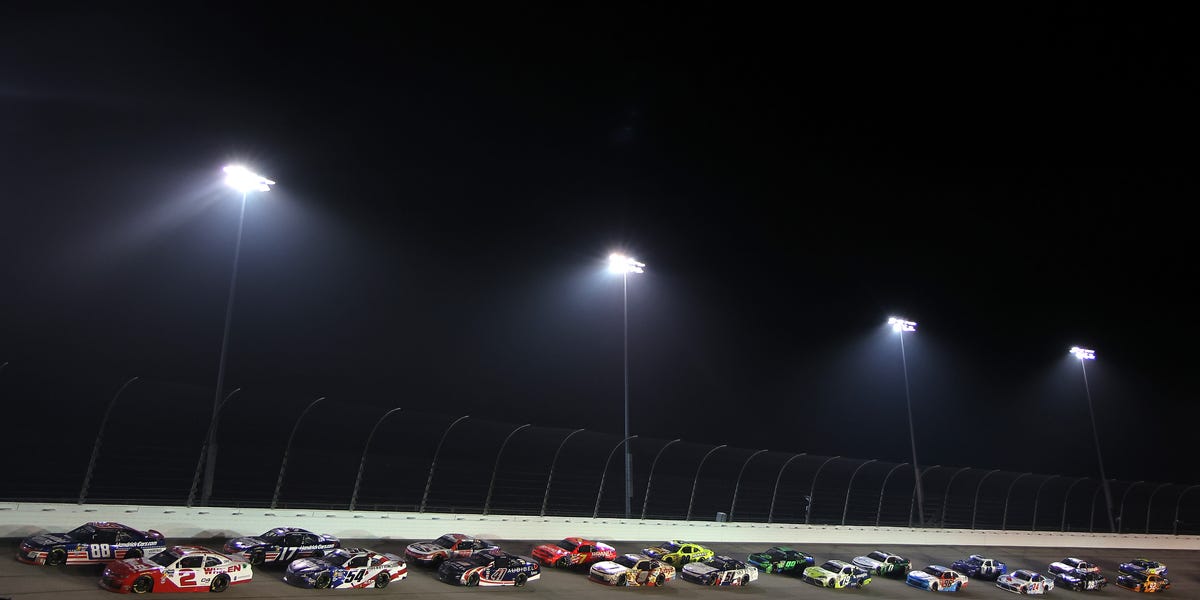
NASCAR champion Chase Elliott says fans have told him they prefer Cup races on Saturday night over Sunday night due to work obligations on Monday.
“Those comments came directly from people that I know personally that either went to the race and weren’t super thrilled about their Monday morning and probably won’t do it again or people that chose not to go because they had to go to work on Monday morning,” says Elliott, who’s been voted the Cup Series most popular driver for eight consecutive years.
The issue surrounding Sunday night Cup races moved to the forefront after EchoPark Speedway’s Quaker State 400 ended shortly before 2 a.m. on Monday due to a slightly more than three-hour rain delay Sunday night. The scheduled 260-lap race started at 7:19 p.m. and completed 120 laps before it was halted for rain. The race returned to green-flag conditions at 12:01 a.m. ET on Monday and eventually finished in overtime at 1:45 a.m. ET.
“While I totally get that TV runs the show in a lot of ways, there are still a lot of people that like coming to the races and also probably would like a day at home to recover and kind of get their affairs in order to go back to work on Monday,” Elliott said at North Wilkesboro Speedway during preparations for Sunday’s Window World 450. “I think people travel from lots of different areas for our races. The further they travel, the harder that is.
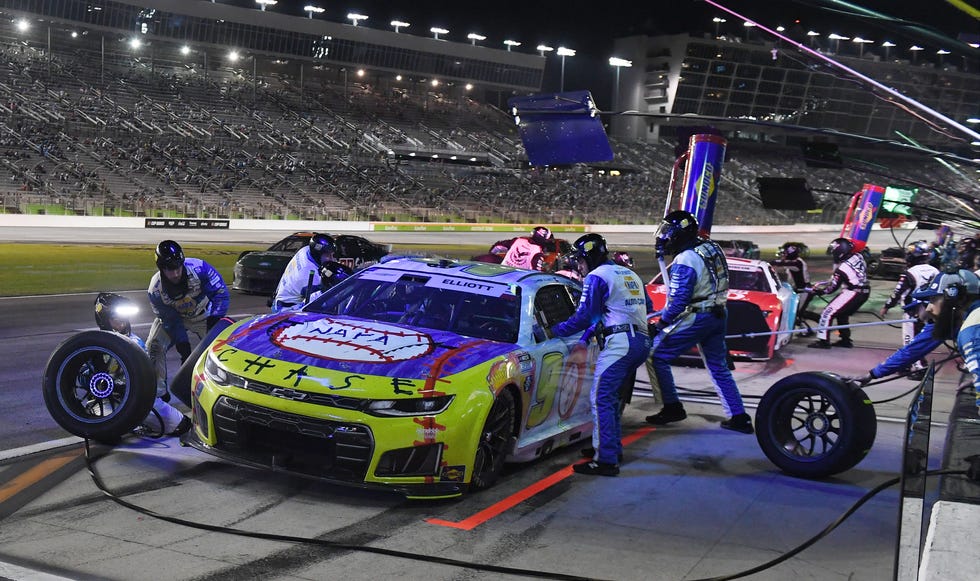 Icon Sportswire//Getty Images
Chase Elliott pits during the running of the NASCAR Cup Series race at EchoPark Speedway on July 12.
“I think we have a unique opportunity with the networks that we’re on to take advantage of the ability to watch this across the country on the good broadcast partners that we have. I think a Saturday night race is super healthy for people at home watching and also, more importantly, the people that are here an opportunity for them to get home on Sunday and reset and go back to work on Monday.”
In the 1980s, the only Saturday night Cup race was the August Bristol event. However, after Charlotte Motor Speedway showed in 1992 that a speedway could be lit, numerous tracks erected lights, including the 2.5-mile Daytona track. Immediately, the weekly short-track promoters clamored that moving Cup races to Saturday night would adversely affect their business, possibly forcing them to close their facilities.
“I think there’s room for middle ground,” Elliott said.
The 30-year-old driver noted that Saturday night races were a “big deal” to him when he was growing up in Georgia.
“I was fired up to have a Saturday night race, thought it was great,” Elliott continued. “The only downside was I didn’t have anything to watch on Sunday. You were bummed about that when Sunday afternoon rolled around, the race wasn’t on, but the lead-in and the excitement, energy for a Saturday night show I thought was pretty darn elite. So, I would love to have more.”
Elliott noted the summer’s hot weather made Saturday night races attractive.
“No need to be racing during the day,” Elliott commented. “I think it (Saturday night racing) makes a lot of sense.”

A North Carolina native, Deb Williams is an award-winning motorsports journalist who is in her fourth decade covering auto racing. In addition to covering the sport for United Press International, she has written motorsports articles for several newspapers, magazines and websites including espnW.com, USA Today, and The Charlotte Observer. Her awards include the American Motorsports Media Award of Excellence, two-time National Motorsports Press Association writer of the year, and two-time recipient of the Russ Catlin award. She also has won an award in the North Carolina Press Association’s sports feature category. During her career, Deb has been managing editor of GT Motorsports magazine and was with Winston Cup Scene and NASCAR Winston Cup Scene for 18 years, serving as the publication’s editor for 10 years. In 2024 she was inducted into the NMPA Hall of Fame.