

Listen to this article
Estimated 4 minutes
The audio version of this article is generated by AI-based technology. Mispronunciations can occur. We are working with our partners to continually review and improve the results.
The vacancy rate for front-line registered nurses is at a more than two-year low in the N.W.T., according to a Northwest Territories Health and Social Services Authority spokesperson.
In an emailed statement, Krystal Pidborochynski said focused efforts around staff training, recruitment and retention, and the expansion of virtual care have helped strengthen the system and reduced pressures on staff.
The health authority reports they have over 358 full time-equivalent nursing positions budgeted for the coming year.
The vacancy rate for nurses continues to be high and significant hurdles remain when it comes to staffing doctors in the territory. According to a 2025 StatsCan report the three territories taken together — N.W.T., Yukon and Nunavut — had the highest health-care occupation vacancy rate in Canada at 7.8 per cent.
When it comes to filling physician positions, Pidborochynski said the focus is on attracting more full-time physicians.
“Additional resources have been devoted to physician recruitment and retention efforts. Our continuing goal is to have as many of these filled as possible,” Pidborochynski said.
However, vacancy rates for physicians in the Northwest Territories also remain high with the gaps filled through a reliance on locum doctors, who travel from outside the territory for short-term stints in the hospital and clinics. Locums are paid at a higher rate than physicians who work full-time in the territory, but without benefits.
Agency nurses are also relied on to keep critical services running, including obstetrics services in Inuvik.
Intermittent closures at the end of 2024 and into 2025 compelled those in the Beaufort Delta region in need of pregnancy care to travel more than 1,000 kilometres by air or 3,000 kilometres by road south to Yellowknife.
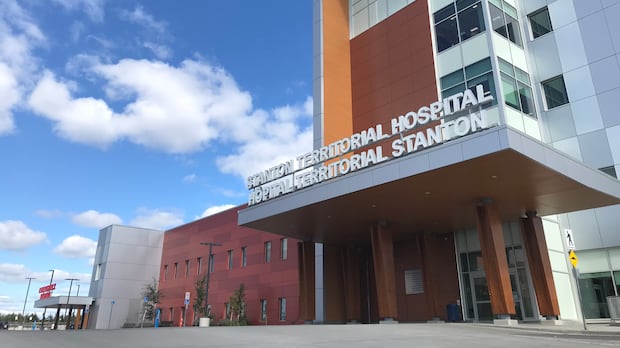
A “name-your-price” bidding process was implemented last summer at Stanton Territorial Hospital’s emergency department in Yellowknife to ensure physician shifts were filled.
It was put in place as a range of other options were under consideration including forcing staff to take back-to-back shifts, implementing virtual doctor visits in the ER or the worst case scenario: temporary closures.
The Northwest Territories Medical Association, which advocates for physicians in the territory, warned in a 2024 letter addressed to Premier R.J. Simpson and Minister of Health Lesa Semmler that staffing had become “thin and fragile.” They warned that there was “no buffer” to absorb the impact of unexpected health-care developments.
Doctor vacancies remain
The medical association’s president, Dr. Mimmi Thompson, said there has been some progress since then, particularly in relation to the functioning of the ER at Stanton, but challenges remain when it comes to staffing full-time physicians in the N.W.T.
“The bidding system was a temporary measure implemented last year to ensure that the ER would remain staffed by a physician on the ground,” Thompson said.
At the same time she pointed to significant vacancies, including the fact that there are no family doctors working outside Yellowknife and Inuvik, and the absence of local internists, ENT (ear, nose and throat) physicians and the recent retirement of the territory’s only ophthalmologist.
Thompson noted the reliance on short-term locums is expected to continue but efforts are underway to recruit full-time physicians through more competitive salaries and benefits but also through initiatives to welcome them into the wider community.
“If you see a locum or student and you had a good experience, tell them you appreciated it and hope they come back because it’s not every day that we hear that we’re doing a good job. Or if you feel up for sharing, tell them your favourite spot to go pick cranberries or what community events are coming up this weekend.”
In a statement to CBC, Northwest Territories and Nunavut Association of Nurses executive director Anne Marie Thistle said the system is operating at its limit.
“In small and fly-in communities especially, there is very little margin — a single unfilled position can affect a whole community’s access to care,” Thistle said.
“Many of our members continue to work under real pressure — heavy workloads, overtime, and ongoing recruitment and retention gaps that make it hard to consistently deliver safe, high-quality care.”