
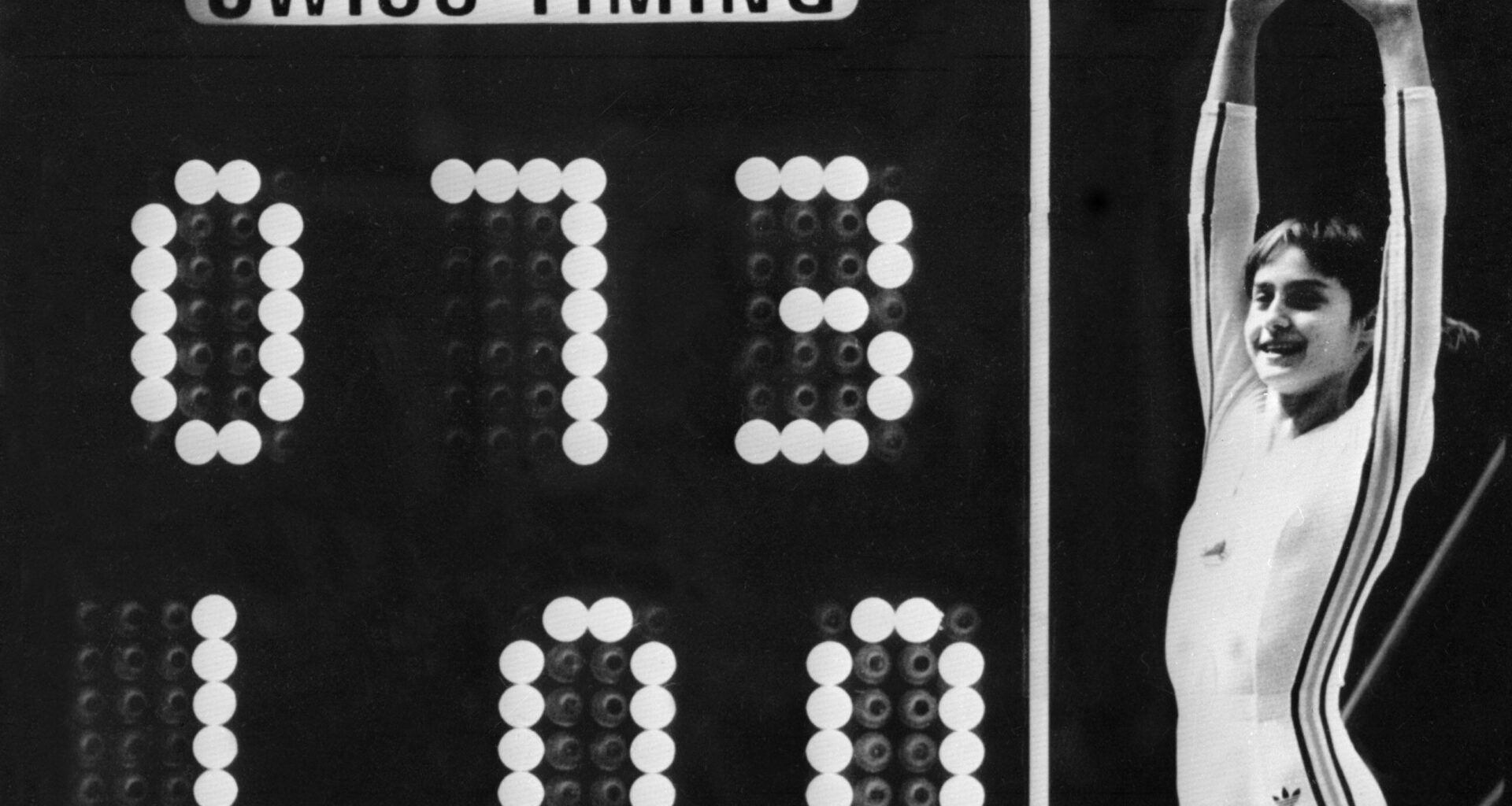
Fifty years ago, Nadia Comaneci, 14, entered our lives and the history of the Olympic Games as a brilliant and unexpected light.
Through her grace, talent and quest for perfection, she captivated the world by scoring the first-ever perfect 10 in Olympic gymnastics on the uneven bars at the 1976 Montreal Games.
Millions still remember the prodigy who redefined excellence in sport. She shattered our certainties and awakened a deep admiration that transcends generations.
As a 15-year-old, I followed her exploits on a large colour television in a shop where I worked as a night guard. Comaneci’s performances were a source of strength and inspiration. They gave me the will to push beyond my limits and seek greatness as a high school athlete.
A big thank you to Comaneci for embodying a reachable dream that continues to inspire. May her light continue to shine and guide future generations.
Yvan Giguère, Saguenay
Inaccessibility comes in various forms
Re: “REM needs ‘real’ accessibility: advocate” (The Gazette, July 16)
Jason Magder’s article highlights the very real physical barriers that continue to prevent many people with mobility impairments from using the REM independently. While accessible parking, functioning elevators, and safe station design are essential, universal accessibility must extend beyond what is visible.
For many neurodivergent individuals, including those with intellectual disabilities, the greatest barrier isn’t physical at all. It’s what happens when their routine is unexpectedly disrupted, something that has occurred far too often since the REM’s inauguration.
My adult son travels independently using four modes of public transportation between the South Shore and his school in Montreal. When the REM operates as it should, he navigates the system without incident. But when the REM breaks down and unexpected changes occur, his independence disappears instantly.
Announcements are confusing, and REM employees understandably focus on directing the crowds. No one notices the visibly bewildered, anxious passenger who simply needs someone to stop, explain what is happening, and calmly tell him where to go.
Many individuals with invisible disabilities may not understand what is happening, know how to ask, or even realize who they should approach. Staff should be trained to recognize when someone appears confused, anxious or vulnerable and to proactively offer assistance.
Universal accessibility means designing systems that work for everyone, not only those with visible physical disabilities. Only then can we truly say that our public transit system is accessible to all.
Lindi Ross, Carignan
Milliard must get on with it
Re: “It’s much too early to write off Liberals” (Robert Libman, July 11)
I agree it’s too soon to count out the Liberals. But with less than three months to election day, if you were to ask 100 people on a Montreal street corner who is Charles Milliard, a great percentage of them, in my view, wouldn’t know his name, let alone recognize him.
If the Quebec Liberal Party thinks it can wait for Labour Day to really start connecting with voters, then the Coalition Avenir Québec must be thrilled with that strategy.
Five months after Milliard was acclaimed as QLP leader, it’s still not clear to me why he is running, what exactly he stand for and how he proposes to improve the lives of Quebecers.
That vital information vacuum needs to be filled pronto and consistently; otherwise, I expect another footnote of a Quebec Liberal leader awaits.
Barry Beloff, Montreal
Let consumers decide on U.S. booze
Re: “First, the booze boycott; now, the hangover” (Opinion, July 15)
The SAQ boycott of U.S. wines and spirits was indeed a knee-jerk political response to the U.S. aggressive trade action that threatened Canada’s economy.
However, the premiers who introduced the boycott after the products were already in Canada failed to consider the financial cost of storage and tied-up capital and seemed to have overlooked that the U.S. has the leverage to retaliate.
The population of Canada should be the ones to choose whether to buy U.S. products. This means all imported products should be clearly identified by country of origin, not the place of preparation or packaging.
John Hall, Montreal
Missed opportunity to ‘improve the tone’
Re: “No English debate during fall election campaign” (The Gazette, June 26)
Following “Nosh-gate,” Premiere Christine Fréchette stated that “maybe we can improve the tone used by the OQLF” and have a more pragmatic dialogue with the English community.
Yet the Coalition Avenir Québec declined to participate in an English-language debate in September citing campaign scheduling conflicts and existing commitments.
The Parti Québécois followed suit by stating that an increased number of overall debates required the party to prioritize its schedules.
Might they not reconsider and reach out to all voters in the non-regions where the majority of anglos, allos and francos live, and where economic power is concentrated in the Montreal metropolis?
To refuse to debate in English might itself turn out to be “non-pragmatic” and short-sighted.
Giuliana Pendenza, Montreal West
Peel St. sad symbol of our city’s decline
Re: “‘People fall flat on their faces’ on warped Peel St. sidewalk” (The Gazette, July 15)
To put it succinctly — what a disgrace.
Peel St. is not a side street in some far-flung borough. It is a major artery in our downtown core.
That the sidewalk has been broken since November, and that the local city councillor advised city services and yet nothing has been done, speaks volumes.
As a visiting expat friend recently said: “This city has become a dump.”
What a sad state of affairs for what used to be the most colourful, vibrant and, most important, functional city in Canada.
Bob Vanier, N.D.G.
Brand new names, same old results
Re: “Santé Québec rebrands regional health offices” (The Gazette, June 15)
Renaming regional health offices does not detract from the fact that Santé Québec has not made progress in the flow of patients in its hospitals.
Since the agency was launched on Dec. 1, 2024, the number of niveau de soins alternatif (NSA) patients — people occupying hospital beds who no longer require acute, active treatment and should be elsewhere — has consistently risen.
Now occupying more than 14 per cent of hospital beds, NSA patients tend to deteriorate when they are in a place not intended for them and also block beds meant for others. This hurts patients and the system, no matter what you call it.
Santé Québec must do everything in its power to get that 14 per cent down to the target of eight per cent instead of worrying about names.
Nathan Friedland, Roxboro
Easy rider? Not in these conditions
Re: “No more leisurely rides with all the orange cones on roads” (Letters, June 11)
I have been riding motorcycles since 1972 in sunshine, rain, hail, thunderstorms, and hot and cold weather.
Now, as another letter writer has noted, it’s nearly impossible to enjoy a leisurely ride anywhere because of traffic and road conditions.
I used to average 20,000 kilometres a year, but I’m down to 5,000, mostly for rides to the dépanneur and the gym.
And for this we pay more than $700 a year for a licence plate?
Stanley Cohen, Dollard-des-Ormeaux
Editor’s Picks
Submitting a letter to the editor
Letters should be sent by email to letters@montrealgazette.com
We prioritize letters that respond to, or are inspired by, articles published by The Gazette.
If you are responding to a specific article, let us know which one.
Letters should be sent uniquely to us. The shorter they are — ideally, fewer than 200 words — the greater the chance of publication.
Timing, clarity, factual accuracy and tone are all important, as is whether the writer has something new to add to the conversation.
We reserve the right to edit and condense all letters. Care is taken to preserve the core of the writer’s argument.
Our policy is not to publish anonymous letters, those with pseudonyms or “open letters” addressed to third parties.
Letters are published with the author’s full name and city or neighbourhood/borough of residence. Include a phone number and address to help verify identity; these will not be published.
We will not indicate to you whether your letter will be published. If it has not been published within 10 days or so, it is not likely to be.
Please send the letter in the body of an email, not as an attachment.