

Listen to this article
Estimated 4 minutes
The audio version of this article is generated by AI-based technology. Mispronunciations can occur. We are working with our partners to continually review and improve the results.
If it weren’t for patios, Matthew Senecal-Junkeer says he wouldn’t be in business today.
He owns two restaurants in Vancouver through his company, the Birds & The Beets Food Group.
The Chinatown location had a small patio that was extended through the city’s street-side patio program in 2020. The program also allowed him to build a new patio at his Gastown location after years of trying, since city regulations before the pandemic had prevented it.
The new patio was a “game changer,” Senecal-Junkeer said. “It really was what allowed us to stay afloat.”
Patios are still a critical driver for restaurant revenue, six years after the COVID-19 pandemic drove demand for outdoor dining. However, restaurant operators say they are not as lucrative as they once were, as the extra seats are now being factored into higher rental costs.
Senecal-Junkeer said that the extra patio space means his business is roughly 40 per cent busier in the summer. He estimates that the increased traffic has translated to a 20 to 30 per cent sales bump.
“We almost don’t see the interior in the summer; everybody wants to be out on the patio,” he said.
Patio dining became newly popular during the pandemic as it allowed people to eat outdoors while being mindful of social distancing practices at a time when gathering inside was risky.
Restaurants can choose to set up patio spaces differently, with some looking to create a busy and fun atmosphere, while others opt for calmer and quieter spaces for their patrons. Some restaurants have been running their patios for years, while others more recently moved to capitalize on demand for outdoor dining.
Even when the weather doesn’t co-operate, Senecal-Junkeer said consumers come back with fiercer demand when the sun is back out.
When patios became more popular during the pandemic, he said it was essentially a “free lunch” for anyone who already had one in their existing lease structure. At least, for the first few years.
“Now, when landlords are leasing a space, they’re able to factor in what that patio opportunity is and price the rent of the space accordingly,” Senecal-Junkeer said.
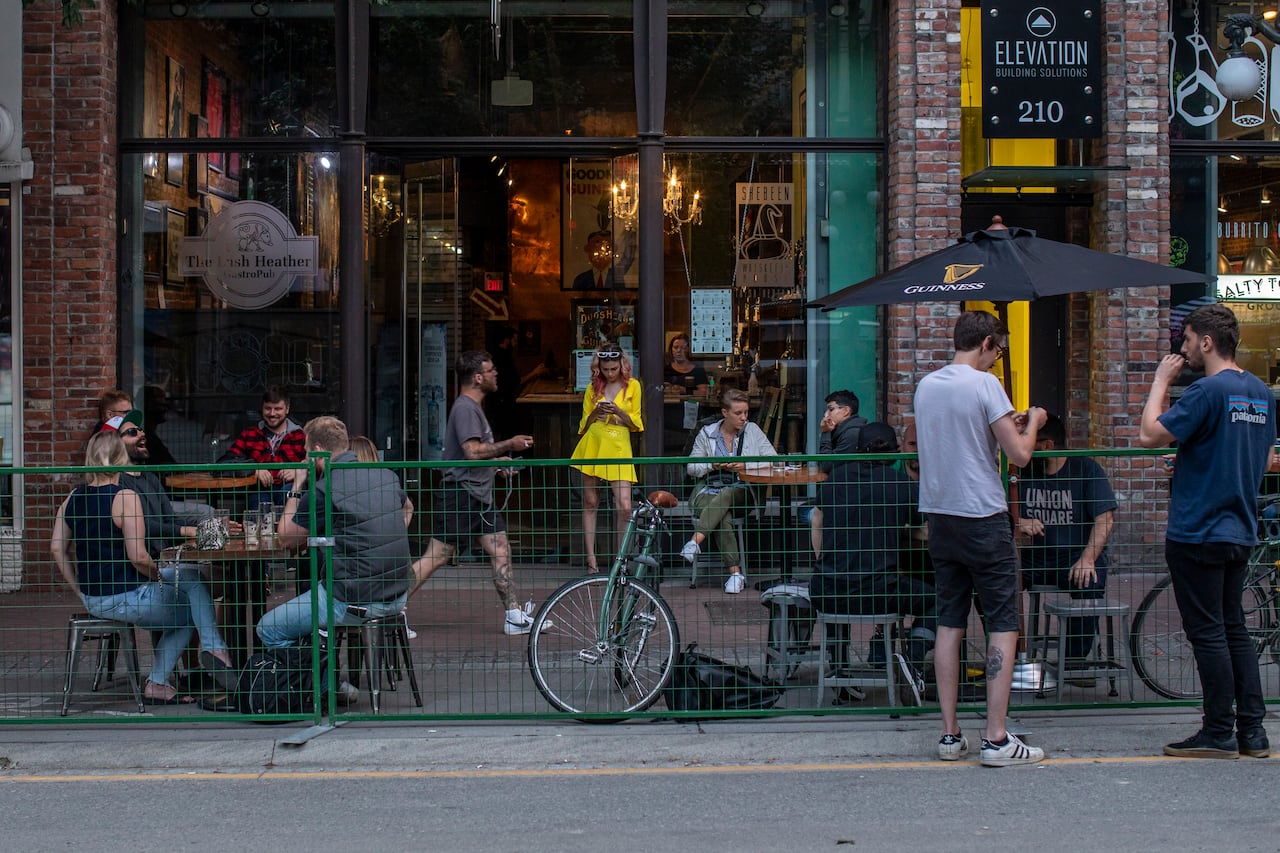 People are pictured on a patio in Gastown in 2020. A local business owner called the city’s patio program that began during the COVID-19 pandemic a “game changer.” (Ben Nelms/CBC)
When it was time to renew the lease on one of his restaurants in 2023, he said the patio was factored into the rental cost and drove up the price per square foot.
There are also other costs associated with running a patio. When extra space for outdoor dining means removing street parking spaces owned by the municipality, Senecal-Junkeer said restaurants often have to offset the lost revenue for the city.
“I commend the city; they committed to making it revenue neutral from their perspective. We still pay about $16,000 a year for the patio, which I’m more than happy to do,” he said.
Outdoor dining on the rise
Data from OpenTable released in May found that reservations for outdoor dining increased by 24 per cent year-over-year in Canada. July ranks as the most popular month to sit outside.
The findings were taken from online reservations for outdoor dining on the OpenTable platform in Canada between March 1, 2025, and Feb. 28, 2026.
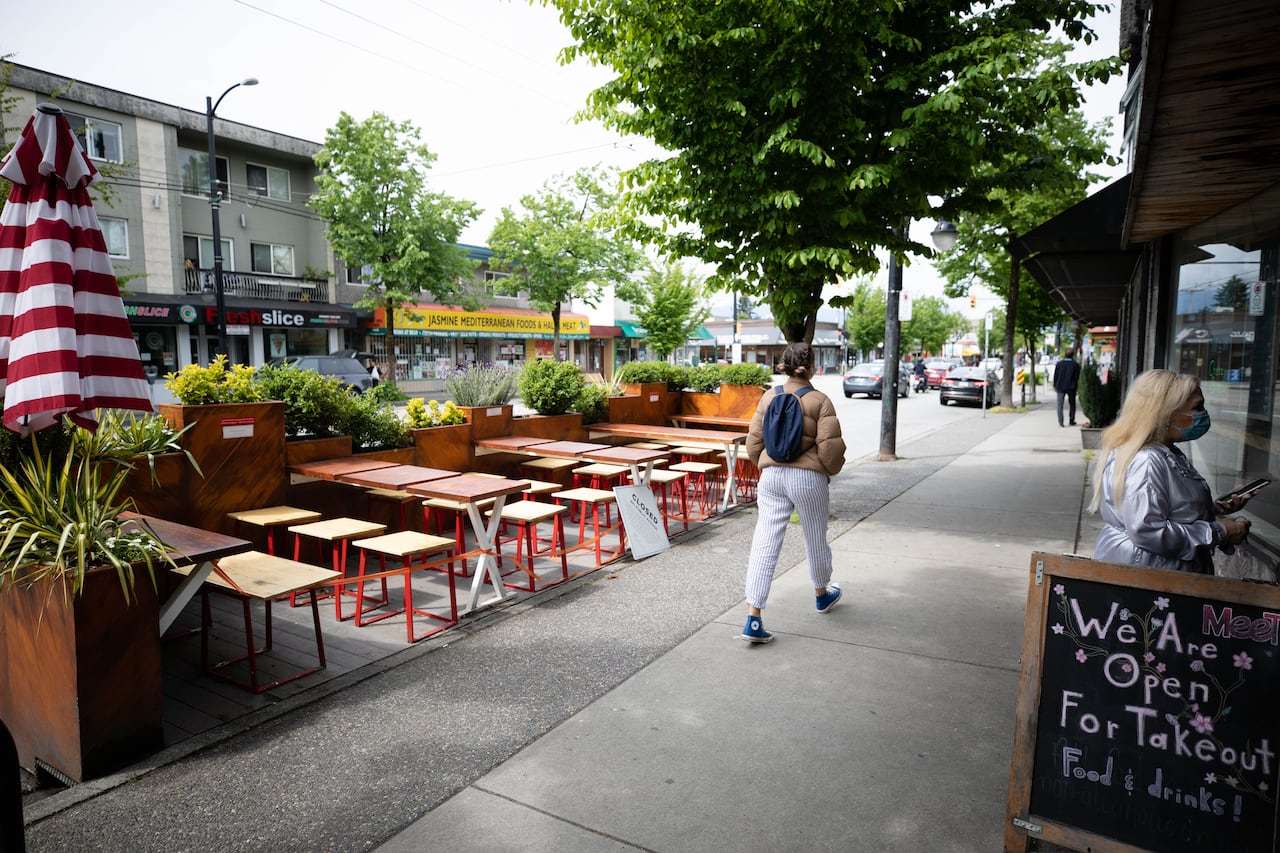 A closed parklet patio space outside of Meet on Main restaurant in Vancouver on Tuesday, May 12, 2020. (Maggie MacPherson/CBC)
Kelly Higginson, the president and CEO of Restaurants Canada, said that while there continues to be enthusiasm for patios, there are difficulties with sprawling patio spaces outside of restaurants.
“One of the things that we’re challenged with now is that fight between infrastructure and construction, but people still want to have their patio space and finding that balance,” she said.
“We’ve got different cities doing… different patio initiatives throughout the country, but how do we do it where we aren’t frustrating drivers and taking over certain bike lanes and all of these other issues?”
Overall, Higginson said patios remain an “all-important” piece for a restaurant’s overall bottom line.
“Every single opportunity to generate sales, especially in this economic environment, is critical,” she said.