

Listen to this article
Estimated 3 minutes
The audio version of this article is generated by AI-based technology. Mispronunciations can occur. We are working with our partners to continually review and improve the results.
Northern senators need to be in Ottawa to effectively fight for their regions, says former Nunavut senator Dennis Patterson.
Especially because there are only three northern representatives in the Senate and few southern senators understand Canada’s Arctic.
“What you’ve got to do to make up for the small numbers is speak up and take advantage of every opportunity,” he said. “Make your views, make your region get on the radar of the parliamentarians in Ottawa.”
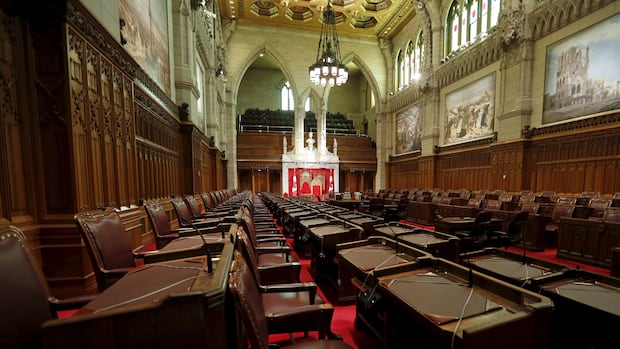
Patterson’s comments follow a previous CBC report revealing that dozens of senators have missed parliamentary sessions since the last federal election.
In the 12 months following the election, the Senate convened for 76 sitting days. Of those, N.W.T Senator Dawn Anderson recorded the highest number of absences due to “other public business,” missing 27 days.
This is not the first time an N.W.T senator was noticed for their attendance.
In 2014, former N.W.T senator Nick Sibbeston was also criticized for his low attendance. At the time Sibbeston had blamed his absence on aggressive party politics and bickering in the Senate.
Representation is more than Senate attendance: N.W.T. senator
In a media release, Anderson defended her track record, stating that many of her absences from Senate sessions were a result of carrying out official parliamentary responsibilities on behalf of the N.W.T.
“When official parliamentary work undertaken in the N.W.T. is described simply as an ‘absence’ from the Senate Chamber,” her statement reads, “it creates an incomplete understanding of what regional representation requires.”
Anderson added that the parliament cannot make decisions about the North without understanding the people that live there.
“Had I instead chosen to remain in Ottawa primarily to improve an attendance statistic, I would have spent less time in northern communities, heard fewer voices, built fewer partnerships, and brought less firsthand knowledge to Parliament,” her statement read.
Senate structure unfair to North, resident says
Of the roughly 25 people CBC spoke to on the streets of Yellowknife, just three said they were familiar with Anderson. The rest either did not know her, or only vaguely recognized her name.
Daniel Gibson, one of the three who was familiar with Anderson, says he agrees with the senator’s priorities.
He says there are times when her efforts are better spent meeting with local residents and understanding the population she serves, rather than sitting in Ottawa for discussions that may not be relevant to the region.
Gibson added that the Senate structure favours Central Canada.
Of the 105 total seats in the Senate, each territory has one representative. Ontario and Quebec hold the most influence with 24 seats each.
“It’s pretty much a bias towards any type of Western government,” he said.
Former Nunavut senator Patterson says because each territory only has one representative, it is even more critical for northern senators to be physically present in Ottawa to advocate for the region and educate southern leaders unfamiliar with Canada’s North.
“As the only spokesman for the huge Nunavut territory compared to 24 senators in Ontario and 24 senators in Quebec, nobody questions that you’re the representative for that region.”