
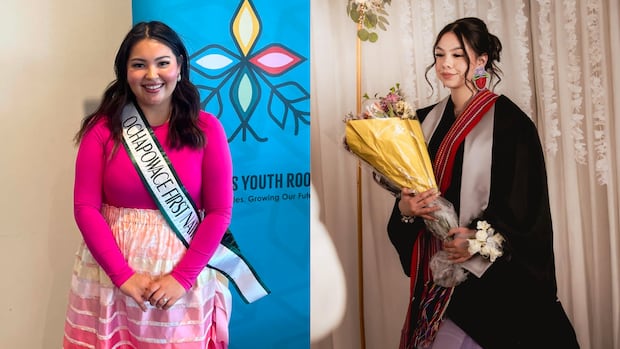
Kiauna Cote says she is choosing to live through her grief to bring more healing and give back to her community while running in the third Miss Indigenous Canada competition.
Cote lost her father to medical complications, her brother to suicide and her nephew to sudden infant death syndrome in a span of just four months last year.
She said the competition “is bringing women together who are community leaders, who have beautiful souls inside and out and after the year that I had, I knew healing was paramount.”
Cote said she is proud to be the first woman from Ochapowace First Nation in Saskatchewan to run for the Miss Indigenous Canada title.
Cote, 27, is a second-year law student at the University of Saskatchewan in Saskatoon. She also has a podcast, AunTea Time, where she talks about Indigenous identity, being trauma informed, Indigenous people in sports, two-spirit people and living a positive sober life.
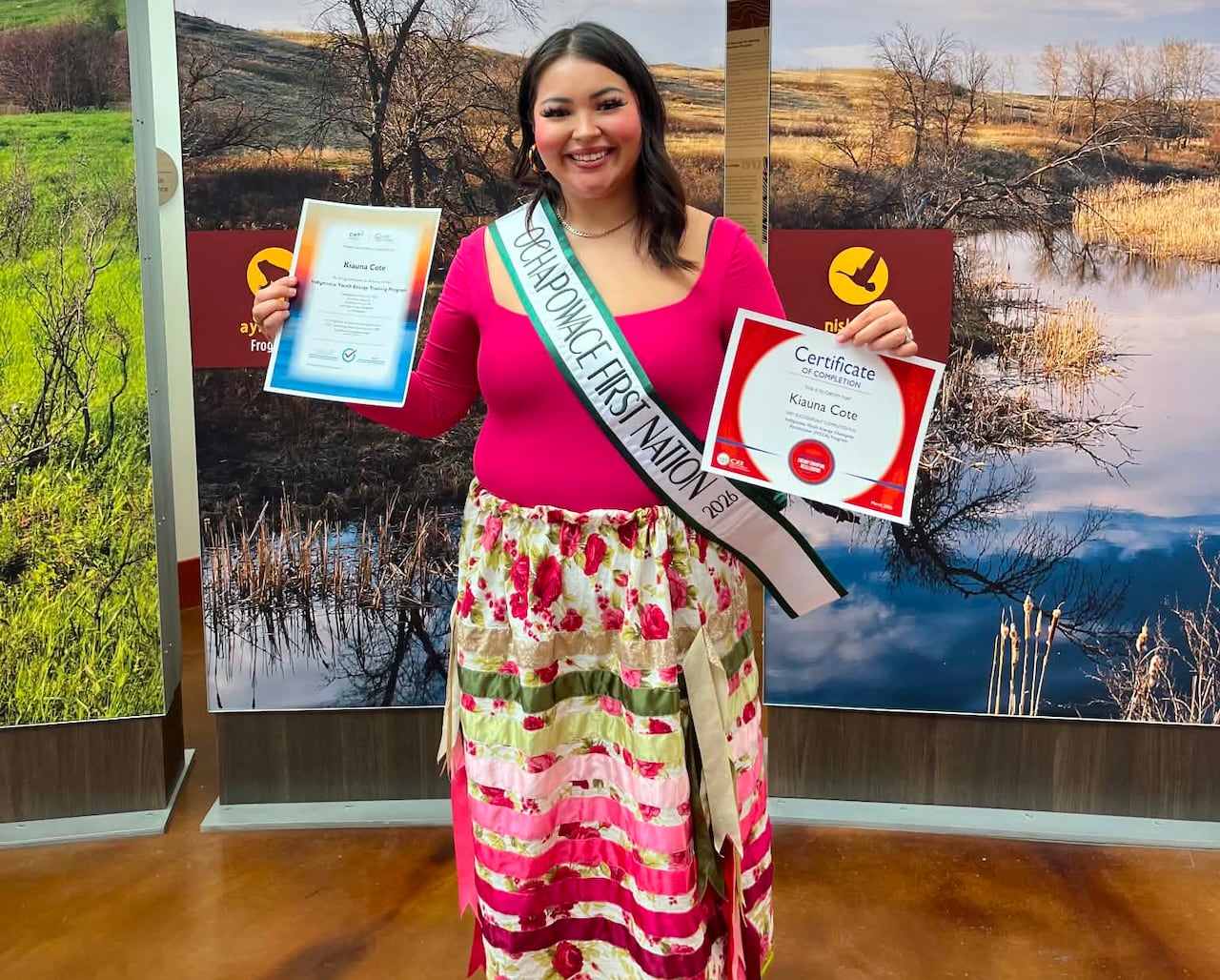 Miss Indigenous Canada 2026 candidate Kiauna Cote from Ochapowace First Nation, granddaughter of the late Tony Cote. (Submitted by Kiauna Cote)
“I’m not an artist but I like to write and speak and in our Indigenous education systems, oral tradition and storytelling is a big part of that,” said Cote.
Cote said she looks forward to meeting all the other delegates later this month and is thankful there’s a stage and space for a competition of this kind.
“When you have healed and empowered women, the people who will benefit are your communities. That motherly and nurturing love to give life, we always give it back,” said Cote.
Building connections
Miss Indigenous Canada is described as a leadership development program for First Nations, Métis, and Inuit women and two-spirit people between 18 and 30. Contestants compete through an essay competition, an interview, a cultural presentation and a scrapbook to display the work that each contestant does in their home community.
This year’s competition has 20 First Nations and Métis delegates from across Canada and will be held July 20-25 in Six Nations of the Grand River with the final showcase at the Sanderson Centre in Brantford, Ont., on July 24.
Aleria McKay, the founder and director of Miss Indigenous Canada from Six Nations of the Grand River, said the competition is to help First Nation, Métis and Inuit youth gain leadership and personal development skills. She said it’s volunteer-run and funded through entry fees, corporate sponsorships, community grants and donations.
“I have seen so many strong connections made between our delegates, they continue to support each other and build these bonds and friendships and I think that is something that is truly special,” said McKay.
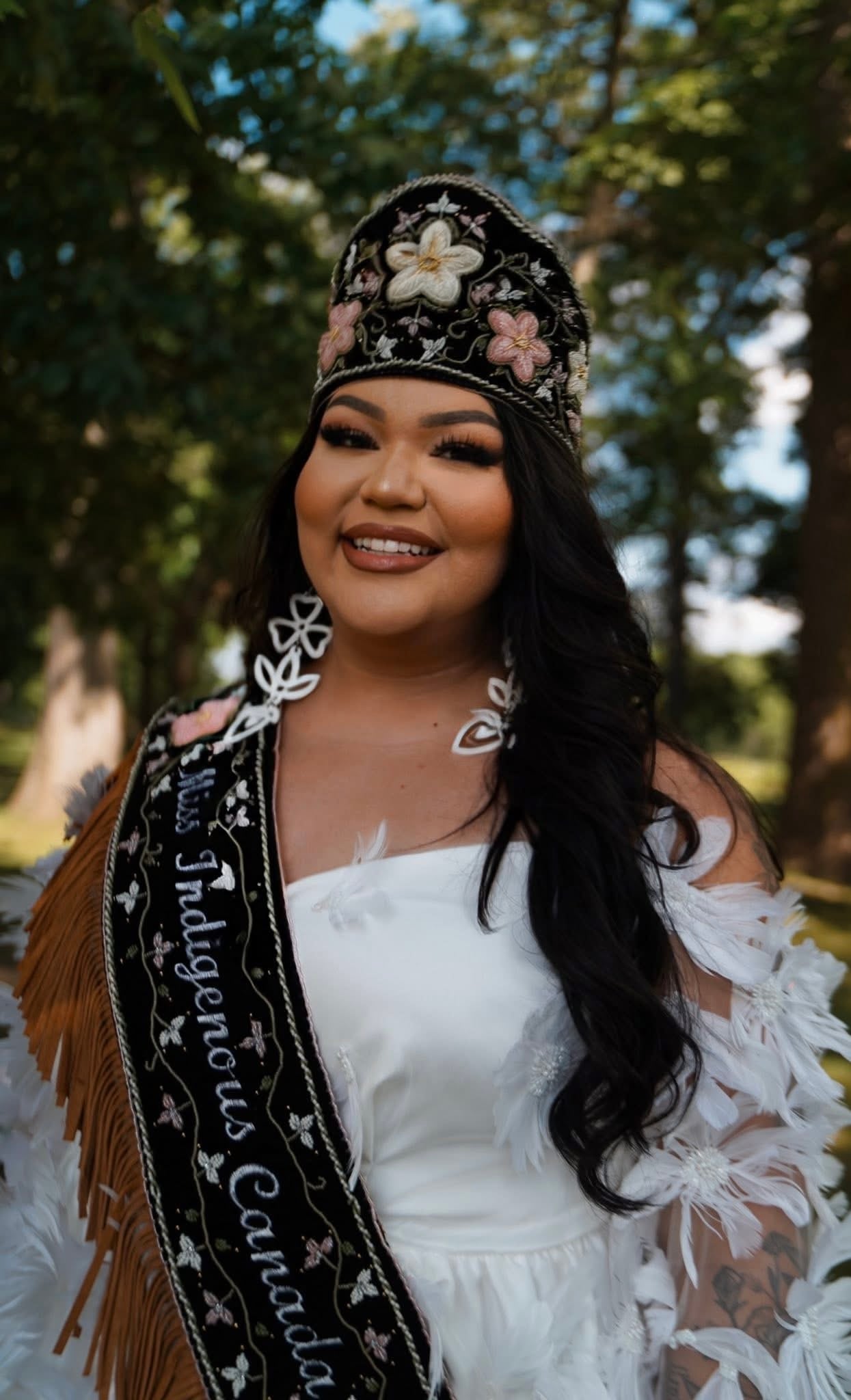 Miss Indigenous Canada 2025, Gena Boubard of Sagkeeng Anicinabe Nation wears the crown and sash. (Taylre Media)
The inaugural winner in 2024 was Jessica McKenzie from Opaskwayak Cree Nation, and the 2025 winner was Gena Boubard from Sagkeeng Anicinabe Nation.
McKay said Boubard opened up the committee’s eyes on the need to be more inclusive in their programming.
The committee no longer promotes the competition as being solely for Indigenous women. McKay said the committee has always been inclusive of trans and two-spirit people but thanks to Boubard’s guidance, they made it more clear in their language.
“There’s just such a need and a desire to see that representation and Gena has been such an incredible light on this specific topic,” said McKay.
‘I can do more than I expect’
Ava Roe, 19, from the Paddle Prairie Metis Settlement in northwestern Alberta, is also running in this year’s competition to inspire youth.
“They look up to me making the move to the city,” she said.
“It makes me happy that they know that if I can do it, they can do it.”
Roe will start studying in Indigenous studies and science at the University of Alberta in Edmonton this fall.
She said she is the first in her immediate family to attend university. She credits elder Rick Lightning for giving her a life changing pep talk during a tea dance to help her figure out what she wanted after high school.
“The conversation that I had with him, I hold it so close to my heart and it was my motivation for everything,” said Roe.
“It’s the reason why I left my home community, it’s why I wanted to go to university and it’s why I know I can do more than I expect of myself.”
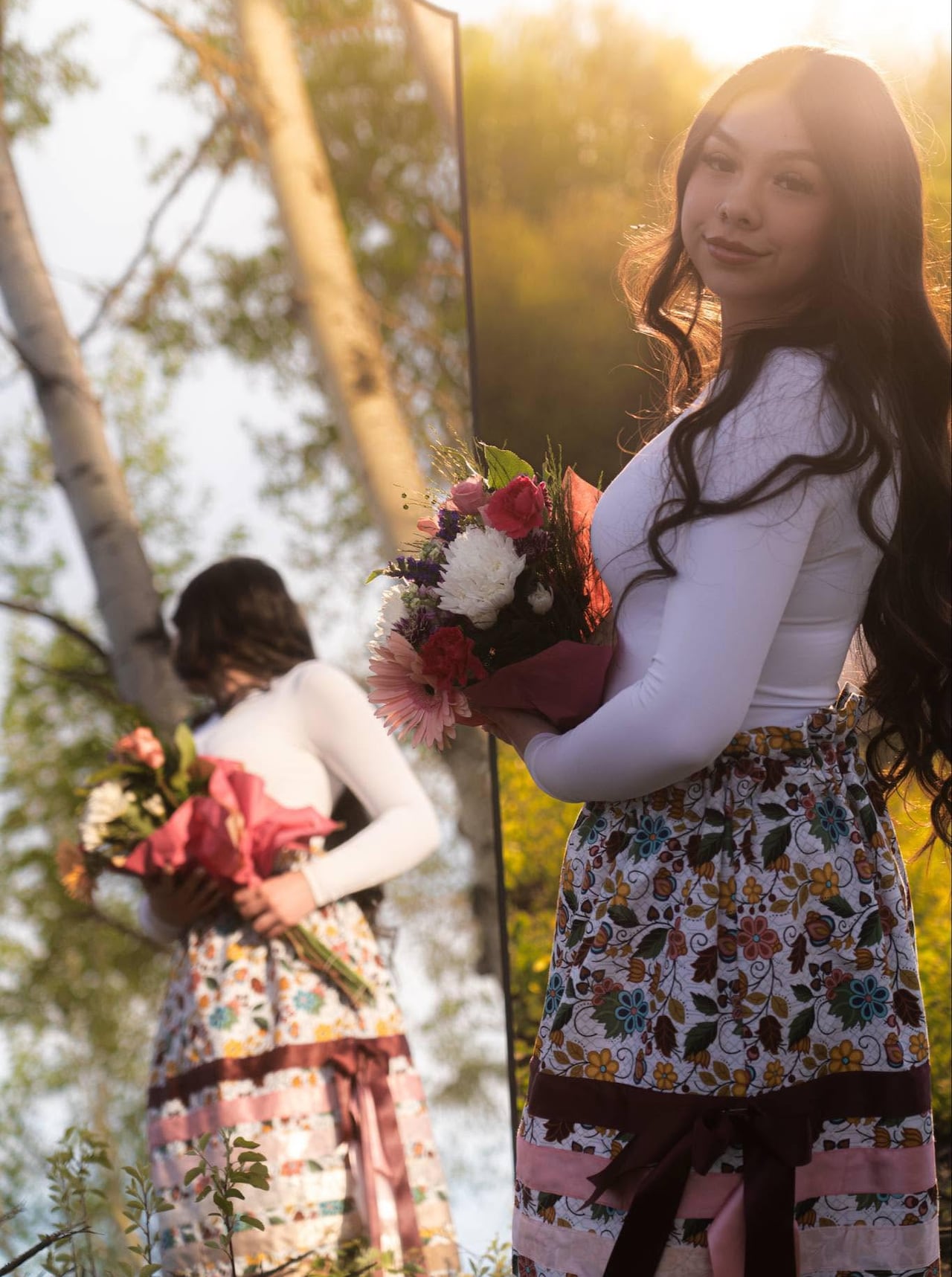 Miss Indigenous Canada 2026 candidate Ava Roe from Paddle Prairie Metis Settlement in northwestern Alberta. (Submitted by Ava Roe)
Roe threw her name in the hat after friends and family suggested she should run but admits the decision came with some self-doubt and she didn’t tell anyone she signed up until she got the notice she was selected.
“My main motivation now is representation,” she said.
“Especially being from the north, we don’t have much representation.”
Roe organized a fundraiser bingo in Paddle Prairie to be able to travel to the competition. She also received donations from local Indigenous businesses.
“If I didn’t have all of this love and community support, I definitely wouldn’t be here and on this journey. It makes me emotional thinking about it,” said Roe.
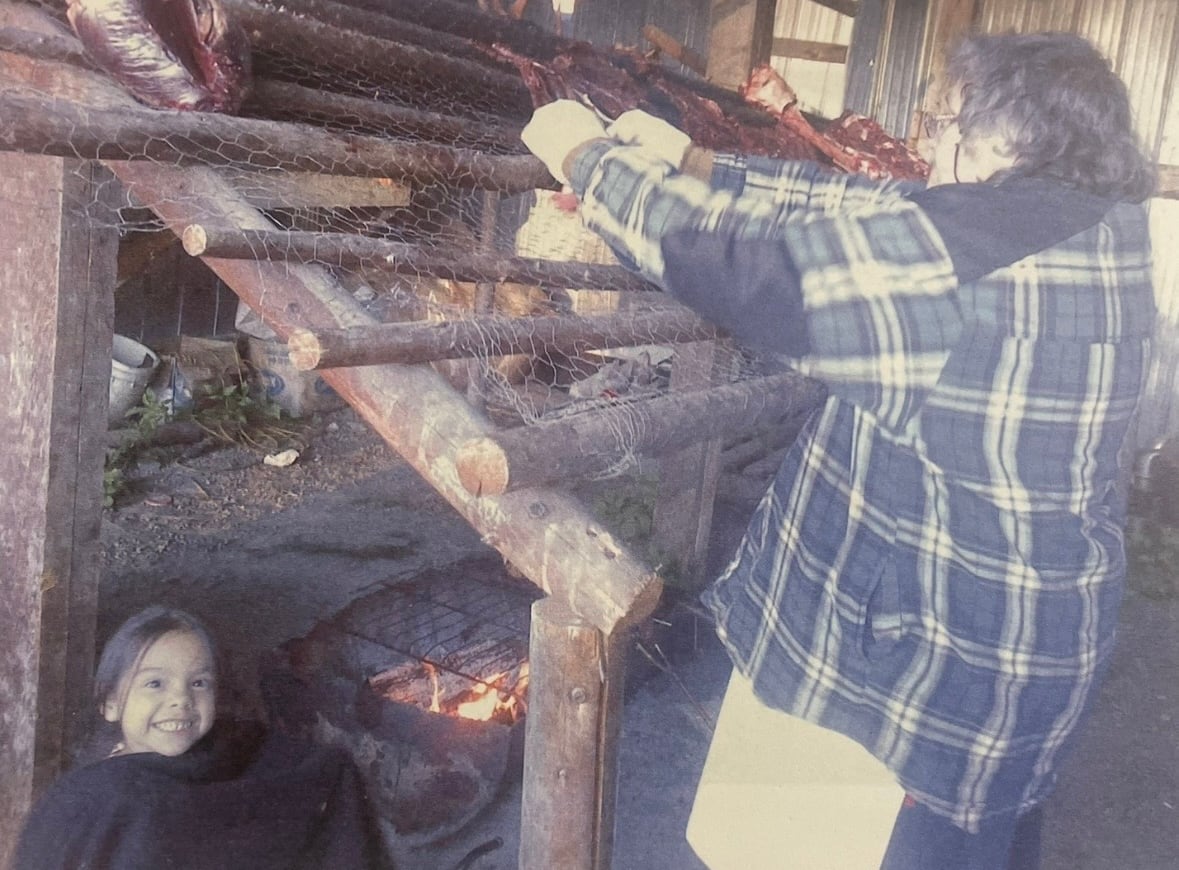 Ava Roe and her grandmother dry meat in Paddle Prairie Metis Settlement in northwestern Alberta. (Submitted by Ava Roe)
Roe said she will also be thinking about her late grandparents during the competition. One of her fondest memories of growing up with them was being a little girl laying down on the ground and looking up at her grandmother hang dry meat.
Roe said she is thankful she learned about her family history and traditions through them.
“If it wasn’t for them to be so strong and still carry their spirits, I wouldn’t be where I am today,” said Roe.