
Meaghan Hackinen has a habit of breaking ultra-distance cycling records. Recently, the Kelowna, B.C., rider set the women’s fastest known time for the iconic Tour Divide route. On this episode of the Canadian Cycling Magazine Podcast, Hackinen shares her journey to setting new records in ultra-cycling, training strategies, gear choices and the importance of sleep and sobriety in performance. Check out her insights into managing long-distance rides and preparing for unpredictable conditions.
Below, after the pod player, you will find three tips condensed from the full interview. If you keep reading, there’s the full transcript. But, do have a listen to the pod for the full experience.
SUBSCRIBE Apple Podcasts | Spotify | Pocket Casts | YouTube | TuneIn | Simplecast | RSS
Tip 1: Let minimalism guide your packing
Matthew Pioro Do you have an adage or a saying or a system that guides you with your equipment choices?
Meaghan Hackinen I try to be as minimalist as possible, but without compromising safety. I’ll always bring a rain jacket with a hood, even though the hood weighs more. I know that jacket will protect me more in the rain. I’ll be a lot happier in a storm because of that hood.
People are often like, what’s your luxury item? And I’m just like: a podcast download. I have no luxuries. But I do bring headphones, which I guess some would consider a luxury item. I really try to think of what I need, what am I using.
In thinking about safety, we bring things that we don’t use, like a first aid kit, right? Or gear to repair our bike. But I’ve kind of figured out what I need to pare that down to the minimum that I feel comfortable with in these remote places and that works for me. So minimalist but also thinking about safety.
I received a few questions about my sleep setup. I think people were a little bit in disbelief that I actually had a sleep setup on my streamlined bike. I got very defensive. I was like, of course I have a sleep setup. I have an emergency bivy, a sleeping bag rated to 0 C and a pad. This will keep me safe in a snowstorm, even, you know, like with my puffy jacket and my rain pants and my socks. I can tuck into that bag and just really have a warm, safe space.
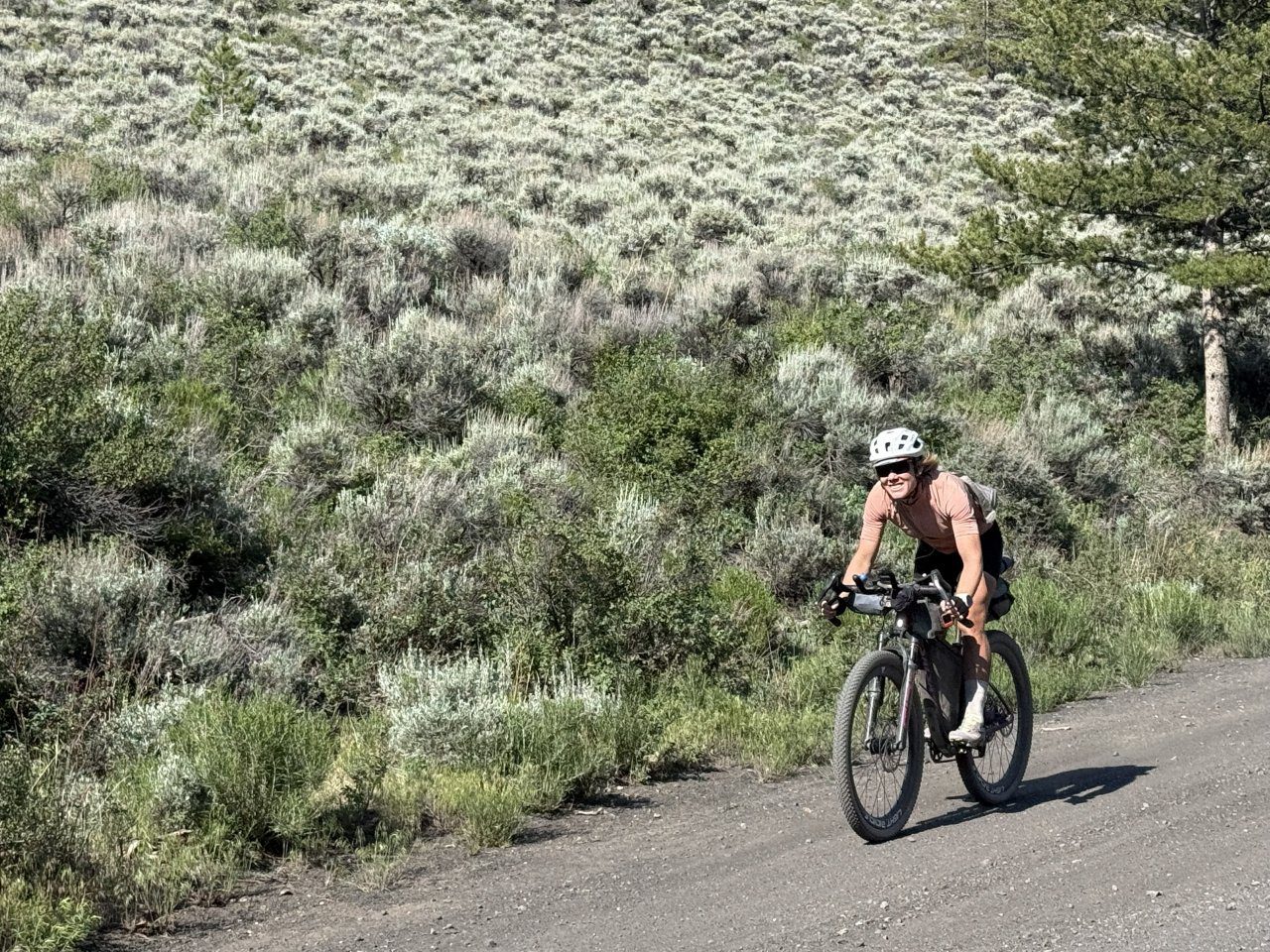 Meaghan Hackinen, 2026, Tour Divide.
Tip 2: Tailor your training to the ride you’re doing
Matthew Pioro Is there a certain training specificity you have to bring to different events, like possibly Tour Divide versus say a Mountain Races series event?
Meaghan Hackinen The hardest thing about the Tour Divide is its duration. It’s really long. Even Silk Road, I think I finished in nine days and Tour Divide was two weeks. To be able to manage yourself on the bike and put out reasonable power numbers for that long is the challenge. [My coach and I] worked on durability and doing some workouts where I’d have intervals at the beginning. I’d ride in Zone 2 for a few hours, and then I’d repeat those intervals at the end. We’d compare how well I did on the second set to the first set. The second set felt pretty terrible, always. But it kind of mimics what you would be doing in those longer multi-day races. The touring, I also think, mimics that a bit. Your body just gets accustomed to hopping on the bike every day and going. I think those two things kind of helped. I guess to answer your first question, what makes it different is the duration of it. It’s not as hard as the Mountain Races in terms of technical challenges. There are some tricky bits, but just the strain on your body for that long.
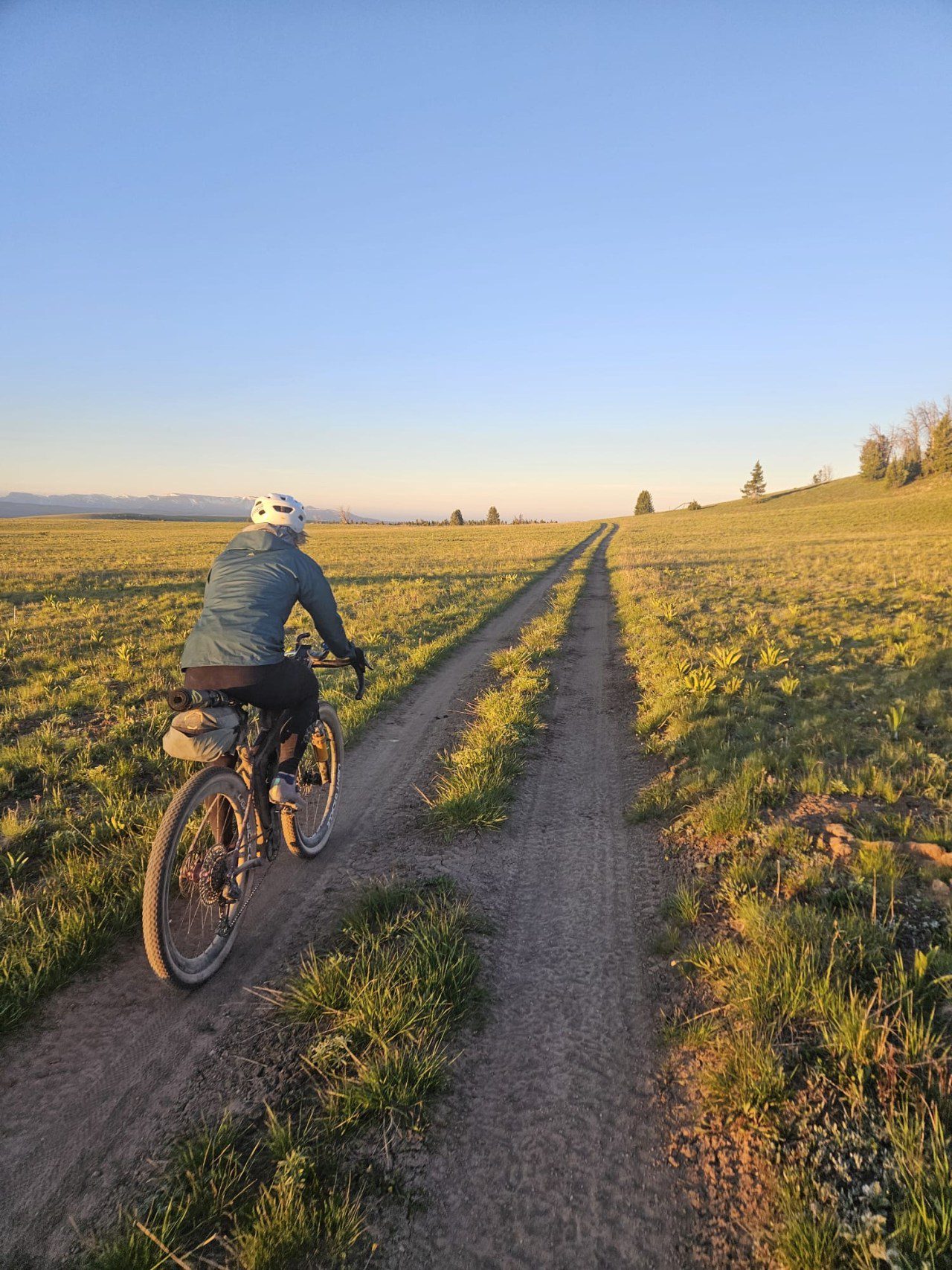 Meaghan Hackinen, 2026, Tour Divide. Image: Felix Laberge
Matthew Pioro What does a rider who wants to get started in ultra-cycling do when they start with training? Should they get a coach or does the old adage, “ride lots,” to use a quote associated with Eddy Merckx, work when you’re starting out?
Meaghan Hackinen I would say having a variety of things, doing a variety of things and riding lots is probably the best thing you can do if you have the time for it—but recognizing that many people don’t have the time to go out on these kinds of all-day adventures. When I think about my training schedule, I have maybe two or three hard workouts in the week, and then one longer ride. Somebody starting out, I would definitely encourage you to try to hit that weekly longer ride. In the winter, that might be four or six hours. In the summer that could be as long as you can handle out there on a bike. But that really gives you a chance to shake out your gear, to develop the saddle calluses you might need on your undercarriage to handle the the long days, to practise fuelling and nutrition, to get comfortable navigating, to make sure that you’re comfortable riding at night and in any time of the day, right? For me I think of it as whatever training you’re doing for any other event, and then add one longer workout. Take one of those Zone 2 rides and make it longer so that you get that practice in.
Tip 3: Fuelling—A fifth grader’s dream, a dentist’s worst nightmare
Matthew Pioro Tell me a bit about your fuelling strategy on the Tour Divide.
Meaghan Hackinen I have an alarm on my Coros that tells me to eat every 45 minutes. That can just be a snack, like a handful of candy. I always had food in my pockets. I had food in the stem pack of my bike. Sometimes I wore a musette bag with snacks for the resupplies that would be, I don’t know, I guess times when I was going to be about a day between resupply, I would have to put stuff in that musette bag. So, I just always try to be eating and make that a constant habit. It’s hard to digest that quantity of food. Whenever I stopped at a gas station, because that’s mostly where I was eating out of, I would go for all the liquid calories I could—big fountain drinks, iced coffees, chocolate milk, smoothies, Yeah, everything I could. And then things that digest, or maybe maybe not digest, but things that go down easily, like ice cream and gummy candies—just like a fifth grader’s dream, a dentist’s worst nightmare.
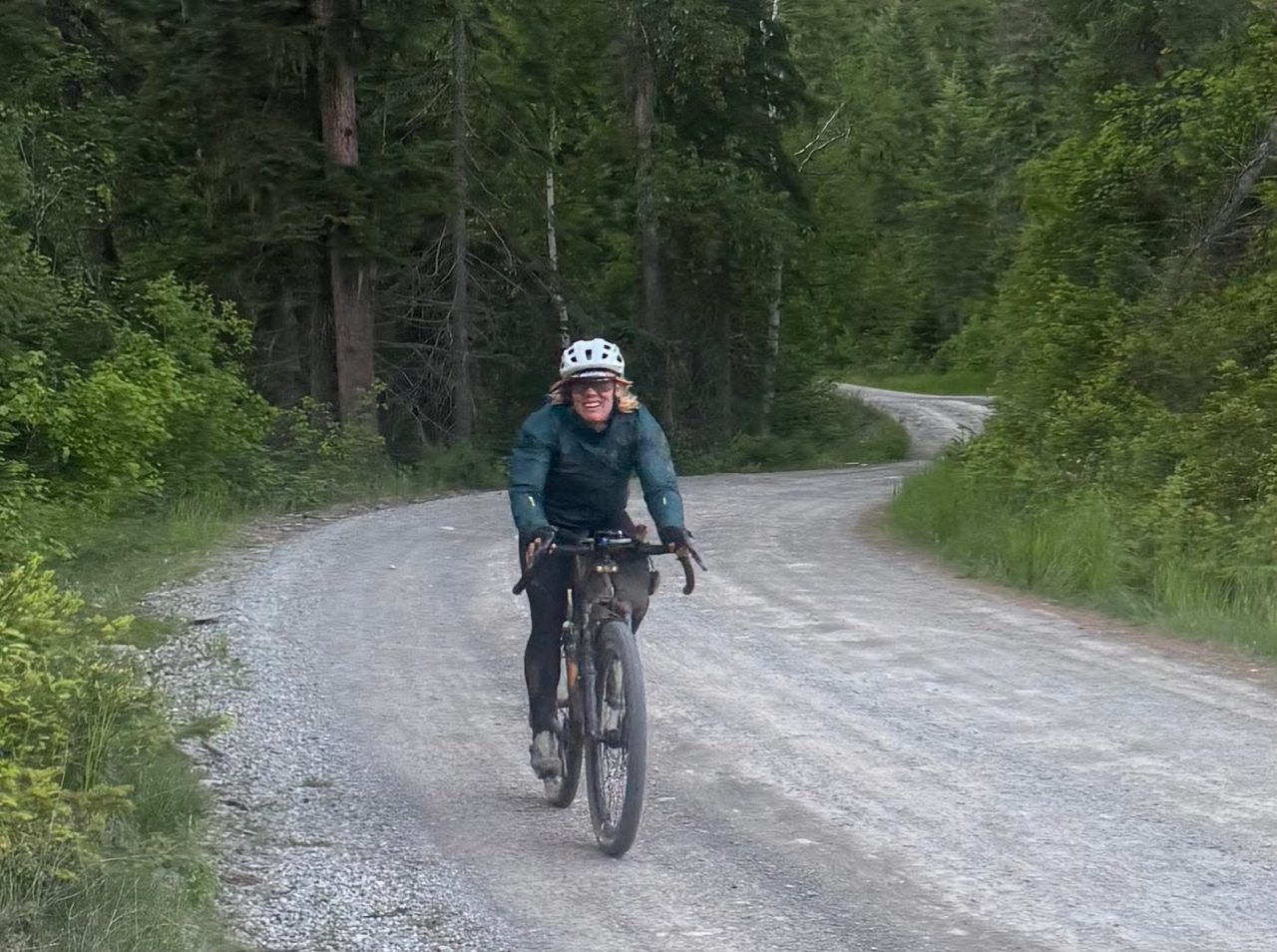 Meaghan Hackinen, 2026, Tour Divide.
Full transcript of the Meaghan Hackinen interview
Matthew Pioro Meaghan Hackinen, welcome to the Canadian Cycling Magazine Podcast.
Meaghan Hackinen Thanks for having me. Stoked to be here.
Matthew Pioro We’re speaking a few weeks after you set a new record for the Tour Divide, the ultra-cycling event from Banff, Alberta, to Antelope Wells, New Mexico. You now have the women’s record for the Tour Divide, which is 14 days, 10 hours, and 2 minutes. How are you feeling about your success now that you’ve had some time to settle in at home in Kelowna? Maybe you’ve cleaned your bike, I’m assuming, You’ve gone to the dentist.
Meaghan Hackinen Yeah, I cleaned my bike, cleaned my teeth, no cavities after eating nothing but junk food and fizzy drinks for two weeks. So that’s a relief. It feels just as exciting now as it did when I got to the finish in Antelope Wells. I think probably the biggest win that I’ve had in setting the record is just something that’s been on my dream list and to live your dreams, nothing could beat that.
Matthew Pioro This is your second Tour Divide record. You set your first in 2024, but there are some differences between those two marks, if you will. Can you touch on those differences briefly?
Getting the timing right for the Tour Divide
Meaghan Hackinen For sure. In 2024, I finished the Tour Divide in 15 days, 23 hours. I won the women’s division that year. I was number seven overall, and it was the fastest Grand Depart time. So for a woman. So it was the fastest time in the women’s category that someone had raced in the Grand Depart where everybody heads out from Banff together. This time, in 2026, I was able to win the women’s division again. I was number eight overall. And I set a new fastest Grand Depart time, 14 days, 10 hours, 2 minutes. And that’s also the fastest overall time that a woman has ever raced the Tour Divide.
You can race it as a Grand Depart, leaving with everybody on the start day, which is always the second Friday in June, or you can race it as an ITT and set that up any time of the year. The advantage of doing it as an ITT is you can fit it into your calendar year. We saw Lachlan Morton do that. And you might have the advantage of better weather if you can schedule it for a time when there’s not going to be snowstorms and monsoons.
Matthew Pioro But as you mentioned to me, before we hit record, there may be other pitfalls with leaving later in the year, possibly wildfires in the U.S. that you might have to contend with their smoke.
Meaghan Hackinen That’s probably the biggest danger is wildfires and smoke, especially with the climate change we’ve seen over the last few years. To get a record on the route, you have to ride it as written. If there’s any sort of detour to go around a wildfire, or yeah, usually it’s wildfires, then it doesn’t count as a record. And it’s a 4,400 km route, so you could be 3,900 km in and be forced to reroute. And that would be heartbreaking. That’s the reality of this race. The pitfall that riders leaving on the second Friday in June in the Grand Depart usually have is there’s often snow in the mountains. The thing with snow is usually you can post-hole through it and it’ll slow you down. It doesn’t make for fast riding, but it’s still passable, right? It’s not like burning up in a fire.
Training for an ultra-distance ride like the Tour Divide
Matthew Pioro It’s not like burning up on a fire. Right. Frostbite versus burns. I want to know more about your training for this event. When did you start structured work in preparation for this?
Meaghan Hackinen I started in November last year and that’s the time when I’d recovered from whatever my last event of the season was. I was starting to feel excited about training. So I did some testing with my coach. I hate testing. I hate working out to failure. I think some people enjoy it. I don’t like that feeling. I’d actually been kind of avoiding it and making up lame excuses for not doing certain workouts that are really hard.
But I did it this time because I really wanted to go back to the Divide and listening to your coach is one of those things that you should do if you’re trying to get the most out of your body. Structured training through November and December aside from the testing looked like about three harder workouts a week kind of alternating between threshold and VO2 and in between those were usually easier Zone 2 workouts. That’s when I could kind of schedule my adventure rides. I was house sitting in the Kootenays for some of that and just love exploring new places. They had a very mild fall so I did some great riding there. December was more indoor training in Kelowna where I live. I have asthma. My lungs don’t do well in the cold temperatures so I prefer to train indoors when the temperatures are probably 5 C and cooler. Then I’ll go out hiking or snowshoeing at a lower intensity that doesn’t aggravate my asthma. Then I went to Baja California for seven weeks and bikepacked the Baja Divide. That was my January and February.
Matthew Pioro Your training for Tour Divide seemed, how can I say, you had a lot of flexibility. But is there a certain specificity you have to bring to different events, like possibly Tour Divide versus say a Mountain Races series event?
Meaghan Hackinen The Tour Divide is the hardest thing about it is its duration. It’s really long. Even Silk Road, I think I finished in nine days and Tour Divide was two weeks. To be able to manage yourself on the bike and put out reasonable power numbers for that long is the challenge. We worked on durability and doing some workouts where I’d have intervals at the beginning. I’d ride in Zone 2 for a few hours, and then I’d repeat those intervals at the end. We’d compare how well I did on the second set to the first set. The second set felt pretty terrible, always. But it kind of mimics what you would be doing in those longer multi-day races.
The touring, I also think, mimics that a bit. Your body just gets accustomed to hopping on the bike every day and going. I think those two things kind of helped. I guess to answer your first question, what makes it different is the duration of it. It’s not as hard as the Mountain Races in terms of technical challenges. There are some tricky bits, but just the strain on your body for that long.
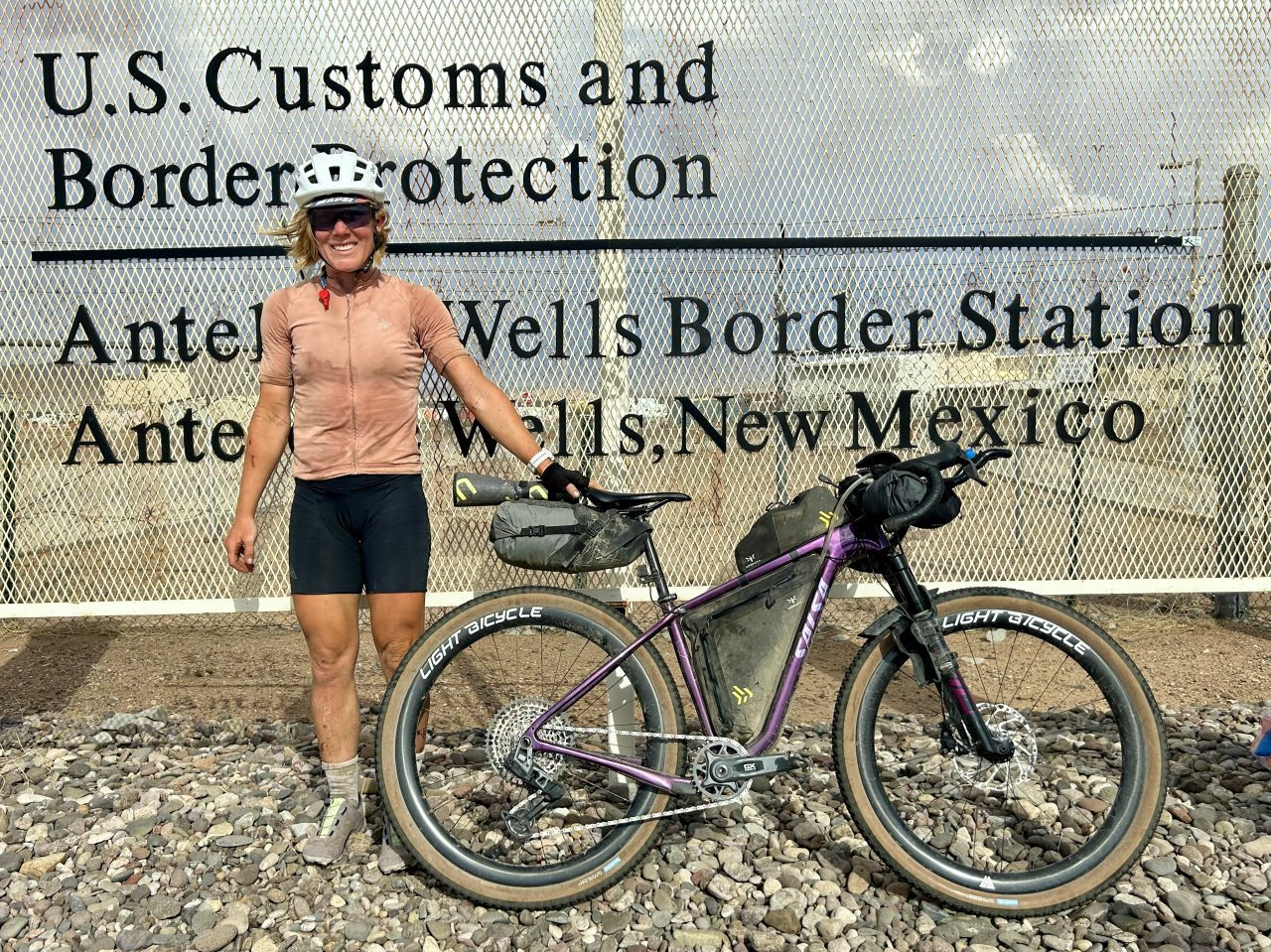 Meaghan Hackinen in Antelope Wells, N.M., 2026, after setting an FKT for the Tour Divide
Getting started in ultra cycling: Tips for beginners
Matthew Pioro What does a rider who wants to get started in ultra-cycling do when they start with training? Should they get a coach or does the old adage, “ride lots,” to use a quote associated with Eddy Merckx, work when you’re starting out?
Meaghan Hackinen I would say having a variety of things, doing a variety of things and riding lots is probably the best thing you can do if you have the time for it—but recognizing that many people don’t have the time to go out on these kinds of all-day adventures. When I think about my training schedule, I have maybe two or three hard workouts in the week, and then one longer ride. Somebody starting out, I would definitely encourage you to try to hit that weekly longer ride. In the winter, that might be four or six hours. In the summer that could be as long as you can handle out there on a bike. But that really gives you a chance to shake out your gear, to develop the saddle calluses you might need on your undercarriage to handle the the long days, to practise fuelling and nutrition, to get comfortable navigating, to make sure that you’re comfortable riding at night and in any time of the day, right? For me I think of it as whatever training you’re doing for any other event, and then add one longer workout. Take one of those Zone 2 rides and make it longer so that you get that practice in.
Meaghan Hackinen on strategizing pacing and sleep
Matthew Pioro Tell me about your overall strategy for riding Tour Divide. I’m thinking of things like pacing, breaks and even sleep.
Meaghan Hackinen I looked at my 2024 day-by-day numbers from Strava and used that to help me make a plan for this year. I had targets for every day, but making those targets knowing I would probably fall off target in the second half of the race. So that’s how I kind of looked at that.
I have a lot of experience racing ultras. I know that my minimum sleep is four hours. That’s the bare minimum. Less than four hours on an event that’s more than, let’s say 48 hours, I start to become a mess and make stupid mistakes, navigational errors and just become very slow. I knew I needed to plan for four-hour stops. I left some room to feel it out. I wasn’t feeling well-rested by the time I got to Wyoming, so I upped that time to five hours and feel like that was the right decision.
Also related to sleep, I hoped to stay in hotels most of the time. I brought a bivy setup for camping, so that I would be able to sleep outside as well. That was a really good decision because things didn’t go as planned with the hotels. I ended up outside an awful lot. So I had these daily targets. I had an idea of where I’d want to stop each night, whether that would be a hotel or a bivy.
For fuelling, I have an alarm on my Coros that tells me to eat every 45 minutes. That can just be a snack, like a handful of candy. I always had food in my pockets. I had food in the stem pack of my bike. Sometimes I wore a musette bag with snacks for the resupplies that would be, I don’t know, I guess times when I was going to be about a day between resupply, I would have to put stuff in that musette bag. So, I just always try to be eating and make that a constant habit. It’s hard to digest that quantity of food. Whenever I stopped at a gas station, because that’s mostly where I was eating out of, I would go for all the liquid calories I could—big fountain drinks, iced coffees, chocolate milk, smoothies, Yeah, everything I could. And then things that digest, or maybe maybe not digest, but things that go down easily, like ice cream and gummy candies—Just like a fifth grader’s dream, a dentist’s worst nightmare.
Matthew Pioro That is the best description I’ve heard actually of the current fuelling trends with high carb stuff. One rider said to me — he was a bit more cynical about it—said we’re all diabetics in the making. But I don’t think the sugars are staying around long enough.
Meaghan Hackinen I feel you’re burning through those calories as quickly as you’re eating them if you’re, you know, if you’re doing these rides. Sometimes, for me, it can be a little hard to transition back to normal life. I go into a store and all of a sudden I’m in the pastry aisle and just loading up my buggy with all this stuff that like, right, you get the vegetables over here. We can eat green things now. It doesn’t matter how many calories are in something. We’re not going for the most calories for the dollar anymore. We’re going for nutrient density and taste.
Matthew Pioro That’s a very interesting sort of gear-switch you have to make from in-race to out-of-race.
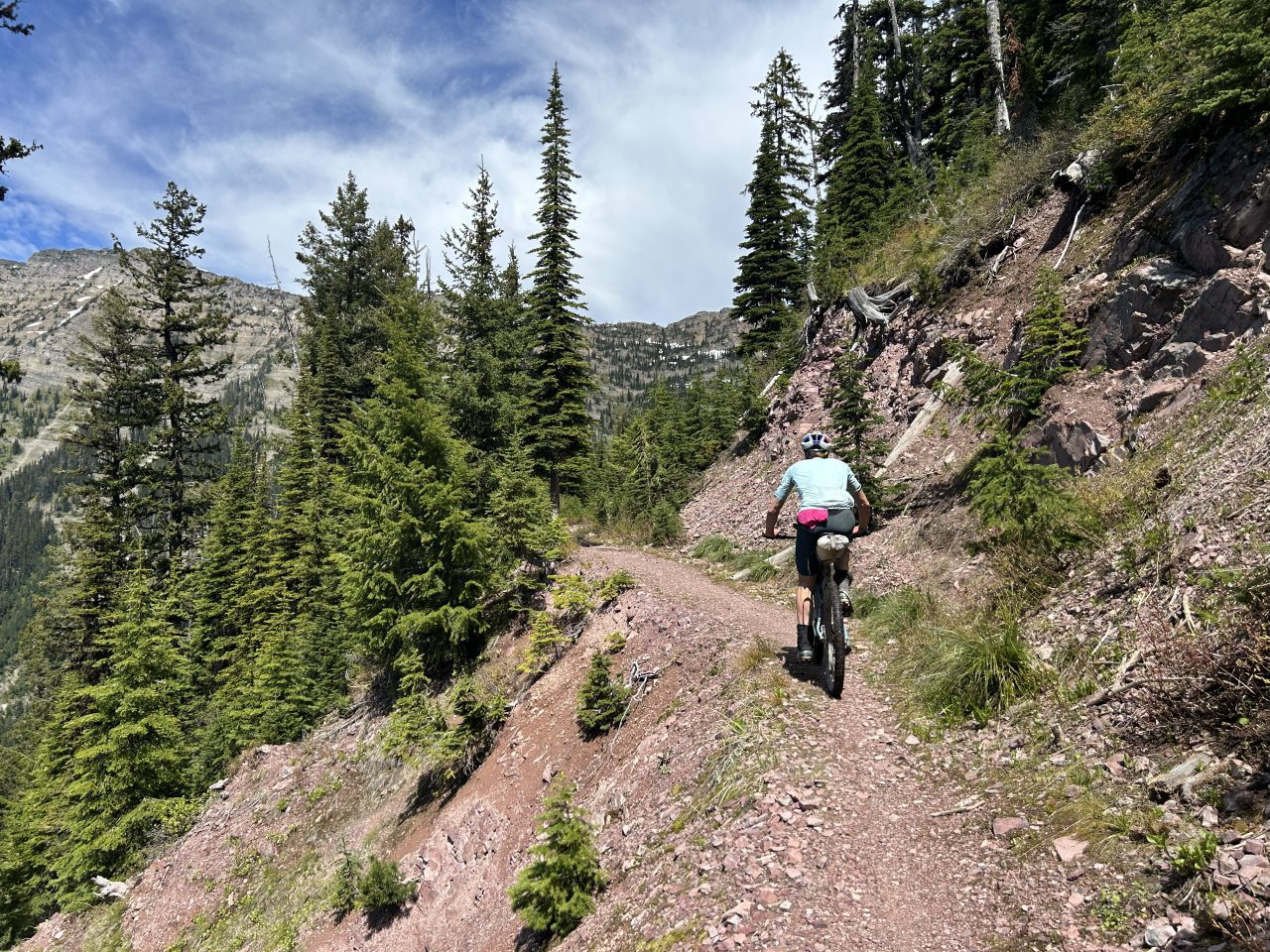 Meaghan Hackinen, 2026, Tour Divide.
Getting started in ultra cycling: Tips for beginners from Meaghan Hackinen
Matthew Pioro I want to circle back to sleep. In an article you wrote for Canadian Cycling Magazine in 2024, you said, whether racing or training, sleep is vital for recovery, given the choice between sleep and literally anything else, opt for sleep. When I was rereading this, I was struck because in 2025, Tour Divide winner Robin Gemperle spoke of the importance of rest above sleep deprivation. And this year, Victor Bossoni set the men’s ITT record, and he’s also said eat well and sleep well, and then you’ll have a real good day.
Now, Meaghan, I know you didn’t invent sleep, but are you at the forefront of making rest a priority in ultra-cycling?
Meaghan Hackinen I’m not sure if I’m at the forefront, but I’m definitely on that bandwagon. In my daily life, I try to get eight hours. Because I get to set my schedule, I don’t schedule morning meetings. I try not to set an alarm, and that feels amazing to wake up that way. I definitely have to set an alarm when I’m racing. I think that I’ve learned through my mistakes. I’ve been this sleep-deprived, hallucinating zombie probably more times than I can count. It doesn’t feel good. I mean, I guess I’m trying to set a record; I’m trying to win a race. It’s not about feeling good. If I wanted to feel good, I might go to a five-star resort on the beach. I think the better you feel, the faster you race. That’s something Victor and Robin have both demonstrated.
I feel like I’m living that experience as well. If you rest a bit more and can get your power numbers a bit higher, if you can improve your efficiency because your brain is more cognizant and functioning, then you’ll make up that time. It’s something I’ve observed happening around me, this trend towards, I don’t know if it’s a trend, but this movement toward taking sleep more seriously and appreciating its value as a recovery instrument during ultras. I think the time where it gets really tricky for me is in those shorter events where you might be able to push through without any sleep. Or, you know, in the shorter events, I guess, the amount of sleep feels like it weighs more heavily if you’re only out there for 50 hours.
Matthew Pioro I was going to interrupt and ask, wait, what do you mean by a shorter event? 50 hours?
Meaghan Hackinen Ha ha. That’s actually a very short ultra. I haven’t done— well, like I was going to say I haven’t done one that short for a while, but East Texas Showdown for me, I think that was like 29 hours. That was definitely a no-sleep one. To prepare for that, I tried to get really good nights of sleep the few days before and just left myself like a huge sleep window and tried to show up feeling very well rested, very relaxed and knowing that I would ride through the night. Hoping that I would have the energy and fuel to kind of get me through.
Something as long as the Tour Divide, I really feel like the past few years have demonstrated that sleep does the body good. When I was planning my race this year, I thought about that. I wrote step by step how I would approach my rest stops, whether they’re resupply or sleep, to try to be as efficient as possible and cut down anything I didn’t need to do. I never looked at my phone before bed aside from setting an alarm and just kind of having the order of operations. You know, when I get to a hotel, I’m going to plug in my devices, I’m going to wash my shorts and have that all really outlined in my head so that when I was there I could do all that and then just get to the good part, sleeping.
Matthew Pioro I read about that: how you had planned disciplined and intentional stops. So it sounds like you had a script prepared almost or a checklist to make sure you stopped correctly and you got to all the important parts like sleep and, whatever, charging your phone and whatever you had to do.
Meaghan Hackinen That is true, yes. My coach asked me to kind of prepare these checklists or scripts. At first I was like, I’ve raced a lot. I kind of know what to do when I check into a hotel. But I did them. They proved really useful, I didn’t reference them while I was racing, but writing everything out and then rehearsing it a few times before the event itself, I think made things go more smoothly. I actually practised unpacking my bivy bag, my sleeping bag, my sleeping pad, rolling it all out, climbing into it, putting it all away and setting a timer so that I had an idea of how long that would actually take. And man, it was funny how much longer it took in New Mexico when I was tired. I didn’t know it could take that long to stuff a sleeping bag into a stuff sack. But it’s hard. It wears on you.
Matthew Pioro I find this striking. It’s almost like an F1 race team practising the wheel changes. It’s something you need to master. In your case, it’s in the midst of the race you’re fatigued and you’re not even thinking well enough to to stuff a sleeping bag, it sounds.
Meaghan Hackinen I mean, it’s more complicated than that. I had a little nerve damage in my hands, too, making it difficult. And sometimes it’s cold— I was going to say “it’s hot,” but it’s not hot in the morning when you’re stuffing a sleeping bag. I think there is definitely a brain fog. I would describe myself as not a morning person, so everything’s hard for me in the mornings, which is why I need eight hours of sleep. The combination of factors makes things way more difficult than they should be. Then throw in any little little extra thing. For instance, there were times when I lowered my tire pressure to handle rougher terrain. In the morning I’d pinch my tires and think that’s pretty low. I should inflate them. Just inflating your tires adds maybe a minute per tire, but all of a sudden those minutes add up and that’s part of ultra-racing, I guess. That’s what makes it interesting. And we’re not just robots out there with FTPs.
Navigating challenges: Technical skills and terrain
Matthew Pioro On social media, you wrote that you stayed in control and raced your own race until the Continental Divide Trail segment just before Silver City. Then things unravelled a bit after dark. That perhaps hinted that your technical skills could still use some work. First, what happened? What unravelled?
Meaghan Hackinen I think I was able to feel like I was the one steering the bike, like I had control of the situation. That’s a really great feeling to have for such a long time. I come from a road cycling background, so I’m not as comfortable on rough and rocky terrain. It’s been a weak point for me for several years since I started riding the Cutthroat in 2021. I don’t really love mountain biking and people are always like, why do you do these events? And I’m like, well, I love riding my bike in the mountains, but I don’t love the challenge of, you know, uneven terrain and stuff. I prefer to be on a forest service road or some doubletrack or a gravel farm road. That’s more of my jam. But I’m willing to do the rougher stuff to get to the beautiful places it takes you. And that’s part of these events.
The Continental Divide Trail section was quite narrow. It’s more of a hiking trail than a biking trail. There was some hike a bike involved, which I don’t mind hike a bike. I actually probably prefer it because I don’t have to ride my bike. At the top of the hike a bike, it kind of twists and turns. I think there’s some great viewpoints, but I didn’t see anything because I got there after dark. In my game plan, I was going to get there before sunset. Trails are so much easier to navigate when you can see around you, right? I’ve got my headlamp, but I have a dynamo light on my bike, which doesn’t do great at slower speeds. It felt really disorienting and the risk of everything hit me pretty hard, you know? You’re on a little trail and you can see that there’s a drop off, but you don’t even see how far the drop off is. You can just kind of imagine that things would not be good if I went off that cliff, right? That could be race-ending.
Confronting the mental challenges in racing
I definitely feel like the fear takes over for me in moments like that. It did in this circumstance. So I hopped off the bike and pushed my bike a lot more than I wanted to—a lot more than I did in 2024 when I reached that section in the daytime and just felt like I had better legs for it. The head games I get from having to push my bike aren’t great either. You know, I started beating myself up. Like, why didn’t you work on your technical skills, Meaghan? You’ve had years. You knew this would be here. You could have prepared better. Maybe you didn’t prepare better because, you know, were you lazy or are you just unskilled?
These conversations kind of interfered with my ability to negotiate the trail and with confidence. I finally got off of it and finished beating myself up about that. I was just pretty depleted. It was time for me to go to bed, but my game plan had me riding to the finish and that was a bit over 200 km, which I mean, in the scope of a 4,400-km race, it’s not very long. But when you’re that tired and when you’re not in a good headspace, it feels like an eternity.
Matthew Pioro Yeah, I think I think in that scenario, you’ve got at least two things working against you. So it sounded like the right call. It’s like negative headspace, fatigue: you needed a reset. So I imagine that was the best call there.
What happens when you give your bike a name
Matthew Pioro Let’s talk about gear. You mentioned your Salsa Cutthroat. This bike has a name.
Meaghan Hackinen Yes, her name is Dolly. Thanks for asking. I name all my bikes and I named this one after Dolly Parton. I think she’s an incredible singer, songwriter and creative person. She’s just always creating and that’s kind of what I would like to be like. You know, I want to be contributing to the world. I want my creative energy to flow freely. I thought, yeah, naming a bike after Dolly would be a good companion for long days and nights on the road and she’s been wonderful.
Matthew Pioro I knew about the bike naming. I believe you had a Cervélo P3 named Sarah. What effect does it have to name a bike? Like does it change your relationship with this machine?
Meaghan Hackinen That’s right, yes. I feel closer with it and I feel like I have a partner in adventure. I enjoy doing things on my own, but it’s also kind of nice to feel like you’re with a buddy. The bike is so important. I think you need to respect the bike and take care of the bike. One of the best pieces of advice given to me was in 2024. My friend Andy Ward in Fernie told me to sacrifice my body and protect the bike. This was in reference to mud and river crossings and especially on the first two days when there’s some deeper crossings, where you can’t gauge the depth and you might try to ride through. He was saying get off the bike, protect it, don’t smash it up on Day 1. I think that advice has served me really well. Having the the bike named, it makes it a little bit closer. So I’m not just taking care of the bike, I’m taking care of my dear Dolly.
Matthew Pioro In my mind, it’s a variation of the old joke, I crashed, don’t worry, the bike is OK. But I think this is, this is actually more important because you’re looking at the long game throughout. Like this is what’s going to get you to the end of this ride. So you have to take care of it.
The packing strategy for a long ride
Matthew Pioro Do you have an adage or a saying or a system that guides you with your equipment choices?
Meaghan Hackinen I try to be as minimalist as possible, but without compromising safety. I’ll always bring a rain jacket with a hood, even though the hood weighs more. I know that jacket will protect me more in the rain. I’ll be a lot happier in a storm because of that hood.
People are often like, what’s your luxury item? And I’m just like: a podcast download. I have no luxuries. But I do bring headphones, which I guess some would consider a luxury item. I really try to think of what I need, what am I using.
In thinking about safety, we bring things that we don’t use, like a first aid kit, right? Or gear to repair our bike. But I’ve kind of figured out what I need to pare that down to the minimum that I feel comfortable with in these remote places and that works for me. So minimalist but also thinking about safety.
I received a few questions about my sleep setup. I think people were a little bit in disbelief that I actually had a sleep setup on my streamlined bike. I got very defensive. I was like, of course I have a sleep setup. I have an emergency bivy, a sleeping bag rated to 0 C and a pad. This will keep me safe in a snowstorm, even, you know, like with my puffy jacket and my rain pants and my socks. I can tuck into that bag and just really have a warm, safe space.
Matthew Pioro In preparation for this interview, one of the articles I read was by Jeff Bartlett for Bike Gear Database. Jeff is also a regular contributor to Canadian Cycling Magazine, but in that story he mentioned you brought hiking shoes. Now this seems like a bulky item. Why hiking shoes?
Meaghan Hackinen I went back and forth on this. Day 1, for the faster riders, about 160-km in, there’s a section called Koko Claims. It’s a steep hike a bike. I can’t remember how much gain there is, but it took me an hour and 40 minutes or something to get up and over. It’s big rocks. It’s one of those sections where I think if you’re a strong cyclist, you might hear about Koko Claims and be like, well I can probably ride it. But it really is a hike of bike for everybody. I’m telling you this now. In 2024, I didn’t bring another pair of shoes and I really destroyed the soles of my cycling shoes over the course of the race. Similar to protecting the bike, I wanted to protect the shoes so that they weren’t like peeling off on me.
I debated bringing the hiking shoes. We didn’t really have boots on the ground in B.C. and Alberta to say what the early passes were going to be like. There was a lot of speculation online about there still being heaps of snow and wet, muddy conditions. Just not knowing what I was going to encounter up there, I figured that hiking boots would be a better choice, more grip. I guess they were more like lightweight trail hiking shoes, but they had some great grip on them. I opted to bring them.
I slipped one on each aero bar and just kind of strapped them on there and pulled them off when I got to the hike a bike. They definitely helped me with that section. I felt more confident on my feet. I was a little bit afraid I would lose my cycling shoes, like one of them would slip off and I wouldn’t notice it, and then I would be stuck without a shoe or both shoes. That would be absolutely terrible. But I did not, and I had to ride with these shoes on my aero bars after that section until I got to Fernie. Then I gave them away to a dot watcher. Who knows if she’s going to wash them and use them or throw them in the trash. That’s not my story anymore. That’s for somebody else to deal with. I think it was the right move.
As a minimalist, it really was a hard thing for me to do to pack these shoes. Quite a few other riders seem to, and I think it was the right call. I don’t believe it was 100 per cent necessary, but my cycling shoes were in better shape, so that’s a good thing, too.
Where a beginner should start with ultra-cycling gear
Matthew Pioro Where does someone getting into ultra cycling start with gear? There’s a Portlandia bit that friends and I love to quote about getting the gear in which two people go nuts equipping themselves just for a short hike. Cycling is a gear forward discipline and bikepacking might be the gear-iest. So how does one start gearing up right?
Meaghan Hackinen I know exactly what clip you’re talking about and I love how you described bikepacking as the gear-iest.
Matthew Pioro I mean, you put on bags to carry more things.
Meaghan Hackinen For sure. Yeah, it’s a tricky place to start right at the beginning. I would probably go to a local bike shop that has more bikepacking gear and poke around and look at things and touch things and feel things. Usually the folks that work at those shops are gear nerds and they’re happy to tell you what works for them, what doesn’t. It’s nicer to look and touch and feel than just kind of scope on the internet where you don’t get that kind of tactile community experience.
The first three pieces I purchased back in the day were a top-tube bag, a frame pack, a partial frame pack—I use a full one now—and a seatpost bag. So those three things I think were my three essentials. You can do a lot with those three things. I mean, you have to make a lot of choices to get to those.
In 2017, I think I went to my local bike shop and there weren’t a lot of choices. I basically took what they had. You can kind of piece together other things as needed. You can throw a backpack on if you have a little bit more stuff. I mean, I would not recommend using a backpack as your primary packing device. But if you need to add one to carry a little bit more, that can work. You can use a dry bag and some straps for a front roll to carry your tent and sleeping bag if you need.
Having the top-tube, frame and seatpost bag— for me those were kind of the starting points. A lot of people don’t use the frame bag; they just use the water bottles so you might be able to get it down to the top tube and the seatpost bag.
You can borrow things from people to try them out. You can sell stuff if you don’t like it. I guess realizing that these decisions that you make now are not forever. You know, you want to think about them, but you can overthink them and you’re not married to this bag.
Matthew Pioro That’s good because sometimes you’re like, I bought this, I need to use it until it dies. It’s like, no, maybe not. Maybe you can upgrade.
The impact of sobriety on performance
Matthew Pioro Meaghan Hackinen on social media, you wrote, as a returning rider with big goals, I felt some performance anxiety, but I kept reminding myself that making it to the start, and this is the start of Tour Divide, making it to the start sober meant I’d already won. I want to unpack that quote a bit. Now, you didn’t drink during races, but alcohol was part of your routine. Now that you’ve cut out alcohol, how has it affected your performance on the bike?
Meaghan Hackinen The performance benefits were immediate and positive, as you would expect. I think one of the biggest ways I’ve seen it is in my recovery.
Even sober, I’m not a morning person, but when I was drinking, mornings were very hard for me. I felt like, you know, dealing with hangovers was kind of my punishment or like my cross to bear for having a drinking problem, right? I was like, well, you deserve this, so you just have to suffer with it. Not feeling that way in everyday life is, it’s just, it’s so much better. I’m a much nicer person before noon.
But I felt it when I was doing my testing with my coach—those first rides back into training in December and November. Just being able to hit higher power numbers and maybe push my body a little bit further than I was used to taking it in training circumstances. As uncomfortable as that felt, I felt really good about being able to go there, knowing that I could just take things a little bit further.
On the mental side of things, it’s definitely given me more clarity. I feel there are so many decisions you need to make, in planning and preparing for a race like this. Then when you’re actually out there, we’re making decisions based on the information available to us. It can be really difficult, you know, when you’re gauging how quickly the weather is coming in or how your body is going to feel at 11 p.m. if you should push for a longer target or how long your food is going to to last you, or, you know, if the next water resupply might be dried up or not. These decisions can be really mentally fatiguing. They can be quite stressful for me sometimes. But I felt like I had more clarity and I was able to make them this year in the Divide in a way that just made a lot— it felt easier. Some of that was from experience on the course, but I think sobriety played into that a lot just because my mind is less clouded and that feels really good.
I also feel like I have a better sense of what’s actually important and what might feel important. What’s really important is maybe how I feel inside, if something brings me joy. And I don’t want to be selfish, but it comes back to me. And valuing those things over maybe some of the superficial and less-important things has been easier since I’ve chosen sobriety.
There’s been a shift in how I see things. And I maybe care less about race results now, which in a strange way has perhaps allowed me to do better because I care less. So I’m letting go, focusing more on the experience and the preparation because I enjoy the preparation. I’m not too far along on this journey and I think it’ll be really interesting to reflect in a few years or a few seasons.
Matthew Pioro This question for me comes from— like we’ve done articles in the magazine just on the physical effects. And it’s pretty common now, but you know, alcohol does your body absolutely no favours. But I also find it interesting the sort of extra dimensions that it opens up for you. And that’s almost a paradox of the not-caring-as-much part. It’s not apathy, but it’s— I don’t know what that is. It’s a freeing you up so you can, like you said, just focus on the experience. Is that how I’m reading it?
Meaghan Hackinen I think so, yeah, I think so. I realize that choosing sobriety has been such a big win for me and I feel— I kind of have been joking that my sponsors expect me to have a higher goal than just not drinking. But that is the piece that needs to come before other things. When people talk about sobriety that way, when people have talked to me in the past like that, I’ve been like, oh God, that doesn’t sound like fun. But now that I’m on this side, yeah, my point of view has shifted quite a bit.
I definitely knew that alcohol was doing my body no favours, but that’s something, you know, you can just kind of turn off. I feel like in this day and age, we can choose which health advice we want to listen to and which we don’t, and I chose not to listen to that.
Safety tips for solo female travellers by Meaghan Hackinen
Matthew Pioro Sticking for a second with slightly more serious subjects, what are your top safety advice or tips for women travelling solo in remote places?
Meaghan Hackinen One of the things that’s really helped me was getting a Garmin inReach because it has two-way communication. So before that I used a Spot tracker, which tracks you and you have the SOS button and I think a couple of other pre-programmed buttons. But having two-way communication gives me a lot of confidence when I’m in a remote place and it gives the people who love me, you know, they feel a lot more settled and reassured that they can reach out to me and see where I am on a map, but also communicate with me.
I think the newer inReach has voice notes and photos, which sounds really, really cool. But this has been a game changer for me for local rides here in the Okanagan. If I’m out, I can tell people where I’m going and then give them a link to where I’m going to be. I know that if something happens to me, if I don’t come home, they’ll come looking for me or they’ll call emergency services or I can call emergency services.
I do think about where I sleep and where I feel comfortable sleeping because, as we discussed, sleep is so important for recovery. I don’t want to go to sleep feeling anxious about wildlife and predators and people interrupting me. So I try to choose places that I feel have good vibes and I feel safe in. For me that’s often small towns, small communities where I sense there’s a low crime rate, and there’s a place to lean my bike up against and maybe a picnic shelter to get cosy under.
I would say places away from busy roads, kind of out, you know, off of the side of some quiet forest service road, but outside of grizzly country. So there’s yeah, there’s a lot of big animals in the northern part of the route. And then there’s this line at Pinedale, Wyoming, that the grizzlies do not continue south of into the Great Basin. So that’s where everybody dumps their bear spray. And there are bears south of there, but there’s not grizzlies. So, you know, one could keep their bear spray and have a good reason to. But south of Pinedale is when you don’t have to worry about food storage and things like that quite as much. So I try to stay in hotels or stay in small communities where there was a garbage bin to stuff my food in the back of or a campground, a place that was, you know, a little more, a little more protected, I guess. Because I didn’t want to worry about predators at night, right?
If you don’t feel confident, if you haven’t spent as much time off in remote places, doing it with somebody else, doing it with the group can be a great way to kind of get there. I know this was a hurdle for me when I got my Cutthroat. I figured if I had a mechanical, I could hitchhike back to town or something. I could just flag somebody down. In a race that’s not so much an option, you’re supposed to deal with it yourself. But on training rides, I just figured I could wave my thumb and yeah, I have hitchhiked a few times actually. But when you’re in more remote areas, you might not see a car for hours or days.
So going to those places with other people so that you have a buddy to help you deal with something that might come up. And then asking yourself what are my fears and can I address them? So if your fear is I don’t have the mechanical skills to deal with my bike if you know X, Y and Z happens, OK cool. How can you address that? Can you take a class? Can a friend help you get these skills? Can you watch some YouTube videos? Maybe you need to buy some more tools.
But just asking yourself specifically, what am I afraid of and can I address it? And everybody’s fears are different. Some people’s fears come from previous traumas, and they are not so easily addressed, right? But if you do an inventory and you can kind of work through them, I think that helps build confidence and helps people have this individualized plan for getting farther on your bike.
Meaghan Hackinen on staying present during ultra-distance races
Matthew Pioro When you’re racing an event like Tour Divide, you have a plan, you have a pace, and you’re travelling through places that many people don’t get to see. So how do you make sure to take in the scenery and the landscape and even the people you meet along the way? I know of Tour de France riders who day to day they could not tell you where in France they are. But how do you avoid missing out when you’re racing through North America or Greece or Kyrgyzstan? How do you avoid missing that sense of place or you know, appreciating where you are?
Meaghan Hackinen I try to ride with both eyes open and be present and enjoy it. One of the reasons why I got into long-distance cycling is because I love moving through landscapes. I love that feeling of flow. I love doing it with my own muscles and I really enjoy seeing things change around me as you climb to the top of a pass and then roll over to the other side. So I find enjoyment in the actual act of movement.
Sometimes I find stopping for photos interrupts me. On the other hand, stopping for photos helps me kind of capture that memory and look back on it and it gives me some, you know, source material when I’m writing because I can have the visual in front of me, right? So that’s like an internal struggle that I have. I often take pictures while I’m moving that are not good photos, but they’re kind of just for me to look at later and remember like some details.
Matthew Pioro Yeah, it’s more note taking than photography.
Meaghan Hackinen I will say that my average was like 16 and a half kilometres an hour on the Divide, so you’re not moving that fast. So you do have a lot of time to observe what is around you. My average in Greece was like 9.9 km/h so it’s even slower. So you’re really able to take in a lot at that speed, you know. 9.9 km/h, people run faster than that. So I just try and take things in and I try not to let my head go weird places or into like past ruminations or negative thoughts that might take away from where I am now.
I think one of the joys we all experience on the bike is that our mind can kind of thought-hop to different places, but keeping it just here in what I’m doing and enjoying the landscape. Of course, if I start reflecting on the Easter that my sister and I were given bunnies as presents, like that’s a nice thing to pop into your head. I’m not going be like, that’s not on-topic. Get out, get out. But I do try to be there in the moment. And people are always like, what do you think about? And I try not to think too much. I just enjoy being there.
Post-race recovery and reintegration
Matthew Pioro Tell me what recovery from a big event is like. Do you have a recovery or post-event checklist?
Meaghan Hackinen I do not, but I probably should. That’s a great thing to work on for next time. The Tour Divide finishes at the border of the U.S. and Mexico, and the next town is about 50 miles away. So someone gave me a lift to Hachita and there’s a bike ranch there where a fellow named Jeffrey Sharp helps riders transition back into the real world. This woman Jill also gave me some clothes to wear since I didn’t have anything. So it was like a purple T-shirt and a denim skirt. So that’s what I wore for like five days until I got home again, just on repeat. At the bike ranch, there’s just other cyclists there, other finishers in my case, and we could just eat huge bowls of cereal and plates of pancakes and reminisce and enjoy the feeling of finishing and swap stories and get to know each other.
In most events, there’s usually a transition space like that where you can hang out with the other finishers before reintegrating into society. These people really understand what you’ve been through because they’ve just done the exact same thing and it’s a really cool feeling. I love that stage. From there, I took a bus to Phoenix and I stayed with a fellow for a couple nights and then took a flight home.
Since I’ve been home I’ve been focused on enjoying the sleep in my own bed, eating food that’s nutrient rich. I’ve been having a green shake or a smoothie every single day and starting to incorporate things like going to the gym. I’ve done a few easy recovery workouts on my bike. I spent a lot of time on phone calls and coffee dates and catching up with people in my community and filling people in on stories. I’ve been stretching and my body doesn’t want to stretch. It feels terrible to stretch, but I know I need to, so that’s definitely been a priority.
For anybody finishing, a lot of kind of life admin stuff to catch up on, emails that haven’t been responded to and and things like that. And you know, sometimes that feels like a lot to handle, but I guess I’m very lucky that I do this for a job so I can sit down with my coffee and kick my feet up and enjoy spending time on the computer.
I think one thing I try not to do is is rush back to things and as I guess we’ll talk about I am heading out on tour again, but I really try not to push, like you know, I need to be doing a hard workout by this day or I don’t line up any races for for a while. I think my next one isn’t until September. So giving yourself a big window. Because you don’t know what you’re going to feel like at the end. I’ve finished events feeling almost like I could go out and ride another back-to-back race. I finished other times just not wanting to look at my beautiful bike ever again and not being able to ride because of some knee injury or something like that that forces you to stay off the saddle for a while.
Matthew Pioro The phrase “integrating into society,” it almost sounds like you’re been in prison or something for an extended period of time. But I love that. But it is, it becomes its own world that you then have to exit.
Meaghan Hackinen’s upcoming adventures and new challenges
Matthew Pioro You mentioned another event that you have lined up. When this podcast comes out, I believe you will be riding the Golden Gravel Trail. It’s not an event, but can you tell me about the Golden Gravel Trail and what you will be doing out there?
Meaghan Hackinen So the Golden Gravel Trail is the Adventure Cycling Association’s newest route in the U.S. It starts in Cape Girardeau in Missouri on the Mississippi River. It goes west all the way to the Oregon coast, finishing in Port Orford. So it’s 6,100 km, mostly gravel. The idea was to have a long-distance off-pavement route. It’s a little bit safer than riding on the pavement, and you get to explore the back roads and stuff a bit more. It’s Adventure Cycling’s longest off-pavement route. It’s longer than the Tour Divide.
It’s called Golden Gravel because it’s celebrating their 50th anniversary. I’m riding it as an ambassador for Adventure Cycling. I’m really excited to get to tour this route. I have eight weeks to spend on it. My role will be being a friendly face on the trail, chatting with other cyclists. Folks are invited to drop in and ride with me if they like.
I think I will be doing a lot of shorter days than the Tour Divide. More like a 100 to 110 km versus 300 km and up. I hope that I can, you know, take it a little bit slower at the beginning if I need to and put in some bigger days when I get to Colorado and Idaho and Oregon, where there’s more hill climbing. The biggest challenge I think I’ll face in the beginning is probably the heat and maybe the wind. So thinking about doing shorter days and earlier in the day. But really excited to get to spend time on a bike in a different way right now.
Matthew Pioro And in the fall, I believe you are planning to take on a new event. That’s the Taurus Mountain Race, a new addition to the Mountain Race series. Have you ridden in Turkey before?
Meaghan Hackinen I have not, no. I signed up because Nelson Trees and the Mountain Races are yeah— Nelson is a great race director and the Mountain Races have all been amazing events. Doing the trio last year, I wanted to kind of round everything out and jump on the newest event. I’m really excited about this.
It has not been on my planning radar yet, so I’ve got to put some time into that. They’re not releasing the actual route until two days before the race. They want to keep it a surprise and not have people recce’ing anything out. So I think the racers will be provided with information about the checkpoints, information about the temperature ranges and the altitude and kind of what we need to know to prepare to race there safely. But there won’t be any specifics until two days before. And then we’ll download the GPX tracks.
Matthew Pioro That’s wild. I was going to ask, how do you prepare for a new event like this? But you’re not even going to know the route until two days before.
Meaghan Hackinen Which I do kind of love because I feel like I have a lot on the go. And so it’s not me neglecting it. I just don’t have the route.
I think the one big change I will make is I’m going to be riding Dolly, but I’m gonna swap out the drop bars for flat bars because not knowing the route, I feel like it could be more mountain bike-y and I might prefer not to have those drop bars. And I’d rather prepare for rougher terrain than faster terrain. And knowing Nelson, I don’t think it’s going to be easy. So I’ll make that change to my bike and have it tuned up and serviced and, you know, fresh tires and all the like and then just use the information about the temperatures and distance between checkpoints to plan as best I can.
Matthew Pioro Amazing. Well, Meaghan, thank you so much for your time. Good luck with, well, whatever adventure’s next. I will look forward to continuing following your adventures. And yes, thanks again for spending time with us.
Meaghan Hackinen Thanks for having me. You asked some awesome questions and it’s been really fun to spend an hour with you.