
This story is part of Peak, The Athletic’s desk covering the mental side of sports. Sign up for Peak’s newsletter here.
Thirteen months before he won the Open Championship at Royal Birkdale, Ryan Fox stood over one of the biggest putts of his life — a 16-footer for birdie on the final hole of the RBC Canadian Open. It was the kind of moment that could change a career.
Fox, a 39-year-old from New Zealand who was then in just his second year on the PGA Tour, needed to sink it to force a playoff with Sam Burns, an American ranked 42 spots ahead of him in the World Golf Rankings. But when Fox made contact, he immediately feared the worst. He pulled it left.
To his astonishment, the speed was right, and the line was solid, and the putt just held on, finding the left edge of the lip and falling gently into the hole.
“Your mind’s racing,” Fox said later. “My hands were shaking a little bit.”
The dramatic putt sent the tournament into a playoff, which Fox won on the fourth hole after smashing a three-wood to within 7 feet from 258 yards out. The brilliant approach shot was so good that the tournament installed a commemorative plaque in the fairway. It was also the catalyst for a second playoff victory in less than a month, a late-career breakthrough that burnished Fox’s self-belief.
“There was a belief deep down there somewhere that my good golf was good enough to compete,” Fox said in an interview on Wednesday. “But then to actually do it, it makes it so much easier to believe.”
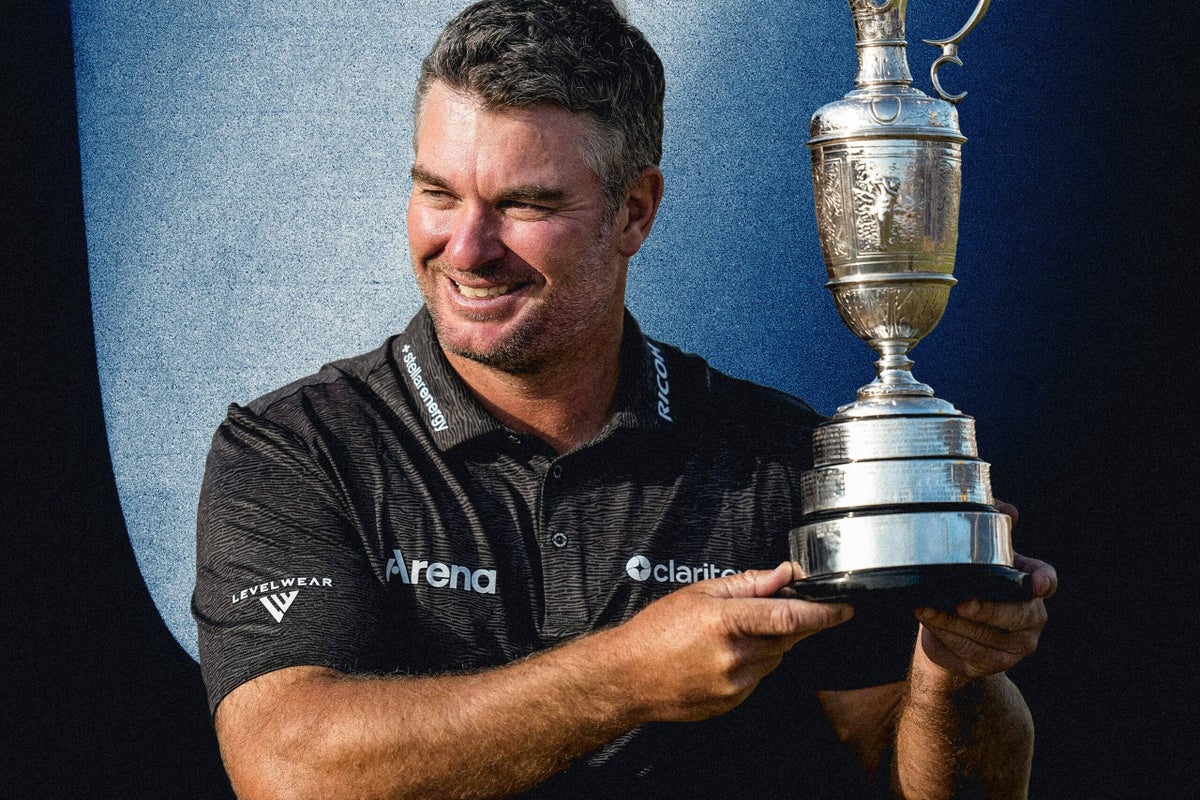
When Fox hoisted the Claret Jug at the Open Championship on Sunday, his journey mirrored that of countless elite athletes and champions. An improbable victory — unexpected by most — had offered confidence and belief, providing a springboard to the future. And when he faced a similar situation — needing a birdie on the last hole at Royal Birkdale — he leaned on past experience and delivered with another clutch putt.
For any athlete or sports fan, the narrative may sound like a familiar trope. Yet the story of Fox offers a window into new scientific ideas about how humans may forge self-belief.
Kenneth Kishida, a neuroscience professor at Wake Forest, has spent the last two decades studying how the human mind processes narrative and how expectations can alter our subjective reality. In recent years, his focus has shifted to studying dopamine, a neurotransmitter in the brain that is largely known as “the pleasure chemical.”
What Kishida’s research has found, however, is that dopamine is part of a sophisticated teaching system that guides our behavior.
At the most basic level, Kishida says, dopamine is signaling prediction errors that humans make, allowing the brain to adjust and adapt based on the experience.
Aaron Rai does something that no one else is does
Elise Devlin
The research is complex, requiring technology that allows measurements during invasive brain procedures, like electrode implantation to treat Parkinson’s disease. But Kishida offers an analogy:
Imagine you’re an athlete, and in the middle of competition, you have a moment in which you believe that you might lose. You could be trailing, or time may be running out. You may have just hit a horrible shot. Yet you still keep playing, handling the pressure, performing well, and against the odds, pull out a victory in the final moments.
The feeling of victory after the expectation of defeat causes an intense dopaminergic signal in the brain, which delivers a simple message: That was better than expected. The process then acts as a teaching tool, reinforcing everything that led up to that point.
“Teaching the brain what leads to the ultimate goal or the ultimate outcome is key to what dopamine seems to be doing,” Kishida said.
Kishida, the chair of a new initiative on neuroscience and society, cautions that the sports example is speculative, in part because we cannot measure an athlete’s brain during competition. But he and his colleagues’ research could unlock part of the mystery of why athletes gain so much from succeeding through adversity or pulling off dramatic comebacks.
“Those things that lead to that goal or lead to the outcome,” Kishida said, “the dopamine system seems to be teaching the brain what those steps are.”
As a late bloomer in the golf world, Fox offers his own lessons about self-belief. He didn’t start playing golf until he was 13 and didn’t turn pro until he was 25. He didn’t become a consistent winner on the DP World Tour until he was in his 30s, and when he finally became a PGA Tour regular in 2024, he was 37.
“I think some people can be the people that can almost talk themselves into it,” Fox said. “Like they just believe through good self-talk. For me, throughout my career at every level, it’s always felt like I’ve needed to do something first to start to find that belief.”
The way he sees it, each victory along the way provided a proof of concept — and an experience to draw on. When Fox is on the course, he likes to focus on being creative, to be reactive and athletic and create shots on the fly. He also wants to play exceptionally fast. As a result, it comes down to a straightforward formula:
The more belief he possesses, the more he can be himself.
“You can draw on that experience of winning and those feelings when you’re in that situation again and go, ‘Well, I’ve done it already,’ ” he said. “This is how I handled it. I know I can do it again.”
On Saturday at the Open, Fox began the third round at even par and tied for 52nd. After shooting an 8-under 62, he was still 2 strokes behind Burns entering the final round. But Fox had experience to draw on. On Sunday, he steadied himself on the back nine, making birdies at the 13th, 14th and 16th holes to grab a share of the lead.
“On the 18th tee, I knew where I stood,” Fox said. “My caddie and I had a discussion in general. It was a pretty short discussion and it was like, I’m gonna take this on and I’m prepared to live with the consequences.
“I don’t know if I verbalized all of this in my head, but I got to the point of, I’d rather go down swinging and (mess) it up. At least, I could live with myself.”
After two great shots, Fox had a birdie putt to win the tournament. It was not so different from the moment in Canada last year. He stepped away to calm himself. He took a couple of deep breaths.
He tapped into what he had done before.