
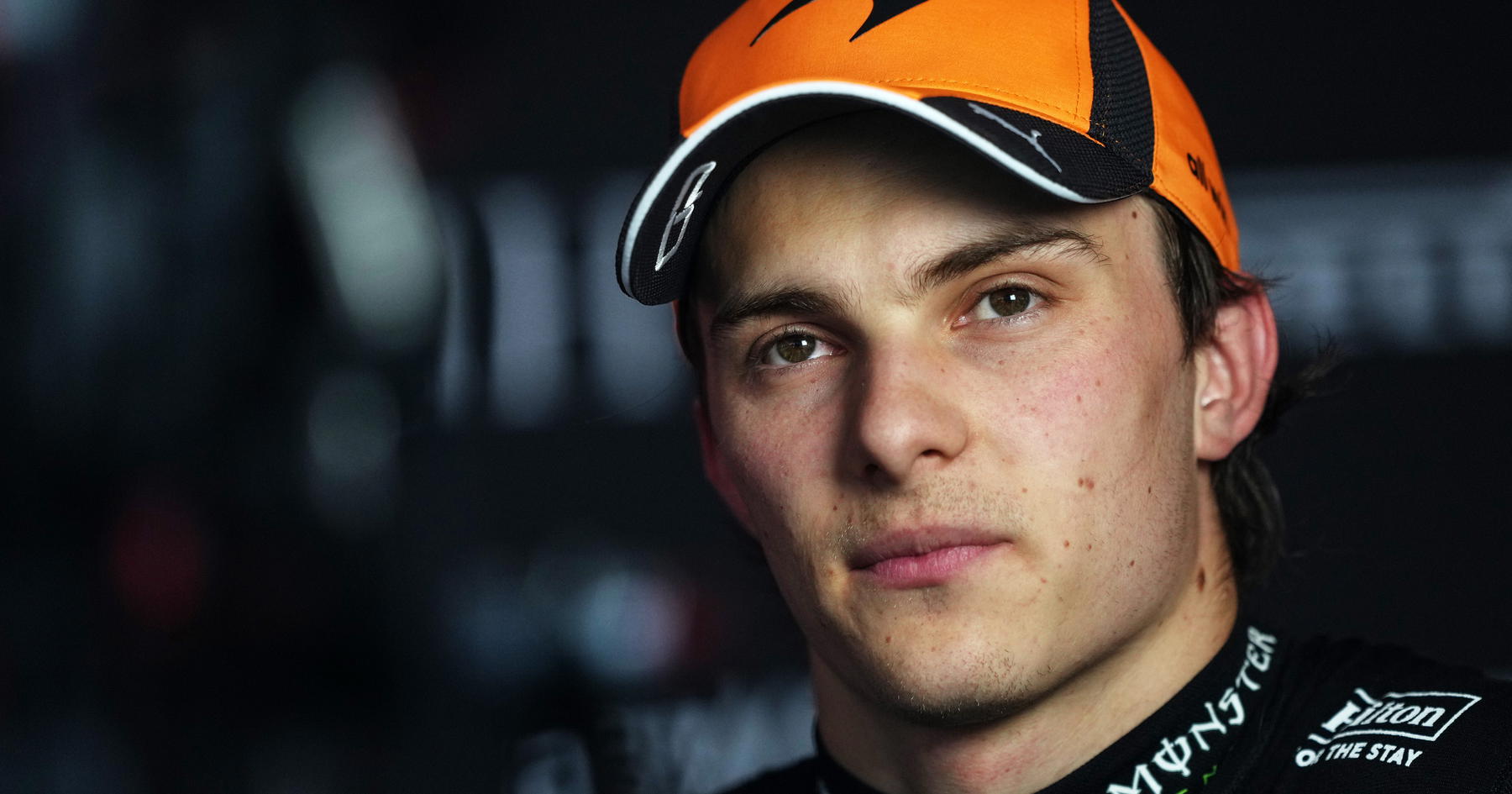
Oscar Piastri says he would require “half an hour” to fully explain what is required from the F1 power units that he currently cannot access.
Drivers are now 10 races into using the complex new engines, which featured a radical overhaul from 2025, with the removal of the MGU-H and a change in the power output between the internal combustion engine and battery from 80:20 in 2025 to 50:50 in 2026.
This has meant that at high-speed tracks with long straights and fast-flowing corners, drivers have struggled to recapture and harvest energy, with the rules still relatively immature as opposed to the old generation of turbo hybrids, which remained fundamentally the same since their adoption in 2014.
One facet of the 2026 regulations which has come under scrutiny is how the computer algorithms in the power unit learn the track as drivers make laps about how to best deploy the energy, with any snap of oversteer or lifting for blue flags upsetting the algorithms.
Piastri, not quite in the half an hour he originally indicated, explained how the “incredibly mature” engines since his 2023 debut have been more drastically different to the current crop.
“To give you the full answer, I’d probably need half an hour,” Piastri told media, including RacingNews365, when asked what he should be doing with the power unit that he can’t currently.
“Even with the previous hybrid engines, there was a big element of learning, coding and AI, to some extent.
“When I joined Formula 1, those engines were incredibly mature, but also the penalty of things being slightly wrong or slightly out of place was significantly less, because it was such a small percentage of the overall power you got.
“Whereas this year, it’s basically half your power, so any small differences or anything that doesn’t quite go right has a massive impact, especially at a track like Spa.
“To answer your question, no, we’ve got no control over where the deployment happens, more or less. You can push the boost button, but that’s more for overtaking than in qualifying, especially.
“Like I said in Spa, when you’ve got those differences there that you have no control over, it can be frustrating.
“I’m sure it’ll get better. I don’t expect it to ever fully go away, but as the manufacturers understand it more and work out the regulation restrictions more, in terms of what the code can and can’t do, hopefully things will become a bit better.”