
By Michelle Jaffee
A new mechanistic discovery in a hereditary form of deafness could pave the way for using gene therapy to “tune” the ear’s sound-sensitive hair cells and change life for babies born with an inability to hear due to Usher syndrome.

The preclinical discovery in mice comes at a time of great excitement about the potential of inner-ear gene therapy to initiate or restore hearing: Just last month, the FDA approved the first-ever gene therapy for inherited deafness, for a similar but distinct condition caused by mutations in the otoferlin gene.
Now, researchers hope they can follow a similar path for children born with the rare and devastating Usher syndrome, which causes combined deafness and blindness.
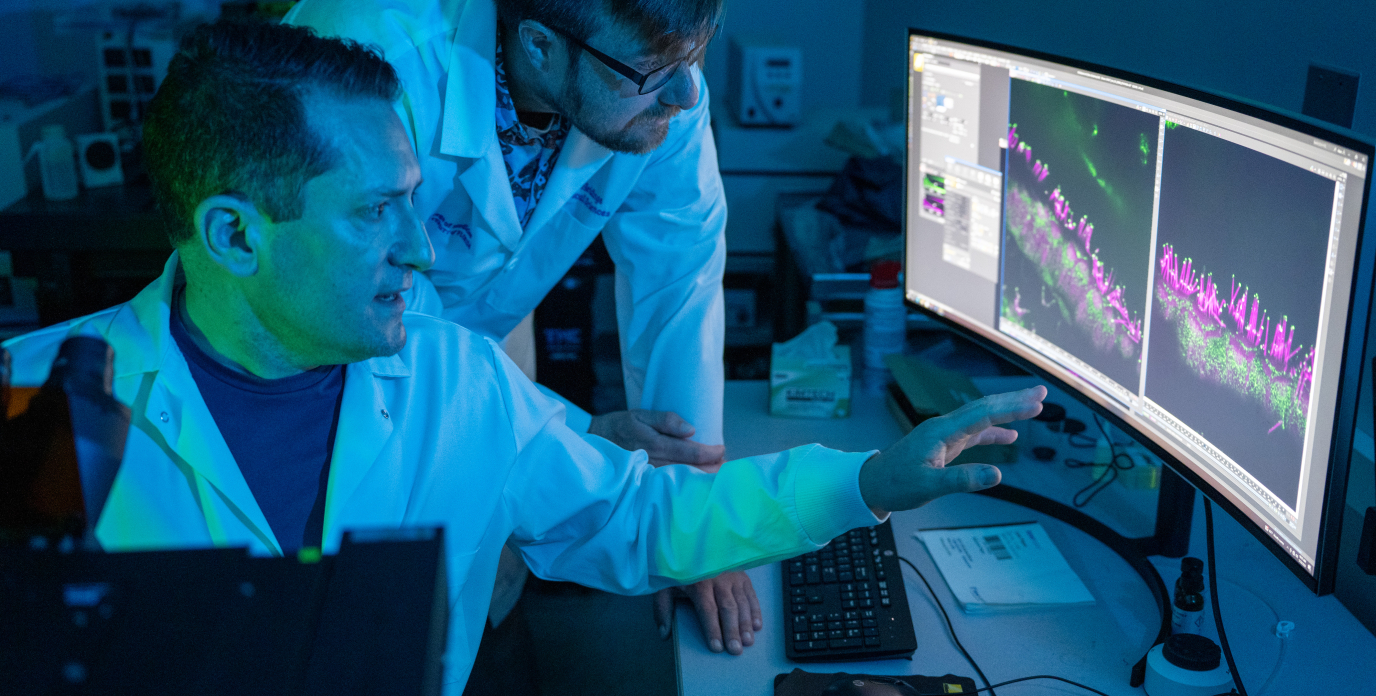
In a paper published in Nature Communications, a research team co-led by University of Florida neuroscientist Jonathan Bird, Ph.D., and collaborators at the University of Virginia and the University of Colorado describe how mutations in the MYO7A gene may affect a tuning mechanism required for auditory hair cells to detect sound.