
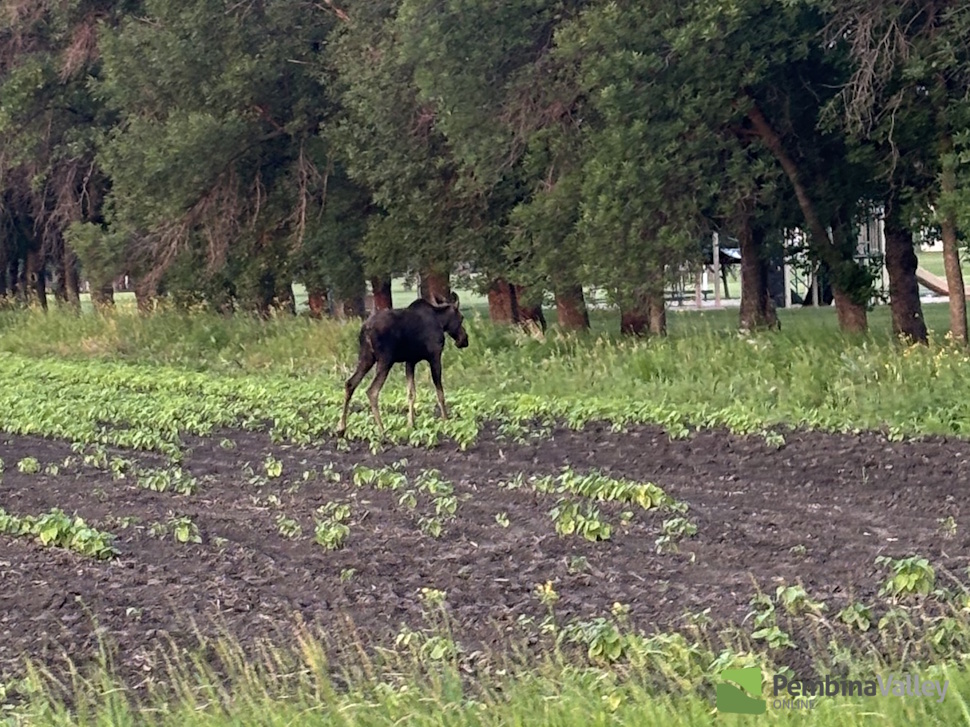
Earlier in the week, moose sightings near Schanzenfeld drew the community’s attention.
Pictures from the sightings indicate it was a young moose making its way through the region.
While the sighting generated plenty of interest, conservation officer Nick Woroniuk said moose are spotted in the area more often than people might expect.
A ‘not that uncommon’ occurrence
Woroniuk said that although the province doesn’t know the exact number of moose in the region, a modest population exists throughout the Pembina Valley and toward Swan Lake.
As a result, he said sightings are “not that uncommon.”
“We get reports of them every year. We also see them while we’re out on patrol,” he said.
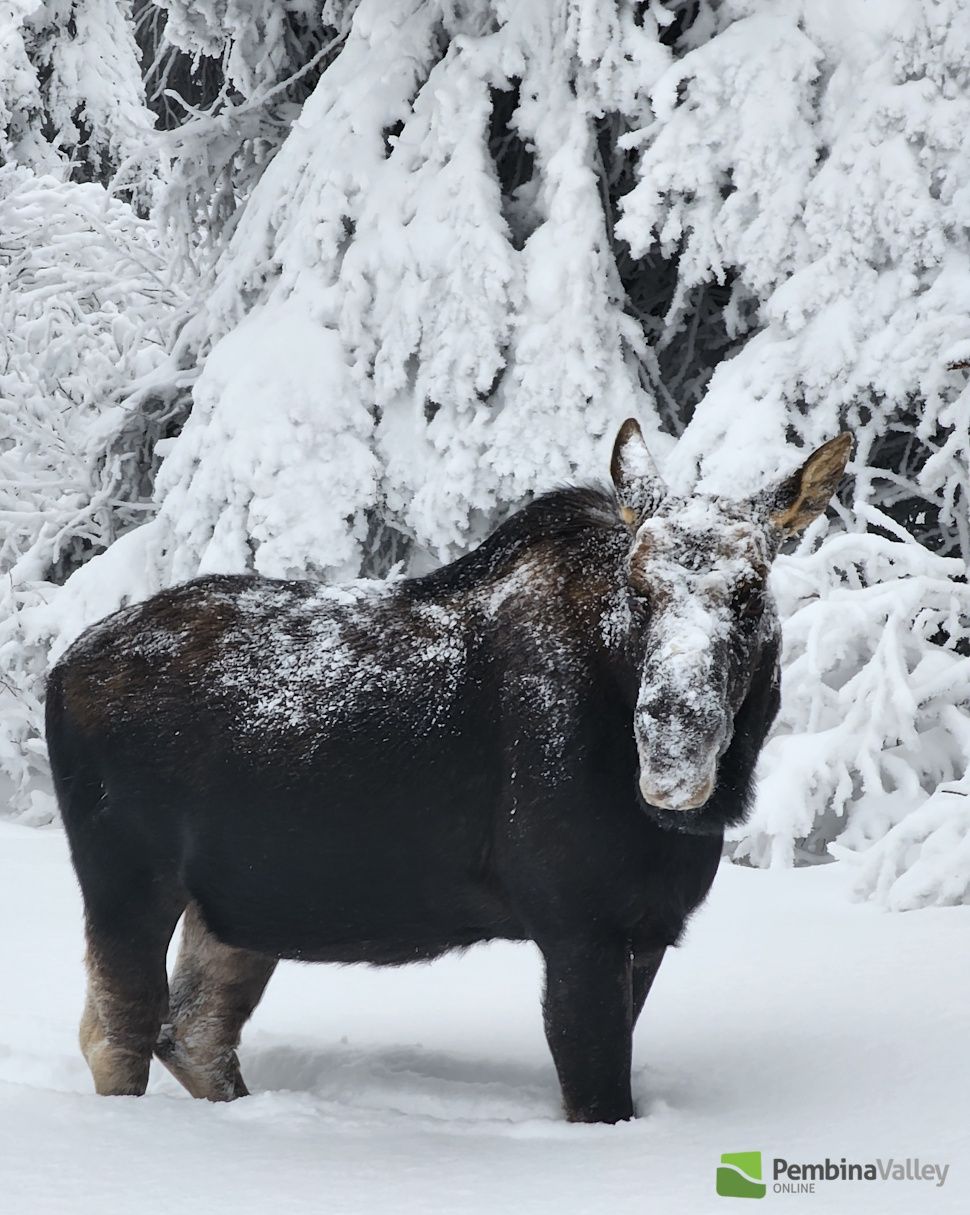 A snowy moose in Riding Mountain National Park, which has a larger concentration of the animal than the Pembina Valley.
Brainworm in southern Manitoba
According to Woroniuk, although it doesn’t seem to be the case in the Schanzenfeld sighting, when moose are spotted in the Pembina Valley, it is often because they are exhibiting unusual behaviour caused by brainworm infection.
He said the parasitic roundworm is common in the area because of the large deer population around Winkler.
Deer carry the parasite, which is fatal to moose.
“It’s basically shed through their feces, gets on a snail, and then the moose eats that snail, and it causes neurological brain damage and paralysis, blindness for that moose,” he said.
“So, to see the moose isn’t uncommon, [but] a lot of the times when we get called about moose in this area, it’s because they’re acting odd out in the field — they’re moving in circles.
“At that point, conservation does get involved, and ultimately, we have to go and euthanize that moose.”
He added that while brainworm is a serious threat to moose, it cannot be transmitted to humans and poses no risk to people.
How to respond to a moose if you see one
Woroniuk said that moose in Manitoba spend the summer “cruising and feeding” while avoiding areas with large numbers of mosquitoes, black flies, and horse flies, which is why they are sometimes spotted in open spaces.
“In the bush where there’s no wind, bugs can be very bad, so just like humans, [they] want to get out to a breeze to get away,” he explained.
“They’ll come out to a flowering canola field and different crop fields, and basically feed where the food is good and get away from the bugs where there’s a bit of an open breeze.”
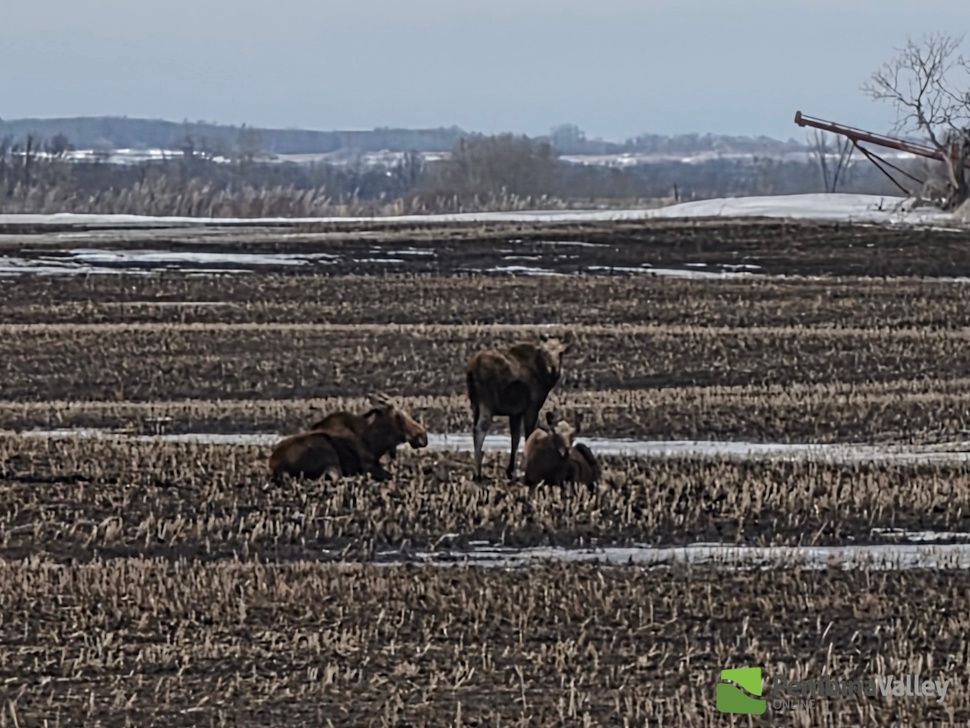 Three moose out in the open on a field just outside the Pembina Valley region.
As for how one should handle spotting a moose on foot, it’s best to “treat it like any wildlife” and make noise so the animal is aware and can leave the area.
“Moose are known to be aggressive,” he said.
“We just don’t want to push into a distance that’s going to make that moose uncomfortable and turn that positive interaction of observing it from a distance to a negative interaction where it’s going to feel threatened and needs to defend itself.”
Related stories:
Although it is important to exercise caution around wild animals like moose, Woroniuk does not discourage taking advantage of — and enjoying — what can be an awe-filled sight.
“People move to rural Manitoba to enjoy the country, and you get to experience wildlife that people in the city don’t get to see, so, if you see a moose out in the field or on the side of the road, take that opportunity to take some photos of it, but ultimately just give it space,” he said.
With files from Robyn Wiebe