

Listen to this article
Estimated 3 minutes
The audio version of this article is generated by AI-based technology. Mispronunciations can occur. We are working with our partners to continually review and improve the results.
Montreal’s transit authority has identified eight areas that could see future public transit expansion.
In a statement, the Autorité régionale de transport métropolitain (ARTM) says it will examine each area between this year and 2029, with the first study focusing on Chomedey–Saint-Laurent.
The plan will be to recommend the most appropriate scenario for each zone to the provincial government in order to guide future investments.
The studies are expected to look at current and future mobility needs and identify the projects that could provide the greatest benefits for residents.
The eight zones that will be under analysis are:
Chomedey – Saint-Laurent (Montreal and Laval). Central areas of Montreal (west zone).Laurentian corridor.Les Moulins.Montérégie corridor.Saint-Laurent – Ahuntsic – Montréal-Nord.Marguerite-d’Youville.Roussillon.
The results of the study are expected in the fall and, according to the ARTM, will help “inform reflections” on the next phases of transit development in the area.
WATCH | Transit projects are key to reducing congestion: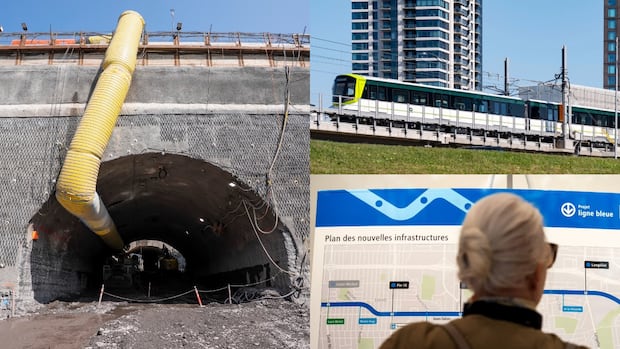
These 8 greater Montreal areas will be studied for future transit development
Montreal’s Saint-Laurent borough and Laval’s Chomedey district are among eight areas that will be studied by Montreal’s public transit authority. Transit experts say projects like these are key to reducing road congestion.Entire greater Montreal should be studied, expert says
Ahmed El-Geneidy, a professor at McGill University’s School of Urban Planning, says Montreal’s public transit system is already in “a very good shape.”
But he still sees room to improve access across the region.
“Our service is very good to get you to downtown from certain areas in the region, but not from every area in the region [to downtown],” he said.
El-Geneidy expects expanding the network would improve people’s quality of life.
“You don’t want people to be running on calls at night to get home and so on,” he said.
He also believes the ARTM should study the entire metropolitan region instead of dividing it into separate zones.
“I prefer to look at an overall vision, the flows of people, where they want to go, and then design metropolitan projects,” he explained.
“You have to start looking at where the low-income groups are and where the people that actually need new service are.”
Plan ‘a bit optimistic,’ public transit advocacy group says
Brian Nash, the public affairs and communications co-ordinator at Trajectoire Québec, says his public transit advocacy group views the announcement positively.
“We think that we need to develop continuously the public transit in the metropolitan region, so we cannot just go back to the times where we would just build a Metro station every 10, 15, 20 years,” Nash said.
But he warns the ARTM must also consider the maintenance of such infrastructure and the costs associated with it.
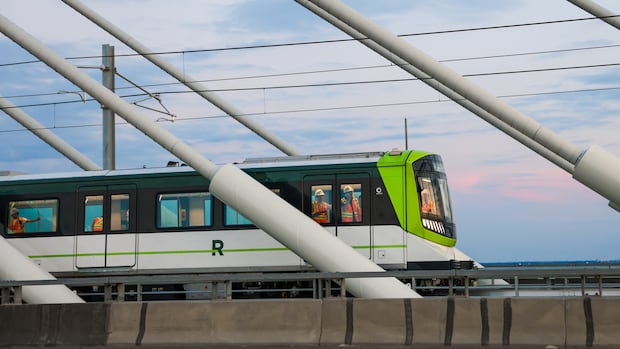
The announcement comes three years after the launch of the REM light-rail network and ahead of Quebec’s provincial election in October — with public transit likely to be a key issue.
Nash says the current government doesn’t “really have the intentions of putting funding in public transit as much as it should.”
“I think it’s a bit optimistic to just go to the Quebec government and just say: ‘Hey, we have that project, can you fund it?'” Nash said.
“We will need some [commitments] from the future Quebec government in public transit for that plan to work, for sure.”