

Listen to this article
Estimated 5 minutes
The audio version of this article is generated by AI-based technology. Mispronunciations can occur. We are working with our partners to continually review and improve the results.
Just recently, I was asked to join a new Facebook group, ‘Bears on the Avalon.’
Nothing startling about such invitations; we all get them. Some we ignore, others we check out.
I signed up for this one without hesitation because I’ve hunted black bears on several occasions off the Avalon Peninsula, these magnificent creatures have always intrigued me, and I’ve known for quite some time that black bears indeed inhabit southeastern Newfoundland.
Avid outdoorsman Art Collins of Shoal Harbour initiated the social media group simply because “there are a lot of people who don’t believe there are bears on the Avalon; I’m just trying to make them aware.”
Collins has harvested about a dozen black bears over the last 30 years. He spends a considerable amount of time fishing, hunting and trapping, and believes a bear hunting management zone and season — just like moose management areas —should be added to the Avalon.
Reports of sightings on the Avalon Peninsula have increased significantly over the past few years. Most recently, on June 30 the Town of Bay Roberts received a report of a bear sighting in the vicinity of Country Road.
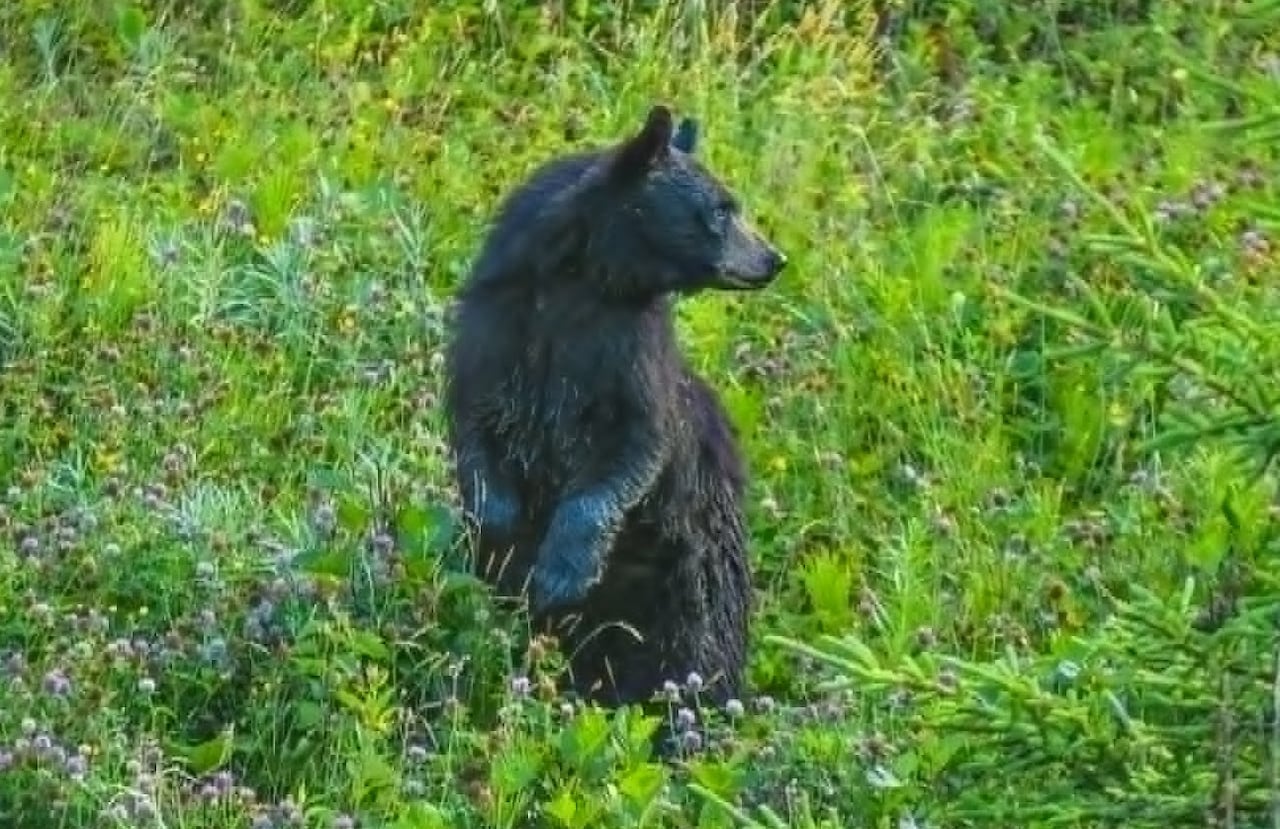 Black bears are native to Newfoundland and Labrador. (Submitted by Mike McCarthy)
According to the province’s Department of Forestry, Agriculture and Lands, black bears “have likely been on the island of Newfoundland since the end of the Wisconsin glaciation,” — about 10,000 years ago — so it is unlikely that recent sightings are the first time they have been seen on the Avalon Peninsula.
However, officials confirm “there is certainly an uptick in sightings on the Avalon since 2023, and 2026 has had the highest number of black bear reports to date. Of note, most reports on the Avalon are merely sightings and not encounters or property damage. Black bear sightings have now been confirmed across most of the Avalon Peninsula in the past few years.”
Close encounters
My first Avalon bear experience occurred 12 years ago, less than 40 kilometres from the St. John’s metro area. I was taking my overly hyper — not to mention friendly — seven-month-old yellow Lab for a run along the pole line behind the St. John’s Rod and Gun Club. The bushes were a blanket of blue, with berries on this early September morning, so of course, I had to pick a few handfuls, eating as I went.
That’s when I saw it — bear scat. Two very fresh mounds; one small and the other quite large, obviously a sow and her cub.
Knowing my dog would jump at the opportunity to play with another small animal if he spotted it, I called and bribed him with treats until I had him on a leash. If he had gotten between that cub and its mama and appeared as though he could harm her baby, I probably wouldn’t have been taking him home in one piece.
As I was walking back to the truck, I looked down the pole line and caught a glimpse of the dark animals disappearing into the thick forest.
This isn’t to suggest there’s reason to fear black bears any more than coyotes. Wildlife officers and hunting guides have told me over the years bears are more afraid of you than you are of them. Though I’ve had a few close encounters with these animals over the years.
Like most animals, black bears usually have a natural fear of people but can quickly get used to life in residential areas as long as they have easy access to food. Although attacks on humans are extremely rare, they can occur if a black bear becomes too comfortable around people.
I believe residents of the highly populated Avalon region should be aware of their presence so they can take precautions, such as not leaving garbage outside so as not to invite them around homes.
Wildlife officials advise people going out on the land to avoid going alone, carry bear spray and make noise.
“If you see a bear, do not run, climb a tree, approach the bear or attempt to feed it.”
Black bears are native to Newfoundland and Labrador. Although counting surveys aren’t as easy as those of moose and caribou, the latest population estimates suggest up to 10,000 animals.
Download our free CBC News app to sign up for push alerts for CBC Newfoundland and Labrador. Sign up for our daily headlines newsletter here. Click here to visit our landing page.