
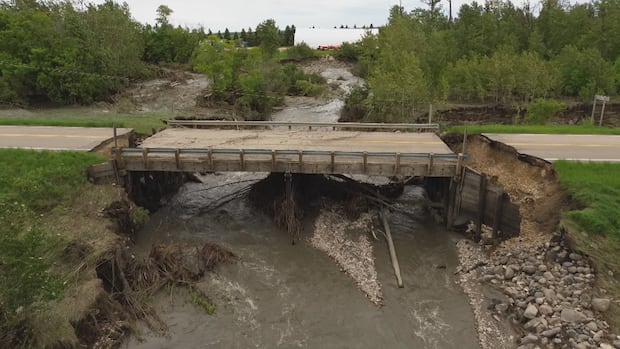
A Manitoba government disaster assistance program is expected to bring financial relief to local authorities and organizations in flood-hit areas — but one official whose municipality has seen frequent flooding is urging communities to be patient through the process.
“I feel for them. I know what they’re going through,” said Jolene Bird, the chief administrative officer for the Rural Municipality of Montcalm in the Red River Valley.
It’s been hit by flooding six times in the last 10 years, and the RM was covered by disaster financial assistance in 2019, 2022 and 2023.
The municipality is still recovering from its last two major floods, Bird said — challenging work that’s expected to take until 2028 to fully complete.
“We had approximately 290 damaged sites [in] 2022. We are down to less than 10,” Bird said. “It takes a long time to fully recover from a flood.”
The provincial government announced a disaster financial assistance program last month for those affected by heavy rains and flooding that hit much of southern Manitoba in June.
Such funding can help small businesses, farms, homeowners, municipalities and non-profit organizations cover the cost of uninsurable losses, according to the province’s website.
For municipalities, the assistance can help cover costs to fix infrastructure including bridges, roads and drainage systems, a provincial official told Municipality of Swan Valley West council on July 14.
The province said as of Wednesday, it had received 47 assistance applications from local authorities for the June floods.
Process can be ‘extremely overwhelming’
Montcalm CAO Bird says a few municipalities affected by flooding this year have already contacted her for advice.
She encourages them to hire a consultant to help manage their claim, since the process “can be extremely overwhelming,” she said.
“It’s a lot to do when you already have your existing work that needs to be done in your municipality.”
Consulting costs were covered by the disaster assistance, and helped oversee the contracts and tendering processes for repairs, said Bird.
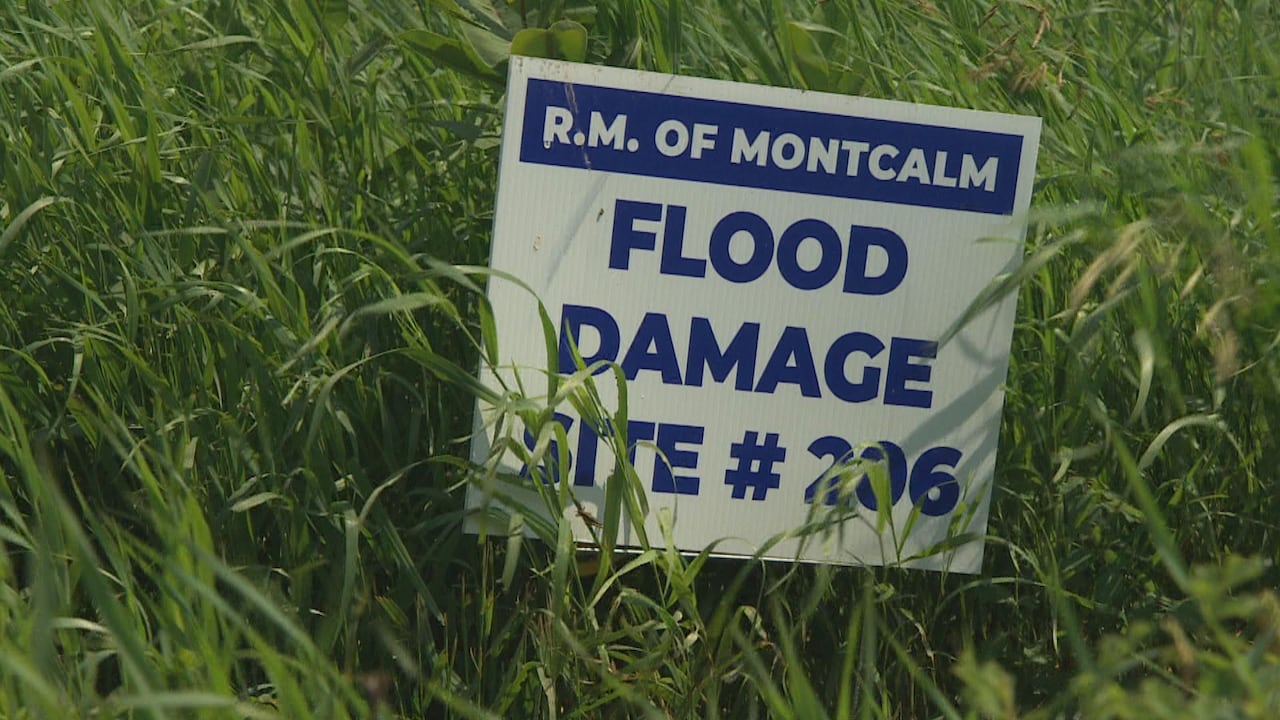 This photo from 2022 shows one of about 290 damaged flood sites in the RM of Montcalm in southeastern Manitoba. (Randall McKenzie/CBC)
Commissionaires Manitoba, a not-for-profit security company, has been helping municipalities with those services for about five years, CEO Francis Fang said Tuesday.
The recovery process can be hectic and take years, he said. His main tip is for municipalities to document everything related to recovery and response.
“One thing that we find is that people lose sight of the need for documentation during a disaster, and this is one of the most important steps,” Fang said.
“Start tracking everything. Create a dedicated file for all of the events, keep photographs, save invoices. There’s going to be costs going on, additional labour records, equipment usage.”
Bird says after Montcalm catalogued, documented and inspected its damaged sites, the RM submitted its community impact assessment report with estimated damages.
That allowed the municipality to proceed with emergency repairs, she said. Full repairs came after the province approved the sites and inspected them, which was followed by instructions on how to proceed with the repair process.
“The approval takes a few months, by the time they have all the inspectors come out,” Bird said.
Municipalities can apply for advanced funding based on estimated damages, then get further advances and payments as more accurate costing comes in, she said.
“As long as you’re using your approved contractors and following what the inspection reports say and staying within those parameters, you should be covered,” said Bird.
She said her RM has put in at least 30 submissions for the 2022 flood already.
“It’s a lot of work.”
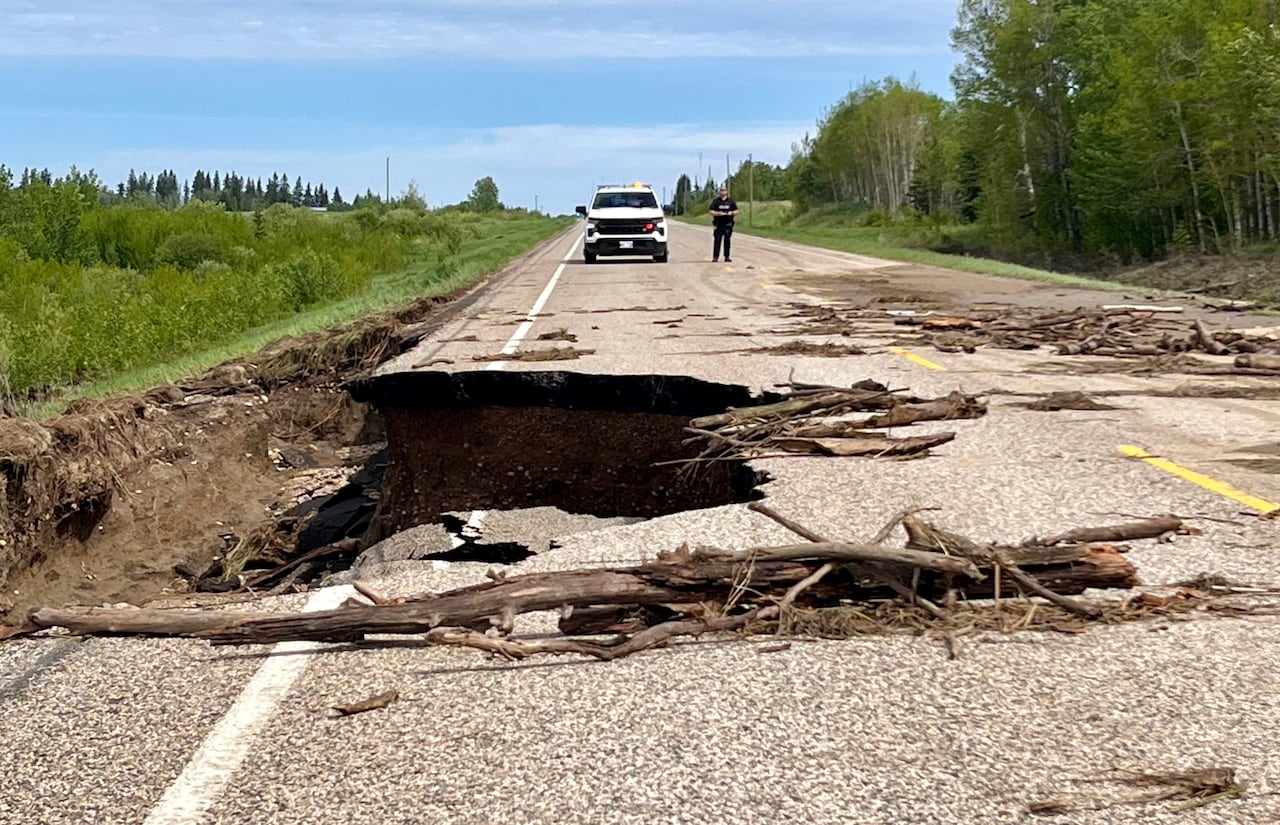 A washed-out section of Highway 83 in western Manitoba, just south of Swan River, on June 9, after flash flooding in the region. The Municipality of Swan Valley West is among 47 local authorities that have applied for disaster financial assistance. (Michele McDougall/CBC)
Given the cost of Montcalm’s damages, Bird says nearly everything was covered by the financial assistance program, except for incurred interest — something she wishes the program would cover, given the municipality’s upfront costs.
Lost income and revenue, along with provincial sales taxes, also aren’t covered, said Erin Robbins, Manitoba’s director of recovery and mitigation.
As of 2025, assistance-approved municipalities can also get funding to help mitigate future disasters and make infrastructure more resilient.
The proportion of expenses covered by municipal and provincial governments is based on a cost-sharing formula: the higher the municipality’s expenditures per capita, the more the province will cover.
It’s unclear how much the Manitoba government has spent on disaster assistance in recent years.
CBC requested a list of when the program was activated in the last 10 years and how much the province paid out each time, but a government spokesperson said it was not able to provide that information.
The federal government shares costs on eligible provincial and territorial disaster financial assistance expenses.
For Manitoba’s 2022 flood alone, the federal government says it provided an advance payment of more than $168 million.