
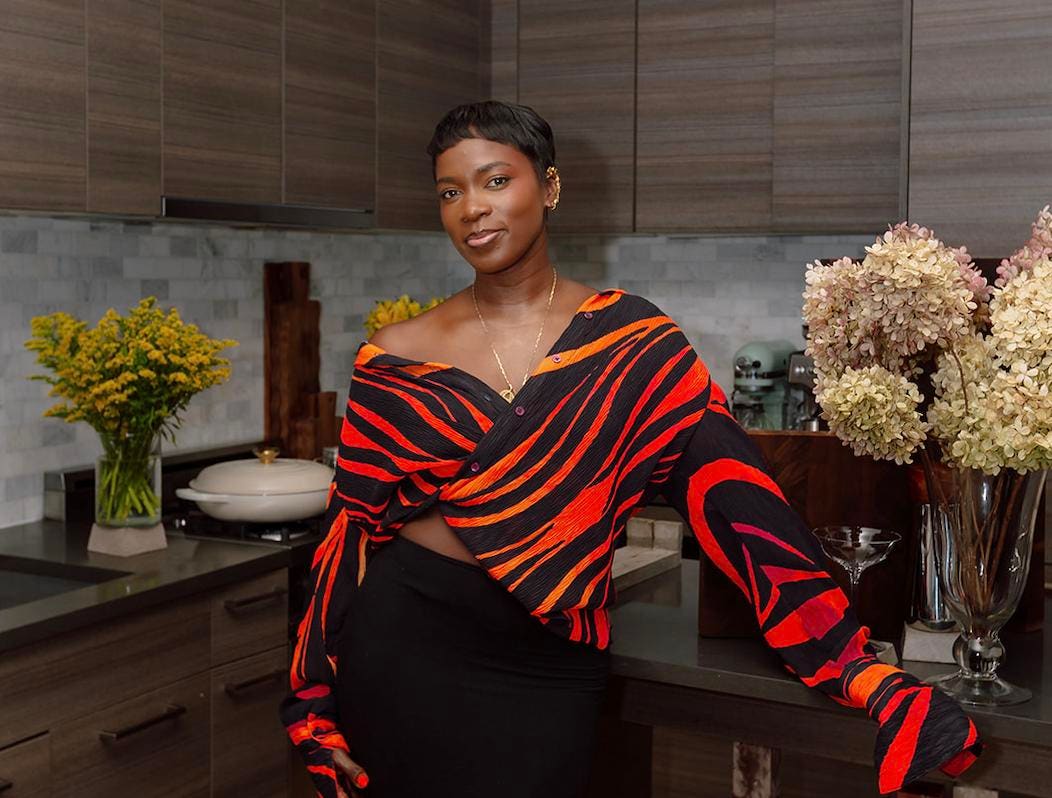
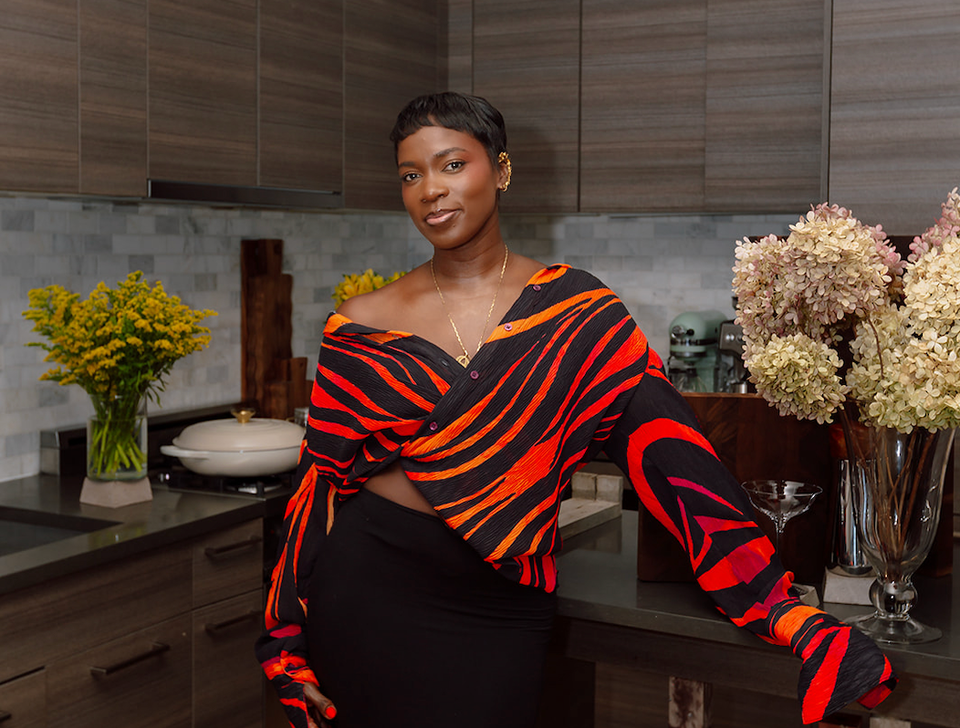
Leonie Badger stands in her kitchen, the place where she creates most of her content.
Courtesy: Leonie Badger
Is becoming a content creator the new ‘promotion’ business people desire?
For decades, the conventional path for ambitious professionals was relatively predictable: earn a degree from a known school, gain experience at the right company, climb up the corporate ladder and after a decade, eventually reach the executive suite.
Today, the creator economy is beginning to offer another path.
What was once largely associated with influencers, entertainers and internet personalities, executives turning creators are increasingly becoming a legitimate business model for professionals who possess expertise, creativity and the willingness to build an audience of their own. Creator revenues from social media sponsored content in the U.S. will reach $10.52 billion this year, marking a 15.0% year over year increase,, as marketers increasingly treat creators as a core component of their strategies.
Enter Leonie Badger, who took the leap from McKinsey & Co to become a creator.
Badger, who currently resides in Brooklyn, New York spent her childhood growing up in Ghana before heading to college at the Massachusetts Institute of Technology (MIT) where she majored in architecture design and minored in management. She continued her education, by earning an MBA from Wharton, and upon graduation landed a coveted position at McKinsey & Company in 2020.
But underneath the résumé was another side of her identity.
After becoming pregnant in 2022, in the midst of COVID, Badger would decide to step away from McKinsey in 2024 expecting to find another corporate position relatively quickly.
“I thought my background in management consulting paired with my MBA would make me a strong candidate,” Badger says.
Instead, she entered a difficult job market filled with candidates affected by major corporate layoffs. After weeks of applying and receiving few callbacks, Badger decided she needed another outlet, and chose to follow her creative intuition.
“I figured that starting a content creation journey that was rooted in exploring my creativity would give me something to do and a portfolio to show to the more creative roles I had started to apply to at worst and a new career at best,” she says.
Leonie Badger celebrating her successes after a long day of shooting content.
Courtesy: Leonie BadgerStarting At Zero
There was no sophisticated content studio or elaborate business plan.
Badger ordered a tripod and remote from Amazon and created a brand-new social media account with zero followers.
Unsure of where to focus, she initially alternated between cooking, preparing recipes and shooting personal styling videos – two subjects she enjoyed and did well. She started on Instagram, expanded to TikTok and eventually launched a Substack.
While the technological barrier was relatively small, the psychological barrier was enormous.
“All my friends were in tech, PE, consulting, etc. sharing promotion and new business launch updates on LinkedIn and I was on Instagram making cocktails,” she says.
Badger feared being seen – and perhaps even more, failing while her peers and family watched.
So nervous at first, she initially avoided even speaking in videos. Months into the journey, she progressed to recording polished voiceovers before eventually becoming comfortable speaking directly into the camera, while alone in her home.
“No one is ever going to give you permission to do or be the person that you are dreaming of becoming,” Badger says. “You have to stop waiting for approval.”
To keep herself moving, Badger created a private manifesto reminding herself why she was creating. Among her commitments: getting comfortable with failure, sharing her creativity, learning vulnerability, developing new skills and doing something without seeking approval.
That internal exercise eventually began producing external results.
From Content To Business
During her first year creating content, Badger says she generated approximately $50,000 through brand partnerships. A number considerably less than her McKinsey compensation, but a confirmation that would prove to herself that this model, if done consistently, could generate revenue.
Two years later, Badger says she is now on track to match or exceed what her corporate salary would likely have become. After creating videos, some of which have accumulated millions of views across platforms, Badger earned representation from Digital Brand Architects, or DBA, a creator-management company, which was acquired by United Talent Agency. She has partnered with Avaline wine, Empress Gin, Vitamix, Barilla, Maybelline, Nordstrom, Chelsea Market, Roku Gin, Pacific Foods, and Tourism board of Pennsylvania to highlight the 2026 World Cup.
With that success, she began to design products that she would use in her content. And with a focus on cooking, she started simply by creating a cutting board for her followers. The first version sold out in less than three months, and she now has more than 2000 people on the waiting list as she switched to a larger manufacturer to fill the demand.
Leonie Badger’s cutting board which she highlights and uses in her content videos.
Courtesy: Leonie BadgerA Distribution System For Her Business
The emerging opportunity wasn’t necessarily becoming an “influencer.” It was using expertise, personality and creativity to develop an audience that can support multiple revenue streams—from partnerships and consulting to products, books, speaking and intellectual property.
Badger doesn’t currently envision returning to traditional corporate life, although she hasn’t ruled it out.
“If there’s an incredible role out there that really takes my creative, strategic, left-brain and right-brain talents and makes the most out of it then I would love for it to find me,” she says.
Otherwise, she plans to continue building. Her journey from Ghana to MIT, Wharton and McKinsey once looked like the résumé.
Now it may simply have been preparation for the business she was ultimately supposed to create.