
Just as Post Malone was rising to the star that he would become, he performed free in a parking lot on Montreal’s St-Laurent Blvd.
In fact, on the busiest nights, as many as 10,000 people crowded into the lot south of Prince Arthur St. Rappers took the stage while artists painted nearby walls and sponsors picked up the bill.
The location — next to a vibrant stretch of bars, restaurants and creative studios — proved to be a magnet.
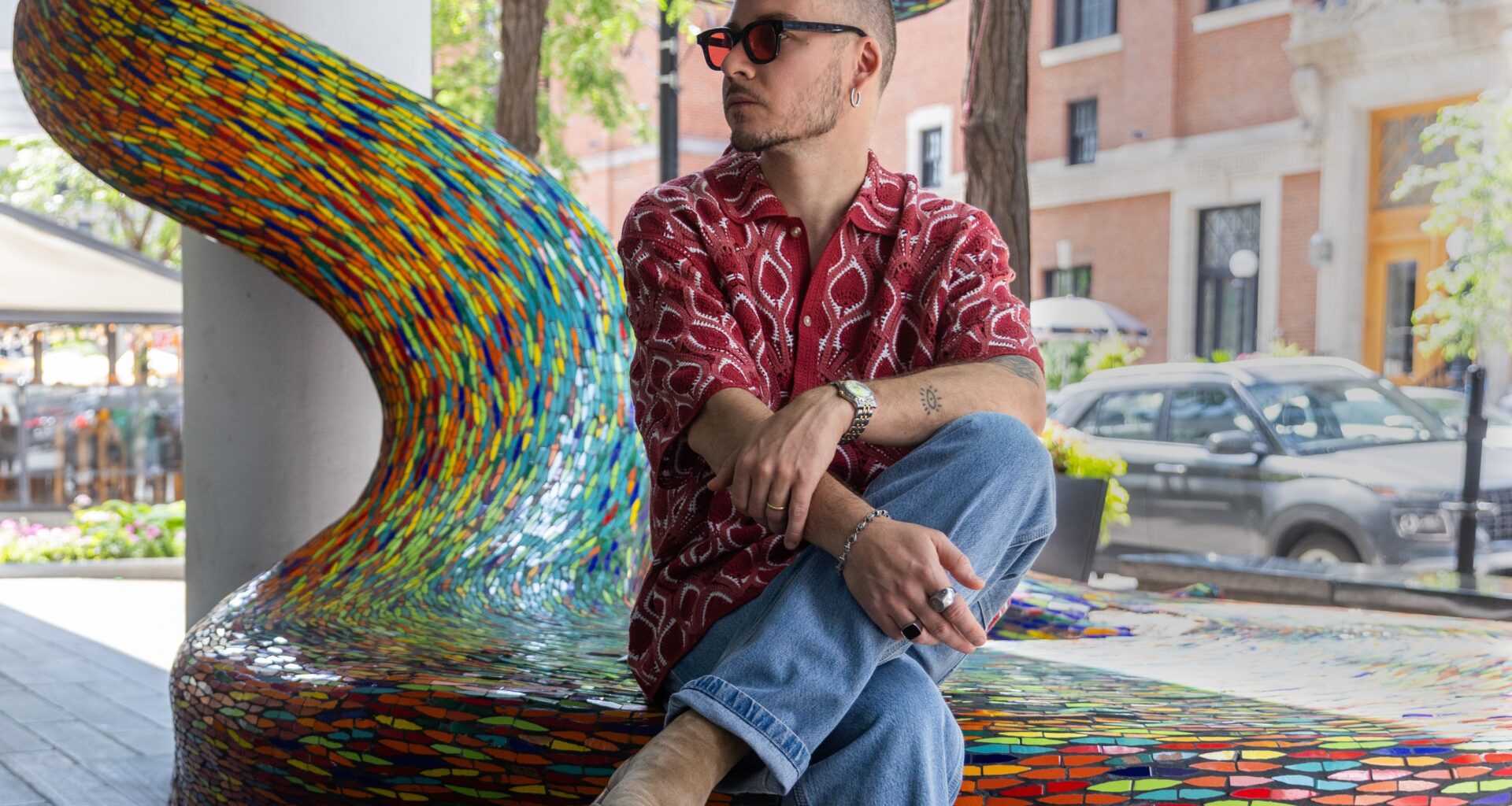
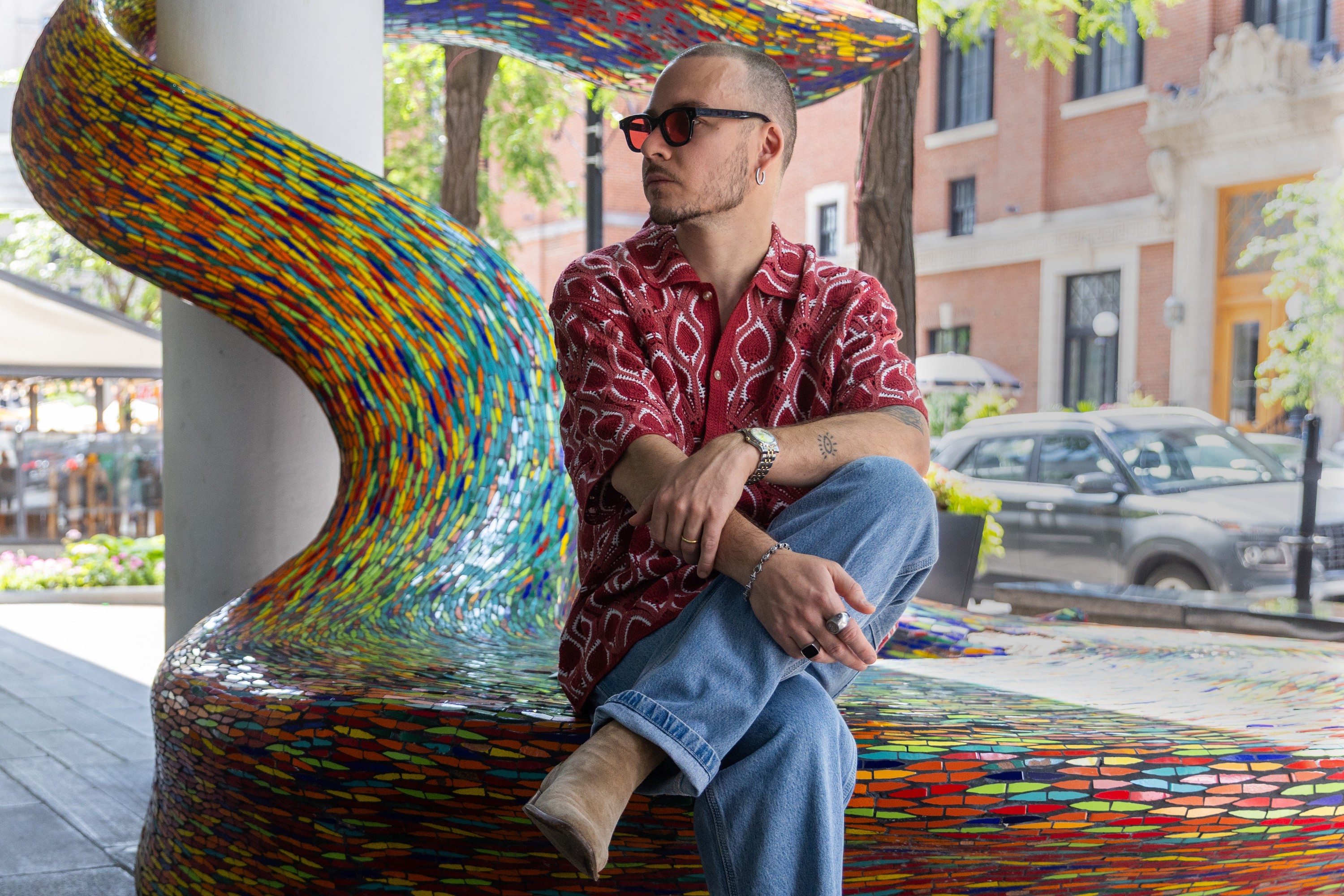 Nicolas Munn Rico, Partner and co-founder of LNDMRK and MURAL Festival, poses for a portrait in Montreal. Evan Buhler / Montreal Gazette
“It was the heart and soul of our brand,” said Nicolas Munn Rico, co-founder of MURAL Festival.
But then the lot was sold. And, instead, construction began on the new Montreal Holocaust Museum. By 2022, MURAL had lost its de facto home.
The loss triggered the unravelling of the business behind a festival and an agency that produced about 300 murals across Montreal and helped carry the city’s creative reputation abroad.
This year, LNDMRK, the agency that also founded MURAL, entered bankruptcy protection, and its assets and the festival’s intellectual property were transferred on April 17 through a court-supervised process to Multicolore Projects, the Montreal company behind Igloofest and Piknic Électronik.
Still, MURAL will continue, with Munn Rico remaining involved as it prepares for its 15th anniversary and tries to discover new venues to bring about new success
LNDMRK was founded in 2012 by four friends working from a borrowed space in Park Extension. Munn Rico and his childhood friend Alexis Froissart were 22 when they joined forces with Yan Cordeau and André Bathalon, two older friends who had worked in marketing at Cirque du Soleil and brought more business experience to the venture.
A Montreal gallerist let them use a building rent-free for two years and encouraged them to experiment.
Their first exhibition featured INSA, a British graffiti artist who covered the walls and floors, and created sculptures that appeared to emerge from the ceiling. A second exhibition featuring local artists did the same.
The partners then began looking for a larger canvas.
Street art at the time was moving into popular culture, propelled by figures such as Banksy and Shepard Fairey.
And for Montreal, it already had a strong graffiti scene, but few platforms connecting local artists to the growing international mural movement.
In 2013, the partners launched MURAL with the support of the St-Laurent Blvd. merchants’ association. The group was looking for a way to revive a street then better known for nightclubs.
The festival’s mission was to democratize urban art. St-Laurent would close to traffic, artists would paint in public and admission would be free.
Editor’s Picks
Recognizable performers also brought in people who might not have known the muralists’ names. They came for the concert and found artists transforming the surrounding buildings. Sponsors financed much of the programming.
The mix set MURAL apart from other street-art festivals. The event combined murals, food, nightlife and block-party culture along a boulevard connecting Montreal’s French- and English-speaking communities.
Between 2016 and 2019, the festival hit its stride.
Fairey, whose work had inspired the founders, came to Montreal and painted a monumental portrait near Prince Arthur St.
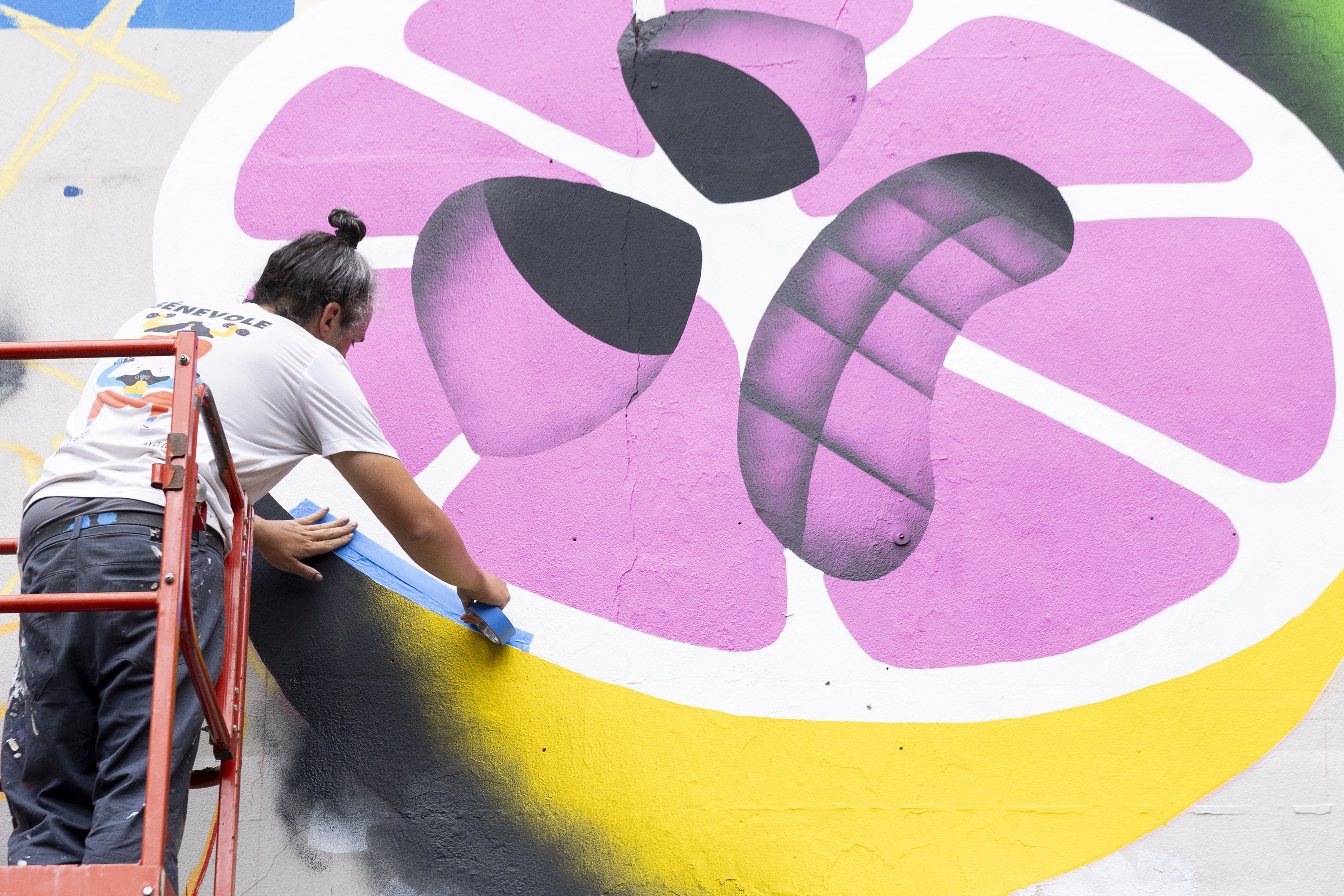 Artist Vincent Arnold masks off a wall before painting on the corner of St-Laurent and Mont-Royal during the MURAL Festival in Montreal on June 11, 2026. Tim Snow / Montreal Gazette
Today, about 120 murals remain across Montreal from LNDMRK’s work, Munn Rico said.
The festival also expanded to Toronto in 2019. Munn Rico also began exploring an edition in Los Angeles.
“We had the wind in our sails,” he said.
Then COVID-19 stopped large gatherings and sharply reduced sponsorship revenue.
MURAL replaced its main event with smaller projects and year-round productions.
The festival returned, but producing it became more expensive. Labour, transportation, staging and artist fees rose without a corresponding increase in sponsorship or government funding.
Losing the parking lot made the economics more difficult.
The privately owned site had concentrated concerts, sponsors and hospitality areas beside the festival’s visual-art programming. LNDMRK also worked from an adjoining three-storey building containing its offices, a gallery and a small venue.
MURAL tried moving its music zone elsewhere. A location used in 2023 worked well, Munn Rico said, but it was unavailable the next year. In 2024, the concerts were staged too far from the main festival grounds. Bad weather and the cancellation of two headliners contributed to heavy losses.
LNDMRK and MURAL operated as sister organizations, sharing employees and supporting each other financially. That arrangement worked when at least one side was prospering.
The creative-agency market had also shifted. Clients were commissioning shorter projects, while marketing budgets moved online. Digital tools and artificial intelligence made production knowledge more widely available.
LNDMRK remained structured around a larger staff and longer-term client accounts, Munn Rico said.
But the original partners gradually left. The company, which at its peak employed more than 20 people, had about 15 or 16 workers as its finances deteriorated. By January, he had hired a financial adviser to assess the options.
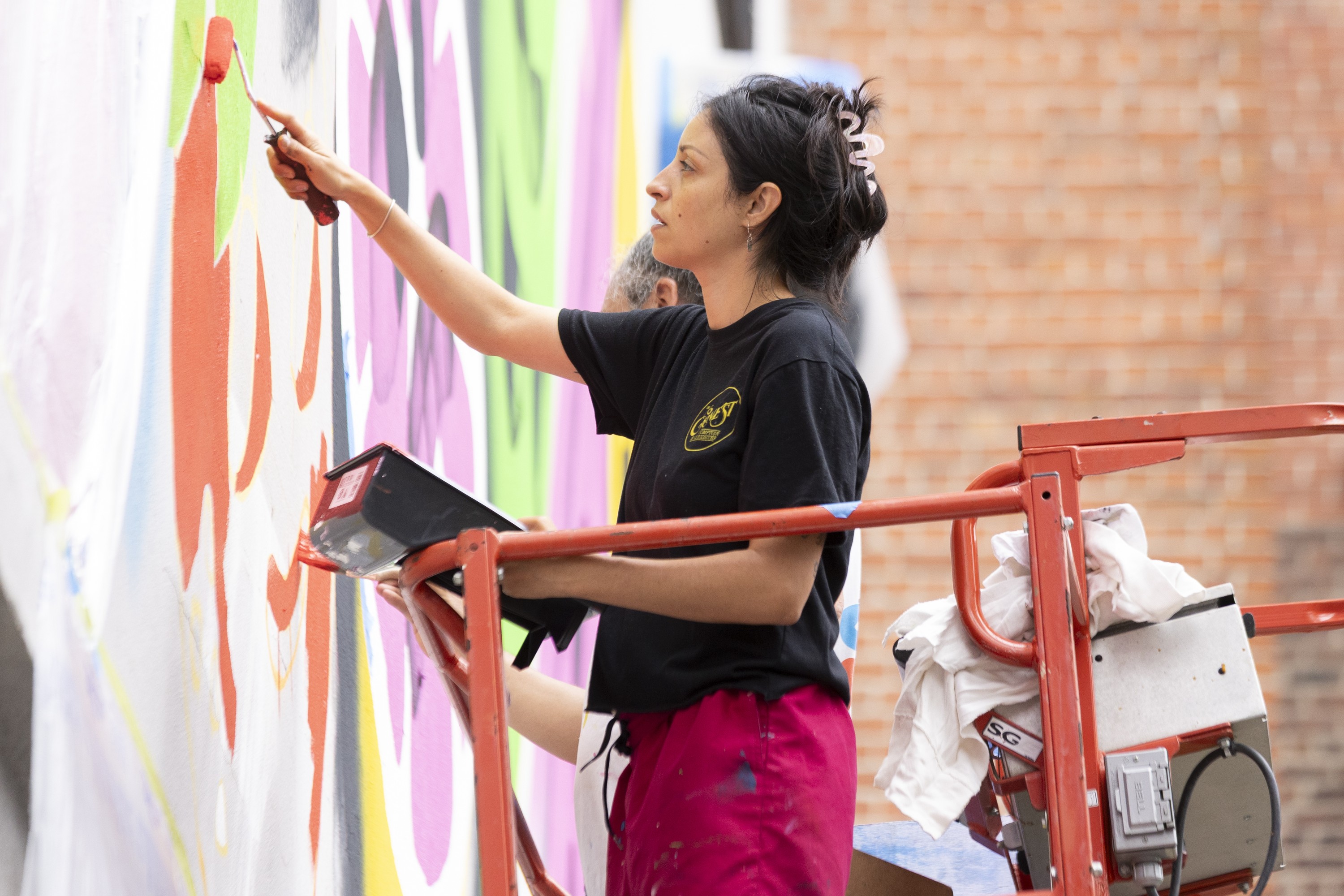 Artist Floriane Soler paints a wall the MURAL Festival in Montreal on June 11, 2026. Tim Snow / Montreal Gazette
Continuing would have required more borrowing, greater personal risk and another restructuring after years of upheaval.
Entering bankruptcy protection, Munn Rico said he found himself in meetings with lawyers and insolvency specialists, struggling at first to understand the terminology. The project he had spent his adult life building was being discussed in terms of debts, assets and potential buyers.
“I was mortified,” he said. “It was the hardest thing I have ever done in my career.”
Multicolore already has teams devoted to festival production, sponsorship and music bookings, Munn Rico explained. About five or six employees now work directly on MURAL within a company of about 100 people.
That gives Munn Rico an opportunity to return to creative work rather than spending each day, as he put it, “extinguishing fires.”
For its anniversary, MURAL plans to restore a larger music component and find a site it can use for more than one year. It also wants to expand beyond conventional murals through sculptures, inflatables, immersive installations and technology-based works.
Street art has changed since MURAL began, Munn Rico says. The movement went from underground to fashionable, then became increasingly commercial and, at times, formulaic.
Munn Rico says that could mean using unusual public spaces or locations far removed from the polished settings normally associated with major events.
“I’m allowing myself to dream again,” he said.
Do you have a story? Write to me at hnorth@postmedia.com