
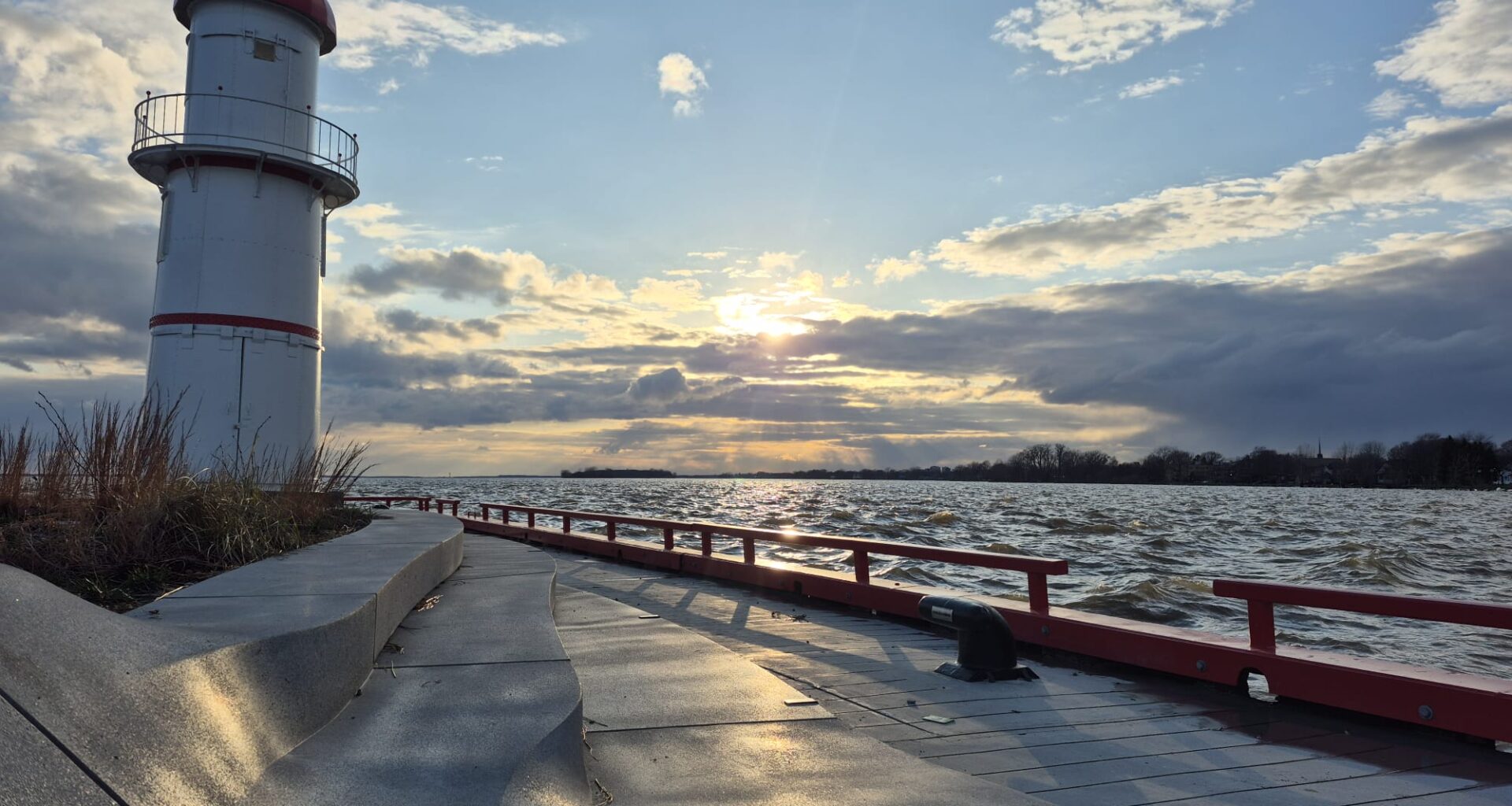
The St. Lawrence should be the city’s greatest treasure. Montreal treats it like an open sewer. This is no geographic accident: it’s a decision.
There is one image that sums up the contradiction. An island-city, surrounded on all sides by fresh water —the St. Lawrence River, the rivière des Prairies, Lac Saint-Louis and Lac des Deux-Montagnes—, in the middle of July, in thirty-degree heat, and its residents with nowhere nearby to take a swim. To cool off in clean water, the average Montrealer has to get in a car and drive between thirty and ninety minutes to the far west end of the island. Whoever has no car does not swim. That simple, that unjust.
It bears saying without euphemism: the problem is not nature, it’s management. Montreal’s large treatment plant, the Jean-R. Marcotte, treats enormous volumes of water, but only with a primary physico-chemical process, without biological treatment and without any disinfection at all. The ozonation plant meant to fix this —promised some twenty years ago, budgeted in 2005 and planned back then for 2018— is still under construction in 2026 and, after a cost close to one billion dollars, will not enter service before the end of 2028. It is a method the industrialized world abandoned decades ago: when it comes to water, Canada’s second city operates by the standard of the last century.