
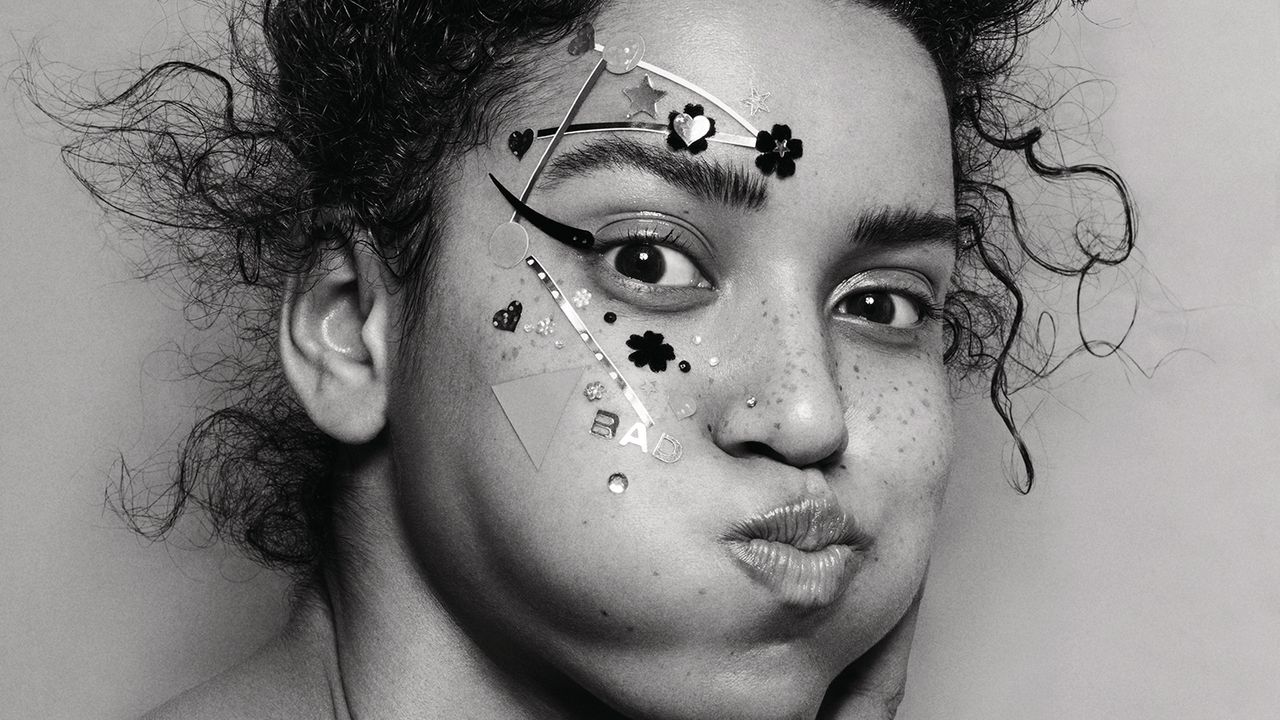
Stress has long been blamed for everything, from sleepless nights to sudden breakouts. Now, a new phrase has entered the beauty world – cortisol face. Across the internet, users are scrutinising their reflections for signs of the viral phenomenon that describes facial puffiness, breakouts, dullness and dark circles, all said to be linked to chronic stress. But while the term has become a convenient buzzword to blame our skin woes on, the science behind it may point in another direction.
“In medical terms, we call this ‘moon face’,” explains Dr Parisa Khonsari of Dubai’s Sequoia Clinic. “It describes a rounded, fuller appearance of the face due to high cortisol levels. What actually happens is that fat redistributes specifically to the face, the back of the neck (also called the buffalo hump) and the abdomen. Cortisol programmes your body to store fat in all the wrong places. However, the amount of cortisol present in your body for a prolonged period should be two to three times above normal. We’re talking months, not a few stressful days.” According to her, a true moon face is most commonly associated with conditions such as Cushing’s syndrome or long-term steroid use, not the pressures of everyday life. “Cortisol spikes from daily stress simply don’t reach the extreme, sustained levels needed for facial fat redistribution,” she explains. “So cortisol face in the literal sense? Not supported by evidence yet.”
Now that we’ve nipped that in the bud, it’s important to note that stress still can leave its mark on one’s appearance. The harsh truth is that chronic amounts of it can elevate cortisol levels enough to trigger inflammation and disrupt other hormones, contributing to facial swelling, excess fluid build-up, breakouts and skin sensitivity. It comes as no surprise that our social media-centric lives also play their part in the damage, reducing complex physiological processes to worryingly simplified (and factually incorrect) diagnoses. “Very often, a puffy face becomes ‘high cortisol’. Acne becomes ‘hormonal imbalance’. Dark circles become ‘adrenal fatigue’,” Dr Khonsari notes. But what this trend does get right is creating a link between emotional wellbeing and skin health. “The skin is the body’s most public organ. It will always tell on your internal system.” For example, high cortisol’s immunosuppressive effects can make one more susceptible to infections and viral flare-ups, explaining those annoying cold sores that seem to always pop up before important events. And those are the cues worth noting in the bathroom mirror.
Athina Theodoridi, founder of Thy Skin, the UAE’s only skincare brand designed specifically for its climate, believes the cortisol face conversation has become overly focused on a single hormone. “Thy Skin was born from my own experience after moving to Dubai. For the first time in my life I developed eczema and persistent dryness, and I couldn’t understand why products that had worked for me before suddenly no longer seemed effective,” she recalls. “I came to realise that skin is not fixed. It is a dynamic system that changes with age, hormones, environment, habits and life circumstances. The same routine that works today may not be what your skin needs a year from now.”