
Why these murals work better than generic public art
The common thread is not paint. It is specificity. Each mural answers three questions at once:
Who did this place help shape?
What did that person give back to sport or community?
Why should a visitor stop here instead of simply driving through?
That is what separates sports-hero murals from generic beautification projects. A landscape mural may make a wall more attractive. A local sports mural can make a town more legible.
For readers, these murals are also practical travel prompts. They sit near arenas, downtown blocks, community centres and main streets, which makes them easy to fold into a weekend tournament, a hockey history drive or a family road trip. You do not need a formal museum visit to understand the story. You only need the address, the wall and a few minutes of attention.
The takeaway for Canadian mural towns
The strongest Canadian sports murals are not trying to make small towns look bigger. They are doing the opposite. They make local memory harder to miss.
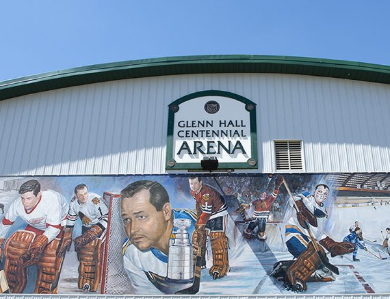
Kentville uses a downtown wall to remember a boxer and builder. Stony Plain turns an arena exterior into a goalie’s community biography. North Battleford gives grief, pride and youth hockey a shared public image. Haliburton shows how a wall can be expanded when recognition was incomplete. Mitchell keeps an early hockey superstar visible on the main street where a visitor can still pause.
That is the real travel value. These murals give readers a reason to look beyond the usual postcard Canada and notice the heroes painted into the places that raised them.