

Listen to this article
Estimated 3 minutes
The audio version of this article is generated by AI-based technology. Mispronunciations can occur. We are working with our partners to continually review and improve the results.
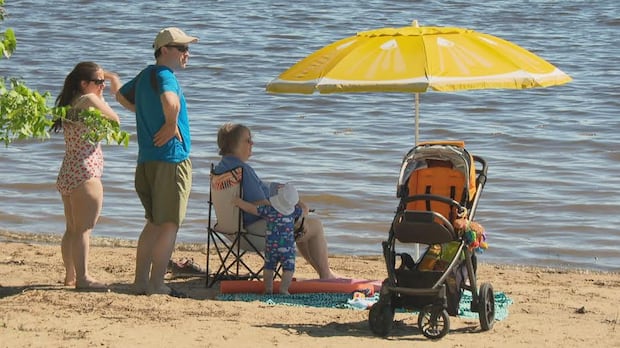
Summertime means many of us may be loading up the canoe, putting on our swimsuits and heading over to the beach.
But not all Ontario beaches have lifeguards or updated safety signage, especially at the Great Lakes.
Chris Houser, dean of the faculty of science at the University of Waterloo, has years of experience studying Canada’s coastlines, and hopes to reduce the number of drownings and rescues in the Great Lakes.
Houser says he wants to keep the focus on water safety, no matter what kind of beach you’re on.
“We tend to think of big waves and rip currents as being something that is associated with the ocean.
“People are not aware that the Great Lakes can be just as dangerous and we tend to underestimate their power.”
LISTEN | Drowning prevention in the Great Lakes:
The Morning Edition – K-W6:30Drowning prevention in the Great Lakes
Summer weather means many people are heading to the Great Lakes for a day of fun, but open water means staying vigilant about water safety. Chris Houser is the dean of the faculty of science at the University of Waterloo and he speaks about his work to reduce the number of drownings and rescues in the Great Lakes.
Houser says one of the things that makes the Great Lakes more dangerous is their enormous size.
“They’re an inland sea. We call them a lake, but they’re not like any other lake in Ontario,” he explained.
“They’re little tiny mini-oceans in terms of the size of the waves that can be generated. And once you get big waves, you get big currents. You can get a longshore current that could sweep you along the shoreline, you can get undertow and you can get these very strong rip currents that develop.”
More likely to drown in lake or pond: Lifesaving Society
The Lifesaving Society’s 2026 Drowning Data Snapshot has found people are 45 per cent more likely to experience a fatal drowning in a lake or pond, compared to rivers (21 per cent), bathtubs (16 per cent) and pools (11 per cent).
The national charity focused on preventing drowning and water-related injuries also warns that the number of drownings go up drastically between May to September.
WATCH | Water safety experts call on public to wear lifejackets as drowning deaths rise: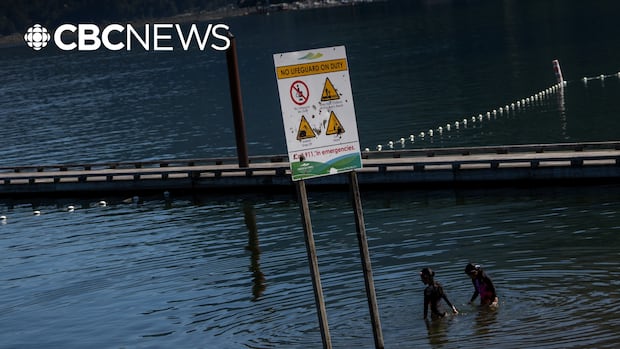
Water safety experts call on public to wear lifejackets as drowning deaths rise
More people in B.C. have drowned this summer compared to the same time last year. As the CBC’s Kier Junos reports, a lifeguarding organization says the spike in deaths is extreme and the highest in the country.
The organization also found that a majority of fatal drownings are a result of not using a personal floatation device like a life vest.
The Lifesaving Society says the most vulnerable age groups are people between ages 20 and 24 and people over 65.
‘Smart Beach’ pilot project
In 2022, Houser launched a pilot project called Smart Beach in Kincardine, Bruce County, that aims to make beaches safer.
Houser and his team have deployed a network of sensors at Kincardine’s Station Beach to monitor water levels, waves, currents and pedestrian patterns.
All of this, said Houser, will better inform them and allow them to advise beach-goers through an automated system on, “which sections of the beach are safer, which sections of the beach are more hazardous and when those [conditions] may occur.”
Moving forward, Houser said he hopes to see this type of technology deployed at beaches in Windsor-Essex so that people can be more informed before they head out into the water.
“[We’re] hoping that this becomes something of a standard approach,” he said.
“So it helps beach users know when and where those hazards might be present and also to pick the beach that is probably safer on any given day.”