
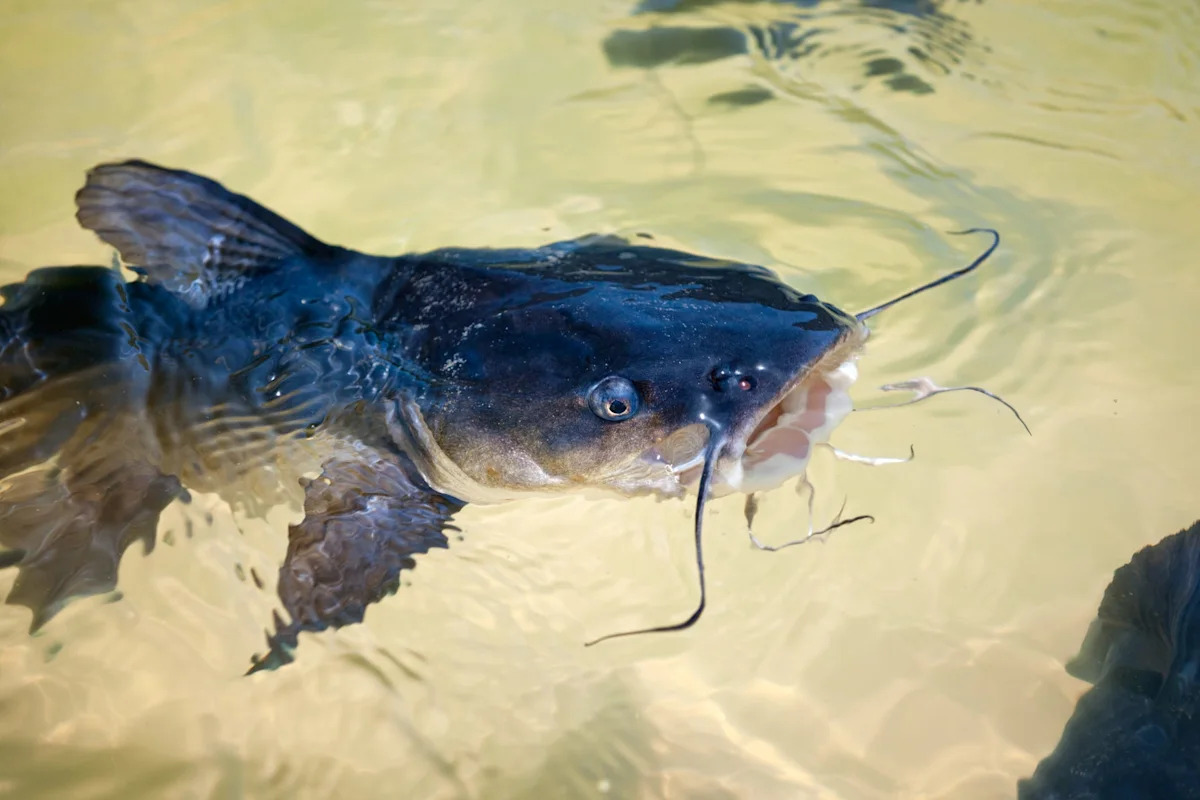
A rare cancer that spreads between fish like an infectious disease has been discovered in catfish in Vermont, marking the first known transmissible cancer in a freshwater fish species.
The disease is only the fourth naturally occurring contagious cancer ever documented in animals. Researchers say the unusual finding could help explain how cancers spread, evolve and survive beyond their original host.
The discovery, published July 22 in the journal Nature, centers on brown bullhead catfish living in Lake Memphremagog, which straddles the Vermont-Quebec border. Scientists found that the tumors are not developing independently in each fish.
Instead, the cancer cells themselves appear to move between animals and grow into new tumors.
How did scientists discover it?
Researchers from the University of Vermont and other institutions investigated after anglers and biologists noticed increasing numbers of catfish with raised black patches on their skin. The lesions first drew attention in 2012.
By 2014, roughly one-third of the catfish sampled in Lake Memphremagog showed signs of the disease.
Initially, scientists suspected pollution, a virus, or another environmental factor was causing the tumors. But genetic testing pointed to a much rarer explanation.

Geese line the shore of Indian Point on Lake Memphremagog in Vermont.
What makes this cancer so unusual?
When scientists compared tumor tissue with healthy tissue from affected fish, they found hundreds of thousands of genetic variants shared among tumors that were not present in the fish carrying them.
That’s a key sign of a transmissible cancer, researchers said, a rare phenomenon in which cancer cells survive outside their original host and spread to another animal.
In effect, the cancer cells become the infectious agent.
The catfish disease joins a very short list of known contagious cancers, including facial tumor disease in Tasmanian devils, canine transmissible venereal tumors in dogs and leukemia-like cancers found in some shellfish species.
“This discovery raises important questions about how cancer can evolve and spread in nature,” researchers said.
Harmful algal blooms can kill thousands of fish and other marine life
1 of 15
A dead Kemp’s ridley sea turtle is documented and picked up by a Sanibel Captiva Conservation Foundation volunteer along the Sanibel Causeway on Aug. 2, 2018 during a “red tide” outbreak along the Southwest Florida coast.
(Andrew West, The News-Press via USA TODAY Network)How does the cancer spread?
Scientists still don’t know exactly how the cancer moves from fish to fish.
One leading theory involves spawning season, when brown bullhead catfish closely gather to reproduce. That close contact could allow cancer cells to pass between animals.
Researchers also say the fish’s biology may play a role. Brown bullheads lack scales and spend much of their lives near lake bottoms, raising the possibility that cancer cells could spread through sediment or water.
The disease appears most common in larger fish of reproductive age, another clue that spawning behavior may be involved.
Was pollution involved?
Researchers examined whether pollution could be driving the outbreak, including concerns about a nearby landfill.
They found no evidence that cases were concentrated near the landfill or linked to unusual pollution levels.
Tumor cells did contain elevated levels of arsenic, a naturally occurring carcinogen found in parts of New England. But researchers said the evidence does not suggest pollution alone explains the disease.
Is it dangerous to humans?
Scientists say there is currently no evidence the cancer poses a threat to people.
Lake Memphremagog supplies drinking water to more than 175,000 residents, but researchers said the cancer cells cannot infect humans or jump to other species.
The fish are considered safe to handle for research purposes, though scientists recommend against eating fish with visible tumors.
What happens next?
Researchers are now studying lakes and rivers across New England to determine how widespread the disease may be.
They’re also investigating whether similar cases may have gone unnoticed for decades or even centuries. Among the clues are reports from naturalist Henry David Thoreau, who described black lesions on catfish in Massachusetts waterways in the 1850s.
Scientists hope the discovery will provide broader insights into cancer biology.
“By studying how cancers survive and spread outside their original host, we can learn a great deal about what keeps cancers contained and what happens when those boundaries break down,” researcher Julie Dragon said.
Reporter Anthony Thompson can be reached at ajthompson@usatodayco.com or on X @athompsonUSAT
This article originally appeared on USA TODAY: Scientists discover cancer that spreads between catfish