
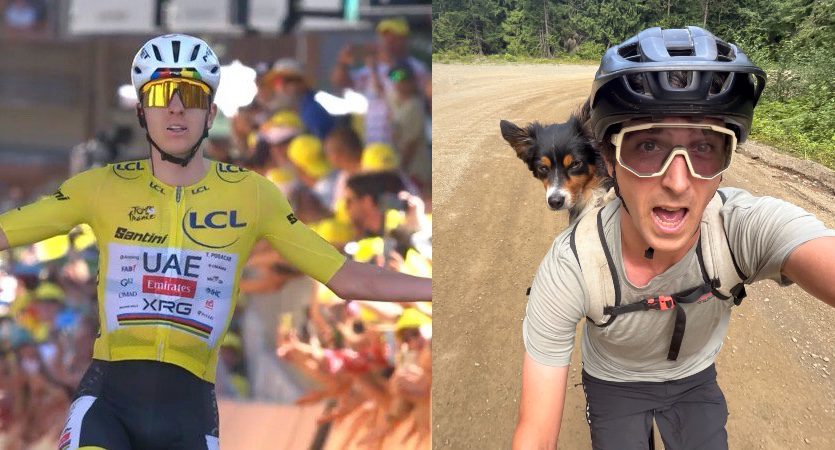
The Tour de France is over for another year and, well, I’m a little sad. Especially after this year. It was a bit shaky off the gun, with heat, a little too much dominance from Tadej and those early morning doping tests. But woah, did that one pull a U-turn. Stunning drama in the second half made this an unforgettable year that even this grizzled old (old-ish) fan revelled in.
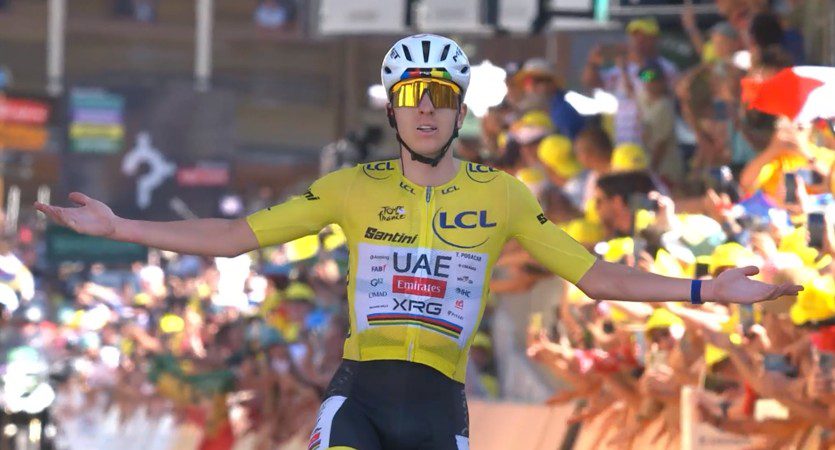 Pogacar destroying Pantani’s Alpe d’Huez record
A self-proclaimed climbing challenge
A big part of this year was the jaw-dropping, record-shattering climbing feats of Mr. Pogaċar. As I watched those incredible rides, up the Tourmalet, up Pertus and Col du Haag and, most of all, up Alpe d’Huez I was inspired. Then I saw various reports of his wattage for those searing attacks and thought…
Huh, that’s not that much.
Of course, I’m thinking of wattage in the context of e-bikes. Because my first thought when I saw a reported average of 400+ Watts while climbing Pertus was “I wonder if that’s even ‘Trail’ mode or just Eco?”
Maybe I’ve been spending too much time on the eebs…
If you haven’t been flooded with the latest wave of hyper-powerful eMTB releases 1) bless you, and stop reading now. 2) they’re getting a bit out of hand. The Bosch Line CX powering a Cannondale test rig rolling through my shed right now is only the third most powerful mainstream motor currently available. And it has a continuous output of 750 Watts. That is less than half the legal maximum of at least one competitor (and that competitor is notoriously easy to ‘jailbreak’ to get around some rules).
Which made me wonder, how would my watts/kg stack up against Pogačar’s record-shattering rides?
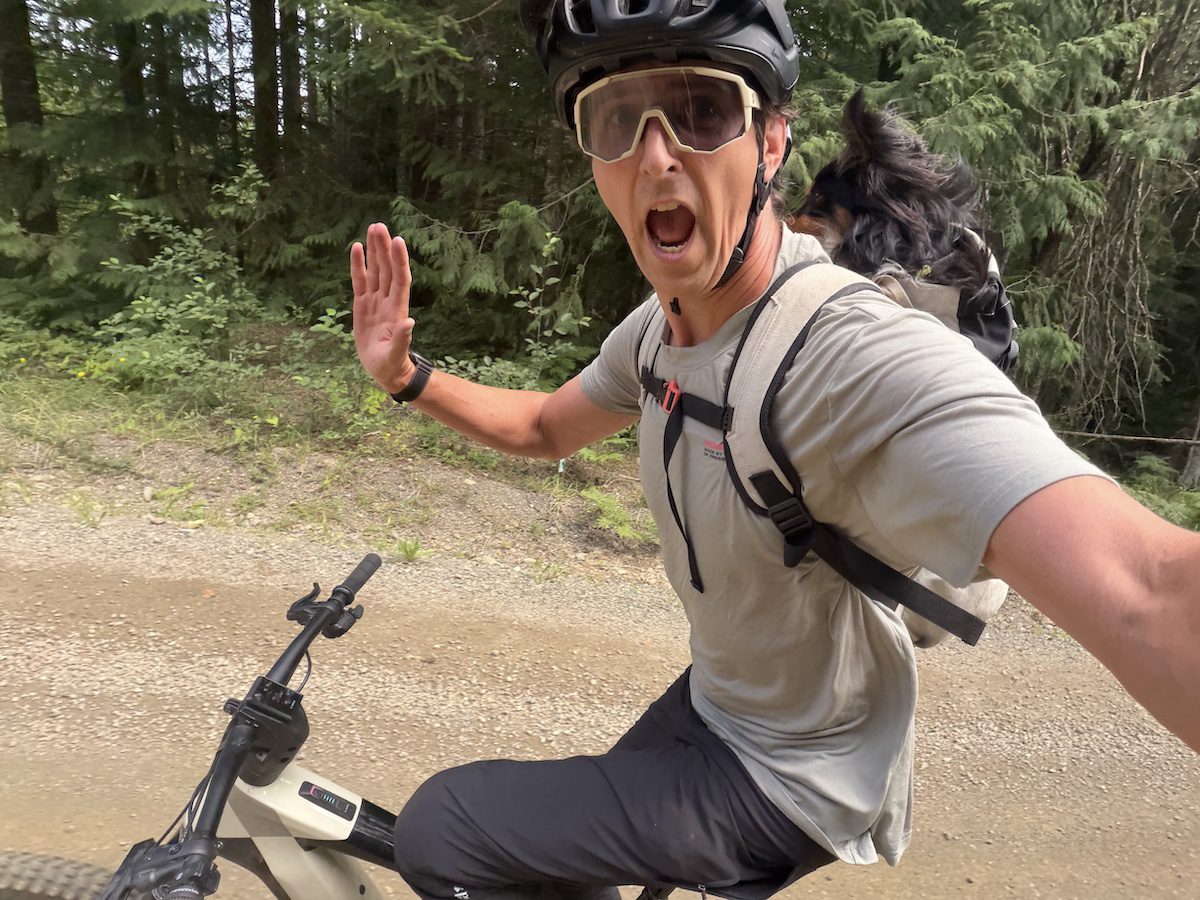 Your author, casually destroying Wh reserves. (Even Frank is embarrassed this is happening to him)
Me (and the E) versus Teddy
The first question is, obviously, who cares? It’s not even an apples to oranges comparison. It’s more like comparing apples (Tadej) to… a GIF of a monkey humping a football. I’m curious because I think it might be an interesting sense to look at just how powerful of an “assist” modern eMTBs are delivering.
Why W/kg? That’s kind of the leveller. The metric that determines how fast you will climb, regardless of size. A sprinter can put out massive wattage compared to a climber but, if he or she weighs significantly more wattage, will fall behind the minute the road goes up hill. It is, as it says, how many watts can you put out per kilogram of body weight.
Tadej’s transcendent Tour
And Tadej put out some jaw-dropping w/kg performances over the Tour’s three weeks.
As a benchmark, around 6 w/kg used to be considered enough to lay waste to a Tour stage. Over three and a half minutes on Pertus, Pogačar put out an estimated 8.2 w/kg, averaging around 540W to shatter any glimmer of hope his GC rivals had that they might, finally, uncover his Achilles’ heel this year. For 8:30 of climbing before that, he averaged an estimated 6.2 W/kg.
On Col do Haag, he put out an estimated 8.4 W/kg for 4:37. That’s climbing 1.6km at 11.1 per cent gradient.
Then there’s Alpe d’Huez. To vault past a nearly 30 year old record set by Marco Pantani, one that remained untouched throughout the entire Armstrong era (and the decade since), Pogačar put out an estimated 6.97 W/kg. That’s 1,115m of elevation gain over 13.5 km at an average of 8.26 per cent gradient. Tadej averaged around 22.8 km/h for 35:28, taking more than a minute off il Pirata’s infamous record.
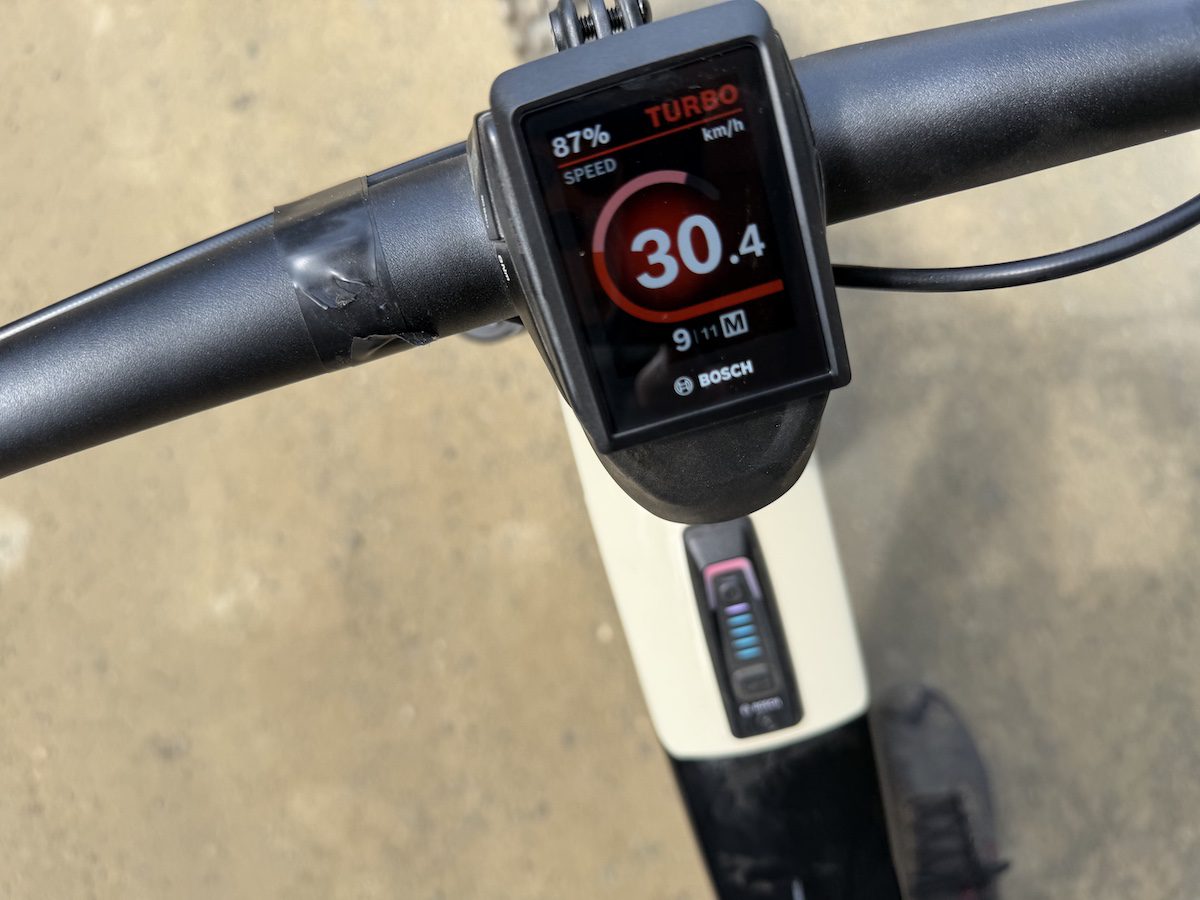 Ok, Bosch did most of the leg work on this one…
A team effort, sort of
So, how would I compare? On my own, obviously miserably. Again, too much time on an eeb. But myself, the “assist” of a Bosch and a Cannondale, our powers combined?
We’d destroy him.
Well, actually it’s kinda close, depending on how you do the math. While traditionally W/kg doesn’t include the bike weight, because his Colnago probably weighs exactly the UCI limit of 7kg, the Cannondale is 1) the primary source of wattage for this effort and 2) a hefty 25.5kg. That latter number is no small factor.
To account for that, I’ve calculated things twice. One set of numbers for just myself, greedily taking credit for the Bosch’s performance as if it were some sort of unpaid intern. And another set of numbers for the “system W/kg” – which accounts for all the weight that was being pushed up the hill by our combined watts. In this case that is the 25kg bike, an 80kg rider and the 10kg dog in my backpack (who, frankly, didn’t contribute much at all).
Not being in the Alps, I don’t have a pristinely paved 1,100m climb nearby. Or, at least not one with good trails back down (I’m not going up and down a road on an eMTB just for the sake of this dumb experiment…). But there is an 11km climb gaining 575m of elevation nearby. It averages around 5.23 per cent, starting gradually before kicking up well past 10 per cent for a few stretches in the middle and at the end.
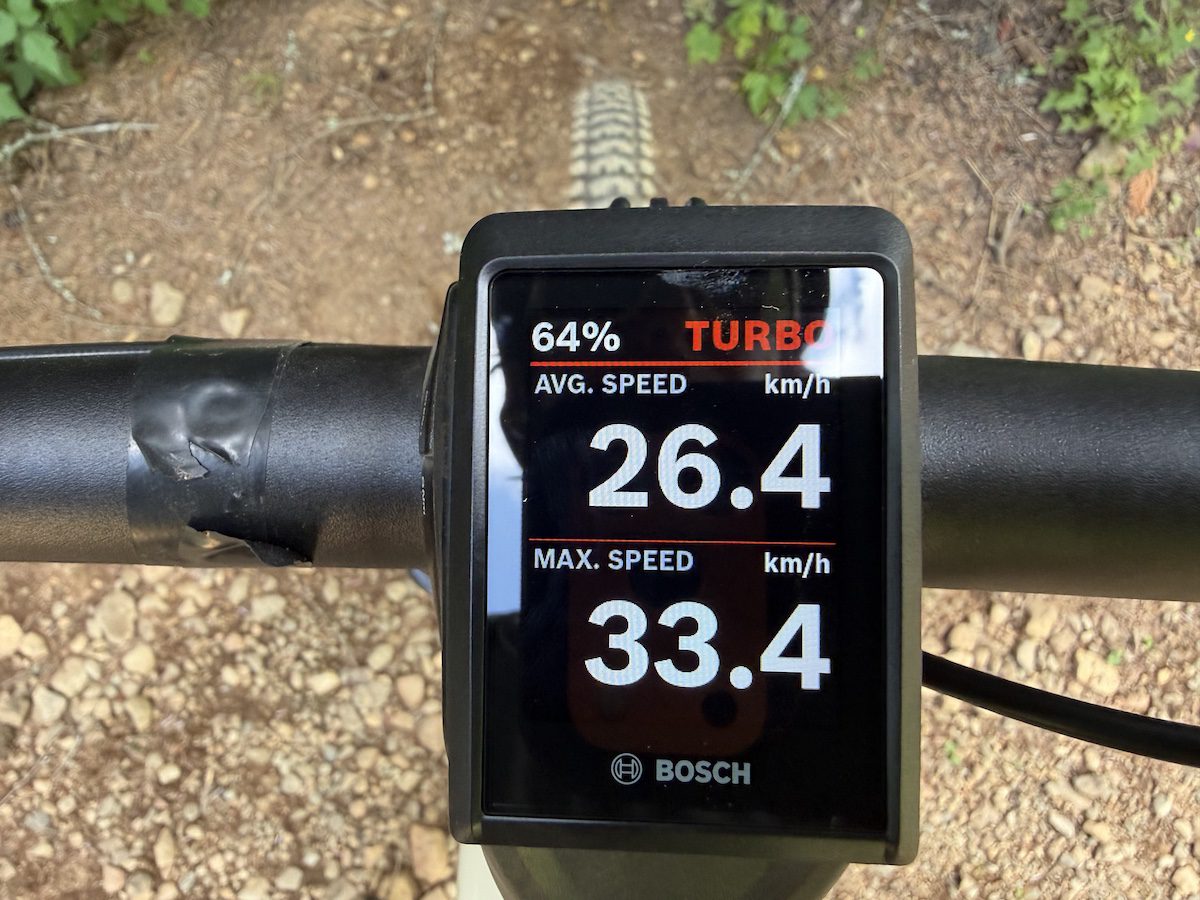 Bosch’s Kiox display made this silly story possible. It shows your power input, as well as all kinds of other information (including maps)
Gimmie some numbers
Adding my modest effort to the Bosch Line CX’s, our little trio of man, beast and machine made it to the top in 27 minutes, posting a speed of 26.4km/h. Way faster than Tadej on the Alpe d’Huez. And the Bosch had 64 per cent of its battery remaining, so I could have done that at least one and a quarter times before the bike started to tire out.
The computer tells me I added an average of 235W to that effort. With just my body weight, that’s a thoroughly unimpressive 2.9 W/Kg.
The Performance Line CX has a max output of 750 watts, and I redlined it in Turbo mode the entire way. But there were a few lower-angle spots where we were held back by its 30km/h assist limit. So I’ve calculated a few different averages.
If we’re playing it safe, and assuming an 600-W average support in addition to my 235 W, that’s a system W/kg of 7.22. Take out the system and stick to just my body weight and it’d be a whopping 10.4 W/kg. All while my HR sat at an average that an Apple Watch I’m testing called, quite dismissively, “moderate.”
If we assume a maximum 750W support the whole way, it’s a system power of 8.52 w/kg. That’s just a hair above Pogačar’s highest measured (estimated) W/kg on Col du Haag. But, again, that was for the final 4:30. “We” held this for a full 27 minutes. In fact, if you take out my paltry efforts, the Bosch’s max power alone would give our “system” a 6.52 W/Kg output, nearly matching Pogačar’s record shattering ride up Alpe d’Huez.
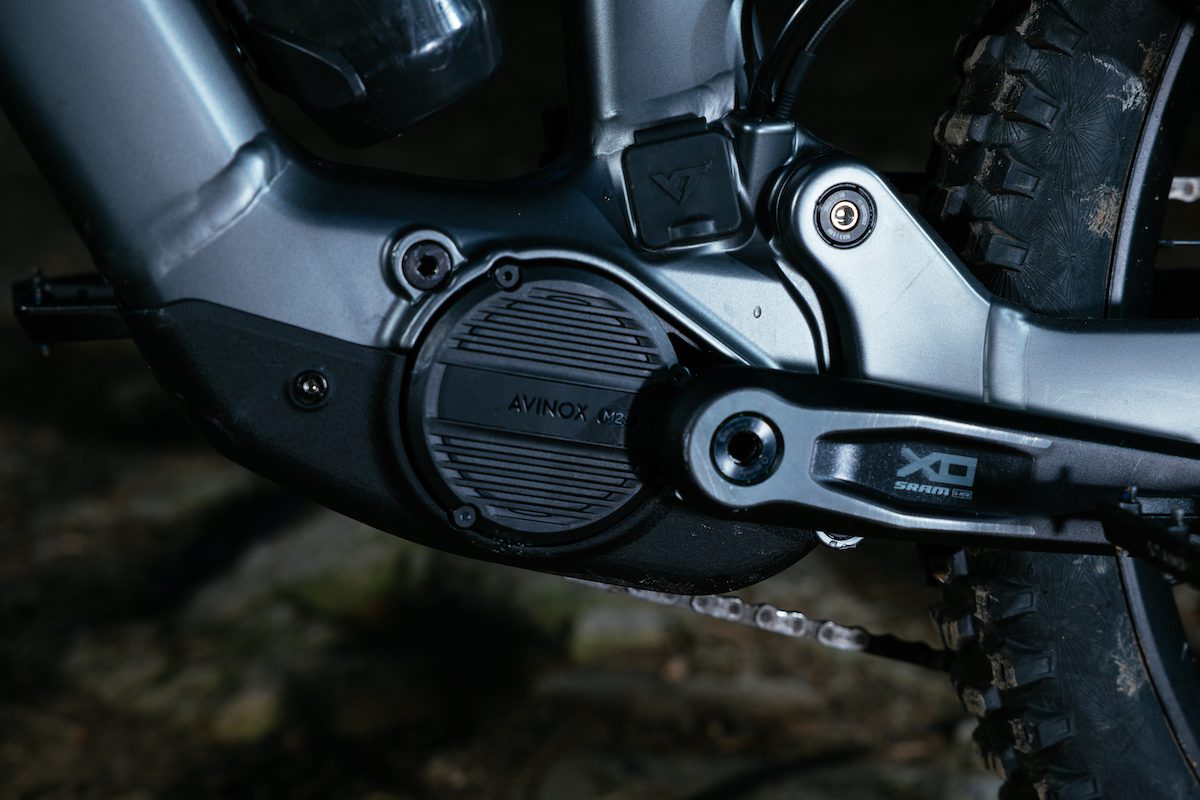
The third most powerful motor
So, with the the “assist” of the third most powerful motor currently on the market, I can climb like a five-time Tour de France champion, while only putting out a moderate effort myself.
The most powerful on the market? Avinox’s M2S. It literally doubles that, though with a limited time. It will hold 1,500 W for 60 seconds before retreating back down to a paltry 1,3000W continuous power. So, practically, doubling the output of Pogačar (and even surpassing the heroic final five-second of 1,433w effort Mathieu van der Poel needed to win stage 9).
Who cares?
Which brings us back to the first question. Who cares? Well, it seems like that is a lot of power to qualify as an assist. Especially when it’s being marketed as a way to bring people into the sport. Or keep people in the sport. It seems more like a different sport. I’m not saying any assist is a different sport. But somewhere between the “light” assist of a TQ HPR50’s 300w output and the M2S’s 1,500 blitz of power, there a line is probably crossed. Not just by Avinox (Specialized’s mixed Class 1 / Class 3 bike is probably a more flagrant offender).
But marketing power numbers in an abstract way makes it easy for the slow, competition-driven upward creep of wattage and torque to seem reasonable. It’s only a few hundred more watts than the last bike, so who cares? Adding the greatest cyclist of all time gives, I hope, some context to how absurd these level of “assist” are now. I mean, It’s fun to say I climbed faster than him, if a hollow, fleeting fun. But is it maybe too much?
On my climb, I flew past two nice people powering their own way up the mountain. I felt rude not slowing down, even if it was in the name of science, but did say hi and wave as I sped past. Carrying a cute dog on your back helps lighten the mood, even when the other rider is suffering in July heat. But without Frank, and if I were flying by them on a climb trail instead of a wide open gravel road, it might feel different on both sides of the pass.