
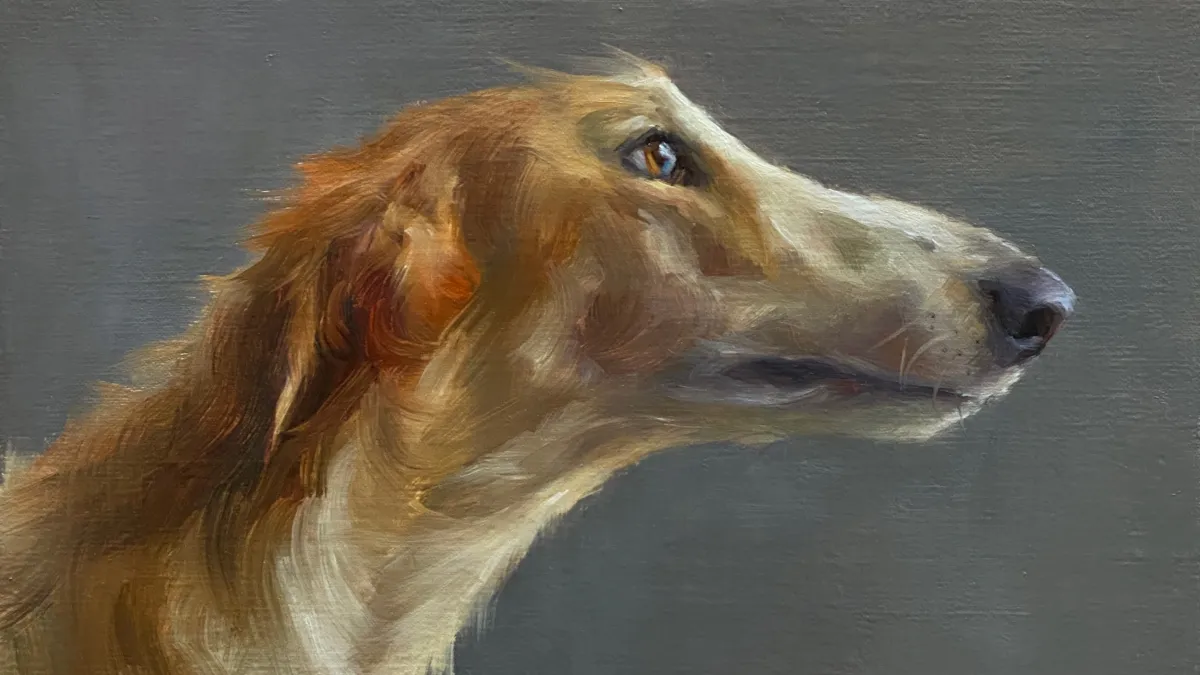
Long before Instagram made minor celebrities of tabby cats and teacup dachshunds, humans were already immortalising their animals in paint and stone. The Egyptians carved cats on tomb walls beside their pharaohs; Van Dyck slipped spaniels into the corners of royal portraits as though they too deserved to be recorded for posterity; and Sir Edwin Landseer built an entire Victorian career on painting soulful-eyed stags and devoted terriers, eventually lending his name to the lion sculptures he designed for the base of Nelson’s Column in Trafalgar Square.
Luxury newsletter
The inside track on tech, travel, philanthropy and the hottest handbags, cars and spas.
Sign up with one click
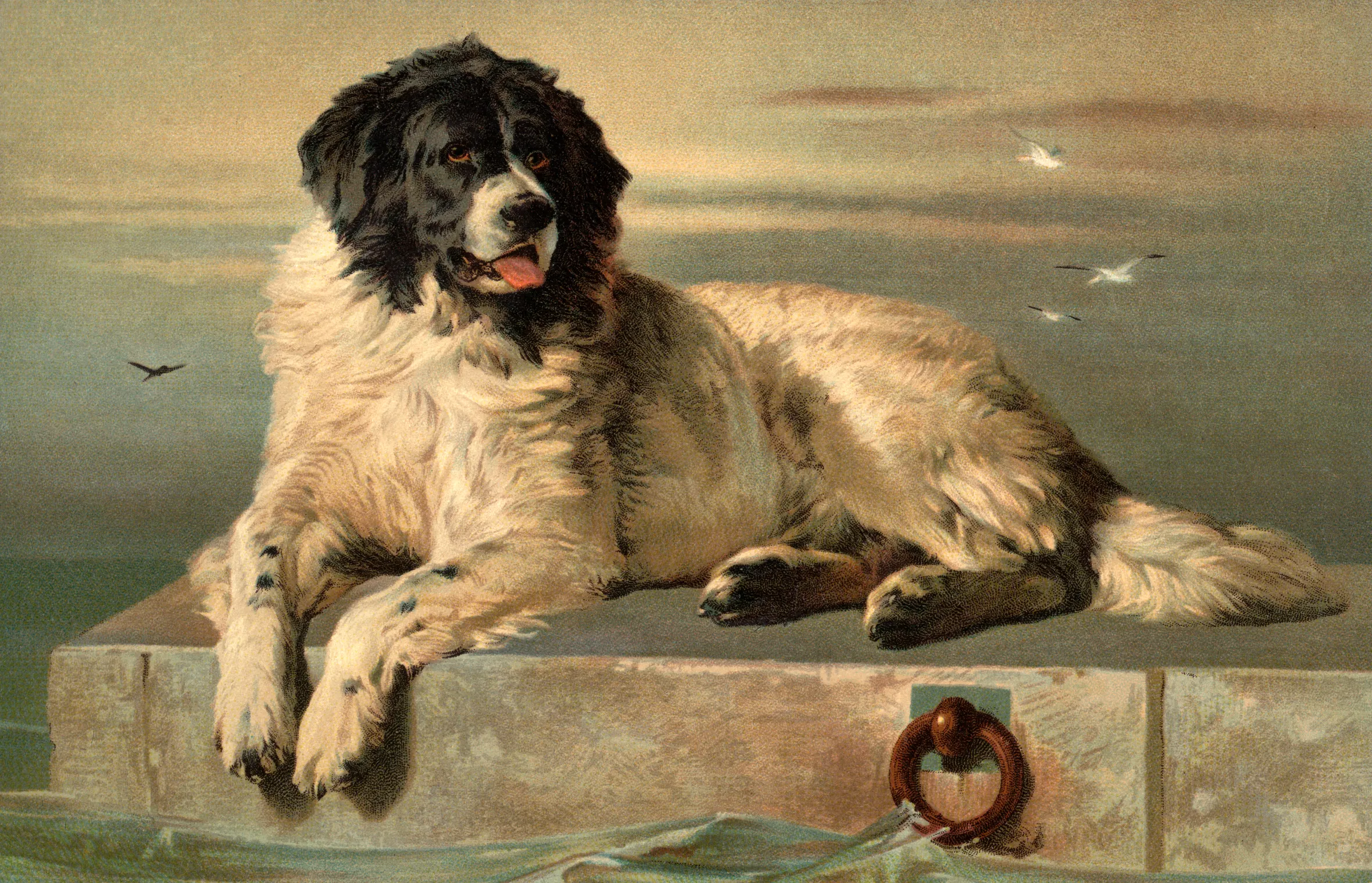 A Distinguished Member of the Humane Society (1838) by Sir Edwin LandseerPhotograph by H Armstrong Roberts/ClassicStock/Getty Images
Queen Victoria, ever the trendsetter, commissioned multiple portraits of her dogs and horses. Today’s version of that tradition comes with a WhatsApp thread, a folder of phone photos (a recent Samsung survey found that on average we have 20 per cent more pictures of our pets than our partners) and — if you’re very indulgent — a five-figure invoice.
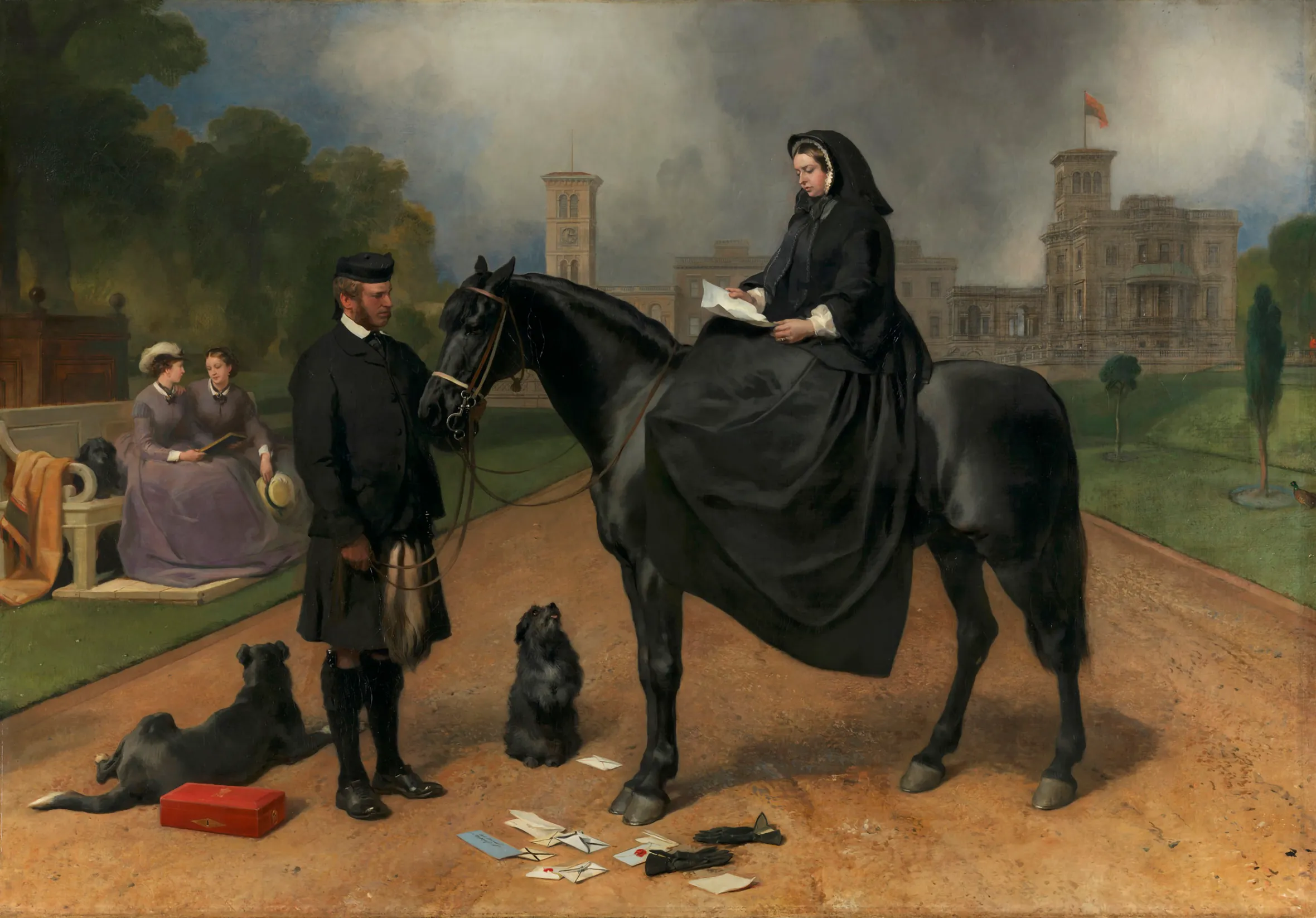 Queen Victoria at Osborne (1865-67) by Sir Edwin Landseerroyal collection trust/© his majesty king charles iii 2024
The modern pet portrait industry ranges from £20 watercolour “teeny illustrations” to £25,000 bronze sculptures with a 17-month waiting list, and its practitioners are unanimous on one point: this is no longer a niche indulgence. “Culturally we see more people treat their pets as a part of the family,” says Christian Tucci, a Los Angeles-based artist who works in coloured pencil and oil (from $250 to $1,000).
However, he’s less enamoured with the vocabulary that has crept in alongside the sentiment. “We hear an expression I detest — fur baby — to describe pets far too often,” he says. Word choice aside, he’s seen the effect on his order book: “I notice many more people interested in higher-end artwork of their pets.”
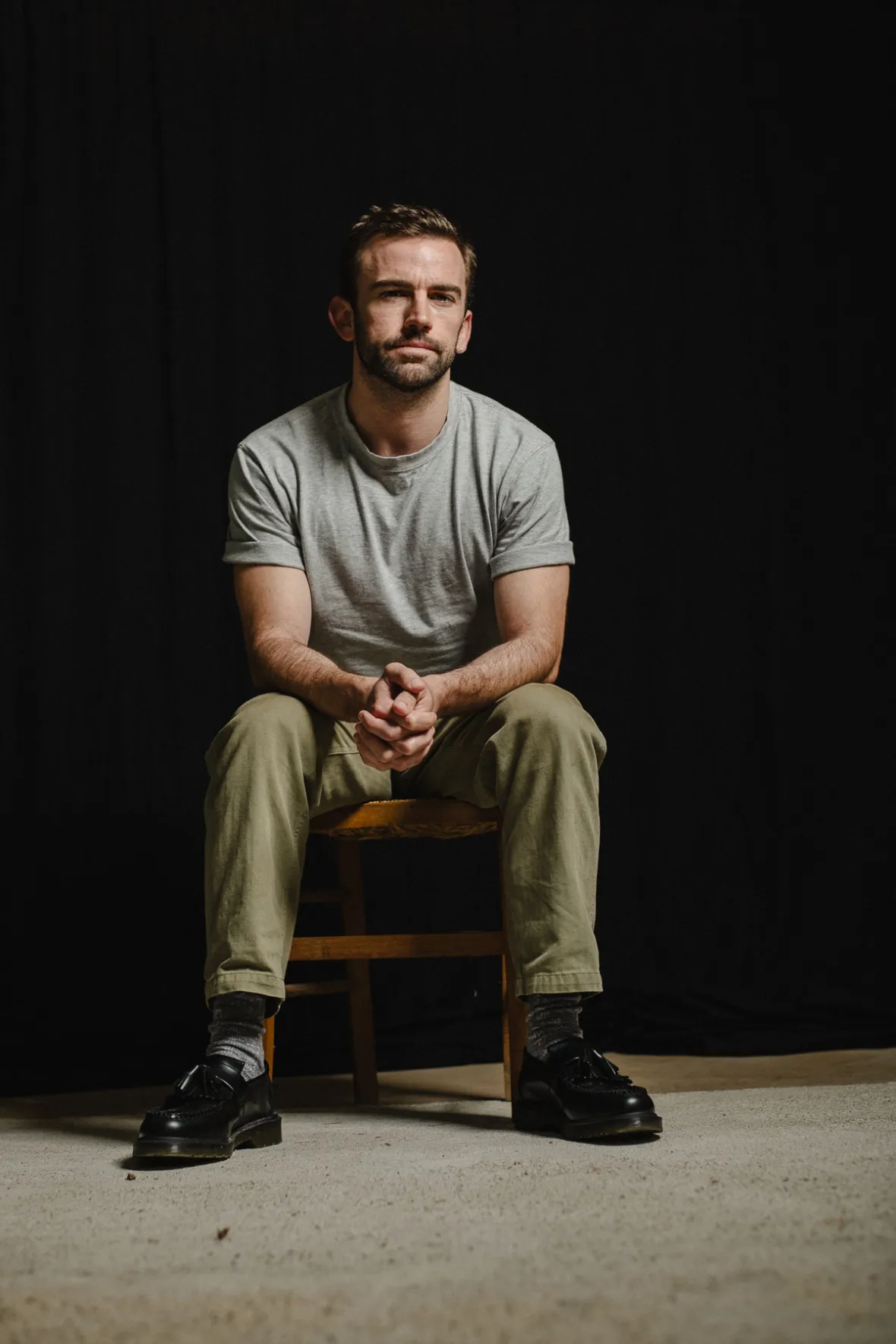 Christian TucciChristian Tucci
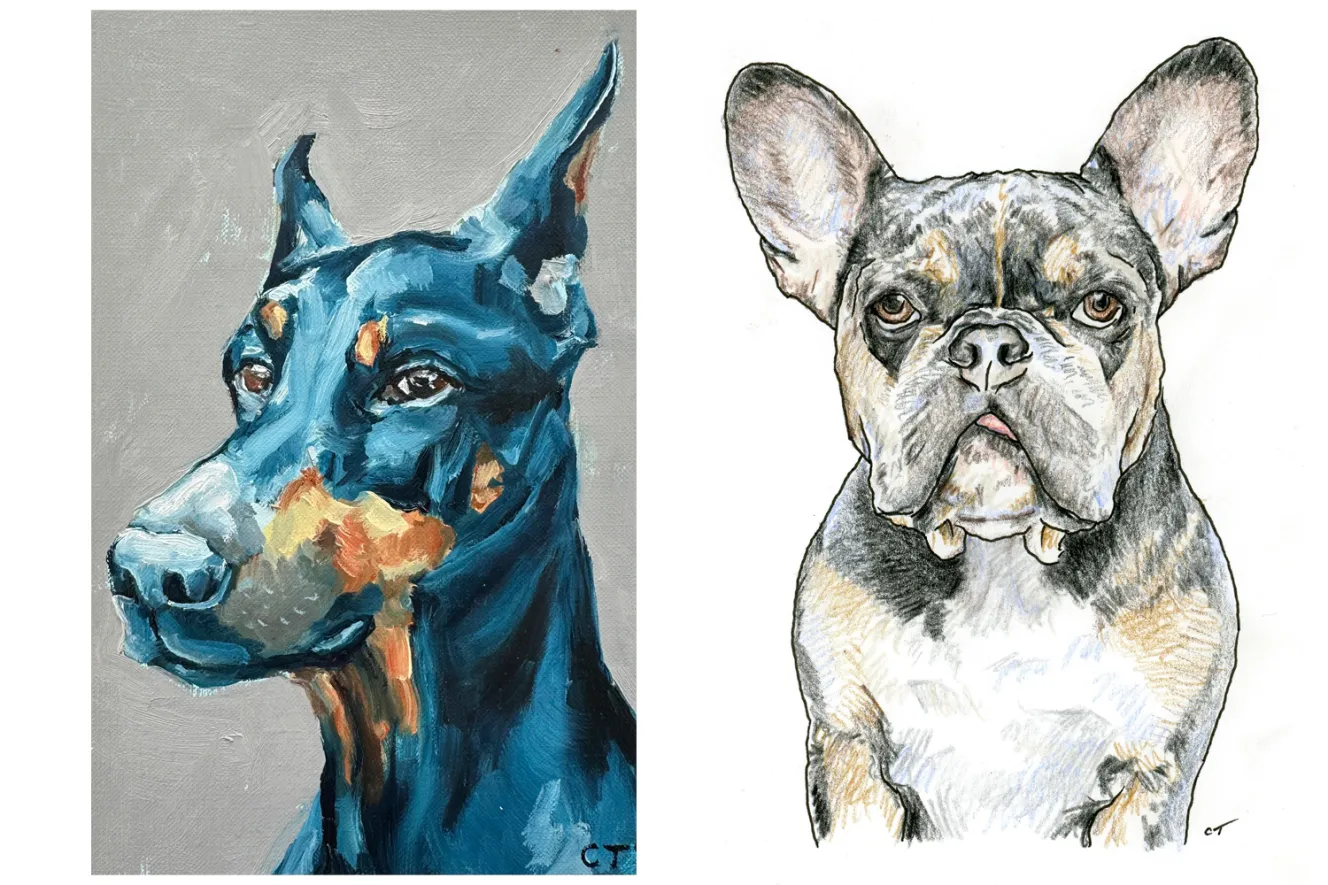 A Dobermann and a French bulldog by Christian Tuccichristian tucci
For sheer material extravagance the crown belongs to the sculptor Tanya Russell, whose foundry-bronze and bronze-resin commissions run from £7,800 to £25,000, with a waiting list stretching back well over a year. Her clients aren’t just paying for the metal. “Small sculptures take nearly the same amount of time to sculpt as large ones,” she says, and a unique statue “costs three to four times more” than one released as part of a limited edition — the sculpture equivalent of a bespoke suit versus one off the rack.
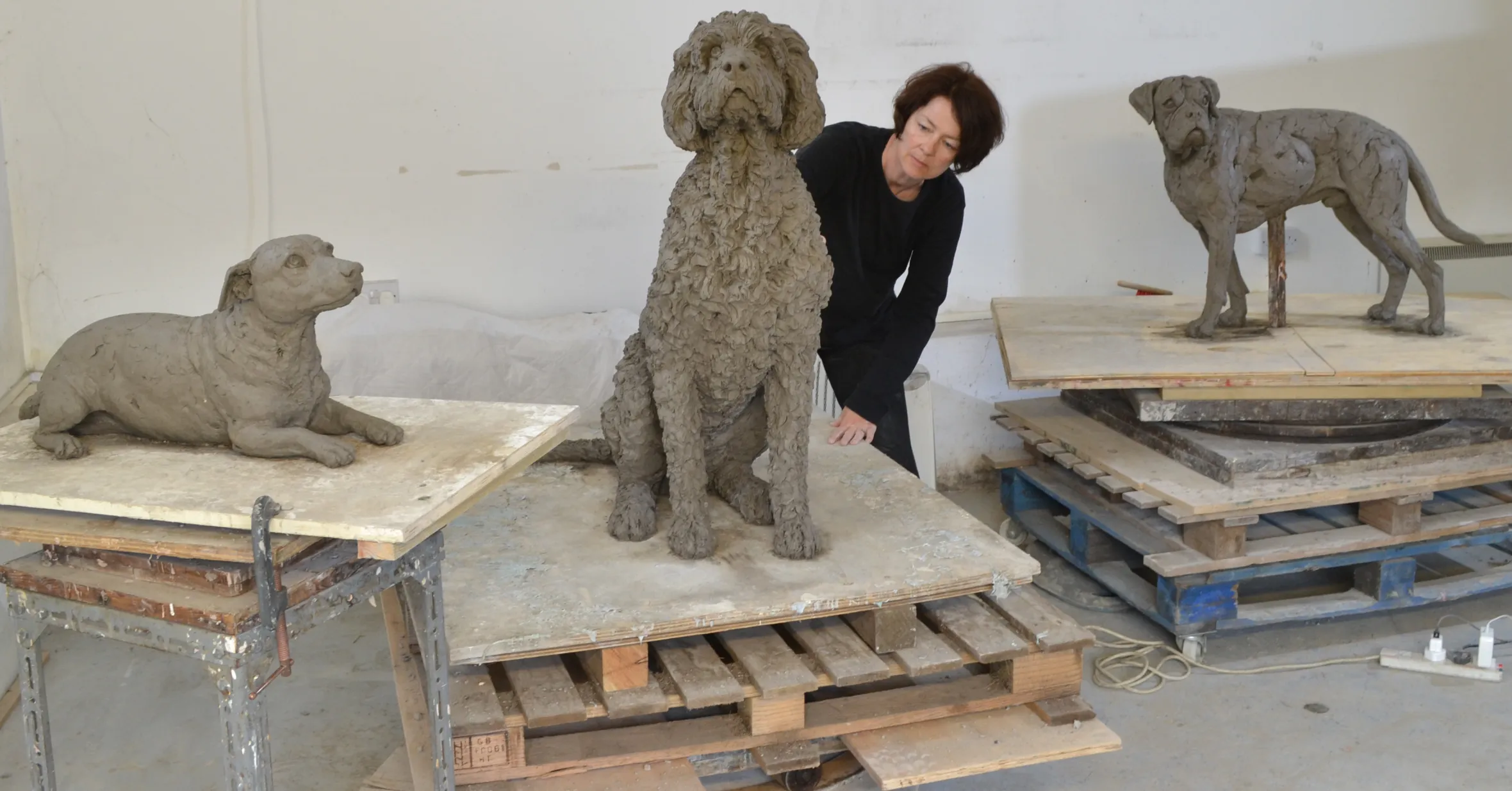 Tanya Russell working on a labradoodle, a boxer and a Jack Russell terrier
The luxury end of the market is vividly illustrated in the studio of the London-based artist Alice Hawthorn (£20-£500), who has painted on watercolour paper, leather, glass, whisky bottles, Christmas baubles and, memorably, a client’s handbag.
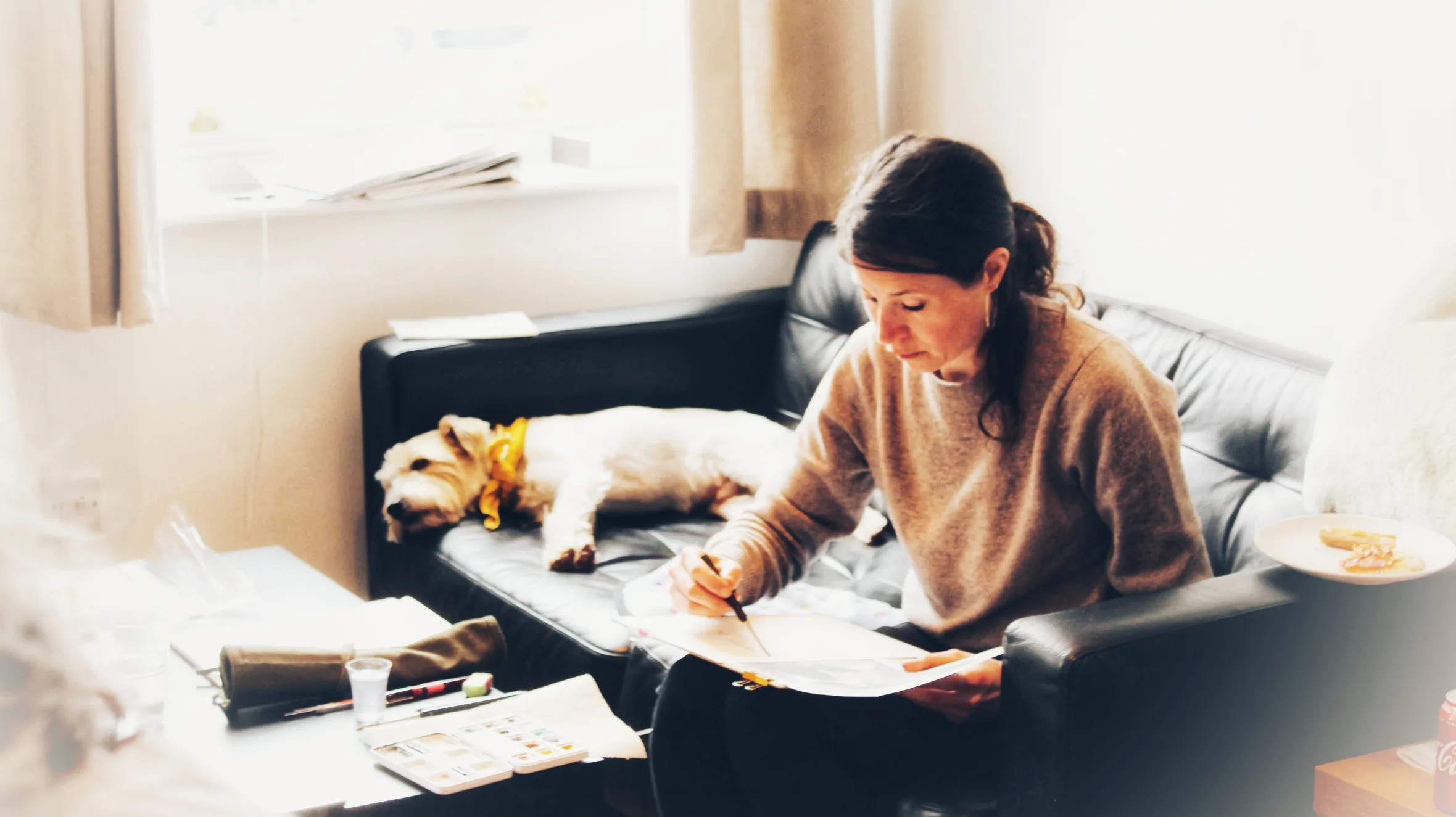 Alice Hawthorn at work
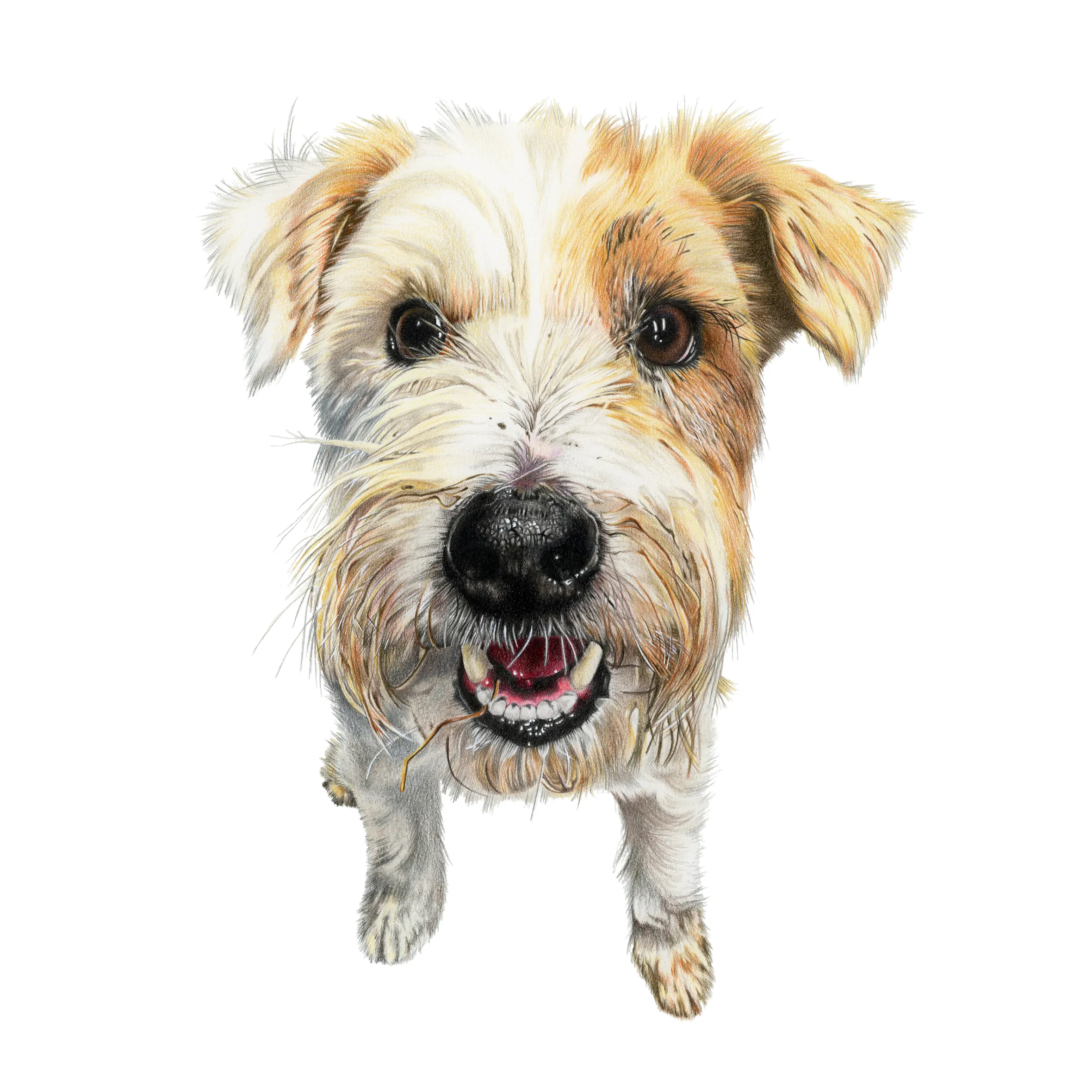
“I once painted a dear little dog called Poo onto a Ferragamo handbag; I used gold and silver leather paint for highlights,” she recalls. “That was nerve-racking but Poo’s owner was thrilled with the result.”
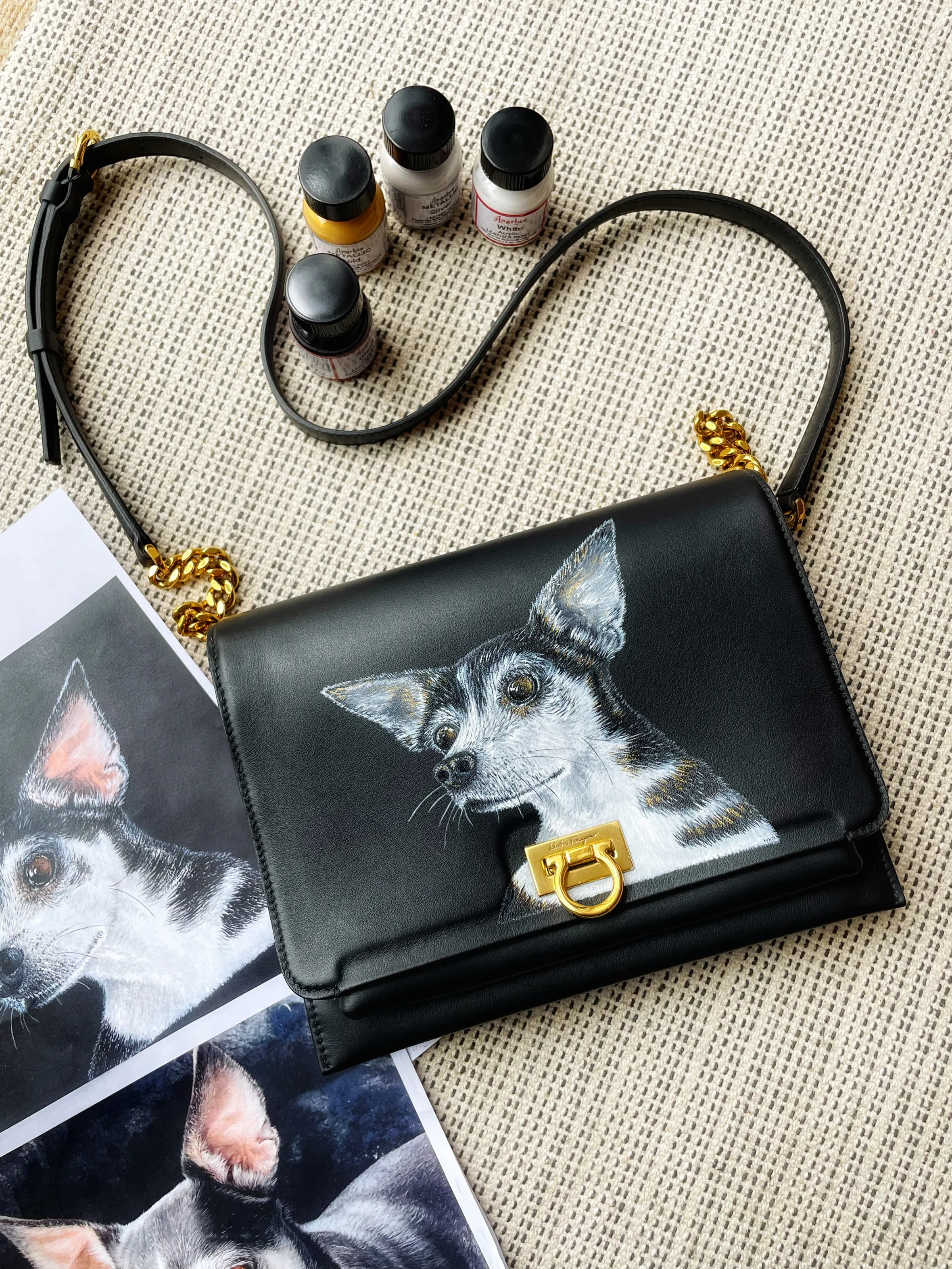 Alice Hawthorn painted a dog portrait on a Ferragamo bag
Hawthorn’s client list has also brushed up against celebrity: a King Charles cavalier spaniel mug she designed to mark the 2023 coronation ended up at Buckingham Palace via a friend, prompting a formal thank-you letter from the Palace itself. “No matter how famous or wealthy a person may be, our love of our dogs and cats levels us. We’re just so lucky to have them in our lives,” Hawthorn says.
Every artist interviewed circled back to the same starting point for their work: the eyes. Tucci begins every portrait there, insisting that “getting the sparkle of the eyes just right conveys so much personality”. Hawthorn agrees, saying she feels she gets to know a pet properly only once she’s drawn them. Russell, working in clay and bronze rather than colours, talks instead about capturing “the composite experience of a life lived”, rather than a single frozen photograph.
However, the American artist Johanne Mangi (POA) recalls painting a rescued cocker spaniel who had lost both eyes to disease. “The finished painting depicted her so well that you didn’t notice she had no eyes,” she says. Mangi has spent more than 15 years arguing that dog portraiture deserves to be taken as seriously as any other genre of fine art. “Artists used to be embarrassed to admit they painted pet portraits,” she says. “I wanted to change the perspective.”
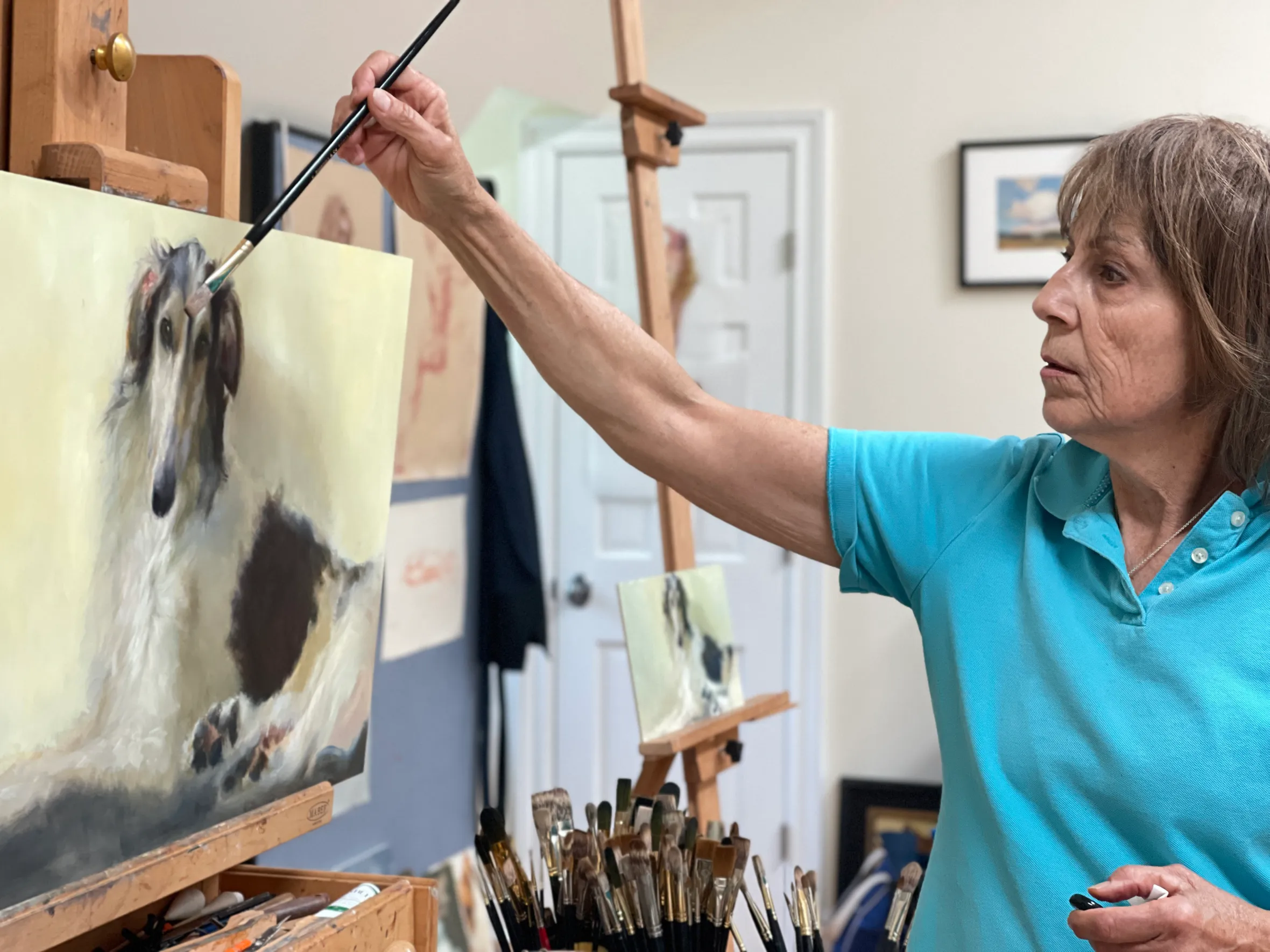 Johanne Mangi in her studioJohanne Mangi
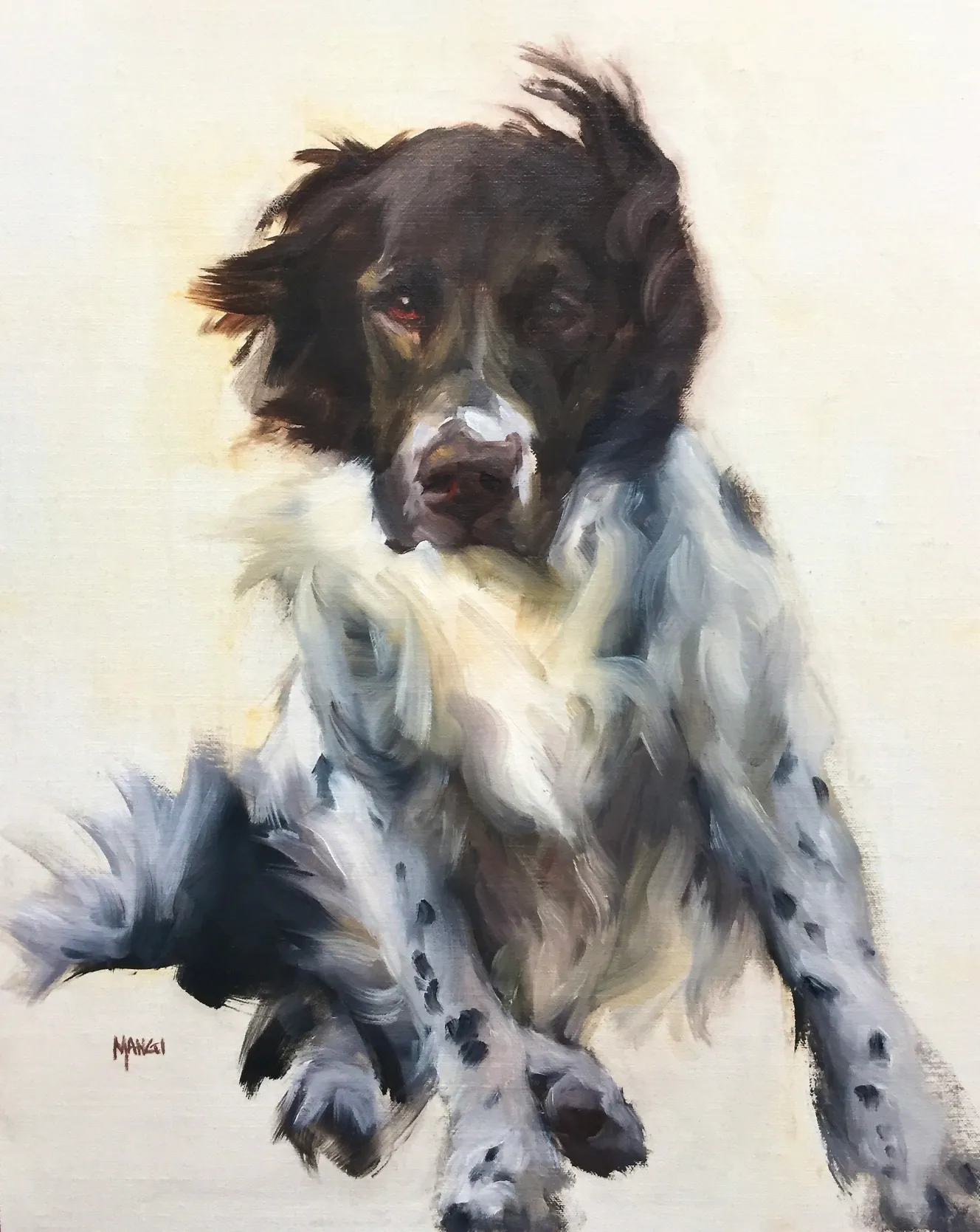 Johanne Mangi
Just as with a portrait of a human, behind every finished pet portrait is an intricate process. Tucci’s begins on Instagram, where he establishes which medium a client wants — coloured pencil or oil — before asking for reference material. He’s learnt to be precise about how he asks for it. “I specifically request three to five photos that the client loves of their pet. Wording it that way, I tend to get reference photos with better lighting and more personality,” he says.
Hawthorn runs a similar operation from London. “Much of the time my job is so light-hearted and funny,” she says. “I painted Barnaby the cockapoo with the baguette in his mouth that he likes to carry home from the boulangerie in the French village where he summers.”
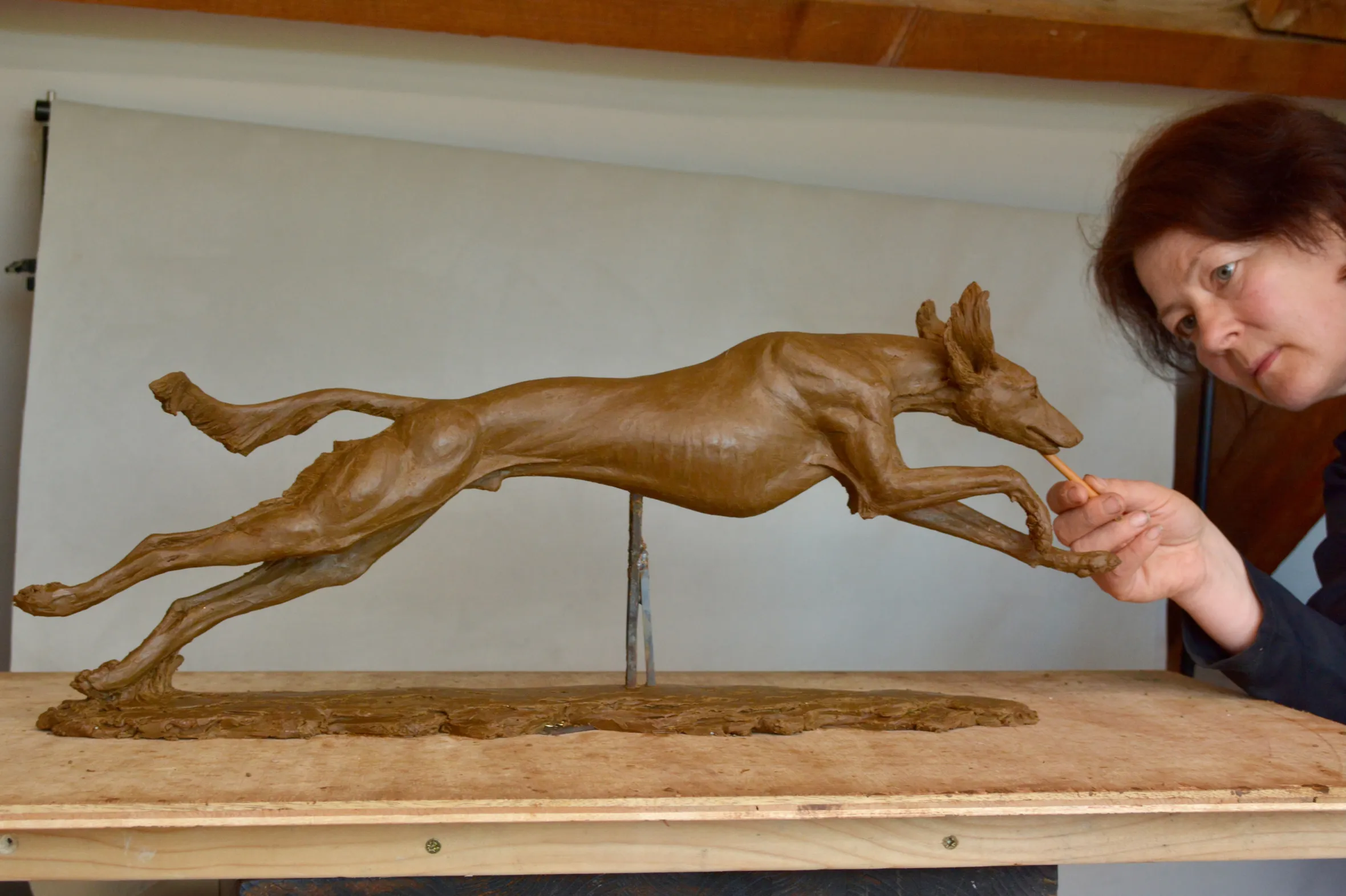 Tanya Russell working on a clay model
For Russell as a sculptor the process is closer to a consultation for a piece of architecture. Once a client commits she asks for something most photographers would recoil at: the bad photos. “We treat pets much like we treat ourselves in selfies,” she says, “and we vet — no pun intended — their photos to ensure only the best are kept for posterity.” She wants the opposite — shots of tummies, paw pads, the underside of the chin — because a sculpture, unlike a painting, has to be convincing from every angle. Where possible she also takes physical measurements, starting with the height at the shoulder, though she says that a St Bernard “may have very definite opinions about being measured”.
Mangi’s process involves “long conversations, numerous images and videos of the dog”, and where possible live sittings — she keeps several dogs of her own on hand to pose as stand-ins when a client’s pet isn’t available. “You must have empathy for your subject. I trust my intuition and ability to go beyond the obvious to capture their spirit.”
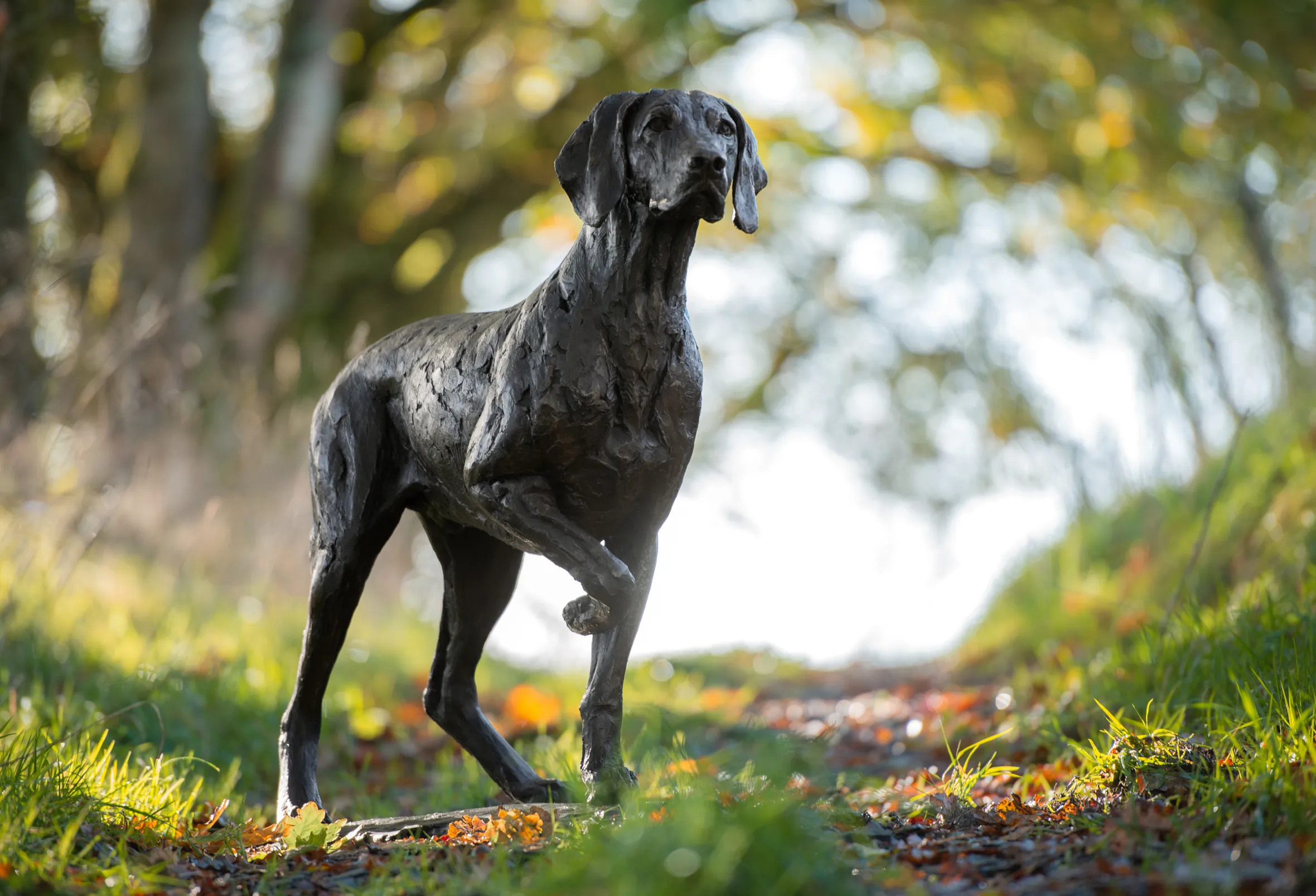 Pointing Weimaraner by Tanya Russell
Russell shares a similar sentiment when explaining the growing popularity of pet portraits today: “We are honouring them not just as working animals but also more as partners and family. The pet portrait is one little piece of a wider experience that is now nearly universal. That journey is one of happiness, followed by loss and grief, and with time that moment when only our good memories and our gratefulness to them remain.”
Ten famous pet portraits through history
Cave Canem (Beware of the Dog) mosaic, Pompeii (1st century AD)
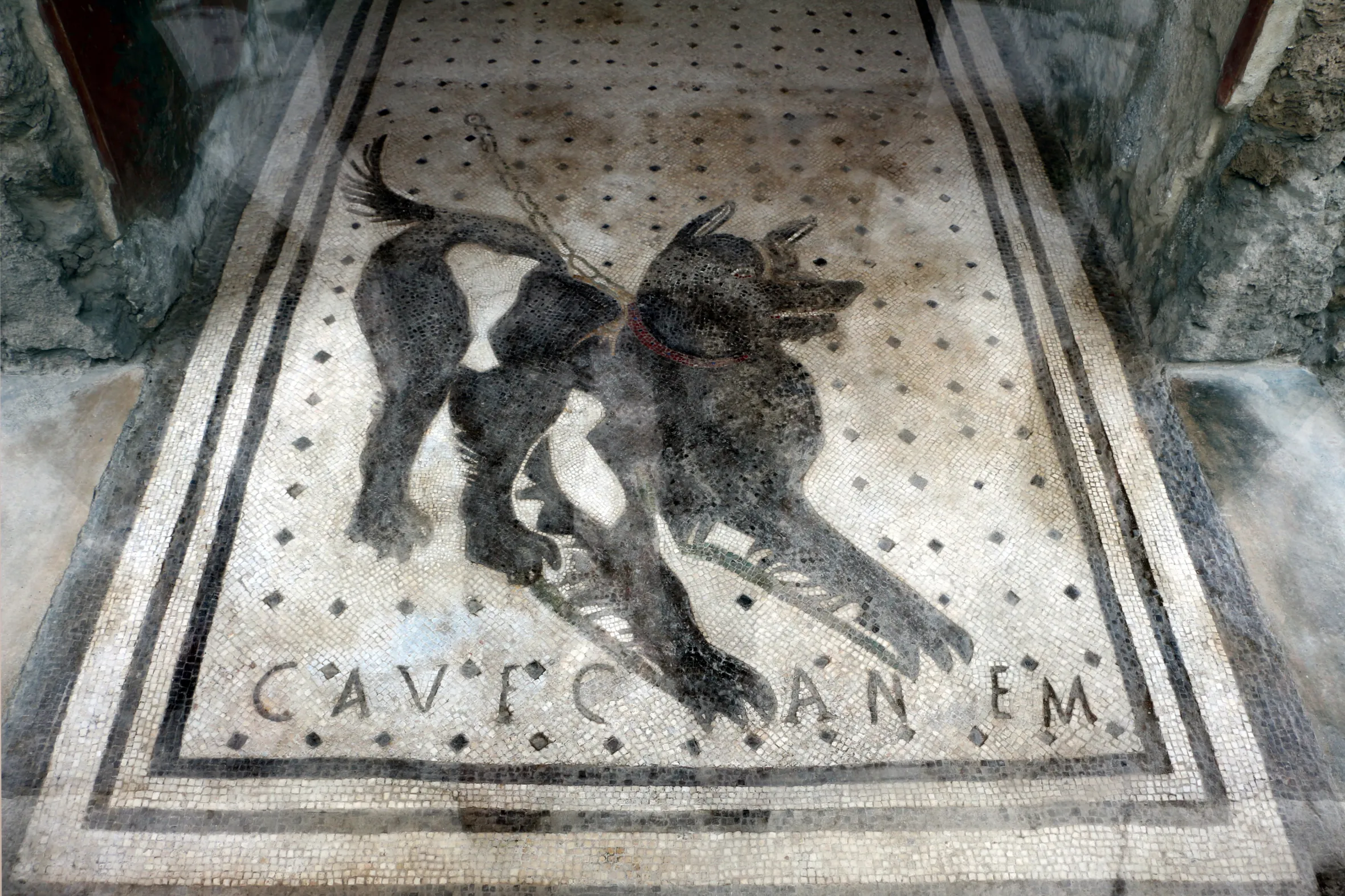
A Roman family’s watchdog was immortalised nearly 2,000 years ago at the threshold of the House of the Tragic Poet in Pompeii, proving people have proudly celebrated their pets since antiquity.
The Arnolfini Portrait (1434) by Jan van Eyck
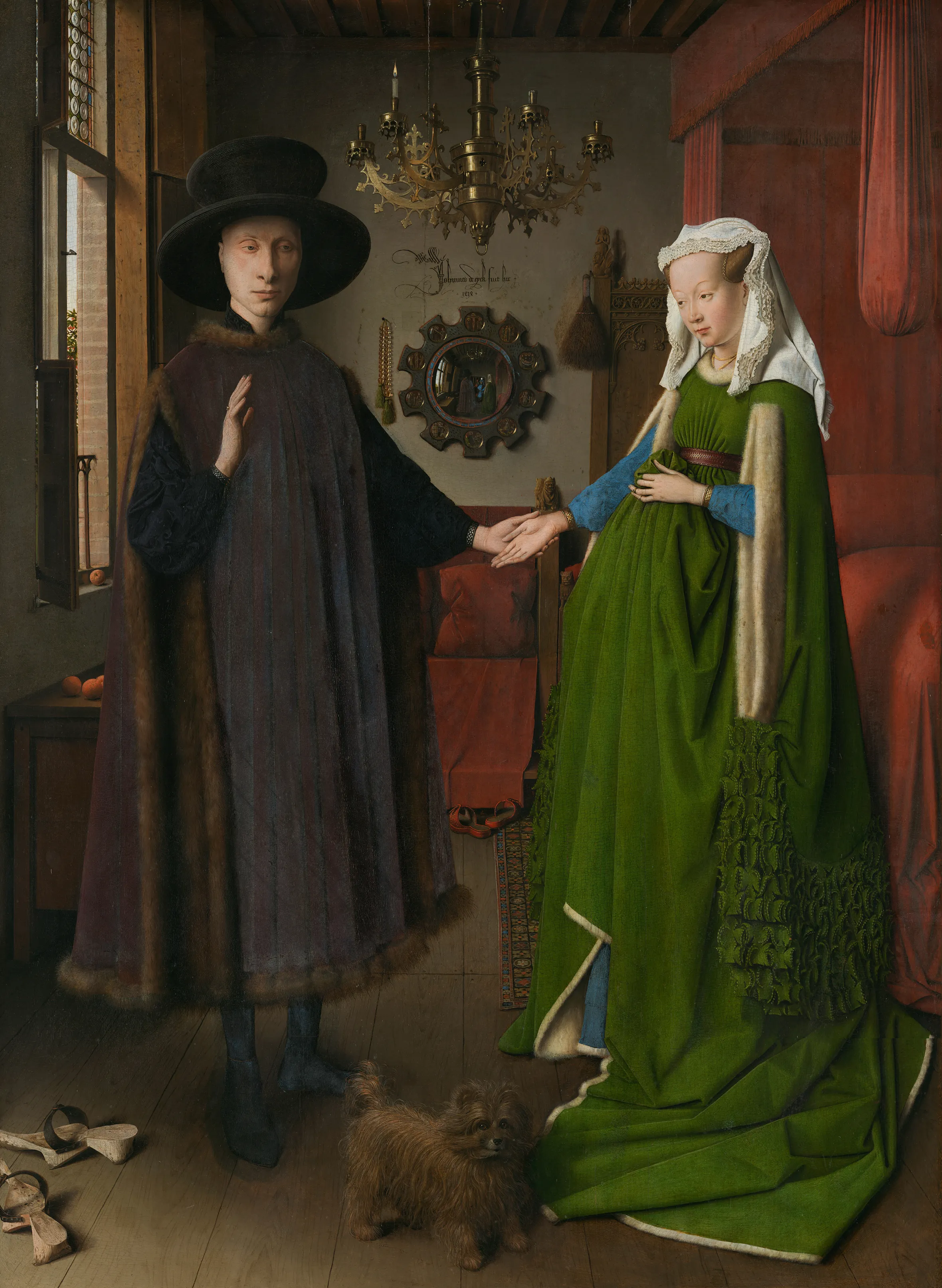
The tiny fluffy dog at the couple’s feet is one of art history’s most famous canine companions, symbolising loyalty while quietly stealing the scene.
Portrait of a Noblewoman with a Lapdog (c 1580) by Lavinia Fontana
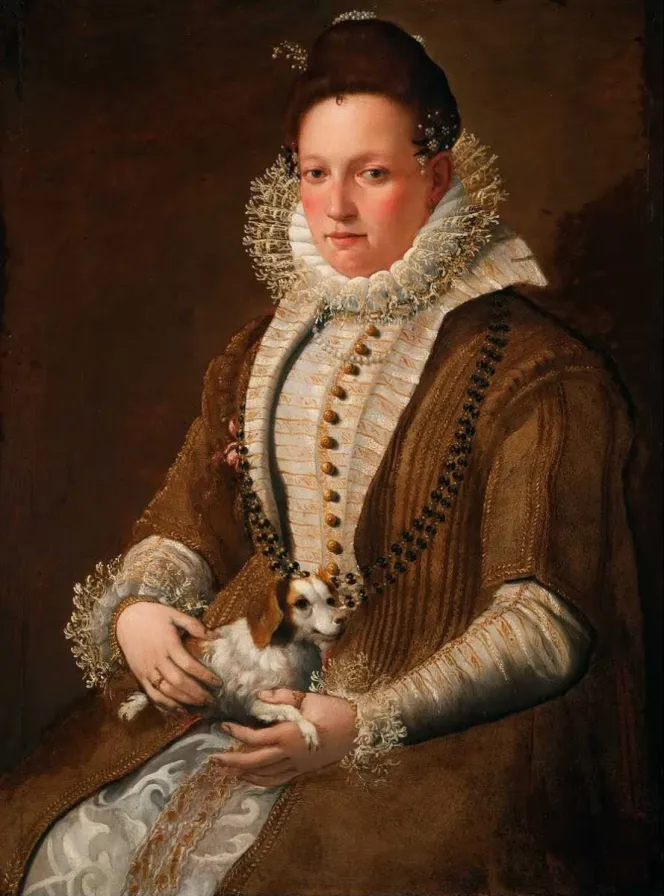
One of the earliest portraits where a pampered pet becomes part of the sitter’s personality — symbolising her status as a good and faithful wife — not just a decorative accessory.
The Painter and His Pug (1745) by William Hogarth
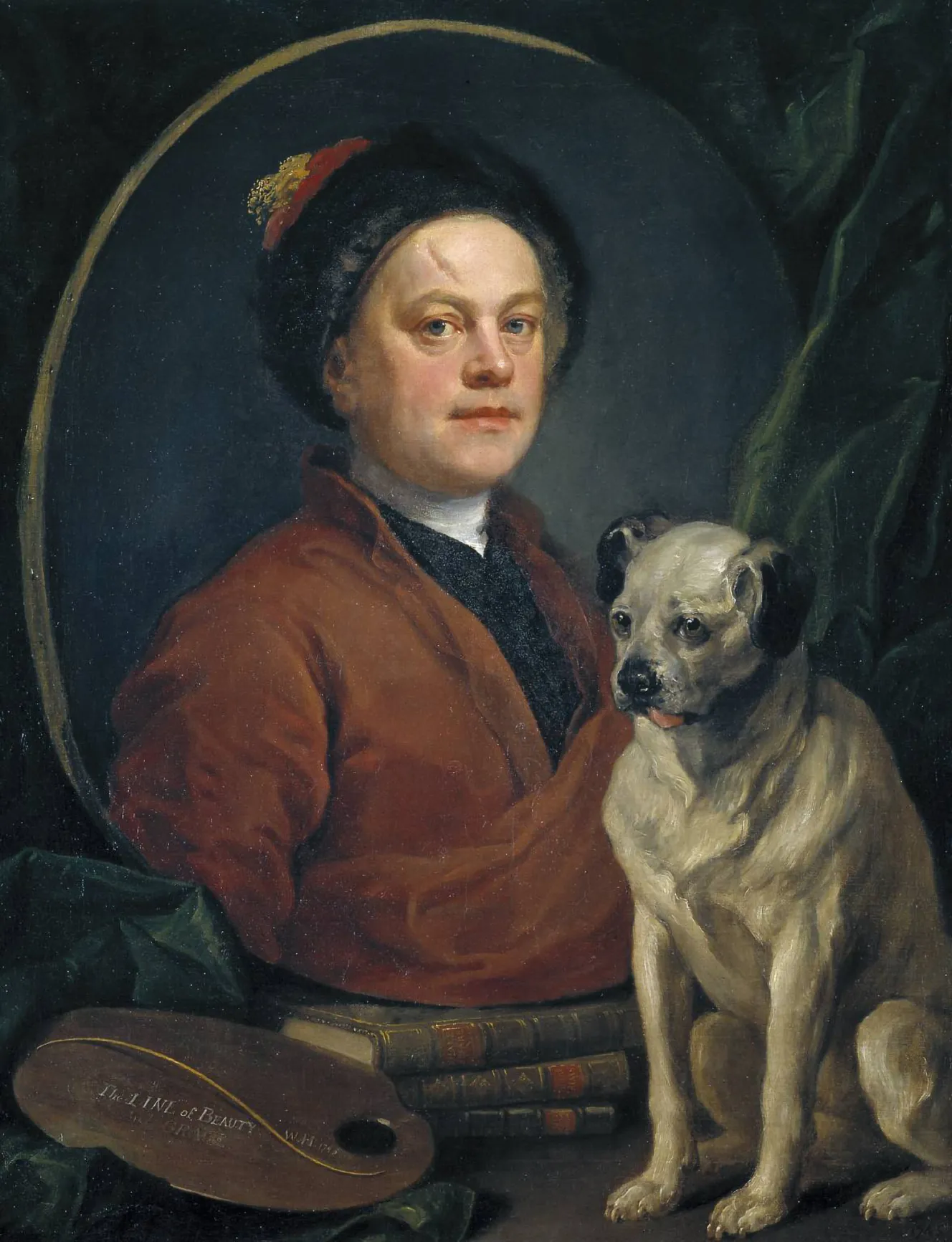 Photo Tate
Hogarth cheekily painted himself alongside his pug Trump, suggesting the two shared the same stubborn character.
Princess Victoria and Dash (1833) by Sir George Hayter
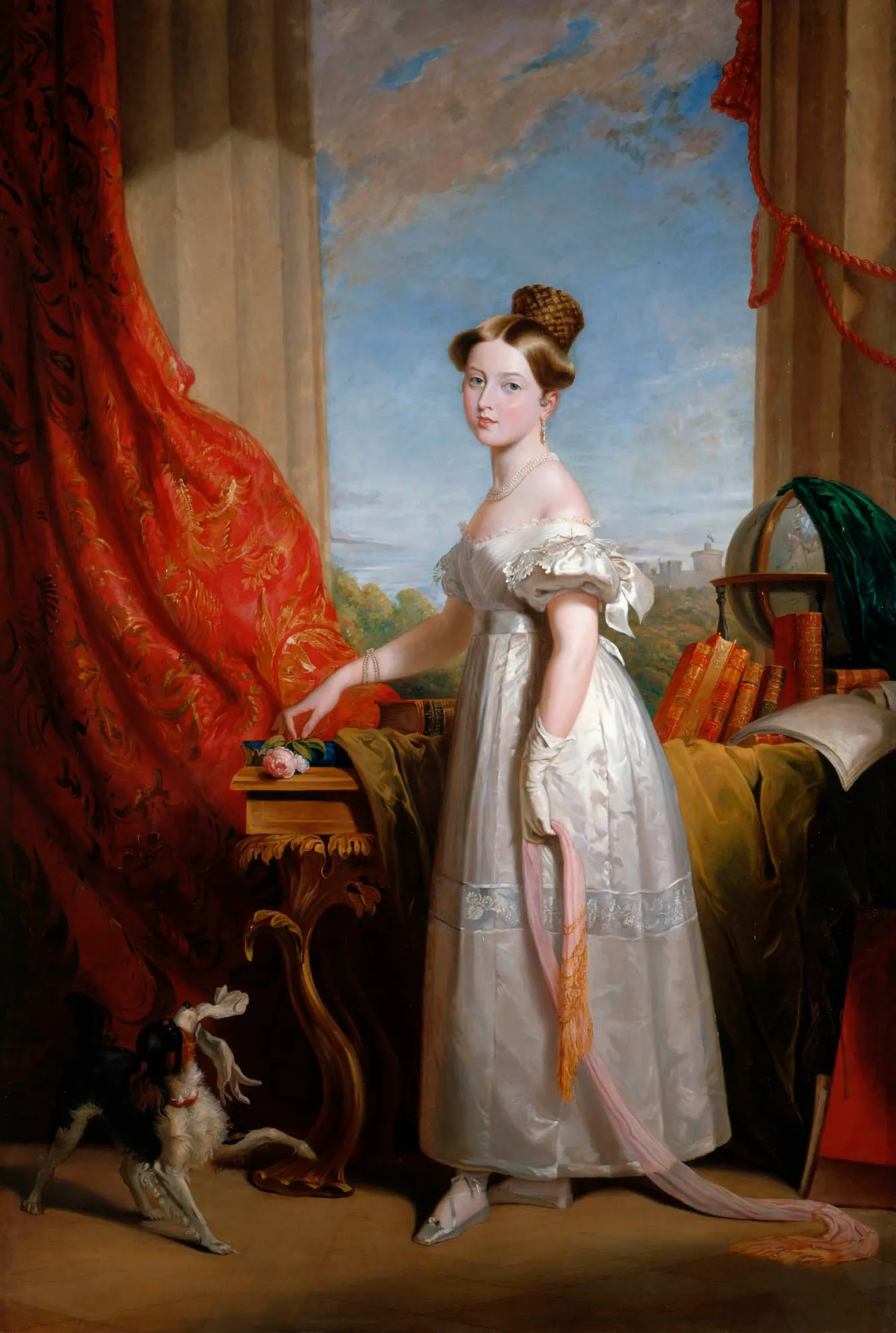 royal collection trust/© his majesty king charles iii 2024
Queen Victoria adored her King Charles spaniel so much that he was immortalised many times on canvas. Dash received a grand tomb when he died in 1840 and became Britain’s most famous royal pet.
The Old Shepherd’s Chief Mourner (1837) by Sir Edwin Landseer
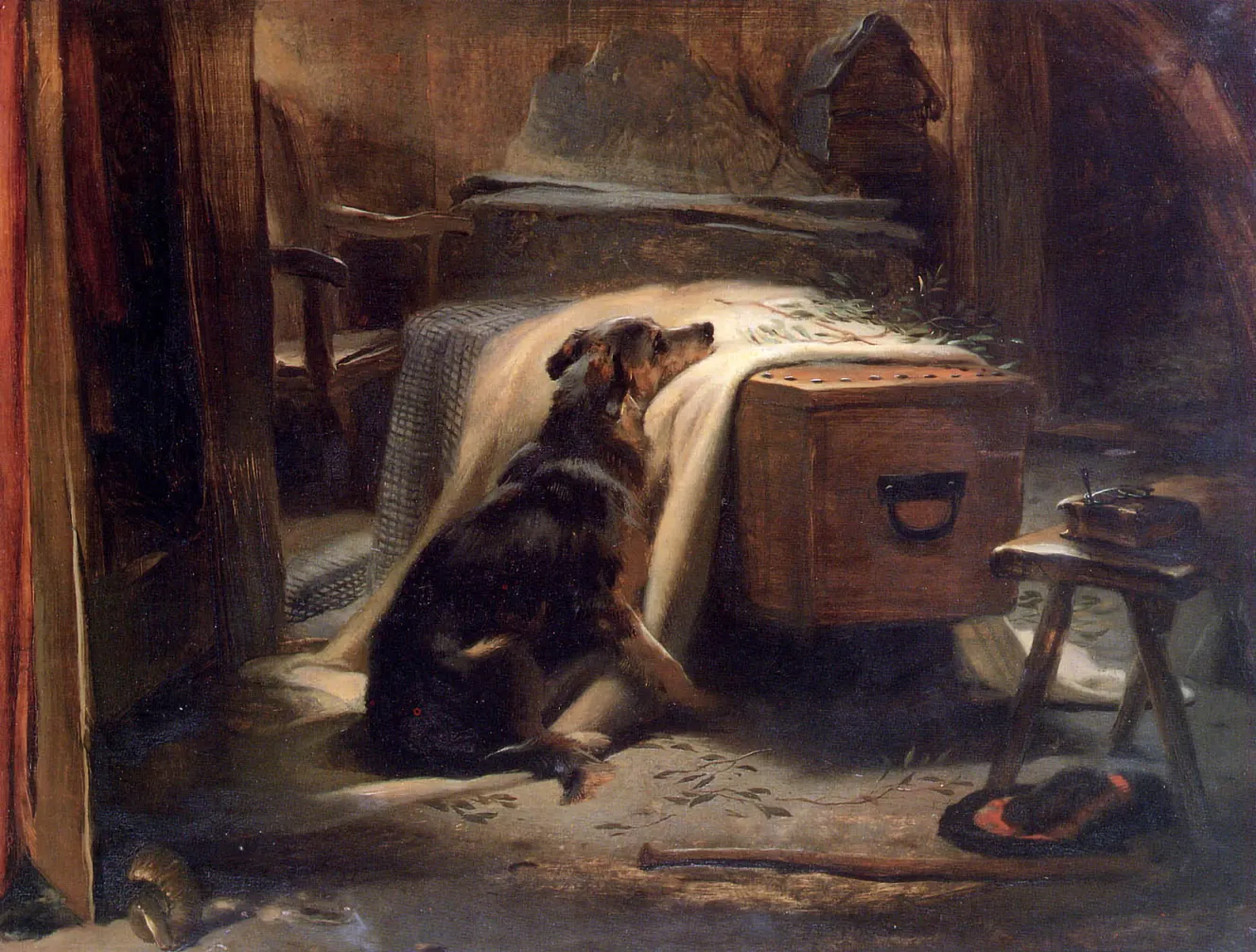 victoria & albert museum, london
A loyal collie grieving beside its master’s coffin became one of history’s most moving tributes to the bond between humans and dogs.
The Bride and Groom (late 19th century) by Louis Wain
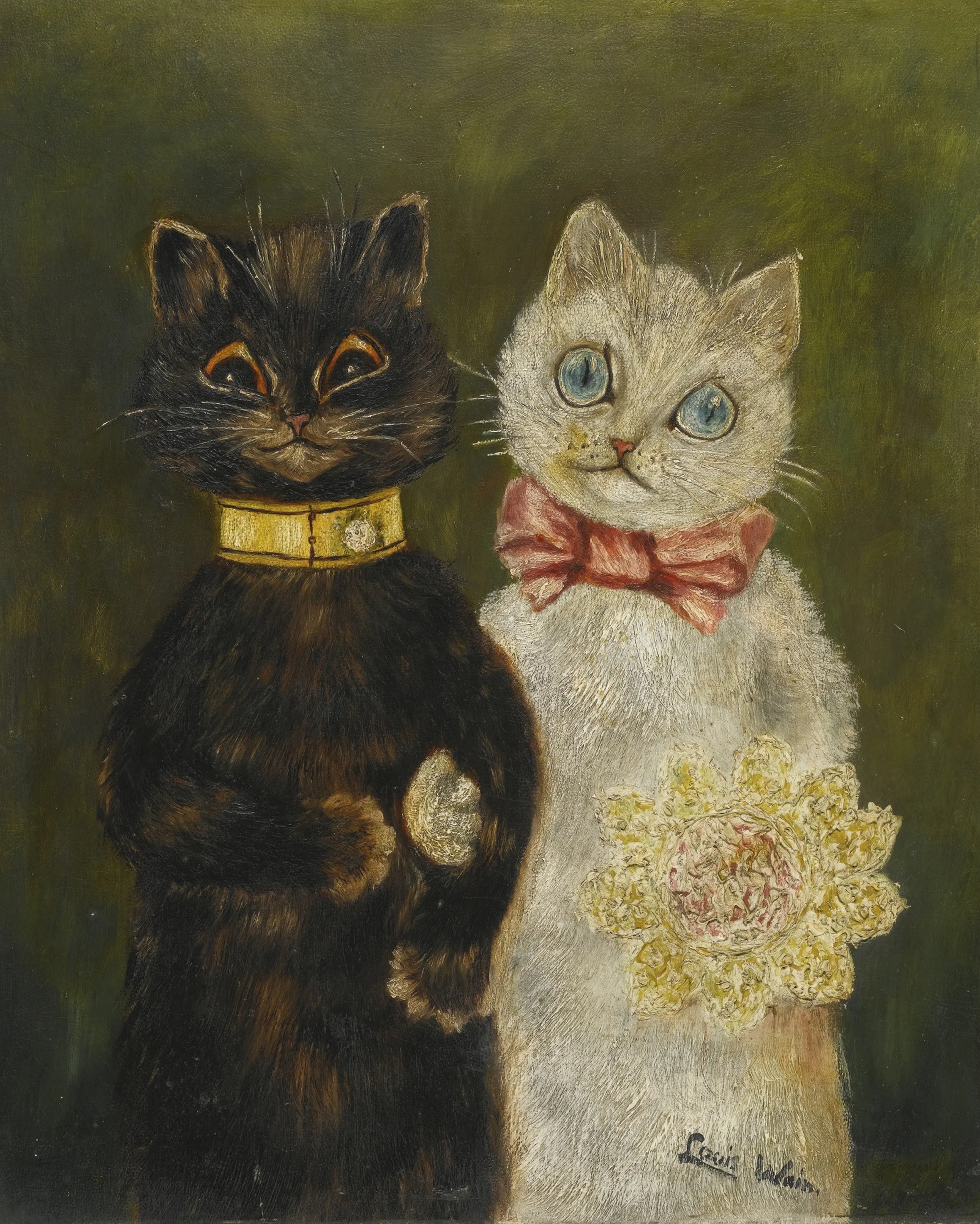 heritage images/Getty images
Louis Wain’s beloved cat Peter inspired an artistic phenomenon that helped transform cats from mousers into adored household celebrities. His feline work recently inspired a doodle-strewn collection from Loewe.
Archie and Amos (1976) by Andy Warhol
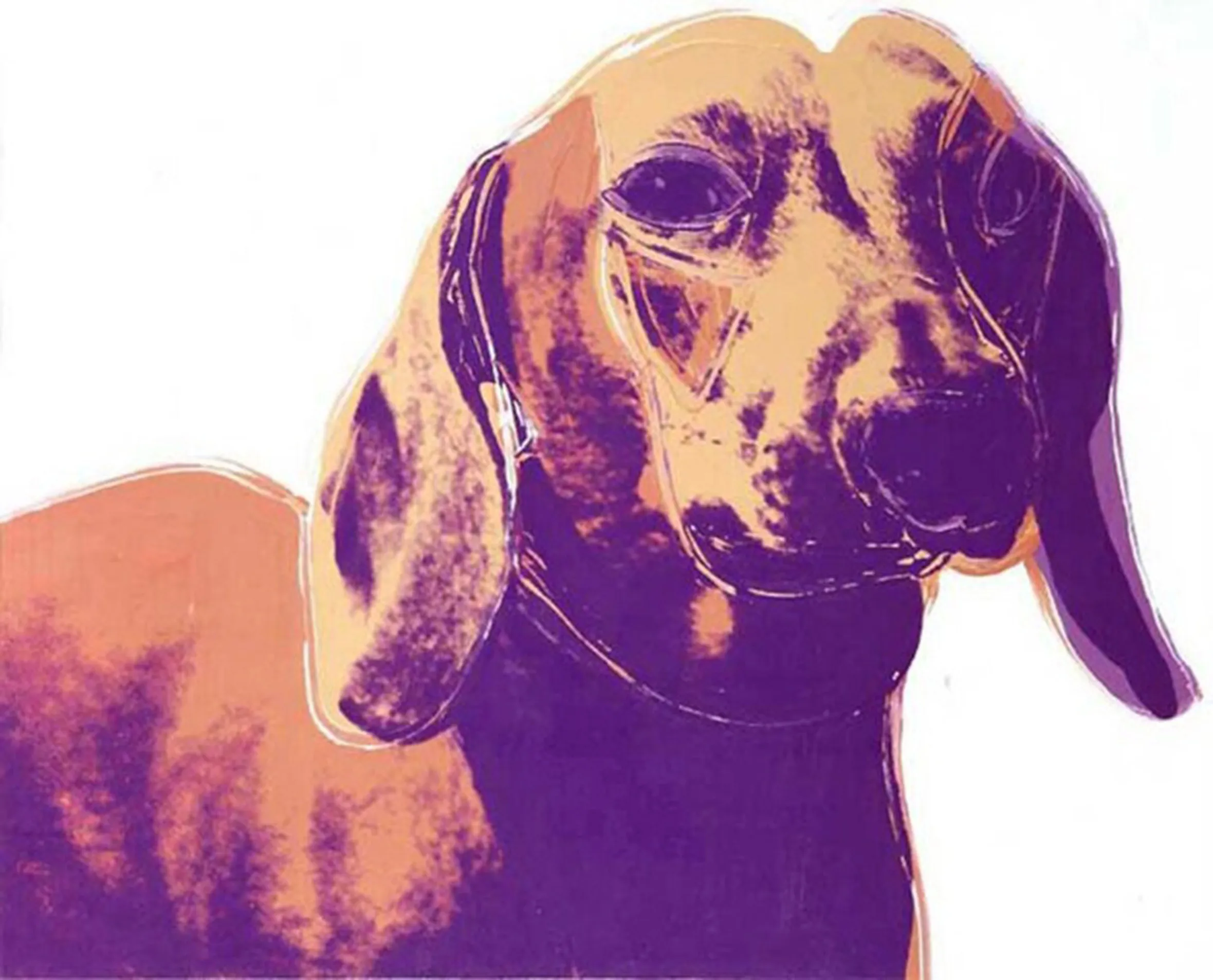 Archie© Andy Warhol
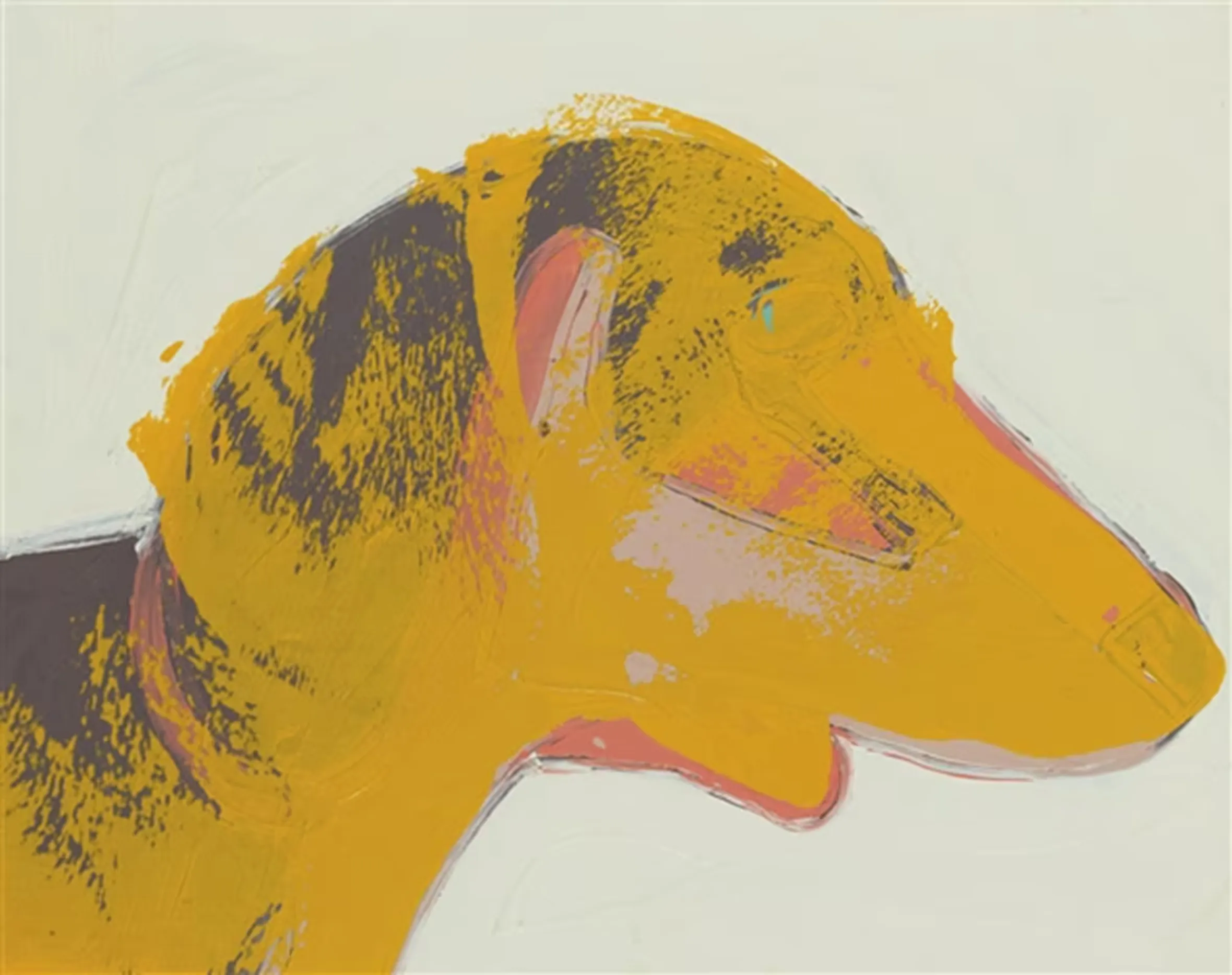 Amos© Andy Warhol
Warhol was another artist who adored his dachshunds and revealed the softer side behind the pop art glamour by immortalising them in his signature style.
Puppy (1992) by Jeff Koons
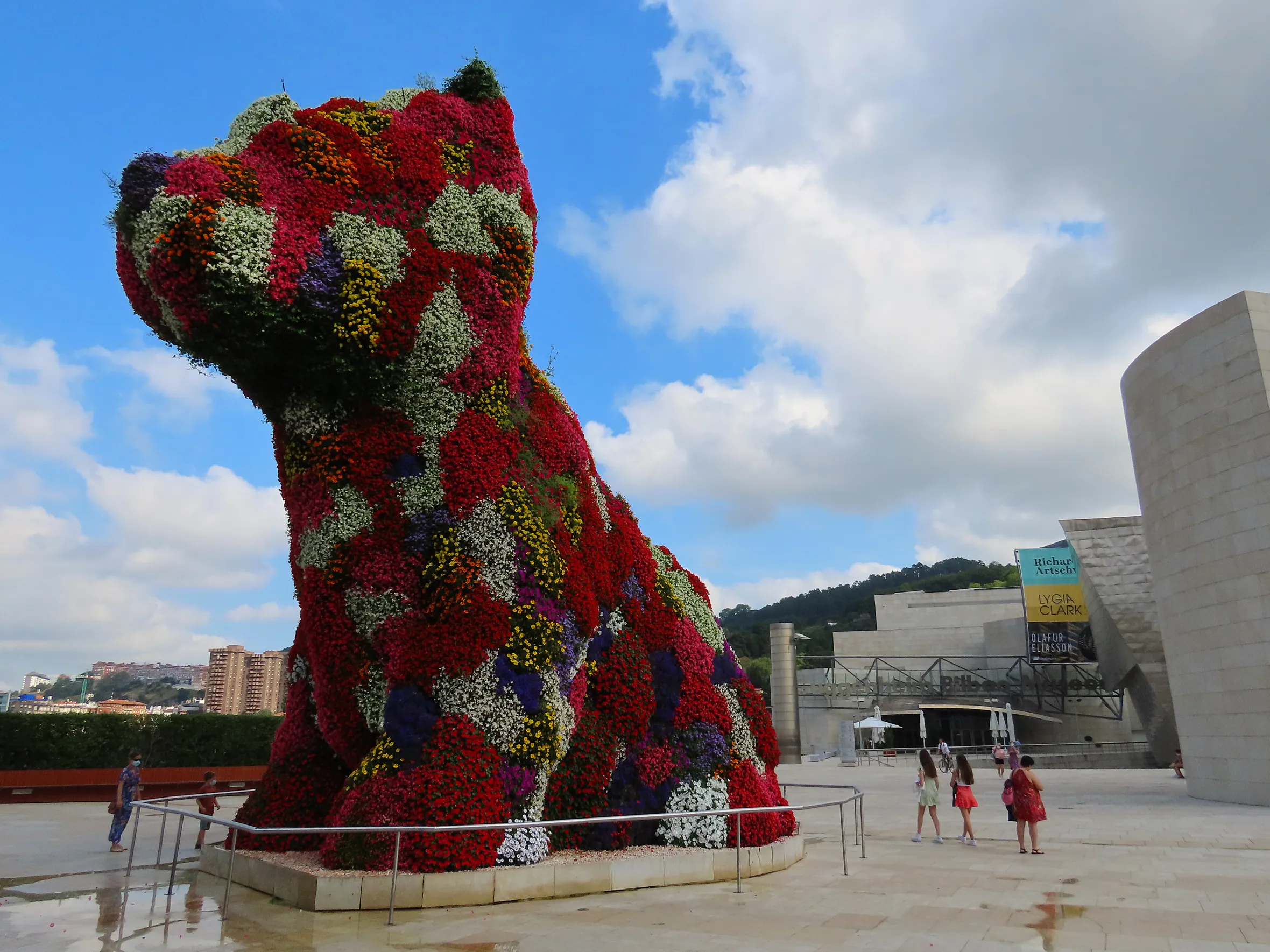 photograph by Cristina Arias/Cover/Getty Images
Standing more than 40ft tall and covered in flowers, this giant West Highland terrier, permanently installed outside the Guggenheim Museum in Bilbao, Spain, is arguably the world’s biggest version of a faithful hound.
Stanley and Boodgie, Horizontal Dogs (1995) by David Hockney
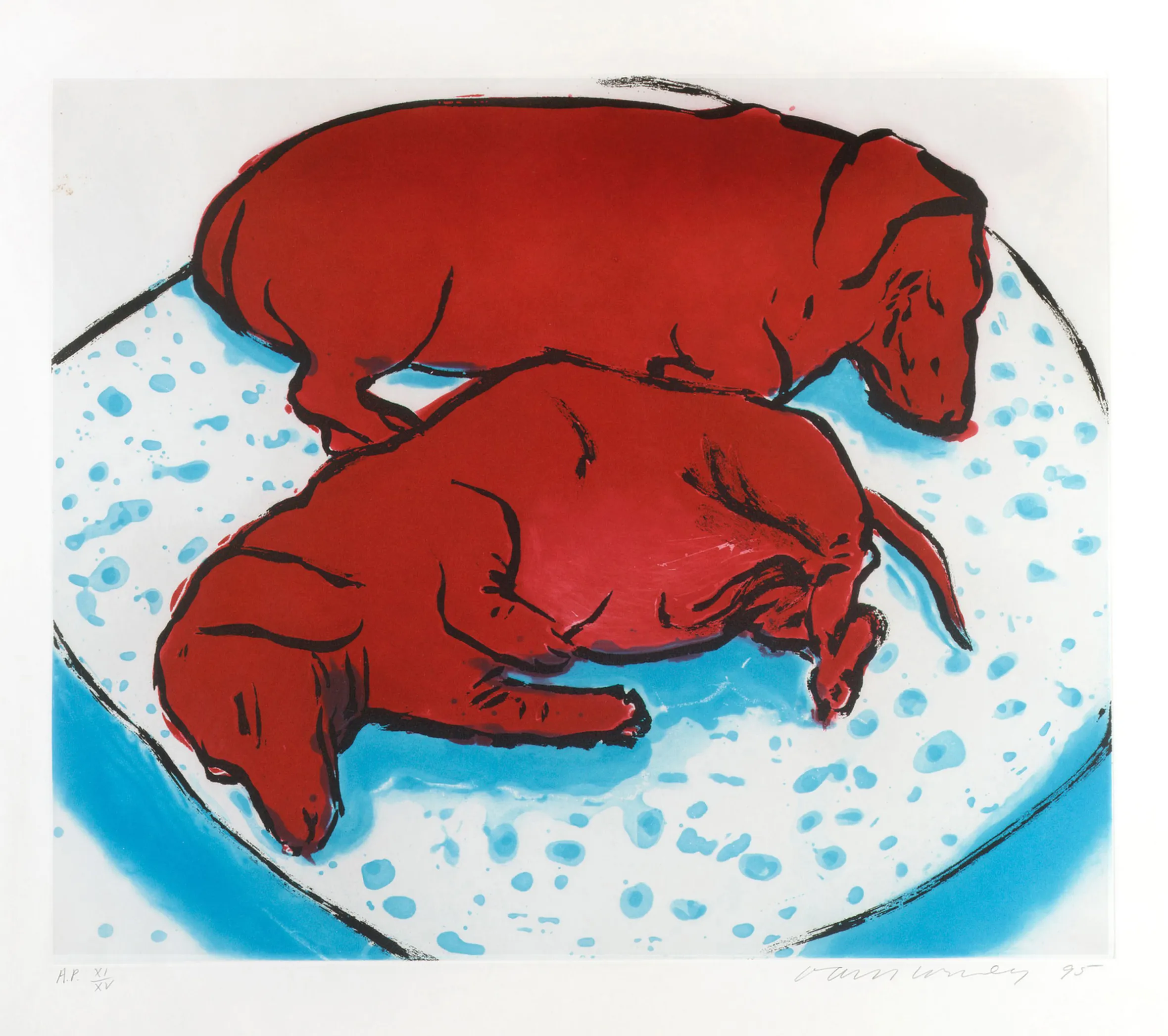
Hockney painted his dachshunds Stanley and Boodgie so often that they became some of the most recognisable dogs in contemporary art.