
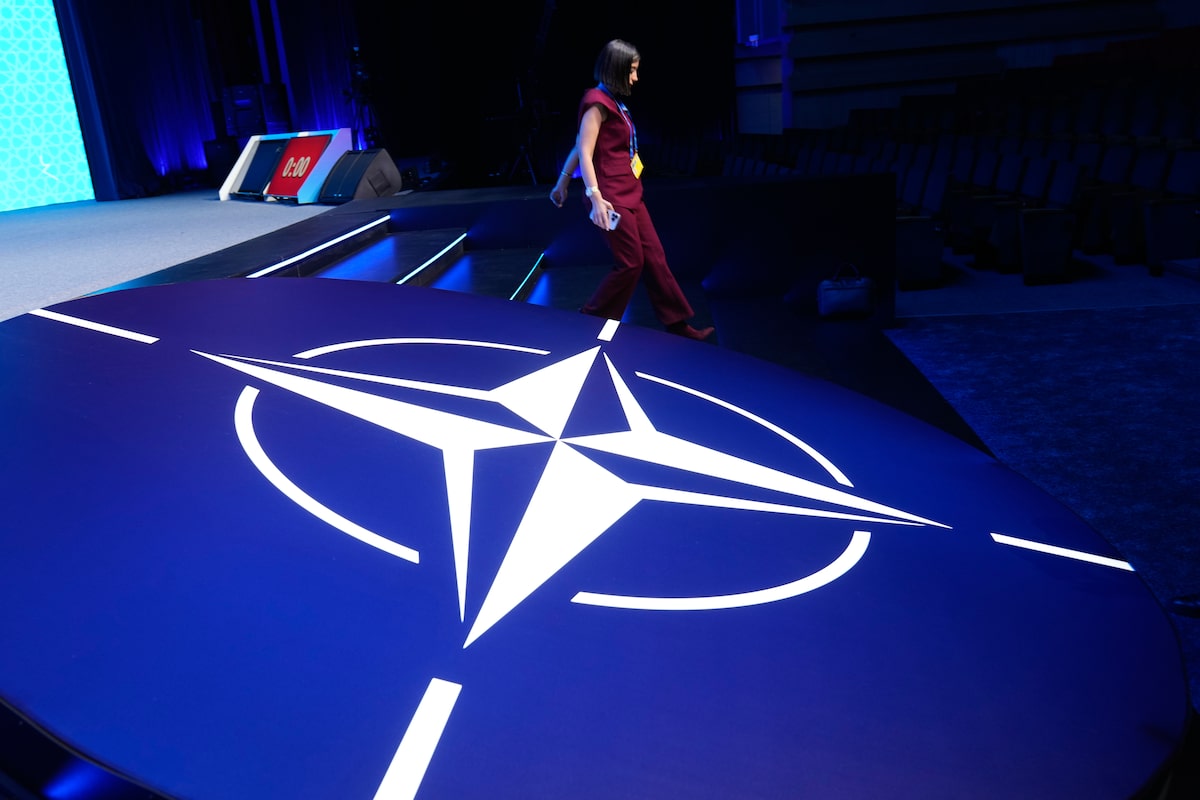
As an intern at NATO, the alleged spy is unlikely to have had a high level of security clearance. But experts say the incident will be embarrassing for Canada, prompting questions about its vetting procedures.Hussein Malla/The Associated Press
A Canadian intern at NATO’s operational headquarters in Belgium who has been arrested on suspicion of espionage was vetted by Ottawa, two senior sources say.
Global Affairs Canada asked the RCMP to carry out a formal law enforcement record check, including to see whether she had any criminal convictions or police interactions, one source said.
The Globe and Mail is not naming the two sources, who were not authorized to discuss sensitive matters publicly.
Interns at the North Atlantic Treaty Organization must undergo months of vetting before starting their roles, including at the alliance’s operational base, Supreme Headquarters Allied Powers Europe (SHAPE), in Mons, Belgium. The protocol for Canadians includes background checks by the Canadian Security Intelligence Service, the country’s spy agency.
CSIS declined to comment on any involvement in the vetting process. The agency‘s website says it provides screening assessments to international organizations, including NATO, of Canadians seeking to work in sensitive roles abroad.
Canadian intern at NATO HQ in Belgium arrested on suspicion of spying for ‘third country’
The RCMP did not immediately respond to a request for comment.
As an intern at NATO, the alleged spy is unlikely to have had a high level of security clearance. But experts say the incident will be embarrassing for Canada, prompting questions about its vetting procedures.
Belgium’s federal prosecutor’s office said in a statement Saturday that the suspect, who is being detained in custody while she awaits trial, is “a Canadian national of Chinese origin.”
“She is suspected of spying on behalf of a third country and of being a member of a criminal organization,” the statement said.
It is not known which third country she is alleged to have spied on behalf of.
According to NATO’s website, security clearance for the sought-after internships “varies from one country to another, but takes on average six to eight months to complete.”
Fen Osler Hampson, professor of international affairs at Carleton University, said NATO would have been relying on Canada for security checks, and when it came to vetting this intern, “somebody clearly dropped the ball.”
Canada’s membership in the Five Eyes intelligence alliance, which includes the United States and Britain, would make it attractive to foreign powers hoping to gain access to sensitive information through espionage, Prof. Hampson said.
“We should not be surprised that some foreign countries view Canada as a runway to secrets of our allies because of the fact we are a member of the Five Eyes and of NATO, and have a very close security relationship with the United States. And because they see us as a weak link,” he said. “That’s reflected in some highly publicized cases where Canadians have successfully been recruited and groomed over years.”
But former CSIS director Ward Elcock said there are limits to what background checks can uncover.
“There’s an expectation out there that intelligence services and police services know everything they need to know,” he said. “The reality is, you only know what you know, even if you’re an intelligence service and have access to a bunch of stuff that most people don’t.”
“We’ve had people who got into Canadian government over the years who, turns out, had connections which, when you really looked at their record, were troublesome. But nobody would have really noticed them until you got to a really tight check,” he said. “The likelihood that you catch somebody in all of that is really, really slim unless you have some intelligence that points you in that direction in the beginning, or you pick up some signals that tweak your interest.”
Mr. Elcock said the uncovering of an alleged Canadian spy in NATO would probably prompt some members of allied intelligence services to say, “Canada, you need to be more careful.”
“But I would say the same to some of my allied colleagues who have had higher-level leaks from people who have never have been thought even to have been possible candidates for, essentially, treason,” he said.
“Everybody gets these problems,” including the Americans, he added.
Before being arrested Friday, the suspect worked at the SHAPE command centre in the southern Belgian city of Mons, near the French border. It is not known in which division she was working or how long she had been based there.
On Tuesday, the suspect appeared at a closed pretrial hearing, where it was decided she will remain in pretrial custody for another month, according to the Belgian federal prosecutor’s office. A spokesperson for the prosecutor’s office said the suspect had 24 hours to lodge an appeal of the custody decision.
As a member of NATO, Canada has military representatives based at SHAPE. Officials at the centre plan and command joint strategy, tactics and operations. NATO’s Cyber Security Centre is also based in Mons.
The Belgian prosecutor’s office has said the suspect came to the attention of SHAPE’s security services, which reported their concerns to the country’s military intelligence agency.
On Thursday, officers searched the suspect’s home and her workplace inside NATO’s command centre, with support from a computer crime unit and a forensic and scientific unit, the prosecutor’s office said. The suspect was arrested the next day.
Colonel Martin O’Donnell, a SHAPE spokesperson, said Saturday that there is no indication that NATO or SHAPE operational readiness, command and control arrangements, or continuing tasks have been adversely affected.
“SHAPE continues to fulfill its responsibilities without interruption,” he said in an e-mail. “NATO remains fully committed to protecting Allied personnel, safeguarding classified information, and maintaining the trust and security upon which the Alliance depends,” he added.
Belgium also plays host to the European Commission and European Parliament in Brussels, and has been the target of previous espionage attempts.
Last year, a Brussels police officer was arrested on charges of spying, allegedly for China and Russia.
The Belgian federal prosecutor last year began a probe into a 2023 cybersecurity breach of Belgium’s intelligence service. The breach was allegedly carried out by hackers linked to Chinese espionage.