

Listen to this article
Estimated 2 minutes
The audio version of this article is generated by AI-based technology. Mispronunciations can occur. We are working with our partners to continually review and improve the results.
The British Columbia government has issued an order affecting more than 450 water licenses to protect fish in the Salmon River watershed, saying the Thompson-Okanagan region has been wracked with “severe” drought.
A statement from the Water Ministry says the river has shown persistently low streamflow despite what it described as significant voluntary conservation efforts.
It says flows over the past week have been well below the minimum threshold required to support the survival of fish populations.
The ministry says the order will help protect endangered chinook salmon by temporarily restricting water use for forage crops and certain industrial purposes.
WATCH | British Columbia drought and wildfire update:
B.C. officials share update on wildfire, drought season
Provincial politicians and staff from the River Forecast Centre and B.C. Wildfire Service will provide an outlook on wildfire and drought in the upcoming months.
It says the temporary order takes effect on Tuesday and covers 456 surface-water and groundwater licenses.
The ministry says they must stop using water for irrigation of forage crops, such as hay, alfalfa and forage corn, as well as lawns, fairways and certain industrial purposes.
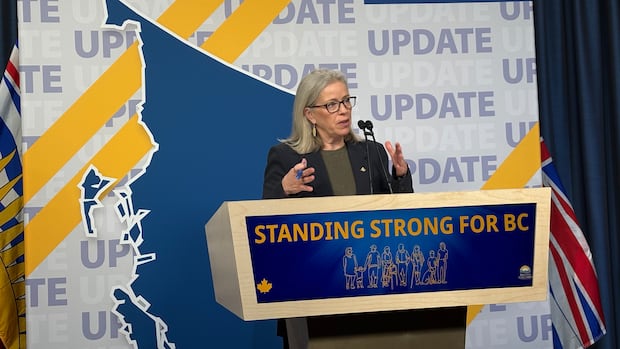
Water Minister Randene Neill said last week that drought had created record-low stream flows in some B.C. waterways, especially in the Okanagan.
She asked Okanagan residents to help conserve water and said she had met with agricultural stakeholders from the region, where farmers in the Salmon River area were implementing a voluntary irrigation schedule in hopes flows would increase.
The ministry says affected water users would be contacted directly about the protection order.
It says programs are in place to offer support for drought-related crop failures, as well as income declines and increased costs.