

Listen to this article
Estimated 3 minutes
The audio version of this article is generated by AI-based technology. Mispronunciations can occur. We are working with our partners to continually review and improve the results.
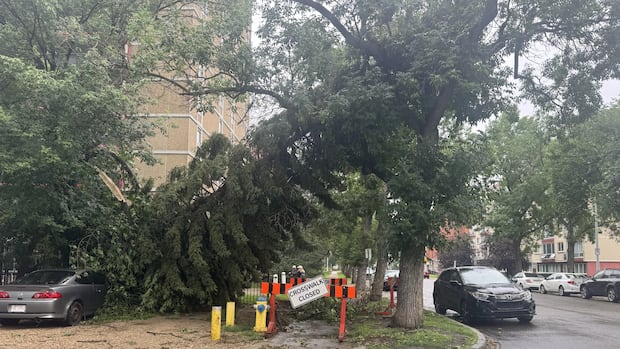
The City of Edmonton is calling Calgary for backup after back-to-back severe storms left the city’s urban tree canopy severely battered.
The city says that, as part of a mutual aid agreement, certified forestry crews from the City of Calgary will begin arriving Wednesday to clear fallen limbs and help respond to whole-tree blowdowns.
Local foresters have already handled thousands of storm-related calls in Edmonton this summer, but constant storms on Saturday and Monday pushed local capacity to its limit, the city said.
“The damage to Edmonton’s urban tree canopy is extensive,” said a statement from the City of Edmonton on Tuesday afternoon.
“The specialized demand for tree removal and hazard mitigation has outpaced the existing capacity of city forestry crews and local contractors.”
The city said crews from Calgary will work alongside Edmonton forestry teams and private contractors for up to seven days. They will clear debris, address hazards and help with mitigation efforts against Dutch elm disease.
Since June 1, city foresters and contractors have responded to more than 3,000 storm-related issues — with more than 2,000 of those issues addressed just this month, the city said. Urban forestry crews have handled more than 500 weather-related issues since Saturday evening’s storm, the city noted in a statement on Tuesday morning.
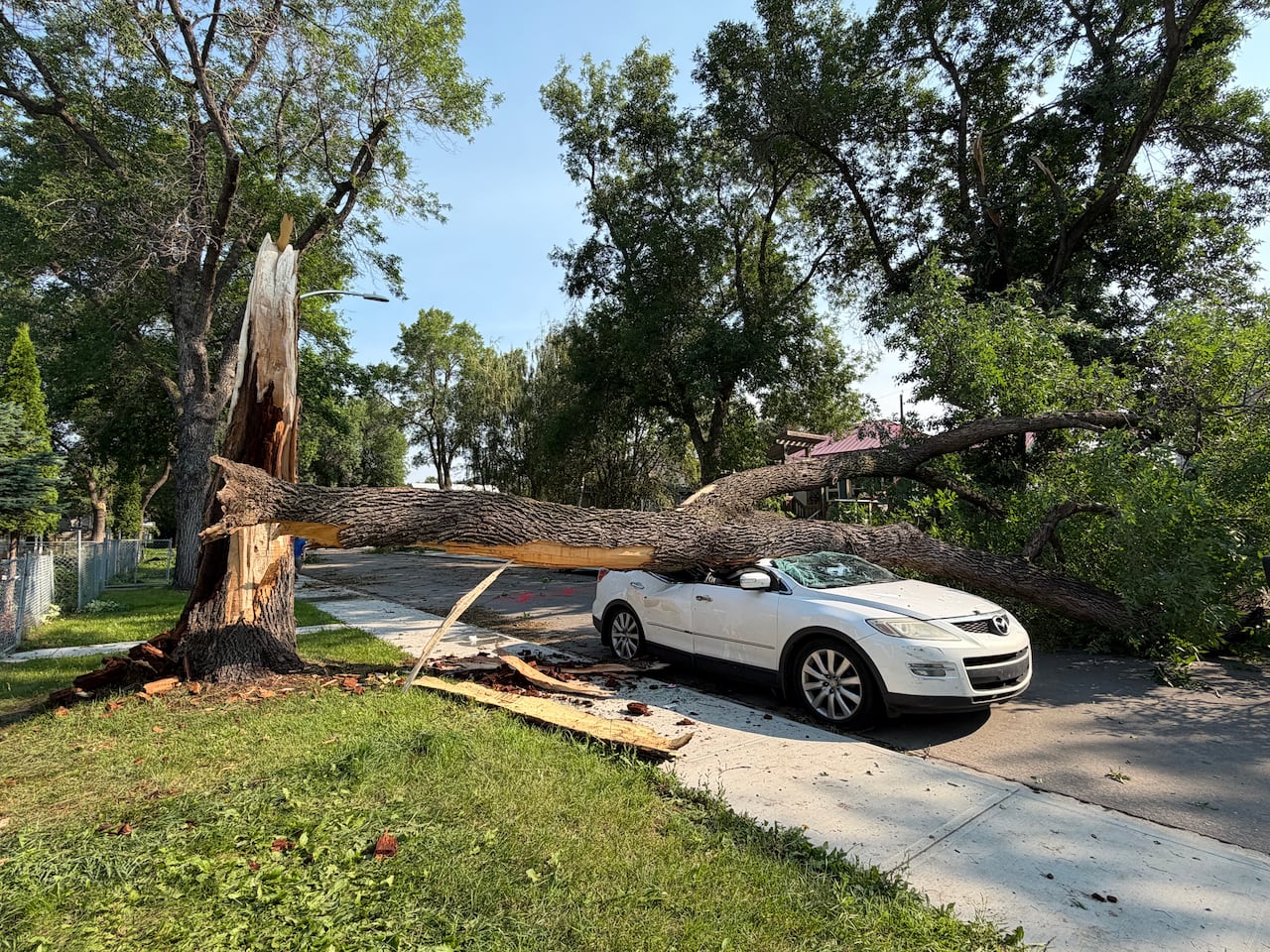 A thunderstorm passed through Edmonton on July 26, resulting in flooding and fallen trees, pictured at 93 Street and 106A Avenue. (Jamie McCannel/CBC)Concerns about saturated soil
As city crews work to tackle damage across Edmonton’s canopy, forestry experts warn waterlogged ground is making trees vulnerable to collapse.
This string of intense summer storms has been soaking Edmonton’s ground and making the city’s trees more likely to collapse, said Milton Davies, a professional forester and consulting arborist.
“These trees are resilient, but again, we’re not used to this kind of water in the soil,” Davies said in an interview with CBC News on Tuesday.
When the soil becomes oversaturated with water, Davies said the ground “starts losing the pore spaces in between the soil particles that the tree roots are actually grabbing onto.”
“What happens with the soil is important because as it starts losing its structural integrity, the tree roots have nothing to grab onto,” said Davies.
“So the tree roots start to fail as the soil has failed and it has become saturated or supersaturated in a lot of places.”
Greg King, an associate professor of environmental science at the University of Alberta’s Augustana campus, said in an interview on Tuesday that this saturated soil combined with heavy winds creates a “higher likelihood for full tree failure.”
“When we have saturated soils … it’s more likely that you’re going to have trees failing completely and tipping over,” King said.