
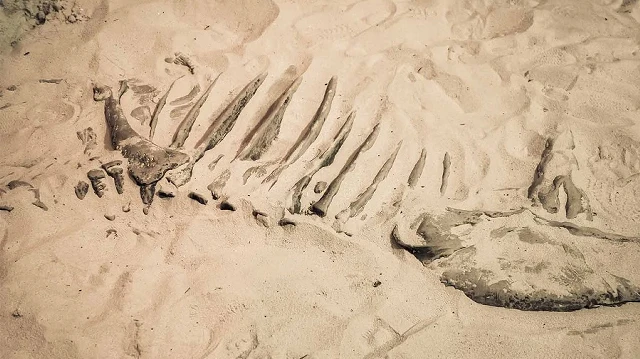
Scientists have announced the discovery of a new 210-million-year-old dinosaur species in Zimbabwe, a finding that is expected to deepen understanding of dinosaur evolution during the Late Triassic period. The newly identified animal, named Musango matusadonaensis, was described using fossil remains unearthed near Lake Kariba in northern Zimbabwe and represents only the fifth dinosaur species formally documented in the country.
A rare fossil discovery
The fossil was recovered during fieldwork conducted in 2018 by researchers from Zimbabwe, South Africa and the United Kingdom. Preserving much of the spine, ribs, limbs and feet, it is regarded as one of the most complete dinosaur skeletons of its age ever discovered in Zimbabwe, providing scientists with valuable material for anatomical analysis.
Insights into early dinosaur evolution
According to the research, Musango matusadonaensis measured approximately 4.5 meters in length and belonged to the early sauropodomorphs, a group of two-legged dinosaurs that eventually gave rise to the giant long-necked herbivores such as Diplodocus. The fossil also indicates the animal had nearly reached adulthood and had survived a significant injury or infection before its death.
Changing the picture of prehistoric Africa
Researchers say the discovery challenges the long-standing assumption that southern Africa was home to broadly similar dinosaur communities during the Late Triassic. Instead, the evidence points to multiple distinct ecosystems supporting different dinosaur species across the region. Published in the Journal of Systematic Palaeontology, the study suggests Africa’s prehistoric biodiversity remains only partially understood, with scientists believing many more dinosaur fossils are still waiting to be uncovered across the continent.