
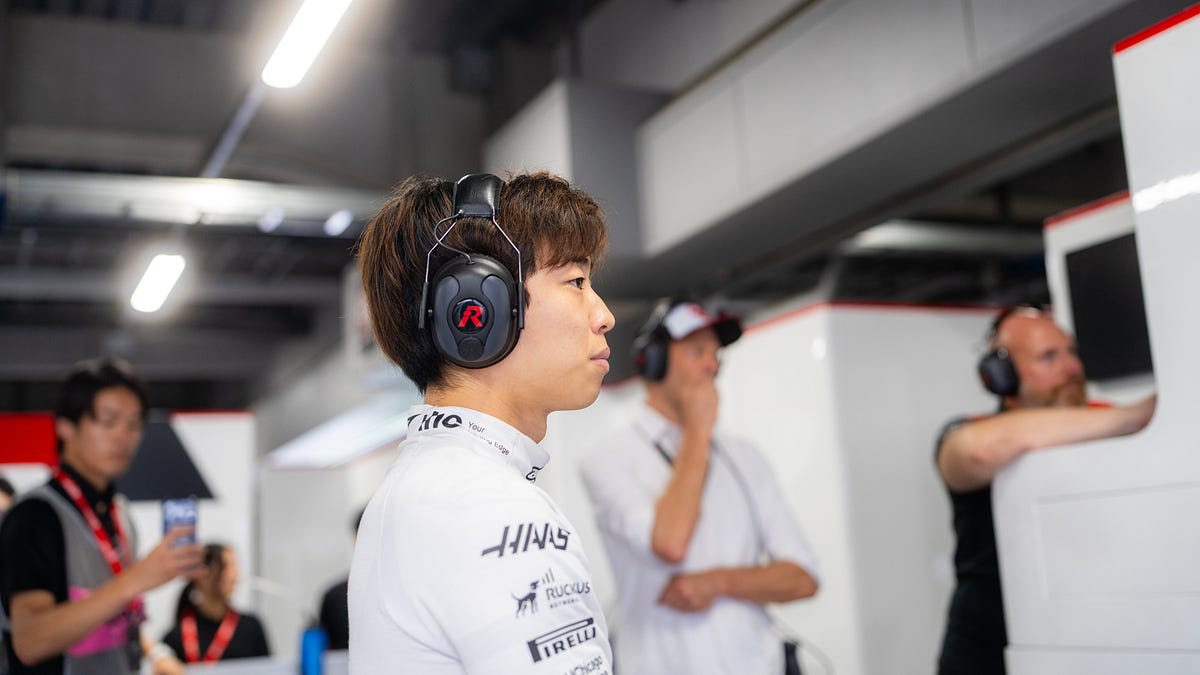
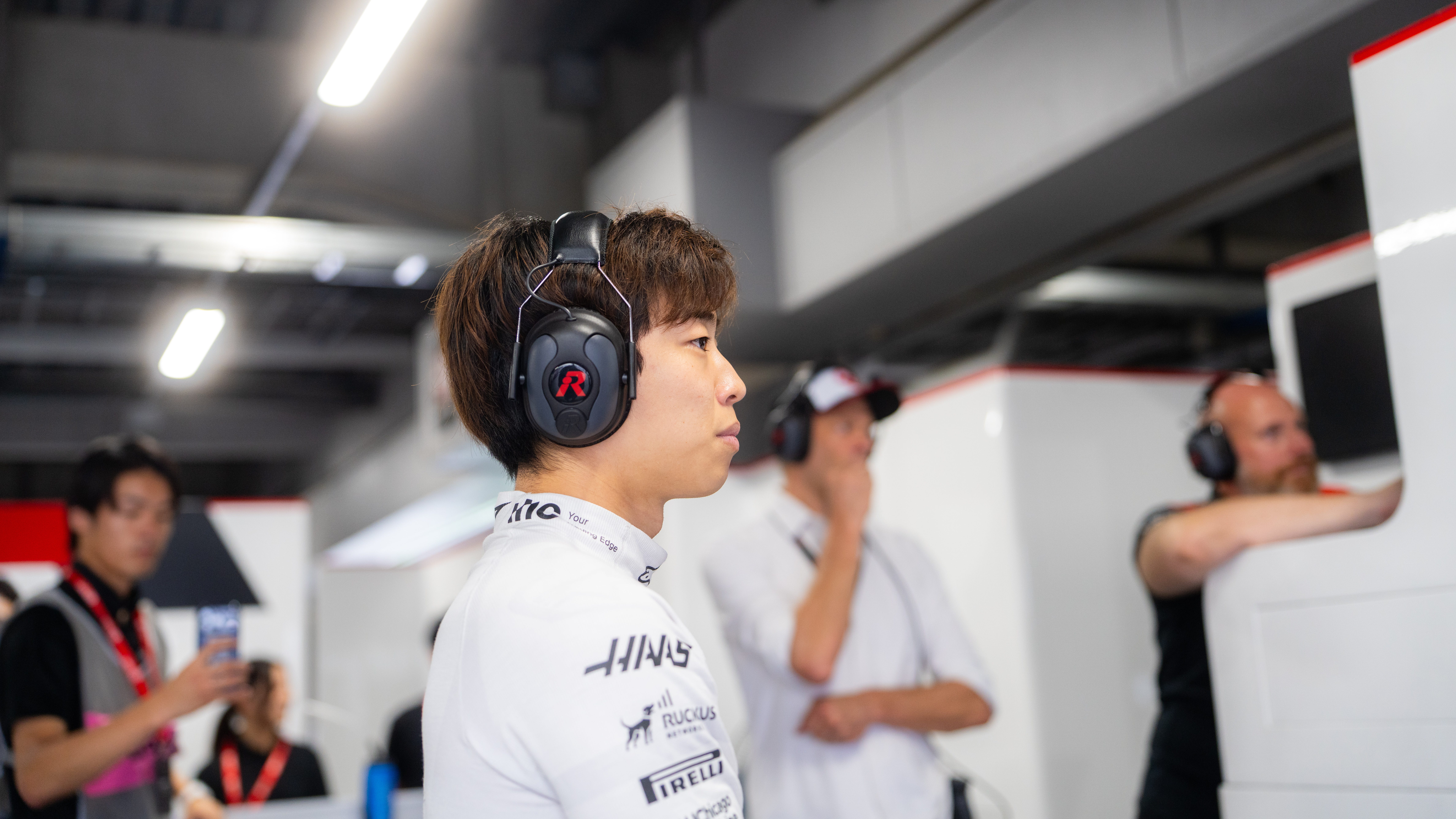
On Tuesday and Wednesday, the Haas Formula 1 team held its second TPC event at Fuji Speedway, following on from the first such event last year. Last year, Sho Tsuboi was given his first opportunity at the wheel of grand prix machinery, and this time it was Nirei Fukuzumi’s turn to find out exactly what a modern F1 car is capable of.
Fukuzumi previously told media that he broke down in tears when he was informed by Toyota that he had been selected to drive in the test off the back of his milestone Super Formula win for Rookie Racing at Suzuka in May. No doubt, the fact that he had climbed the European single-seater ladder as far as Formula 2 back in 2018, only for the F1 dream to fade when he was sent to race in Japan by then-employer Honda, only added to the enormity of the occasion for a driver long regarded by insiders as one of the domestic scene’s most talented practitioners.
But there was little time for sentimentality during two days of running, as Fukuzumi strove to prove his potential up against Tsuboi at the wheel of the Haas VF-25.
Initially, the plan was for Tsuboi to drive in Sessions 1 and 4 (Day 1 am, Day 2 pm) and Fukuzumi in Sessions 2 and 3 (Day 1 pm, Day 2 am), but rain on the opening day quickly forced a change of plans. Tsuboi only did a handful of laps at the beginning of the morning, all on wet tyres, while Fukuzumi did the bulk of the running, setting his best lap of 1’18.080 on hard-compound Pirelli tyres late in the morning session once the track had dried, before the rain returned in time for the afternoon.
If the first day was mostly about discovery, and keeping it on the island in tricky conditions, the second day was a more serious chance for Fukuzumi to really show Haas what he was capable of on what was a more typical summer’s day at Fuji.
Tsuboi again ran first thing in the morning, but such were the high temperatures, both ambient and track, that a best lap of 1’17.914 proved the limit, compared to the 1’17.470 he achieved in last year’s Haas TPC test with the older VF-23 car. Tsuboi reckoned that had the conditions been as favourable as they had been for him last year, when he was blessed with overcast skies, keeping a lid on track temperatures, and a tailwind along Fuji’s enormous main straight, a time of 1’16.9 was achievable.
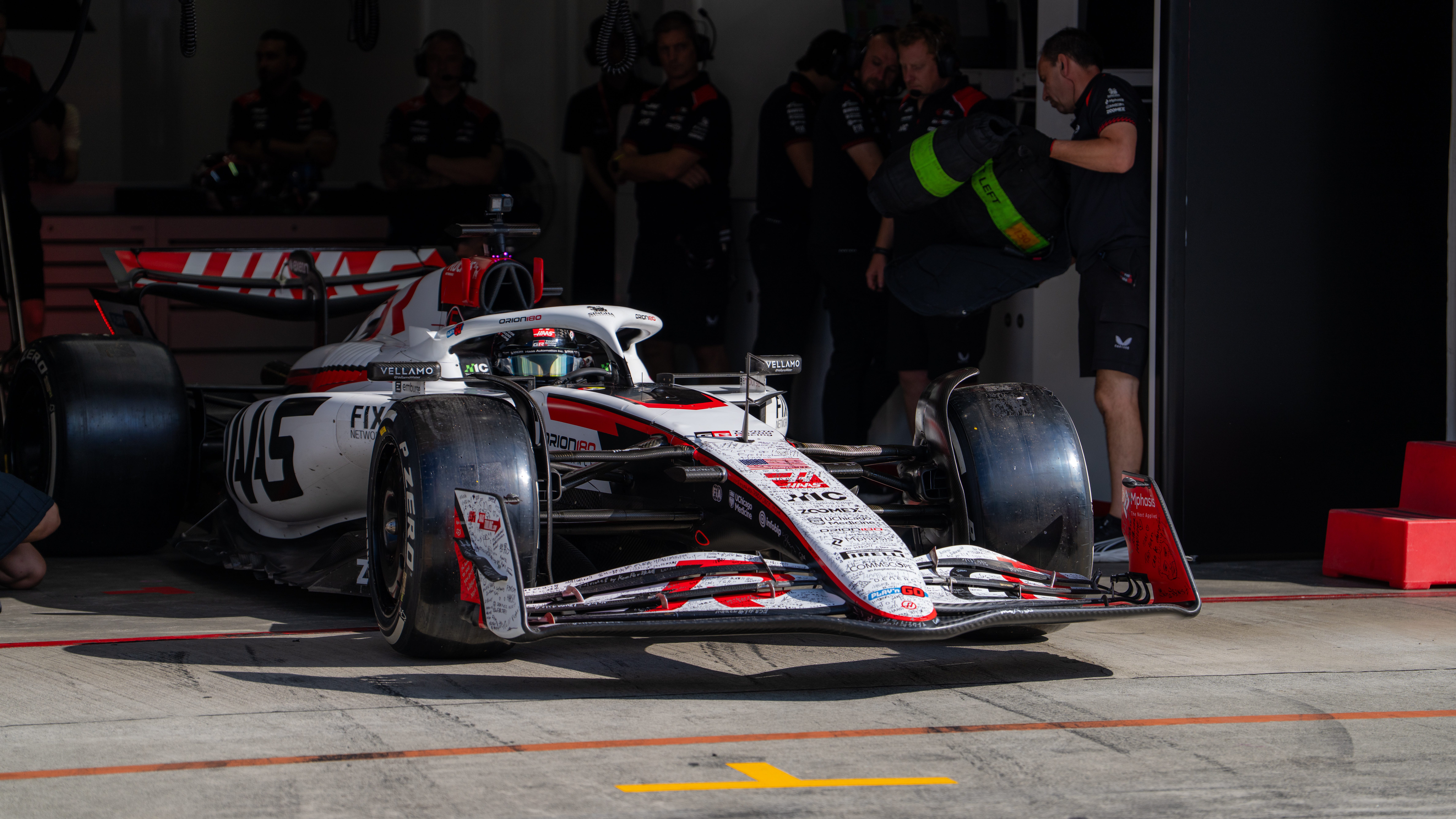
As for Fukuzumi, he took over midway through the morning when track temperatures had risen yet further, initially going out on hard tyres before switching to mediums. The best lap he could conjure proved to be a 1’18.442, around half a second down on Tsuboi’s benchmark, as he struggled to perfect the final sector amid the heat. Felipe Massa’s record of 1’17.287, set on F1’s last visit to Fuji in 2008, was never threatened as the focus turned towards long runs for both drivers in the final session.
Given the difference in conditions and experience between Tsuboi — making his fourth F1 TPC outing in total here — and Fukuzumi, a half-second delta in favour of the former felt more than acceptable. But Fukuzumi was fairly harsh towards himself in his assessment of his own driving, both in the short runs and the long runs.
“The track temperatures were already quite high when I started running, so the car was in a completely different state compared to [Tuesday],” Fukuzumi reflected.
“I started on hard tyres and I drove while gradually feeling the potential of the car and working out where the limit was. By the time I used the second set of hards, I think I had more or less figured things out, but then we put on the mediums and the peak grip was a lot higher than I imagined it would be. Also, in sector three I felt there was a big drop in the tyre. I’m sure that was partly down to the fact the track temperatures were increasing, but I don’t think I was able to quite piece everything together.
“On the second set of mediums, sectors one and two weren’t bad, but in sector three I made a mistake and I could feel how far the tyre had dropped, so I wasn’t able to record the lap time I wanted to. I think if I had been able to combine all the best parts with the two sets of tyres, I could have reached a 1’18.2. Considering my current experience and the timing we went on track, that was probably about the limit.
“I wish honestly that I could have ended the test by putting everything together in one lap, but as it was my first time on the medium tyres I was still in the process of learning and I made a mistake, so I can’t be upset about that. Even with the high track temperatures I wanted to give the best possible account of myself, but I think I was still able to progress through the session properly, so it wasn’t bad.
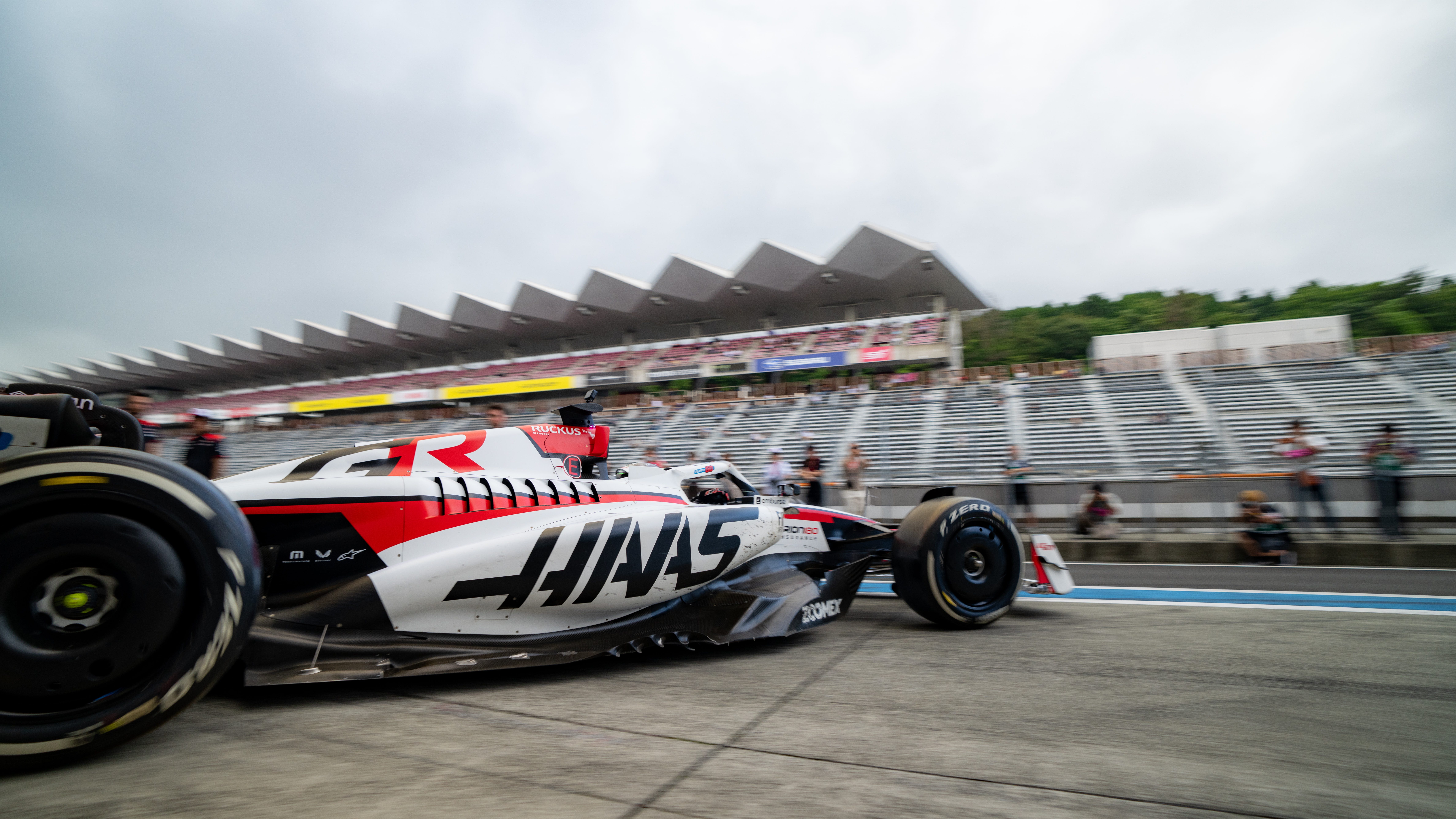
“In the afternoon, basically I knew I had just the one set of tyres, so I was trying to feel my way into it, but in terms of the initial lap time and the pace I set after that, I probably I could have run at a higher pace. I think if I had another set of tyres I could have experimented more, but knowing I had only one set, I was trying my best not to damage them and focusing on being consistent. I think personally that my underlying pace was a bit slow, so there are many things to work on for next time.
“But overall, I was able to run in both the wet and the dry, and at the same time I discovered what kind of car the F1 car is, and what I am still lacking in myself, so in that sense it was an amazing learning experience, and a very fun two days.”
It was clear from the way the run plan for the test was set, and adjusted on the fly, that the intention was to benchmark Fukuzumi against the relatively known quantity of Tsuboi as much as possible. It would have been much more convenient to simply give each driver a full day each, but then it would have been almost impossible to make meaningful comparisons, as was the case for Tsuboi and Ryo Hirakawa last year.
That said, it would be wrong to characterise the test as a true shootout, not least because Tsuboi seems to have done well enough in his various outings up to now, including two at Silverstone (one in the VF-23 last year, one in the VF-25 earlier this year) to suggest he has the potential to fulfil a reserve role for Haas like Hirakawa has done — something Toyota global motorsport director Masaya Kaji hinted could be a possibility speaking to this writer after Tsuboi’s maiden F1 run last year.
Whether that actually happens or not next year is too early to say, not least as the question of Hirakawa’s future regarding his bid to step up to a Haas race seat in 2027 does not appear to have been resolved as of the time of writing.
At the same time, Fukuzumi certainly acquitted himself well at Fuji. Like Tsuboi at Silverstone last year, it’s not hard to imagine him being given another chance to prove himself on a less familiar circuit at some stage (although, unlike Tsuboi, he did visit a decent a number of European tracks earlier in his career in GP3 and FIA F2).
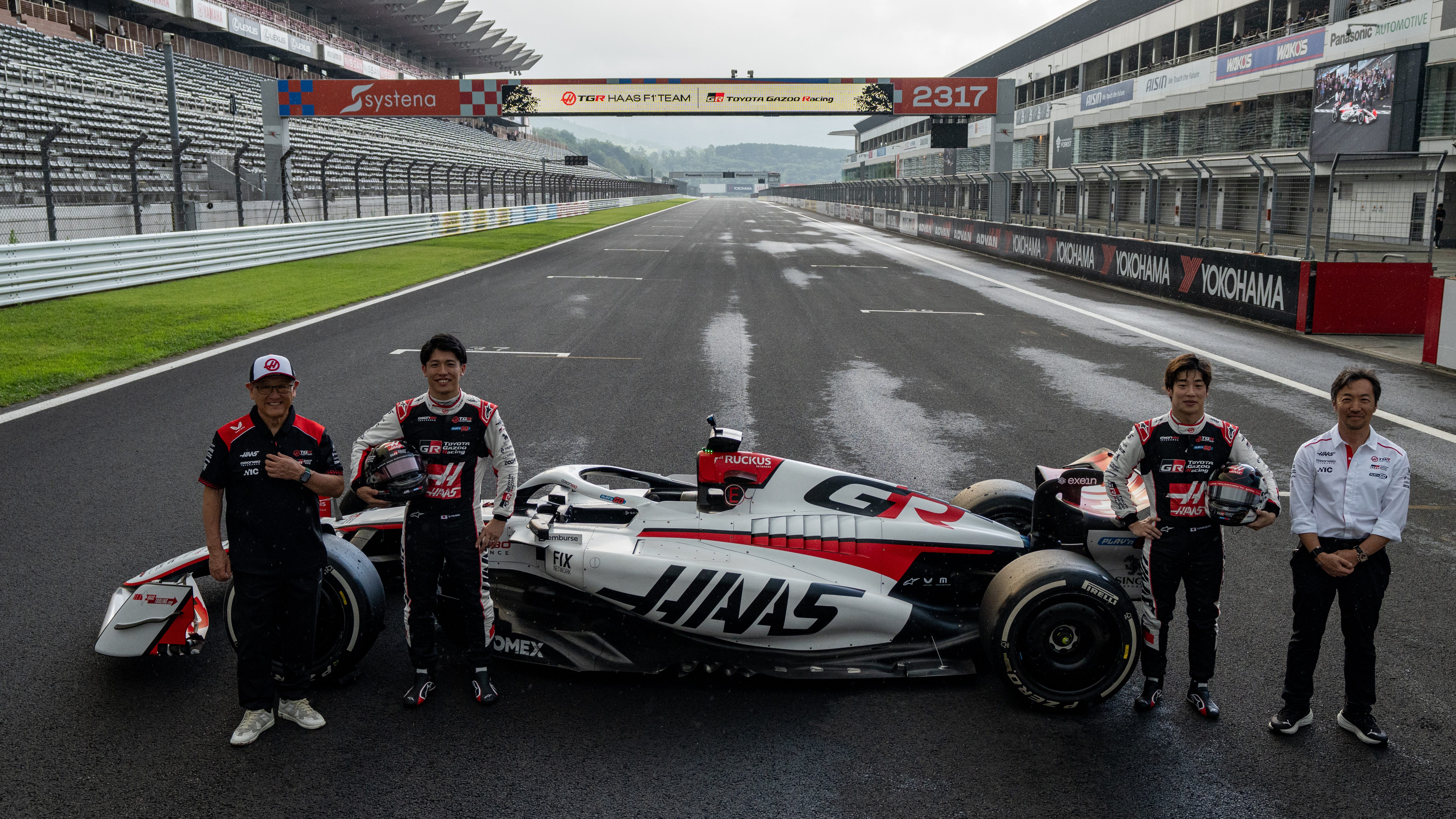
Unlike Tsuboi however, what Fukuzumi doesn’t have to his name at the moment is a Super Formula or a top-level SUPER GT title, and that’s something he is clearly determined to try and change as his focus returns to his domestic racing duties for Toyota, starting with this weekend’s Fuji 300km SUPER GT fixture.
“Many people might say this chance was a ‘reward’, but I don’t want this to be my last time in an F1 car,” said Fukuzumi. “I think depending on the results I get and the performance I can show from now on, more opportunities could come in future.
“That said, I haven’t won a domestic title [Super Formula or GT500] and I don’t think I’ll be given any more chances if I can’t at least do that, so first I want to clear that target and give it my absolute best so that further chances will come my way.”