
Ottawa funds northern clean‑energy projects as Yukon faces rising grid strain
Published 4:30 pm Wednesday, July 29, 2026
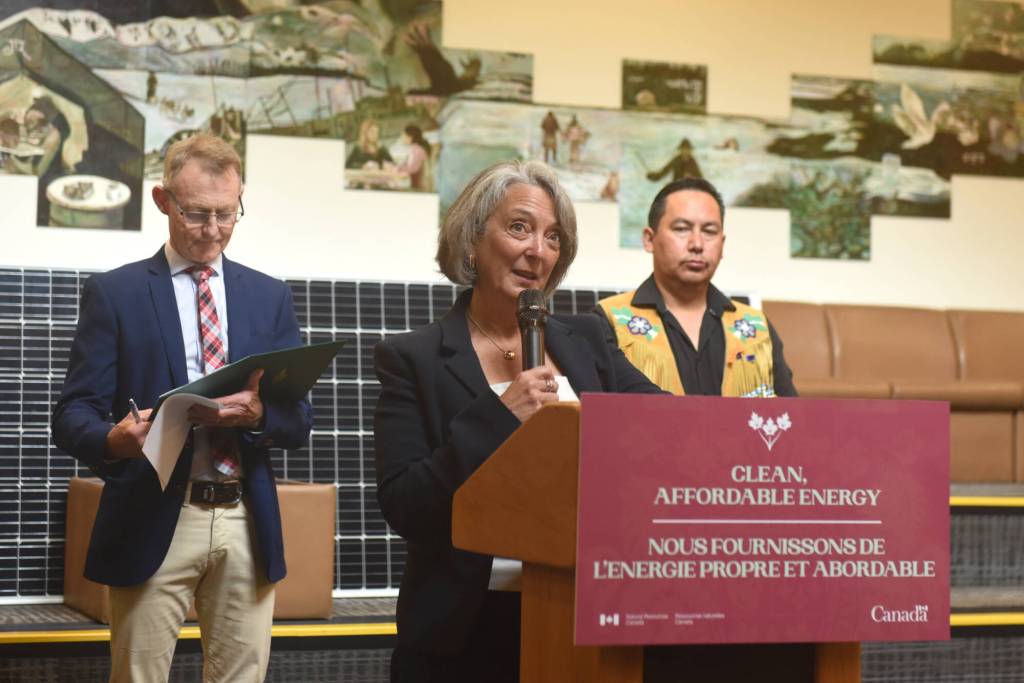
Ottawa announced nearly $7 million for northern clean‑energy projects during a July 29 event at Yukon University, positioning the investments against mounting pressure on the territory’s electricity system as demand climbs and winter reliability concerns mount.
The funding spans eight initiatives across the Yukon, Nunavut and the Northwest Territories, according to a federal backgrounder.
The federal government framed the projects as part of its forthcoming National Electricity Strategy, which aims to double Canada’s grid capacity by 2050.
At the event, federal Environment Minister Julie Dabrusin highlighted two Yukon‑specific projects, a $2.8-million research initiative at Yukon University and a $42,500 biomass heating feasibility study for downtown Whitehorse. She said both projects are intended to help with local energy security.
Yukon University is receiving federal funding for a clean‑energy research team focused on Northern Grid Impact Studies. Dabrusin said the work will help facilitate community‑led renewable generation projects, while university board chair Christine Mahar said the investment will support knowledge retention, northern expertise, and building capacity in the North.
“This investment funds people as much as it does projects,” Mahar said.
Attention then shifted to the second Yukon project, which focuses on biomass heating.
Yukon MP Brendan Hanley announced that Northern Vision Development is leading a feasibility study on a biomass‑fueled heating system that could provide energy to several downtown Whitehorse buildings.
Questions from reporters moved the discussion toward longer‑term energy needs in the territory.
The News asked whether Ottawa had received or was considering additional funding for major Yukon energy projects, including the Mayo hydro facility and the Whitehorse Power Centres. In response, Dabrusin pointed to ongoing federal‑territorial discussions and broader national planning but did not outline specific next steps.
“We’re also working on the commitment of retrofitting up to a million homes across Canada. Energy efficiency is an important piece too. The energy we don’t use is very important when we’re looking at how we electrify and how we strengthen our grids,” Dabrusin said.
Dabrusin also told the News that federal work on grid interconnections includes a potential link between British Columbia and the Yukon, though no schedule was provided for that interconnection.
Hanley said at the event he has been in conversations with Yukon and federal leaders about how the federal government can support the Yukon’s more immediate energy needs, but he did not specify what federal support might look like as of yet.
Yukon Energy Minister Ted Laking highlighted the urgency of the Yukon’s energy challenges over the winter when he spoke at the event. He said record demand, extreme cold and equipment failures last winter pushed the grid close to rolling blackouts.
Laking said residential electricity demand is expected to increase by about 60 per cent within 10 years, driven in no small part by population growth and electric home heating on the coldest days. He noted that this projection only covers residential customers and does not include any potential new mining or industrial projects, warning that the territory is running out of energy.
“We are running out of energy and will not have enough unless we do something drastic in the near and medium term. It’s clear that the territorial and federal governments cannot ignore the critical situation any longer.” Laking said.
“The government of Canada recognizes our critical energy challenges and the need for action. In fact, in their recently released electrification strategy, Canada described the strain on the Yukon’s electricity system as a matter of life and death.”
A reporter also asked how the federal clean‑energy investments align with the Yukon government’s dependable grid program, which incentivizes homeowners to use fossil‑fuel heating. Laking said the incentives are intended to shift energy use off peak times to reduce pressure on the grid and to help people add additional heating sources so their homes remain heated during potential winter blackouts.
Laking argued that shifting some heating demand off the grid could free up roughly three megawatts during peak periods. He said that amount is small in southern jurisdictions but significant in the Yukon, which peaked at 127 megawatts last winter.
Laking said the Yukon has to pursue plans to expand its clean electricity supply in the medium term while also addressing urgent risks on the grid.
The federal backgrounder shows most funding comes from the Clean Energy for Rural and Remote Communities program. One project received support from the Smart Renewables and Electrification Pathways Program.
Contact Jake Howarth at jake.howarth@yukon-news.com