

Listen to this article
Estimated 4 minutes
The audio version of this article is generated by AI-based technology. Mispronunciations can occur. We are working with our partners to continually review and improve the results.
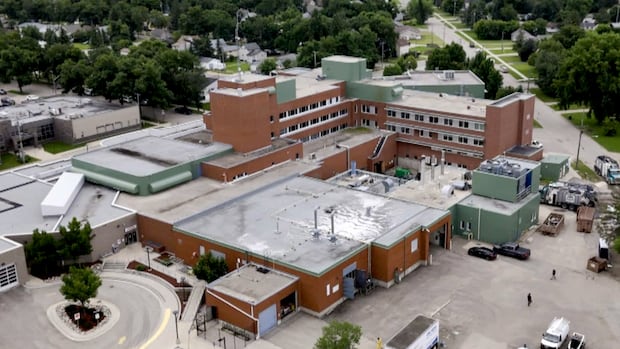
A full month after the Dauphin Regional Hospital closed due to significant flood damage in the basement of the facility, a limited number of care services are expected to return to the western Manitoban town by the end of next week.
Dialysis services are expected to be restored in the coming months, although no firm timelines have been set, says Treena Slate, chief executive officer for Prairie Mountain Health.
In a virtual town hall meeting featuring many senior health care officials Thursday evening, Manitoba Health Minister Uzoma Asagwara said the province will be standing up lab services and a temporary outpatient clinic in the provincial building in Dauphin.
These services will include point-of-care testing, electrocardiograms, phlebotomy, and x-rays.
“And so my expectation and, and what I’m sharing with you today, is that you will have those lab services established in Dauphin by the end of next week,” Asagwara said.
Several diagnostic services are expected to be restored in the coming weeks, according to Dr. Chris Christodoulou, interim president and CEO of Shared Health.
He said work is ongoing to restore dialysis services within Dauphin, but that it’s been a collaborative effort between health care agencies and the province to get appointments moved rather than cancelled.
“No dialysis treatments have been cancelled as a result of the flood and the impacts to the Dauphin Regional Health Centre,” Christodoulou said.
“While patients have experienced changes to treatment locations, care teams work diligently with every patient to arrange alternate care and provide transportation support where needed — patients continue to receive dialysis through alternate sites across the region and province.”
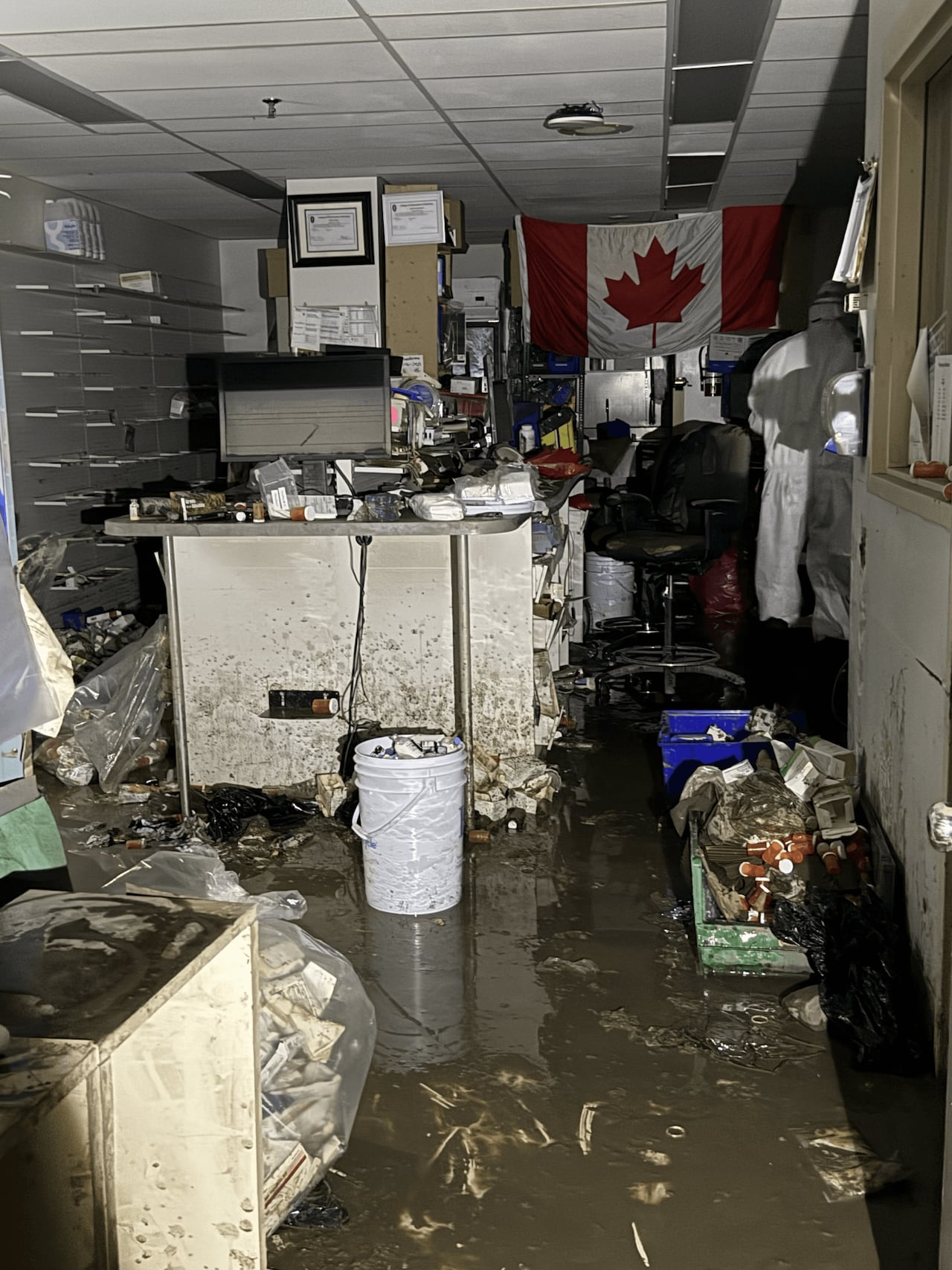
The minister said they and other health care officials toured the hospital on Thursday — almost a month after five feet of floodwaters inundated the basement
“What I saw was incredible in terms of the magnitude of the damage that has been done,” Asagwara said.
Slate says recovering from the damage — to the “heart and lungs” of the building — is a lot more complicated than cleaning and drying spaces.
“Health care facilities are highly complex buildings requiring an incredible amount of power,” she said.
“It includes extensive assessment, testing, repair, replacement and certification of systems so that patients can depend on safe care.”
 Treena Slate, chief executive officer for Prairie Mountain Health, says recovering from the damage to the ‘heart and lungs’ of the hospital in Dauphin is a ‘highly complex’ endeavour. (Prairie Mountain Health)
Slate says more substantial work is now underway, with teams of engineers, contractors, and more, working together to complete detailed assessments to identify what pieces of equipment need repairs or replacement to eventually restore care services at the facility.
When asked about the possible expansion of other temporary services, including maternity care and an emergency room, Slate said they are evaluating every option while restoration work proceeds.
“We’re evaluating every potential solution when it comes to mobile, or modular options that might exist either to expand existing service in facilities or to look at what can be provided with, you know, in situ, in place.”
Asagwara says their priority is restoring the equivalent level of care services that existed in Dauphin before the hospital closed.
“That is our goal and we are going to do that and we’re working to do that in the immediate step by step by step, whether that’s the provincial buildings and the infrastructure that we have that exists already, modular and mobile options, we are looking at every single one of those options,” the minister said.
“Putting that all together so that in short order you’ve got the equivalent comparable services that you had previously in Dauphin — that is the goal.”