
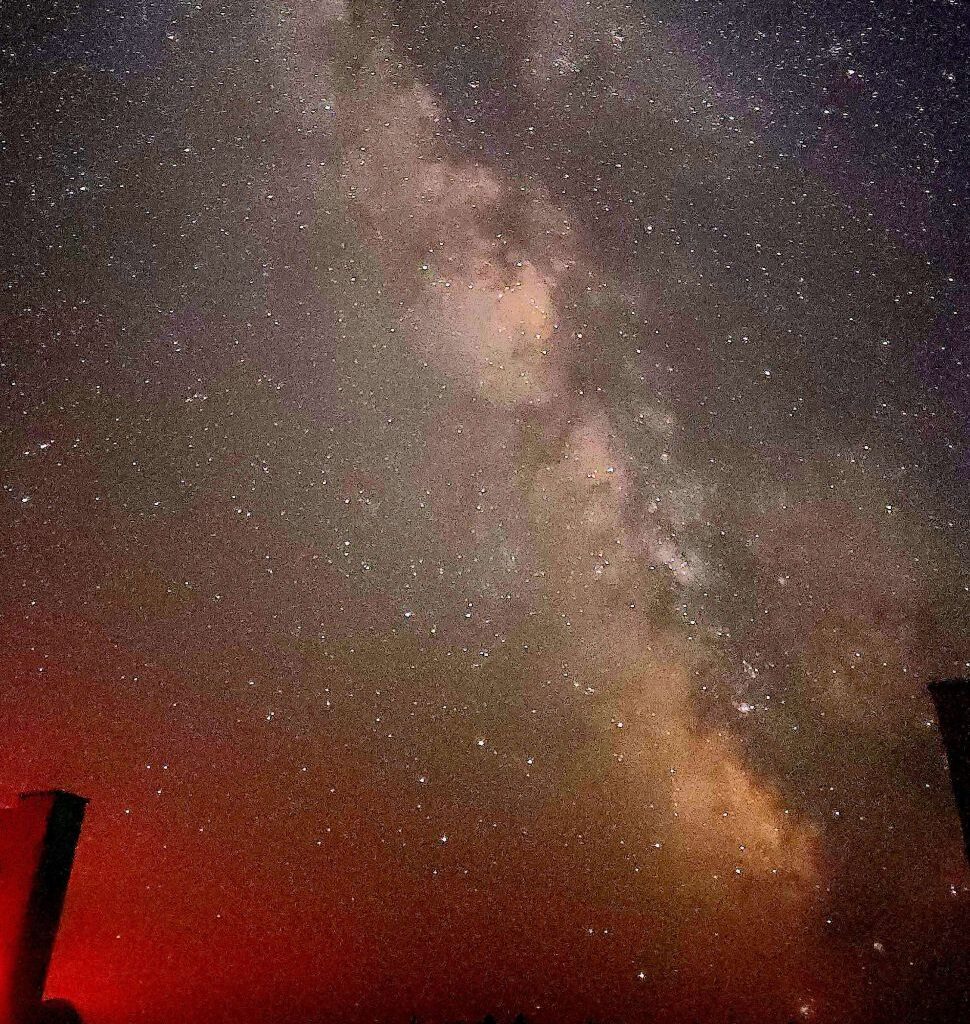
Planetary movements provide viewing opportunities for Saskatchewan residents
Saskatchewan residents will have several opportunities to look toward the sky this August as Mercury, Venus and Saturn move into favourable viewing positions.
Abigail Sadowski, a resident Astra member with the Calum Observatory in Regina, said the month will offer several chances for people interested in astronomy to observe different planets.
Mercury reaches greatest western elongation
According to information provided by Malcolm Warren, Mercury will reach its greatest western elongation on Aug. 2.
The event means Mercury will appear farthest from the sun in the morning sky, making it a better opportunity to try and observe the planet.
Sadowski said people should always use caution when looking toward the area of the sun.
Mercury is one of the more difficult planets to view and binoculars or a telescope may be helpful.
Related Stories:
Venus brightens the evening sky
Venus will reach its greatest eastern elongation on Aug. 14, according to Warren’s information.
At that point, Venus will appear farthest from the sun in the evening sky and will be easier to spot shortly after sunset.
Sadowski said Venus is one of the easiest planets for people to identify because of its brightness.
“Venus, you can see easily, naked eye,” Sadowski said.
She added that viewers farther north may have a shorter viewing window because of the angle of the planet’s path across the sky.
Saturn rising earlier
Saturn will also become easier to view as August progresses.
Sadowski said the planet will rise earlier throughout the month, reaching approximately 9 p.m. by the end of August.
While Saturn can be seen without equipment, a telescope is needed for anyone hoping to see its rings.
“You can see it naked eye, but if you want to see those beautiful rings, you’ll need a telescope,” Sadowski said