

Listen to this article
Estimated 4 minutes
The audio version of this article is generated by AI-based technology. Mispronunciations can occur. We are working with our partners to continually review and improve the results.
With data centre builds a hot topic in Ontario municipalities, some Mississauga city councillors are concerned about what the centres could mean for the community and the environment.
On Wednesday, councillors in Mississauga voted in favour of creating a bylaw for a one-year moratorium on data centres. In the meantime, the city aims to study the impact of the centres, how they would be regulated and consult with the public and the industry.
Martin Reid, councillor for Mississauga Ward 9, put forward the motion for the moratorium. A large construction site for a proposed data centre is nestled next to a highway and a farmhouse, near the ward’s boundary with Ward 10.
Sue McFadden, councillor for Ward 10, said that while there are some data centres in the region, this one would be significantly larger — about the size of three football fields, she said.
“There’s a lot to be afraid of,” McFadden said. “First of all, the unknown. We don’t know the environmental effects of this.”
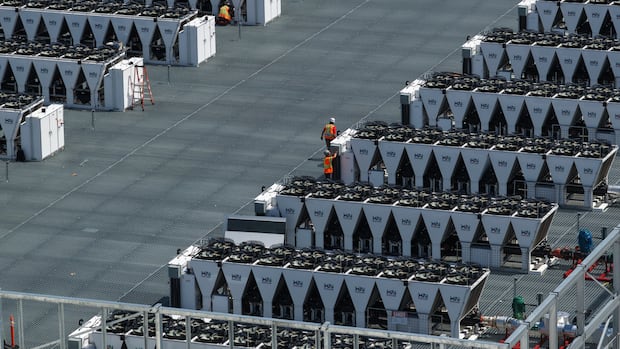
McFadden said she’s concerned about water and electrical grid consumption as well as how it could affect birds and other wildlife in the area.
Unclear what company using planned centre: councillor
Reid said the building company, Prologis, hasn’t disclosed what company will be using the centre or what it will be used for, so it’s difficult to say what the impacts will be for the surrounding area.
“With a new data centre of this massive size, we have questions about water, hydro, noise,” Reid told CBC Toronto in an interview on Friday.
“If we have none of those questions answered, then we can’t really move forward,” he said.
Prologis has provided “detailed technical information” to support the city’s review, Anna Criddle, spokesperson for the company said in a statement.
“The project is still at an early stage, and we are not in a position to identify a prospective customer,” Criddle wrote. She said Prologis notified the public, complying with municipal rules and participated in a public town hall in June.
WATCH | Why AI data centres often bring concerns about water:
Why data centre communities worry about water
As resistance to AI data centres grows, industry leaders say there are ways to build more community-friendly facilities. For Radio-Canada, Anaïs Elboujdaïni examines the water concerns and explores the arguments for a more sustainable approach in Canada.
McFadden lives near the proposed centre. She said building applicants are only required to give notice to those who live within 600 metres of the site, and many of her neighbours weren’t made aware.
“The residents are 800 meters away, so they weren’t notified of this,” she told CBC Toronto.
Municipalities split on how to move forward
Both McFadden and Reid said they’re not completely against having data centres in Mississauga.
“There’s a lot of pressure to build these quickly,” Reid said. “And we want to make sure that we have the right safeguards in place so that we can build it well.”
This week’s decision means council will move forward by drafting a bylaw to enforce the moratorium. That bylaw will go before council for a final decision in September, Reid said.
“Wednesday’s win really is September’s fight” he said. “We have to continue to advocate and to make sure that we bring this over the finish line.”
Mississauga is one of many municipalities in the province grappling with the path forward on regulating data centres.
On Thursday, Toronto city council requested the Ontario government develop a provincial framework looking at impacts and concerns surrounding data centres. Some advocates said the move doesn’t go far enough and are pushing Toronto to implement a moratorium.
WATCH | A look at a data centre being built in Etobicoke: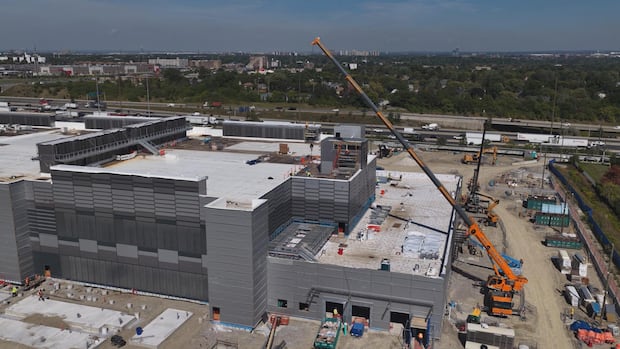
Etobicoke data centre construction
YTO 40, a data centre being built in the Toronto suburb of Etobicoke, was approved to use up to 39.75 litres of water per second for cooling purposes, according to planning documents submitted to the city.
Earlier this month, city councillors in Hamilton rejected a temporary pause on new data centres as municipal leaders there suggested it could threaten new investments in the city’s industrial sector and jeopardize smaller data centre proposals with research components.
The issue has also bled into Mississauga’s mayoral race.
After council passed Reid’s motion, former Mississauga mayor and current mayoral candidate Bonnie Crombie took to social media platform X to criticize current mayor, Carolyn Parrish, for not voting on the motion.
Parrish responded that her vote is meant to make or break a tie. In a statement to CBC Toronto, Parrish said she sympathizes with residents’ concerns and fears.
In another post on X, Parrish said she needs a “full and factual report” before forming an opinion.