Amid Calgary’s ongoing saga over Post-Graduation Work Permits, uncertainty remains from impacted students to the highest level of Canadian government.
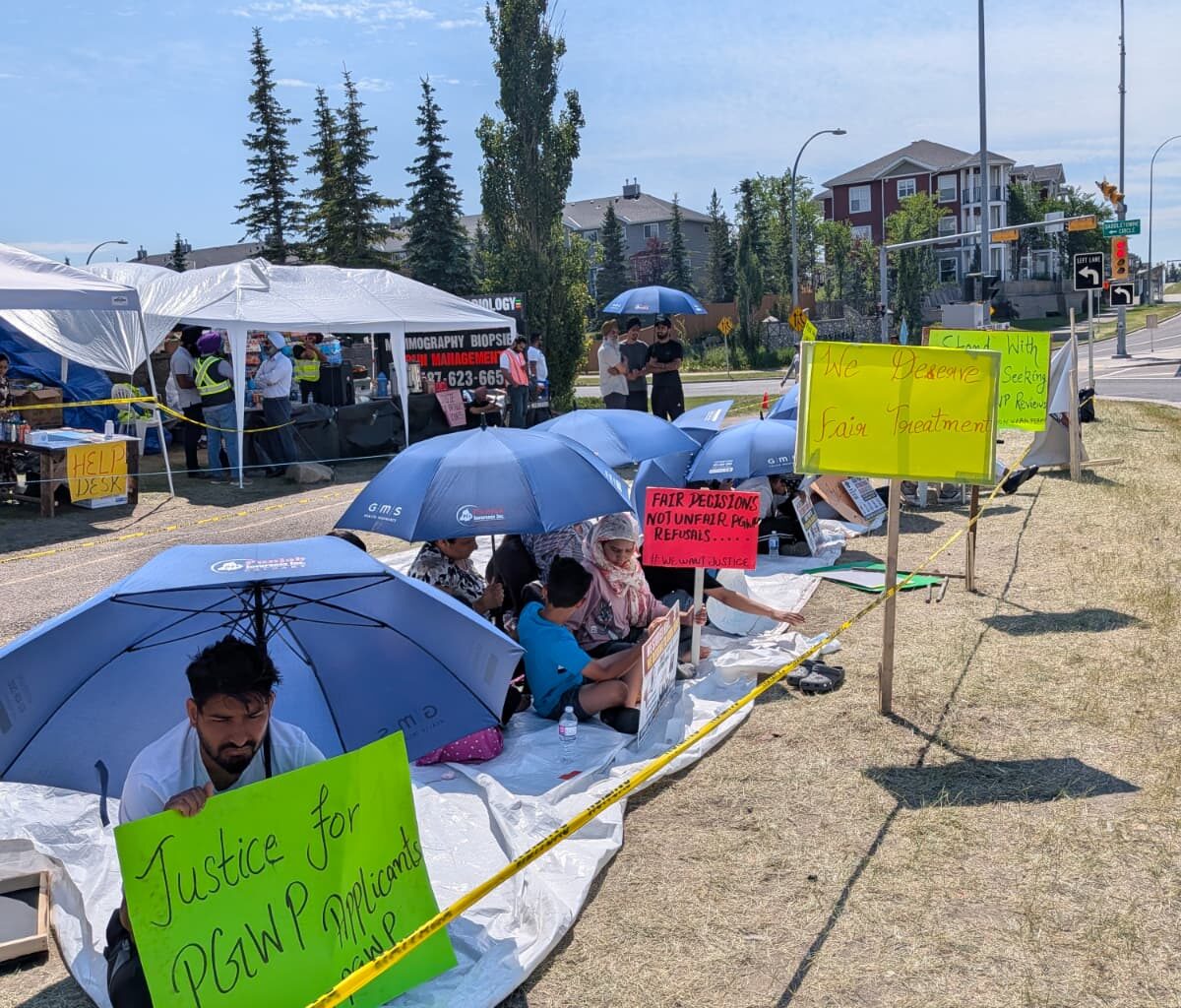
Former students of Portage College, delivered through the Canadian Institute of Osteopathic Therapy (CIOT), continue to protest in northeast Calgary, their efforts now nearing on 10 days. Some students feel their message, and what they’re fighting for, is being misinterpreted.
Speaking Thursday at a press conference in Red Deer, Alta., Prime Minister Mark Carney said he was not familiar with the specific Calgary protest but said immigration decisions must follow established processes.
“If people are here and don’t have authorization to stay… there’s a process that would be followed,” Carney said.
Premier Danielle Smith said she would not specifically describe schools like Portage College as diploma mills, but acknowledged there have been cases where private operators have taken advantage of international students.
Studying in Canada does not automatically lead to permanent residency and Alberta needs greater authority to select immigrants whose skills match provincial labour shortages, according to Smith.
Protesters told LWC that neither statement addresses the issue they are raising: why graduates from the same programs are receiving different PGWP decisions under what IRCC says are unchanged eligibility rules.
“Nobody is asking for permanent residency,” Jaskirat Kaur, one of the organizers of the protest, said.
“We’re asking for the opportunity to get Canadian experience through the work permit.”
The group, which began as over 450 students announcing that they believe their work permits have been wrongfully refused, feel that classmates, who all completed the same programs at the same time, are receiving differing evaluations. Some being approved, others denied seemingly without reason.
Prabhteshwar Khanna, a Calgary immigration lawyer who currently represents some affected students, said the differing outcomes among graduates from the same colleges and programs remains difficult to explain.
“It could be an AI glitch,” he said.
“Maybe there’s an agenda. We don’t know what’s going on.”
Khanna said the most common refusal cites programs as non-credit and therefore ineligible for a PGWP. Others, however, received refusal letters citing reasons like mobility program issues or Labour Market Impact Assessment-related grounds.
“It’s a mix and match,” he said.
Khanna said that if IRCC has not officially changed PGWP eligibility rules, students who completed identical programs should not be receiving different decisions without a clear explanation.
He added that previous immigration rule changes have generally applied to future students rather than those already enrolled.
Students say protest is about work permits, not permanent residency
For students whose applications have been refused, Khanna said acting quickly is critical.
Those within 15 days of receiving a refusal should consider applying for judicial review in Federal Court, he said, while students still within 180 days of completing their studies may also be eligible to submit a new PGWP application.
He also urged graduates to maintain valid immigration status while pursuing legal remedies.
“Maintaining status is their responsibility,” Khanna said.
He said a PGWP is intended to allow international graduates to gain Canadian work experience related to the education they completed in Canada, while permanent residency, which protestors are not looking for, is a separate immigration pathway.
“The main reason for PGWP is that students can use the education and skills they’ve gained in Canada and apply them in the job market,” he said.
Meanwhile, protesters were packing up signs and supplies Friday after receiving notice they could no longer remain on private property where they had been demonstrating.
Kaur said the group plans to relocate nearby while seeking permission to continue protesting on public land.
“We are not going anywhere,” Kaur said.
“We are still on the protest.”
Protesters were disappointed by comments from political leaders, arguing the discussion has focused on permanent residency instead of the work permits they say they earned by completing eligible studies, Kaur said.
She pointed to IRCC’s messaging encouraging international students to study and gain Canadian work experience, saying that promise influenced many students’ decision to come to Canada.
Kaur said some protesters have also experienced racist comments from passing motorists who have shouted for them to “go home.”
“People think we’re asking for permanent residency, but that’s not what we’re fighting for,” she said.
Kaur has already filed an application for judicial review after receiving her refusal earlier this month. Others have also begun legal proceedings, although some missed the 15-day deadline.
She said many graduates are now trying to determine how to maintain their immigration status while their cases remain unresolved.
Some are considering applying for new study permits but are uncertain whether they would be approved or which programs would qualify.
“We’re just stuck in between,” Kaur said.
Liked it? Take a second to support Sakshi Rohal on Patreon!