

Listen to this article
Estimated 3 minutes
The audio version of this article is generated by AI-based technology. Mispronunciations can occur. We are working with our partners to continually review and improve the results.
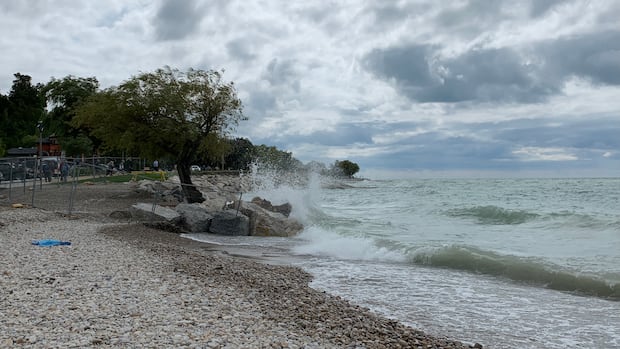
A Great Lakes researcher is urging Ontarians to be cautious at the beach this Civic Holiday long weekend, warning that conditions on the lakes can change in a matter of hours.
Chris Houser, the dean of the Faculty of Science at the University of Waterloo and a longtime coastal researcher, said people often underestimate the power of the Great Lakes.
“We’ve got some very beautiful, safe beaches throughout the Great Lakes, but they can turn dangerous depending upon the weather,” Houser told CBC’s London Morning. “The Great Lakes are basically small oceans and they can get very powerful in storms.”
One of the biggest hazards is rip currents, which form when breaking waves push water toward shore before it funnels back out into the lake.
“It makes you buoyant, and it pushes you offshore,” Houser said.
He also warned that strong waves and offshore winds can pose serious risks, particularly for children using inflatable toys.
“The water may look flat calm, but that’s largely because there may be an offshore wind,” he said. “You can get some kids onto those little floaties, and they can go offshore quite a distance.”
Great Lakes water safety checklist
Before heading into the water, remember:
Check conditions before you swim. Waves and weather can change quickly. Watch for rip currents. If you’re caught in one, don’t fight it. Swim parallel to shore until you’re free, then head back to the beach. Choose lifeguarded beaches whenever possible. Keep inflatable toys close to shore. Offshore winds can quickly carry floaties far from land. Know your limits. Don’t enter the water if waves or currents are beyond your swimming ability. Pay attention to warning signs and beach advisories. Never swim alone, and keep a close eye on children near the water.
About 50 people drown each year in the Great Lakes due to turbulent water, Houser said, with Ontario accounting for the largest share because of its extensive shoreline.
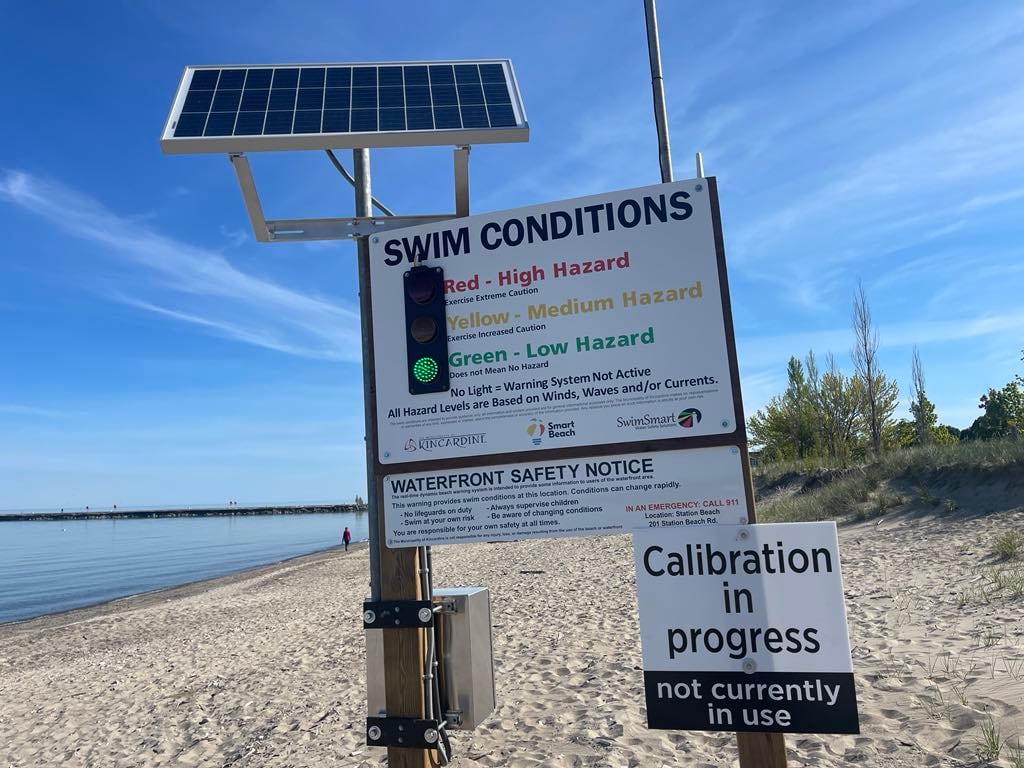 Kincardine installed a Smart Beach Light to warn swimmers of dangerous conditions. (Submitted by Shane Watson)
While beaches such as Port Stanley and Grand Bend have lifeguards, Houser said many Ontario beaches do not because of the cost. To improve safety, researchers are testing a traffic light-style warning system at Kincardine’s Station Beach that would provide real-time and forecasted hazard information.
“We’re hoping that this will reduce the number of drownings,” Houser said. “Lifeguards are the ultimate line of defence, and we need more of them, but this is something to supplement [them], particularly on beaches where lifeguards are currently not available.”