
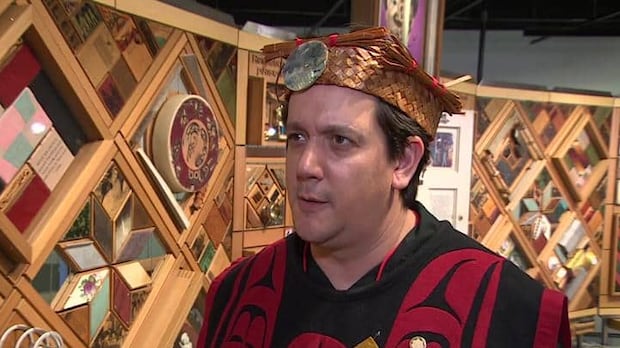
Since its creation more than a decade ago, Carey Newman’s Witness Blanket has toured the country, helping Canadians learn about the impacts of the residential school system.
Inspired by a blanket, woven together to provide comfort and protection, Newman brought together items reclaimed from residential schools and other institutions to tell the stories of the thousands of Indigenous children forced to attend.
The physical art installation has since been adapted online and into a single-user virtual reality (VR) experience, giving people the chance to view items from afar and read and hear the stories connected to them.
Now, in collaboration with Camosun College on Vancouver Island, the project is being expanded once again, to create a multi-user VR experience, something Newman hopes can be used in a classroom environment.
“This VR builds on the original Witness Blanket, offering users the opportunity to interact with the objects, discover sounds of culture and language that have been collected from Indigenous community members before being integrated into the virtual experience,” said Newman, a Kwakwaka’wakw and Coast Salish artist.
“It’s exciting to work with this new technology to engage audiences with the history and legacy of residential schools in a new way, while supporting meaningful dialogue and continuing education.”
Camosun Innovates director Richard Gale said it will “break new ground in the world of Virtual/Extended Reality technologies.”
Newman spoke with CBC’s On The Island host Gregor Craigie about the project.
This interview has been edited for length and clarity.
The Witness Blanket has already been adapted for a virtual reality experience for single users. Can you remind us how that original VR enhancement worked?
It was developed by 3D scanning all of the objects on the blanket. It’s called a virtual replica of the Witness Blanket. Inside of that we were able to bring in different sounds. We gathered a whole bunch of sounds from people across the country, in the same way we gathered the objects for the original blanket.
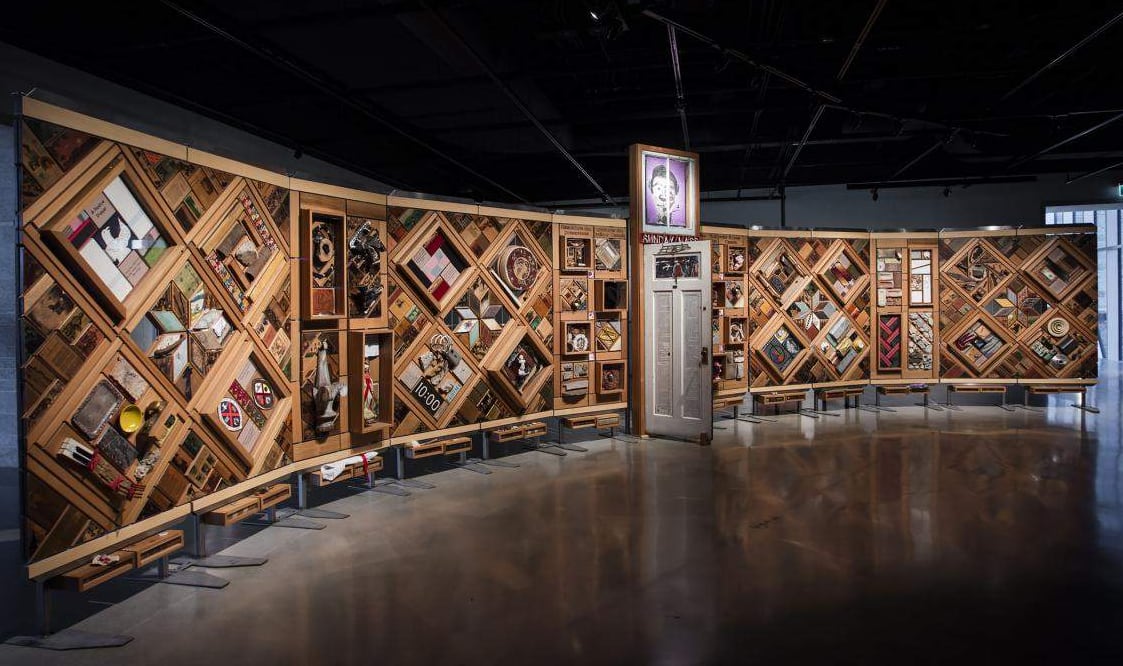 The Witness Blanket stands as a national monument to recognize the atrocities of the residential school system in Canada. (Jessica Sigurdson)
We were able to make it so that when you interact with the pieces, different things happen. So on the website you can click on a piece and you can see where it came from and maybe see its original form. In the VR, if you pick it up, it might transform back into its original shape.
This next iteration is going to allow us to tailor the experience a bit.
How so?
It is a way for us to essentially have a guided experience. So inside of a video game or VR, sometimes you’ll be taken through several steps and asked to do different things that guide you through the game or guide you through the pathway or the exploration.
What we’re going to be doing is making it so that we can develop narratives or stories that follow a theme. So one of the themes of residential schools was the hunger that people felt. Another was the disconnection from language, or the loneliness being away from home. And so there’s objects on the blanket that speak to these things and we will then be able to guide people through an experience of learning more about that through the objects on the blanket.
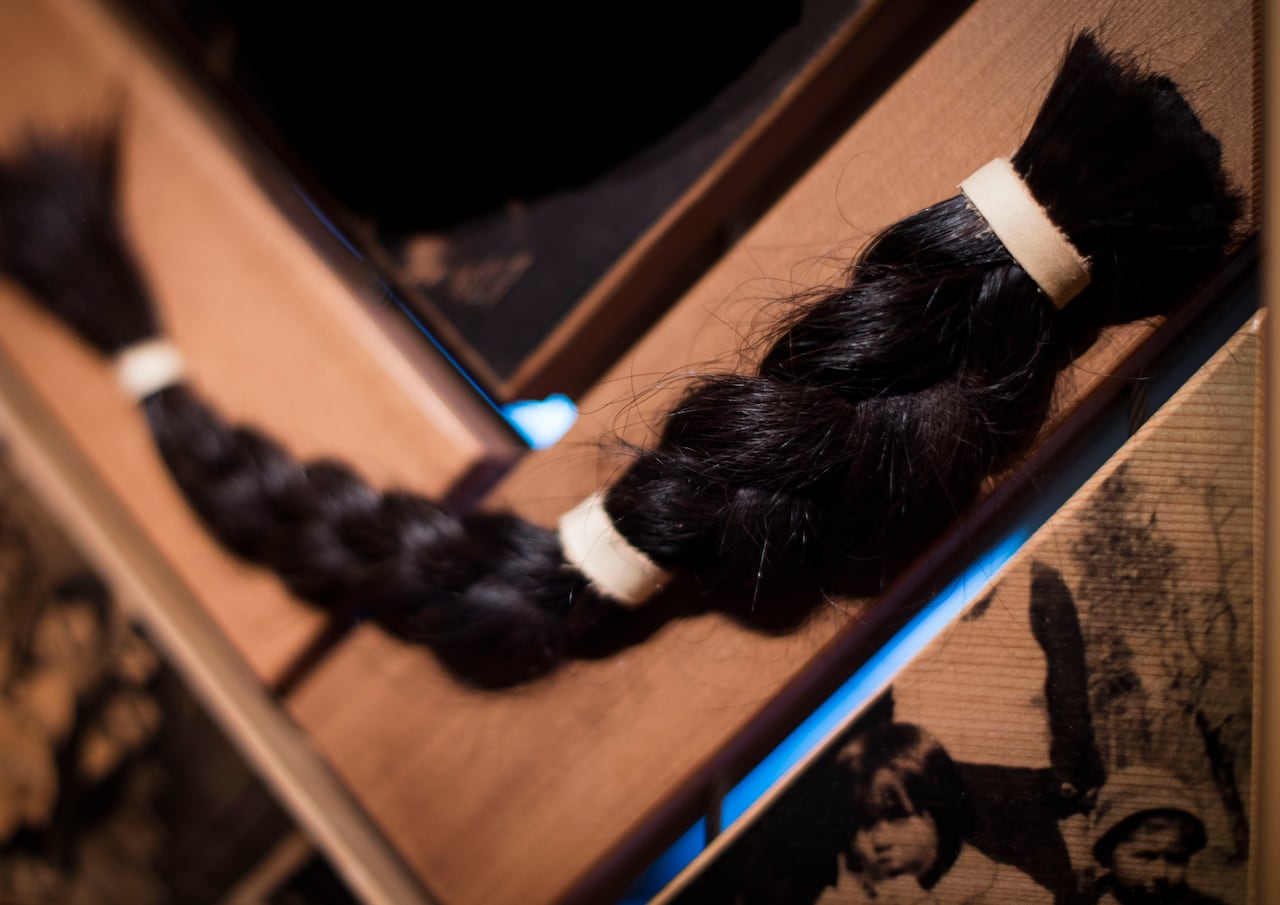 Braids of hair from Marion and Ellen Newman, artist Carey Newman’s sisters, are included in the Witness Blanket. Children who attended residential schools often had their hair cut or shaved on the first day, a traumatic experience for many because hair was a large part of their cultural identities. (Jessica Sigurdson/CMHR)
We think it’ll be great for museum exhibitions because you can time those, but also really good for use in classrooms.
The Witness Blanket has been evolving since its inception. Is that your hope, that it keeps changing?
I don’t know how much further we can go beyond the replicas and now this virtual reality experience. But what I hope is that it continues to find its way into people’s consciousness, that it works its way through classrooms, that it continues to bring awareness to the experience of residential school survivors. And whatever way we can put effort into helping that occur, I’m going to be here for.
Some of the conversation around residential schools has changed across the country, certainly since the inception of this project, becoming more politicized. What do you make of the cultural shift and how some Canadians are talking about residential schools?
If we’re talking about the sort of movement around denialism, obviously that’s a pretty big frustration for me. I think it comes from the political times we’re in, where things have been really polarized. We can see the political parties that we were accustomed to watching find some commonality, some ways of working together distance themselves more and more and sort of draw hard lines around the things that they’re willing to support and the things that I think are completely wrong.
When you apply that to something like residential school history, I think it undermines the work of the Truth and Reconciliation Commission. It flies against the evidence that something like the Witness Blanket holds, and it comes from focusing on what maybe people describe as grey areas. They’ll say, oh, well, there’s no bodies. But there are, there are plenty of them. There’s also records of at least 4,000 children who died in residential schools, like church government documented records of that.
WATCH | UBCIC grand chief on politics of residential school denialism: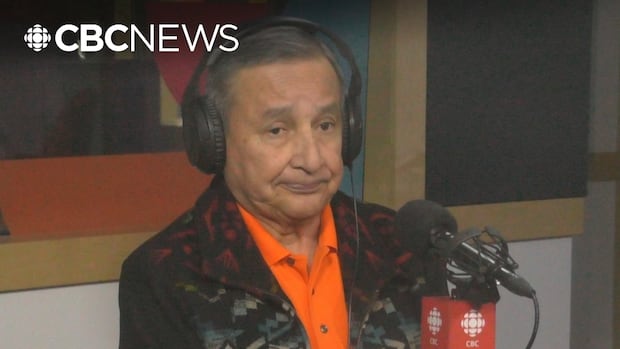
UBCIC president says politicians need to stop advancing residential school denialism
Vancouver-Quilchena MLA Dallas Brodie has called for the First Nations Leadership Council to be defunded. A federal Conservative candidate has been called out for posts that stated the residential school system did not constitute genocide. Grand Chief Stewart Phillip of the Union of B.C. Indian Chiefs says it’s offensive and upsetting for elected officials and candidates to promote residential school denialism.
I think it’s one of those things where when people, when the momentum starts to move forward, there’s always a little bit of a back shift before we continue on again. And so that’s why I think that this subject is always relevant, and it’s why I’m glad that we were able to persevere with this Witness Blanket and bring it into a technological way of sharing it with future generations so that we can continue to push back against people who would say that a person like my father didn’t experience the things that we know he experienced at residential school.
What’s keeping you going these days?
I’ve always got so many ideas. I’ve been working on projects like the Totem 2.0, uh, that we raised at Pacific Opera Victoria, which is made from second growth cedar. It’s a full size pole made from second growth pieces. It was another collaboration with Camosun Innovates to figure out how to make that happen. We’re now working on, I don’t know if I’m gonna call it Totem 2.1 or 3.0, but another version of a pole that’s made in a sustainable way that doesn’t harvest old growth.